

The Digital Edition is an exclusive product available to our subscribers
The Digital Editions are an online version of our weekly print newspaper. In order to access them you’ll need to take out a subscription to the Mail & Guardian.
[tnc-pdf-viewer-image file=”https://mg.co.za/wp-content/uploads/2023/06/edition-2023-06-23.pdf” target=”_parent” download=”false” print=”false” fullscreen=”true” share=”false” zoom=”true” open=”false” pagenav=”true” logo=”false” find=”true” current_view=”true” rotate=”true” handtool=”true” doc_prop=”false” toggle_menu=”true” language=”en-US” class=”” page=”” default_zoom=”auto” pagemode=”thumbs”]
 [/tnc-pdf-viewer-image]
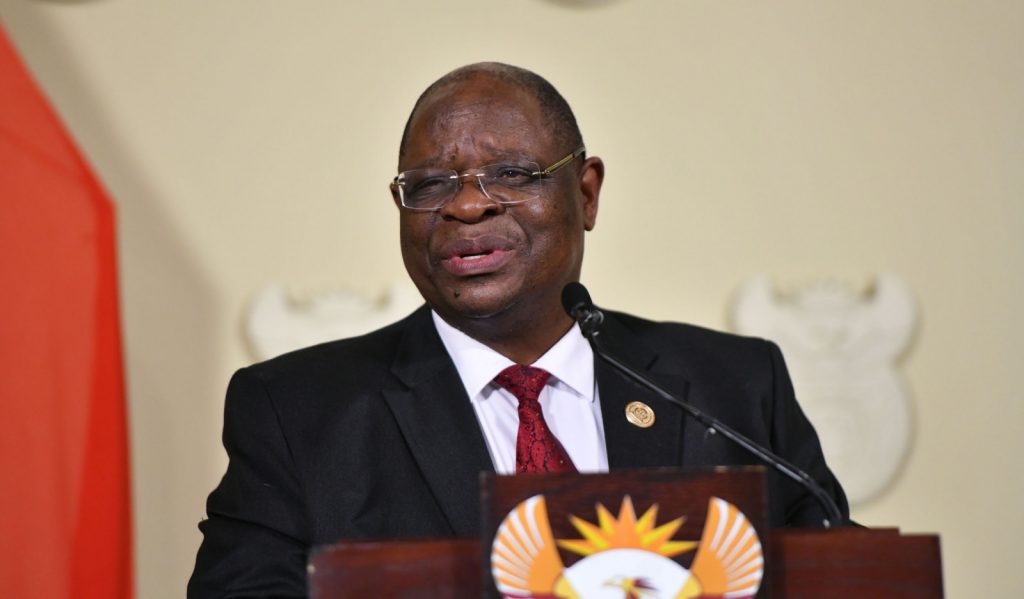
Should renewed attempts be made at state capture, parliament would still not be able to stop it, Chief Justice Raymond Zondo said on Thursday, a year after he handed over the final sections of his gargantuan report — a petabyte of data — on the wholesale looting of state-owned entities.
The Gupta family and its acolytes had been successful in the state capture project because “parliament did not stop them”, he said during a keynote address at the Human Sciences Research Council (HSRC) colloquium, “and nothing has changed”.
“The majority party refused to agree to the establishment of an inquiry to investigate the allegations. There were a number of instances where there was an opportunity for the majority party in parliament to agree, but it did not, and therefore the Guptas continued with their project, and the transactions that happened afterwards, happened because they were not stopped by parliament,” said Zondo.
In its report, the commission detailed various instances where parliament failed to ensure that attempts at state capture were exposed early.
The ANC has been known to suppress attempts at investigations by legislators that could lead to negative political exposure of its leaders. A recent example is the party using its parliamentary majority to vote against the establishment of an ad-hoc committee to investigate allegations made by former Eskom chief executive Andre de Ruyter of organised corruption at the utility — and the enabling of such — that allegedly involved at least one senior ANC politician.
Instead, the party filed papers to sue De Ruyter for defamation after he said during a televised interview in February that the governing party viewed Eskom as a “feeding trough”, and thus benefitted from corruption at the parastatal.
In December, the majority of the ANCs MPs voted against adoption of the section 89 panel report into the theft and cover-up of thousands of US dollars from President Cyril Ramaphosa’s Phala Phala game farm.
In March, ANC MPs also voted against a motion by the Democratic Alliance to establish a parliamentary committee to investigate the Phala Phala scandal.
Historically, despite credible information and allegations from whistleblowers and documentation such as the Gupta Leaks, calls for investigations have been squashed or brushed off as being political posturing from the opposition benches.
Zondo said that because Jacob Zuma had also been “captured” during his administration, “he used his constitutional and legal powers to make decisions that advanced the business interests of the Guptas”.
He said the evidence brought before the commission revealed a number of instances where Zuma made decisions that benefited the Guptas — such as the removal of certain executives at Eskom and the axing of Themba Maseko, the chief executive of the Government Communication and Information System.
According to the Zondo commission’s report, the firing of Maseko was one of the earliest examples of state capture, and allowed for the Guptas to use taxpayer money to fund their now defunct The New Age newspaper.
“Where a president no longer makes decisions that serve the interests of the people, but makes decisions that serve his own interests, or [those of] his family or his friends, that undermines our democracy,” said Zondo.
But, he cautioned, what demonstrated beyond any doubt that state capture placed democracy at risk was when one dealt with the role of the National Assembly, which was mandated to serve citizens.
“I have said before that if another group of people were to do exactly what the Guptas did to pursue state capture, parliament would still not be able to stop it. That is simply because I have seen nothing that has changed. The question that arises then is, if parliament won’t be able to protect the interests of the people — if there are attempts at another state capture — who will protect the people?”
There were three possible answers to that question, said Zondo. One was electoral reforms that allowed citizens to have more power over MPs.
Another was, as pointed out by the commission in its report, a standing state capture and anti-corruption commission where nothing could be “swept under the carpet”.
“If, through that standing commission, it was established that there was serious state capture and corruption, there would be strong public opinion that might force a [recalcitrant] majority in parliament to actually take action,” he said.
The third answer to who would protect the people, was the people themselves.
“I believe in active citizenry, that the people of South Africa are the ones who must take their destiny in their own hands. They are the ones who must say: ‘we have had state capture, and it is not going to happen again’. They are the ones who must say ‘never, never and never again’.”
Also presenting at the colloquium was advocate Gary Pienaar, the senior research manager at the HSRC, who spoke about the implementation of recommendations from the Zondo report, to date.
He said the “essential mechanism” to facilitate state capture was putting “politically connected people on boards” and in the public administration.
One of the key recommendations was that senior appointments should be conducted independently to “make sure that we have a merit based process and not a party interest based process dominating the decision making and appointments”, said Pienaar.
“Lifestyle audits have started at Eskom and they have started elsewhere too. And psychometric integrity testing is being developed by the department of public service and administration, but there is tension between the governing party and the government over these issues.”
Eskom in 2020 extended its lifestyle audits to include lower level staff, after first subjecting its senior staff to the audits. By November 2021, the audits of 383 senior managers and their partners led to the referral of 34 “high risk cases” to the Special Investigating Unit. The standing committee on public accounts was told at the time that of those cases, 11 were referred to Eskom for disciplinary action, while seven employees resigned. In seven cases, there were no adverse findings.
“In December, the ANC retained cadre deployment as its official policy,” said Pienaar. “However, what has happened since then is that the Public Administration Management Amendment Bill and the Public Service Amendment Bill have landed in parliament. They do address some of these issues.”
He said there was a need for disciplinary action as the issue faced in the public service, particularly with regard to financial misconduct, was a lack of consequences, follow through, delays and endless years on suspension.
“I think the concern really is here about losing patience. I think that’s the sense that I get is there are lots of things that have started, but it doesn’t seem to be a great deal of sense of urgency.”
He said that having the aforementioned bills before parliament was good, but added that the Public Service Commission amendment bill was needed.
“That’s the one that could clean up appointments into the public sector. That’s going to make sure we really do professionalise public service. And that is not in parliament yet.”
– The Mail & Guardian Eskom has its eye on COP billions:
Eskom has approached the treasury to hasten the process for it to access funding that was donated to South Africa by wealthy countries at COP26.
At the climate change conference in Glasgow in 2021, a group of international partners pledged $ 8.5 billion to accelerate South Africa’s just energy transition.
Eskom, which is looking for ways to fund its proposed gas-fired power plant in KwaZulu-Natal, which is projected to add 3?000MW to the national grid, has approached treasury to allow it to embark on the project without incurring extra debt or loans.
One of the funding models presented to the treasury involves Eskom being cleared to use some of the money donated by wealthy countries at COP26 to fund the project. Another is the use of a public-private partnership or a power purchase agreement with an independent producer through a bidding process.
According to a highly placed source in the cabinet, the power utility wants to bypass the treasury’s strict conditions for using the funds allocated for just transition projects to build the gas-fired plant.
“The request by Eskom is for the treasury to fast-track the process to release the money received from the wealthy nations to fund the gas plant that is in KZN. This will ensure that Eskom is not taking up new debt but a loan that is accepted nationally,” the source said.
Last week, Finance Minister Enoch Godongwana appointed a consultant to come up with a plan by August to allow Eskom to accept billions in loans designed to help it initiate its renewable projects.
“The government is looking at best mechanisms to disburse the $ 8.5 billion International Partners Group funding, without negatively impacting Eskom’s balance sheet,” the treasury said.
There have been many discussions about when South Africa will receive the money and how it will be used.
The just energy transition investment plan was endorsed by the cabinet last year and was shared with the International Partners Group, which comprises the EU, UK and US.
Eskom needs the money
Eskom, has asked the treasury to reconsider its debt relief conditions which prevent it from incurring more debt, to facilitate the building of the gas plant.
Eskom’s main aim is to stabilise the grid, to enable it to accept power from renewable sources, such as solar and wind.
The gas-fired 3?000MW power station in Richards Bay is part of its plan to alleviate power shortages in the long term.
The utility has been unable to start new projects because of its negative balance sheet and the treasury’s debt relief conditions.
In his budget speech in February, Godongwana said the government would assume some of Eskom’s debt but on condition it did not take on any more loans for three years, unless given written permission by the finance minister.
Eskom told the Mail & Guardian that the projects it has planned would require a lot of money over the next three years and that it would not be possible to complete them on its current balance sheet.
“Eskom is in discussion with the treasury about a different approach. A public-private partnership, independent power producer model, or something based on that, is likely to be the model for the project.
“The utility’s immediate focus is on getting clarity on its role, after which a financing model and detailed business plan will be developed before it approaches the market,” it said.
The utility added it anticipates it will take two years to develop the Richards Bay project and three more to implement it.
Using the just energy transition funds would not be going against the agreement to lower carbon emissions as gas had been added to the EU’s clean energy list.
During COP27, the EU argued that gas should be regarded as a transitional fuel because it produces fewer carbon emissions than coal and oil.
“Gas has since been added as part of the nationally determined contributions for South Africa and is in line with the plan to decrease carbon emissions by 2050,” said the department of mineral resources and energy.
Eskom hopes to deliver electricity from the gas project to the grid by the end of 2028. The generating capacity would be equivalent to three phases of load-shedding.
Ministerial approval
In January last year, Eskom proposed the gas power plant in Kwa-Zulu Natal to Mineral Resources and Energy Minister Gwede Mantashe.
Mantashe, who is an advocate of gas, forwarded the request to the National Energy Regulator of South Africa (Nersa), which published the proposal for comment.
It was rejected by several environmental groups, who argued that important information was missing from the application and that there had not been enough consultation.
Nersa rejected the request for technical reasons, saying Eskom had not followed the correct procedures for approval in December.
However, in February, Nersa did an about-turn and approved the project. That was later overturned by a court. Nersa does not have the legal powers to change its own decisions.
The minister of forestry, fisheries and the environment, Barbara Creecy,. has signalled her support for the gas plant and given the plan environmental approval.
Defending the project as part of Eskom’s drive to reduce its carbon footprint by using gas as a “transition fuel”, Creecy said in court papers South Africa was an emerging economy that had to “balance the competing need for continued economic growth with its social needs and the protection of the environment”.
Her support was rejected by environmental groups, which took Mantashe and Eskom to court over approval of the project.
Melissa Groenink-Groves, of Natural Justice, said this week a gas power plant had the potential to “have worse climate change implications than a coal-fired power station when considering the full life cycle of the power generation process”.
Wage negotiations
To avoid strike action, Eskom has agreed to pay 80% of its staff a 7% increase annually for the next three years, as well as a R10?000 once-off cash bonus this year and next year.
But the utility does not have the money to do this, another reason why it is urging the treasury to hasten the release of some of the $ 8.5 billion.
Eskom said it hoped the negotiations would encourage employees to work harder to decrease load-shedding, which would attract clients to the utility and help it raise revenue.
“The wage agreement will give Eskom an opportunity to address our operational challenges which, in turn, will give us more revenue that will be used, among other things, to fund the salaries.
“The idea seems to be that better operational performance — thanks to employees having been incentivised by the wage increase — will lead to a decrease in load-shedding and an increase in electricity sales, which will pay for the additional payroll,” it said.
Mandisa Nyathi is a climate reporting fellow, funded by the Open Society Foundation for South Africa.
– The Mail & Guardian Submit and get free exposure here: Showcase Your Business | Advertise Your Special Offers.