
40 dehorned rhinos relocated in bid to ‘rewild’ captive-bred animals:
African Parks has taken the first steps to relocate captive-bred southern white rhinos after it became the owner of the world’s largest captive rhino breeding operation, which was facing financial collapse.
The nonprofit conservation organisation said on Thursday it had donated 40 of the 2 000 rhinos that formerly belonged to controversial breeder John Hume to the Munywana Conservancy in KwaZulu-Natal, in support of its successful conservation and community efforts. It purchased Hume’s Platinum Rhino in September last year.
This move marks the first translocation under Rhino Rewild, an “audacious” decade-long plan to rescue and rewild the 2 000 rhino, which formerly roamed on Hume’s ranch in the North West, into secure protected areas in Africa.
The Munywana Conservancy is a 29 866 hectare reserve that is upheld through a collaboration of community and private landowners including the Makhasa Community Trust, the Mnqobokazi Community Trust, &Beyond Phinda and Zuka Private Game Reserves.
“We are extremely pleased to receive these 40 rhinos from African Parks to supplement the current population of white rhino at our community conservancy,” the chairperson of the Makhasa Trust, Thokozani Mlambo, said in a statement.
“We see this as recognition of the important role that community-owned land plays in conservation, and we are proud to be collaborating in such a significant partnership to rewild rhino across our continent, The Makhasa Trust is one of the four primary shareholders of the Munywana Conservancy.”
According to African Parks, the conservancy offers a secure environment to support the rewilding of southern white rhino.
“Munywana’s current rhino population will be bolstered, enhancing genetic diversity, aiding future rhino translocations to other locations, and supporting tourism, which is a key driver of the local economy,” it said.
The main objective, according to African Parks, is to rewild all the rhino to well-managed and secure protected areas, establishing or supplementing strategic populations, ultimately helping to “de-risk” the future of the species.

The government is “very supportive” of the plan by African Parks to purchase and rewild the rhino and remains a key partner in providing technical and scientific advice and the support needed “to carry out this conservation solution in South Africa and on the African continent”, said Forestry, Fisheries and the Environment Minister Barbara Creecy.
To achieve a successful outcome of this translocation, the animals’ body condition and parasite adaptation will be closely monitored as they adjust to their new environment, African Parks said. The conservancy will also implement intensive security measures to ensure the safety of the 40 dehorned rhinos.
Both African Parks and the conservancy have the same ethos and guiding principles on conservation, and “in that spirit the Munywana has gladly accepted this donation, enabling these rhino to commence the process of becoming fully wild and free-roaming”, said Dale Wepener, the warden and conservation manager at the Munywana Conservancy.
The crux of the solution, and the ultimate success for rewilding all the rhino, lies in the existence of safe, well-protected and effectively managed areas across the continent, of which the Munywana Conservancy is an “excellent example”, noted Peter Fearnhead, the chief executive of African Parks.
“Rhino Rewild is one of our most ambitious undertakings to date, where together with a multitude of governmental, conservation and community organisations, and key funders, we have the rare opportunity to help de-risk a species, and in the process to help secure some of the most critical conservation areas not just in Africa, but in the world,” he said.
This first translocation was carried out by African Parks, &Beyond Phinda, Conservation Solutions and WeWild Africa with the financial support for the move provided by The Aspinall Foundation and The Wildlife Emergency Fund.
DA rented a crowd to march in Riverlea, residents claim: The party’s leader, John Steenhuisen, said life is harder in Riverlea than it is in many war zones
Can brain transplants preserve artistic legacies?:
The human brain, with its intricate web of neurons firing in synchrony, has long been regarded as the epicentre of creativity and artistic expression.
Throughout history, artists and thinkers have pondered the mysteries of the mind, marvelling at its ability to conjure melodies, images and stories that captivate and inspire. In contemporary discourse, the idea of the brain as the fountainhead of creativity has led to speculations about the potential of brain transplants to immortalise artistic genius.
Ancient Greek society believed that the divine spark of inspiration could be found in altered states of consciousness, induced through various ways such as rituals, music and substances, many of which played important roles in artistic and prophetic endeavours, religious practices and spiritual experiences.
During the Renaissance, the burgeoning interest in human anatomy spurred Leonardo da Vinci on to conduct anatomical studies to understand the structure and function of the human body. His drawings and observations reflected a growing awareness of the brain’s importance in governing human cognition, emotion, and creativity, recognising the brain as the seat of intellect and imagination and believing that its intricate workings held the key to unlocking the mysteries of creativity.
During the Enlightenment, thinkers such as Descartes and Locke confirmed the emphasis on reason, rationality and empirical inquiry through their mechanistic understanding of the mind, viewing it as a complex machine governed by physical laws.
As the Enlightenment gave way to the Romantic era, attitudes toward creativity again began to shift. Romantics celebrated the power of the imagination, intuition and emotion, favouring a more holistic and intuitive understanding, emphasising the transcendental and spiritual aspects of inspiration.
Recent explorations of the intersection between neurological research and creative expression has revealed the complex interplay between science, art and the human experience that are responsible for cognitive processes such as imagination, perception, and emotion — key components of artistic creation.
Research has shown that various regions of the brain, including the prefrontal cortex, temporal lobes and limbic system, play crucial roles in generating artistic ideas and executing them into tangible forms. The brains of musicians orchestrate the interplay of auditory processing, motor coordination and emotional resonance to give rise to melodies, while visual artists rely on the brain’s visual cortex, hippocampus and amygdala to interpret the world around them to create works with personal meaning and symbolism.
In recent years, the notion of preserving artistic genius through brain transplants has ignited fascination and controversy. In December 2022, Sergio Canavero said “whole brain transplantation in man” is technically feasible. This concept posits that by transplanting the brain of a deceased artist into a new body, their creative essence could be perpetuated, allowing future generations to experience their work firsthand.
Proponents argue that such a procedure would safeguard cultural treasures from the ravages of time, ensuring that the brilliance of masterful composers, painters, and writers endures indefinitely.
But ethical concerns loom large in discussions of brain transplants. The very notion of transferring consciousness — assuming it is even possible — raises profound philosophical questions about identity, autonomy and the sanctity of life.
The two ethical components of consciousness relate to the value or disvalue that consciousness has for individuals and depend on its phenomenology (what it is like to be aware) and content (what one is aware of). These aspects shape normative judgments regarding the effects of various conscious states on individuals, influencing moral judgments about whether intentionally causing these states is permissible or impermissible and how these states can affect behaviour.
Critics caution againstreducing artists to mere repositories of their creative output, warning that the essence of art lies not solely in its physical manifestation but in the lived experiences and unique perspectives of its creators.
And the commodifying artistic genius through commercial exploitation raises troubling implications for the integrity of creative expression.
While brain transplants remain firmly entrenched in the realm of science fiction, historical anecdotes and contemporary advancements offer intriguing glimpses into humanity’s fascination with the intersection of art and neuroscience. Several famous artists and scientists have donated their brains for future study, either to advance scientific understanding or to contribute to research on specific neurological conditions.
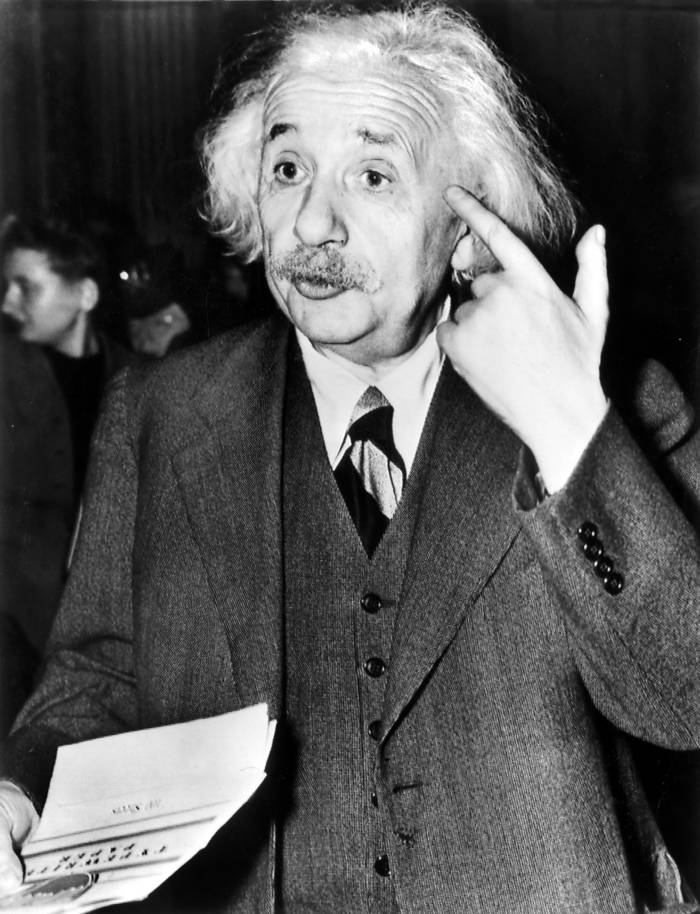
Albert Einstein, renowned physicist, bequeathed his brain to science upon his death in 1955. His brain was preserved for research purposes, with scientists hoping to uncover clues about the neural basis of his extraordinary intellectual abilities.
Santiago Ramón y Cajal, considered the father of modern neuroscience, donated his brain to science upon his death in 1934. His pioneering work in neuroanatomy and histology revolutionised our understanding of the structure and function of the nervous system.
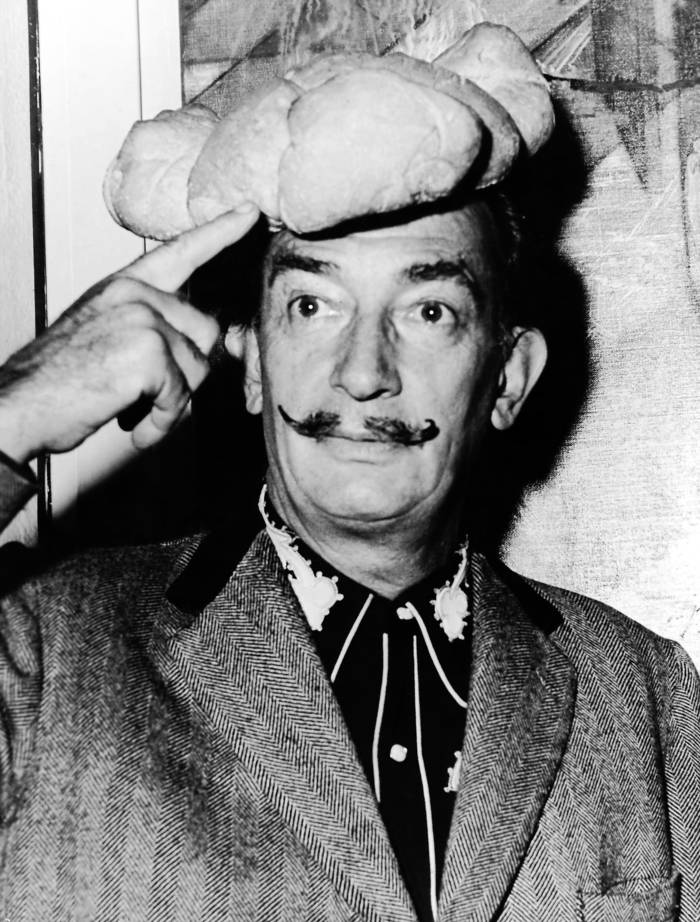
Surrealist artist Salvador Dalí expressed a desire to have his brain preserved for scientific study. While his brain was initially embalmed, it was later exhumed in 2017 for a DNA test in a paternity case, but the condition of the brain was reportedly unsuitable for further study.
These individuals, among others, have made significant contributions to scientific knowledge through the donation of their brains.
Innovations such as neuro prosthetics and brain-computer interfaces (BCIs) hint at the possibilities of merging biology with technology to augment human capabilities. Although these developments may not yet enable the transplantation of entire brains, they underscore the potential for future breakthroughs in neural engineering and regenerative medicine.
Neuro prosthetics, for instance, involve the development of artificial devices that interface with the nervous system to restore lost sensory or motor functions. These technologies focus on restoring functionality rather than transferring consciousness, but they provide insights into the complex interactions between the brain and external devices.
Similarly, brain-computer interfaces enable direct communication between the brain and external devices, allowing individuals to control computers, prosthetic limbs or even communicate through thought alone. While current BCIs are limited in their scope and resolution, ongoing research aims to improve their precision, reliability and accessibility, with potential applications ranging from assistive technology to neurorehabilitation.
Advancements in neural engineering, including techniques such as optogenetics and deep brain stimulation, offer further opportunities for manipulating and modulating neural activity. While these approaches primarily target specific brain circuits or regions rather than the entire brain, they provide valuable tools for investigating the neural basis of cognition, emotion and behaviour.
In the realm of consciousness transfer to computers, theoretical discussions often centre on the concept of mind uploading, wherein a person’s mental states, memories and personality are replicated in a digital substrate. Although speculative, proponents argue that such technology could theoretically enable immortality by transferring consciousness to a durable and potentially immortalised form.
The human brain, with its boundless capacity for imagination and innovation, remains a source of endless fascination and speculation. As our understanding of its inner workings continues to deepen, so too does our appreciation for the profound role it plays in shaping the course of human creativity.
While the concept of brain transplants raises provocative questions about the nature of art and the limits of scientific intervention, it ultimately underscores the enduring quest to unlock the mysteries of the mind and preserve the legacies of those who dared to dream.
Dr Marietjie Botes is the chief executive of BioLAWgic and The Visual Law Lab and an honorary research fellow in health law and bioethics at the University of KwaZulu-Natal.
Submit and get free exposure here: Showcase Your Business | Advertise Your Special Offers.
