A new era for Azerbaijan: Reflecting on the presidential elections and looking ahead:
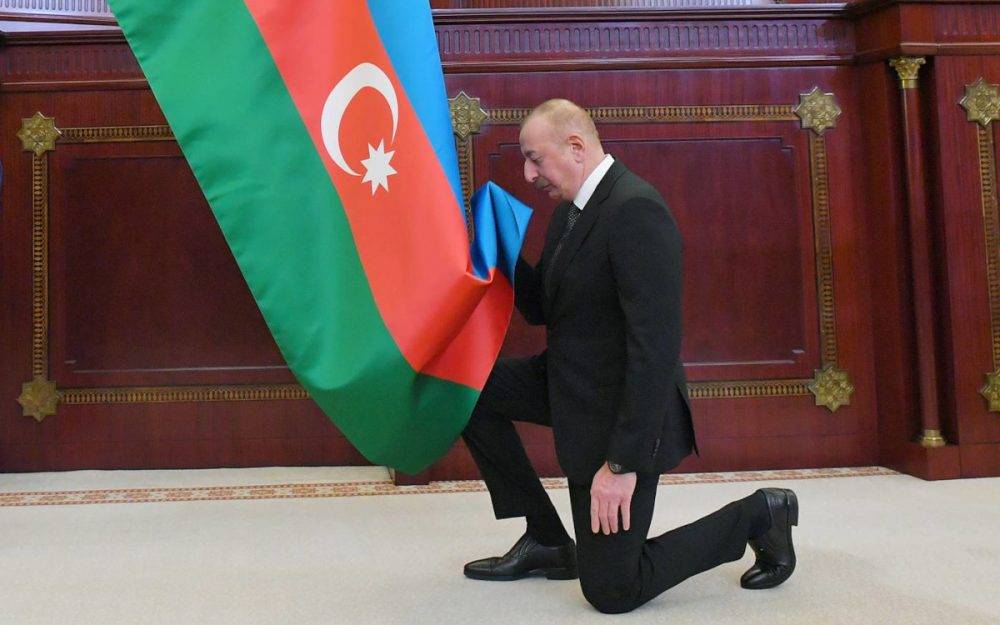
This was the first election conducted across the entire territory of Azerbaijan, including the liberated Karabakh region
In a historic turn of events that marked the beginning of a new chapter in Azerbaijan’s history, the early presidential elections were held on 7 February 2024. This followed a decree issued by President of the Republic of Azerbaijan Ilham Aliyev on 7 December 2023, which set the stage for a democratic process that would herald the beginning of a new era for the nation.
The elections were characterised by transparency, inclusivity and democratic values, and Aliyev was re-elected with an overwhelming majority, securing 92% of the votes. This remarkable political victory was not merely a testament to the trust and support of the Azerbaijani people but also a resounding affirmation and a clear mandate for the continuation of policies aimed at the nation’s development and the protection of its territorial integrity.
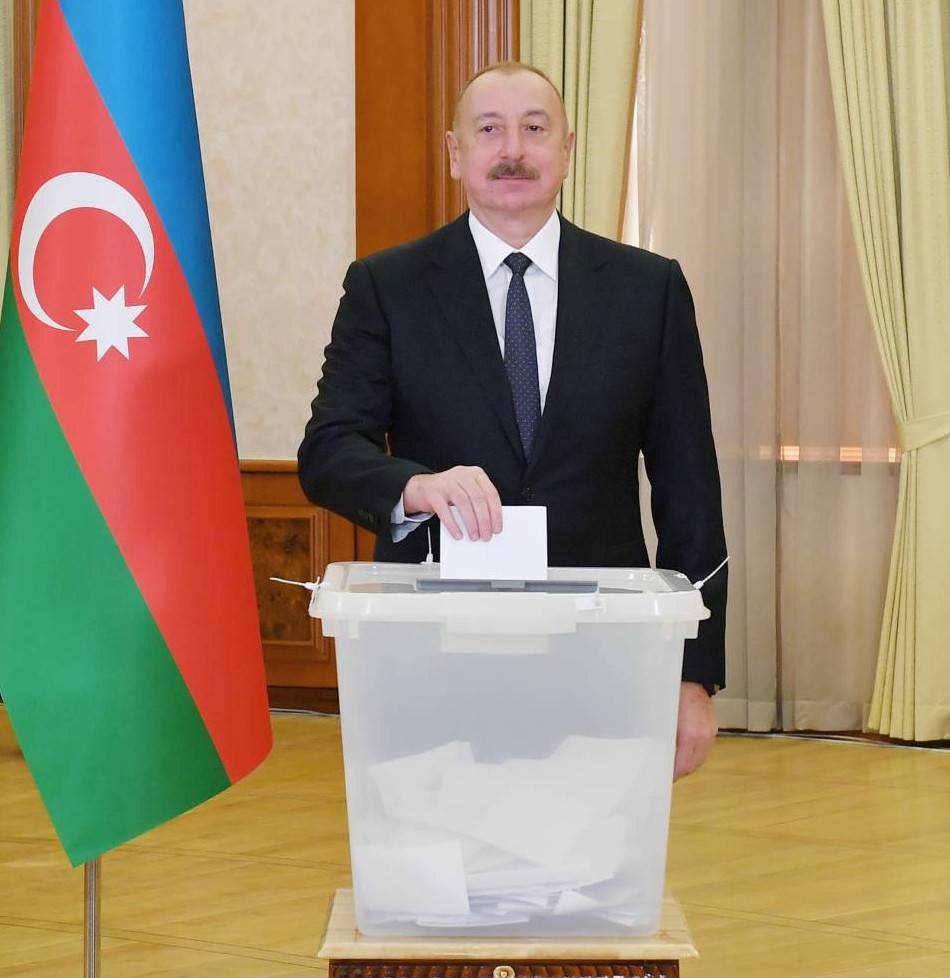
Seven candidates participated in the elections; Aliyev led with 4 281 625 votes. The electoral process, meticulously prepared and conducted by the Central Election Commission (CEC), was a demonstration of Azerbaijan’s commitment to democratic principles and its adherence to both national laws and international obligations. Notably, this was the first election conducted across the entire territory of Azerbaijan, including the liberated Karabakh region, highlighting the restoration of sovereignty and the unity of the nation.
After the corresponding decision by the Constitutional Court of Azerbaijan, the inauguration ceremony was held on 14 February 2024. The swearing-in ceremony was a profound declaration of Azerbaijan’s journey towards sovereignty, development and peace.
In his poignant speech at the inauguration ceremony, Aliyev expressed his heartfelt gratitude to the people of Azerbaijan, acknowledging their unwavering support over the years. “First of all, I would like to express my sincere gratitude to the people of Azerbaijan for once again placing great confidence and supporting me in the presidential election,” he affirmed, pledging to continue his dedicated service towards the comprehensive development of Azerbaijan and the unwavering protection of its territorial integrity.
President Ilham Aliyev’s leadership has been characterised by a steadfast resolve to overcome challenges and achieve significant milestones, notably the restoration of Azerbaijan’s territorial integrity — a promise he has made and fulfilled.
Looking ahead, Aliyev outlined the vision for a new era marked by further achievements and prosperity. He emphasised the significance of the recent elections, being the first conducted across the entire territory of Azerbaijan, including the liberated areas. “This is a historic event, and this historic event has a special place in our centuries-old history,” he stated, highlighting the symbolic importance of casting his vote in Khankendi and the broader implications for national unity and reconciliation.
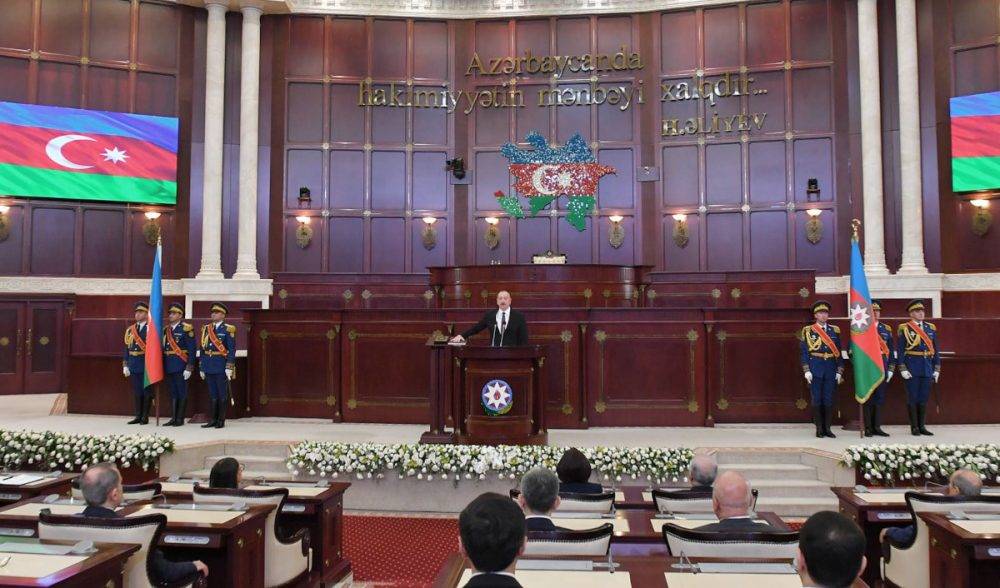
As Azerbaijan embarks on this new chapter, Aliyev’s speech underscored the themes of unity, resilience and forward-looking governance. He laid out a comprehensive agenda focusing on the restoration of Karabakh and East Zangezur, fostering a strong and inclusive national identity, and engaging proactively on the international stage to address global challenges such as climate change, neo-colonialism and Islamophobia.
The liberation of Azerbaijani lands, as recounted by Aliyev, was not just a military success but a historic restoration of justice and sovereignty. “Our territorial integrity had to be fully restored … we liberated a large part of our lands as a result of the Patriotic War,” he recounted, stressing the unity and determination of the Azerbaijani people in achieving this monumental goal. The president’s strategic and principled stance on the Armenia-Azerbaijan conflict, culminating in the decisive anti-terror operation, underscored his commitment to Azerbaijan’s sovereignty and the end of separatism within its territories.
The re-election of Aliyev and his inauguration mark not just the continuation of leadership but the beginning of a promising new era for Azerbaijan. With a clear mandate from the people, his vision for a united, prosperous, and globally engaged Azerbaijan sets the tone for the future. The dedication to fulfilling the aspirations of the Azerbaijani people, as echoed in his speech, serves as a guiding light for the nation as it strides confidently towards greater achievements and stability. The path ahead, illuminated by the principles of Azerbaijanism and the legacy of unity and victory, promises to usher in an era of unprecedented growth and harmony for Azerbaijan.
Put your body clock to rights:

The urge to sleep begins early in the day, from the moment that you first wake up and get out of bed. Shortly before you wake, your body releases a surge of hormones, including the stress hormone cortisol, which prepares you for the day. But waking also triggers the release of a chemical in the brain called adenosine.
Adenosine binds to receptors in your brain, slowing down brain activity. This suppression of brain cell activity is what causes the feeling of drowsiness.
The longer you are awake, the higher your adenosine levels rise. The higher the adenosine levels, the sleepier you get. Then, when you finally go to bed and sleep, the adenosine is broken up and disposed of.
If you are feeling sleepy and want to stay awake, you can, temporarily, block the effects of adenosine by consuming the world’s most popular psychoactive drug, caffeine. Caffeine binds to sleep-inducing receptors in your brain that would otherwise be occupied by adenosine — that’s why it wakes you up.
As you may have noticed, caffeine has very different effects on different people. There are some people, like my wife, who are really sensitive to caffeine. She only needs one cup to wake her up. Caffeine also hangs around in her system for much longer than it does in mine.
The reason you have to keep topping up your caffeine is that it is constantly being broken down by your liver. The average half-life of caffeine is around five hours, which means that, if you have a cup of coffee at 6pm, half is still running around your system at 11pm and a quarter is still there at 4am.
If you are sensitive to caffeine, you will still be feeling the effects of an afternoon cup of coffee in the middle of the night, lying awake and wondering why you can’t sleep.
But quoting average figures is misleading because some people break down caffeine much faster than others. The “average” half-life of caffeine may be five hours, but the range is actually 1.5 hours to nine hours.
If you are someone whose body breaks down caffeine especially slowly, you will still be feeling the effects of your morning cup of tea or coffee in the middle of the night. But, if you are naturally able to break down caffeine rapidly, then you can drink coffee in the evening without it disturbing your sleep.
Various things affect the half-life of caffeine in your body, including your gender, age, weight and any medication you are on. Taking the oral contraceptive pill will dramatically slow your liver’s ability to break it down. The biggest factor, however, is your personal genetics.

As well as the build-up of adenosine, the other major driver of sleep is your circadian clock. Deep in your brain there is a small group of cells called the suprachiasmatic nucleus (SCN). If I were to drill a hole between your eyebrows and carry on drilling into your brain until I hit the hypothalamus, and if I were then to stick an electrode down that hole, you would actually be able to hear the clock tick.
Oddly enough, your circadian clock doesn’t follow a day that is exactly 24 hours long. Some people’s clock runs fast, others’ runs slow. If you have a fast clock, then that means you are a lark — you like to get up early.
If you have a slow clock then you are an owl, someone who likes to stay up late.
The reason you don’t go completely out of whack is that your internal clock is reset every day by light.
Rays of light from the sun hit receptors in the back of your eyes that have nothing to do with vision but instead are linked to the SCN. The SCN then sends out signals to other parts of your body, including your guts, letting them know that a new day has begun, and it is time to get moving. It’s a bit like shouting at the kids, “Wake up, breakfast will be on the table in 20 minutes.”
Similarly, just as we like to have a warm house when we get up, the SCN raises your core body temperature before you wake, so you are ready to get going. It will also, in the early hours of the morning, switch off the production of melatonin — a hormone connected to your brain clock that is released when it gets dark to help tip you into sleep — and switch on the release of the stress hormone cortisol.
What makes things a bit more complicated is the fact that each of our organs has its own clock, which is linked to the main clock but not necessarily driven by it. The clock in your liver, for example, is not reset by light but by when you eat. This is important, because when your biological clocks get out of sync with the outside world, you are in trouble. Not only will you struggle to sleep, but you will get hungry, have problems controlling your blood sugar levels, feel run down and tired, and find it hard to concentrate.
Fortunately, you can retune your clocks and get your body back into sync with some relatively straightforward tweaks. These involve making sure you eat the right food, at the right time, and that you get exposure to strong enough light, again at the right time. That is what this book will help you do. Fix the clocks. Fast.
Europe’s claimed lead in the renewable energy transition offers Africa little to follow:

In a world starving for want of good news, the article by the Mail & Guardian’s climate and environmental editor, Ozayr Patel, “Europe records drop in fossil fuels. Africa should do so too” (18 February 2024), might appear to be just what the doctor ordered. Alas, the patient — the people of the Earth — remain on life-support. There is too much wish-fulfilment in Patel’s diagnosis of Europe.
Moreover, even if we were to allow the reality of a lead to follow, and thus the rationality of his invitation to Africa, it would be countered by the rationality of the much more powerful disorder (of which the European Union is part) designed to keep Africa in a state of perpetual dependency.
If only 2023 was the harbinger of a new Europe. Not only is it not, but Patel’s article forgets the preceding years, which strongly suggest that even if his information were to be correct, it would still make 2023 an anomaly. His delight, for instance, that wind energy surpassed gas energy for the first time is tempered by the fact that some countries — Germany in particular — are desperately scrambling for alternatives to Russian gas. As they are for alternatives to Russian coal. Hence, for instance, the 528% increase in EU coal imports from South Africa in 2022.
No less importantly, the halcyon days of renewable energy in Europe didn’t last long, although they might return soon, albeit in different public forms. In the early years, the growth of renewable energy and the falling costs of wind and solar energy seemed sufficient to make the transition from fossil fuels appear inevitable, as is argued in Transition in Trouble? The Rise and Fall of Community Energy in Europe. From this same source we learn that the transition relied heavily on state subsidies, mainly in the form of feed-in tariffs (FITs). The transition ended when energy companies added the costs of these FITs to user bills — public and business alike — which, in England, for instance, comprised about 20% of energy bills. The European Commission calculated that for 2012 alone FIT payments added €40 billion to the electricity bills of European users. Electricity bills were further inflated when utilities began recovering “system costs”, such as grid upgrades among others. The ensuing abandonment of FITs across Europe and elsewhere, as Transition in Trouble? notes, “compelled Europe to slam the brakes on the transition to renewables”.
Adding to these market woes are the political ones. Britain is experiencing pushback by both its Conservative and Labour parties against climate change. The EU, which is often seen as being in the vanguard of climate action, faces the rising popularity of the far right, with its explicit opposition to climate change measures. And the United States seems to be offering the possible return of Donald Trump, who rejects any climate change restrictions or costs on the US economy and has already rejected the Paris Agreement (weak though it is).
Regardless of whether Trump becomes the next US president, the mere fact that he might is a timely reminder that the transition from fossil fuels is heavily mined terrain.
Having been left unscathed by 27 previous annual United Nations Climate Change conferences (COPs), there was no need for any of them to lose any sleep in the build-up to last year’s. Being held in Dubai, a major centre of the oil kingdoms of the United Arab Emirates (UAE), was the best possible sleeping pill for those who still felt a bit anxious. And with COP 29 being scheduled to be held in Baku, Azerbaijan, another oil-rich centre, none of them should have any need for anxiety.
The Guardian’s headline and blurb capture the essence of what has happened: “Big five oil companies to reward shareholders with record payouts: BP, Shell, Chevron, ExxonMobil and TotalEnergies to distribute more than $ 100bn despite public outrage”. Contrary to Patel’s article, which claims that Russia’s invasion of Ukraine had nothing to do with Europe’s record drop in fossil fuels, The Guardian reports: “The bumper payouts followed a year of record profits for big oil and gas companies after Russia’s invasion of Ukraine upended global energy markets, triggering a rise in the international price of Brent crude and record gas prices across Europe.”
It is with good reason that Alice Harrison, a campaigner for Global Witness, noted: “The global energy crisis has been a giant cash grab for fossil fuel firms. … Instead of investing their record profits in clean energy, these companies are doubling down on oil, gas and shareholder payouts. Yet again millions of families won’t be able to afford to heat their homes this winter, and countries around the world will continue to suffer the extreme weather events of climate collapse. This is the fossil fuel economy, and it’s rigged in favour of the rich.”
None of this would be happening if that fossil fuel industry had any fear of their time being up.
The Guardian article further reminds its readers that in 2023 President Joe Biden approved an oil drilling project, which could lead to roughly 280 million metric tonnes of heat-trapping carbon dioxide emissions. His administration also took measure to expedite the approval of the Mountain Valley Pipeline, which could emit the equivalent of more than 89 million metric tonnes of carbon dioxide, while the UK government greenlit a huge oil drilling field in the North Sea and French company TotalEnergies continues to construct the 1 448km East African Crude Oil Pipeline, which would transport up to 230 000 barrels of crude oil a day.
And then there’s the government fossil fuel subsidies that amounted to $ 7 trillion globally or 7.1% of GDP in 2022, reflecting a $ 2 trillion increase since 2020 as a result of government support from surging energy prices. The subsidy is expected to grow to $ 8.2 trillion by 2030. EU subsidies were €123 billion in 2022, having been stable at about €56 billion (2022 prices) over the period 2015 to 2021.
As Dieter Helm, a professor of economic policy at the University of Oxford, observed: “These companies are investing a huge amount in new projects, and they’re handing out bigger dividends because they are confident that they’re going to make big returns. And when we look at the state of our current climate progress, who’s to say they’re wrong?”
The “Green Bishop”, Geoff Davies, in a recent article, made an impassioned plea: “To all those gathered in Davos — for Earth’s sake, invest in renewables and divest from fossil fuels.” The deaf had a better chance of hearing his anguish than those at Davos. Bob Dylan, in his Masters of War, asks:
“Let me ask you one question
Is your money that good?
Will it buy you forgiveness
Do you think that it could?”
Dylan personalises the making of money out of war because he doesn’t see that the making of money is the morality of capitalism. To those who buy into the system, the source of the money doesn’t matter. For most of them, it is sanctified as long as it’s legal. And it’s perfectly legal to invest in highly profitable companies that just happen to make instruments designed to kill.
But in this respect they are little different from other products known to kill, if only indirectly. Cigarettes, liquor, opioids, cars that kill by being designed to break national speed limits by many multiples and the continuing Boeing disaster come immediately to mind.
Do capitalists want to kill humanity … and themselves?” The evidence suggests that this question is not asked when the choice is the immediate likelihood of “making a killing”.
The Copenhagen COP 15 of 2009 is recognised as being particularly good. Among the main reasons for this accolade was the commitment by the rich nations to mobilise $ 100 billion by 2020. They failed to do so in 2020 and 2021, although they reportedly achieved the target in 2023, 13 years after the commitment. The Paris COP 21, of 2015, widely considered to be the most decisive of all UN attempts to tackle climate change, extended the pledge to an annual one of $ 100 billion until 2025. But this $ 100 billion — even if met — is tiny compared to the roughly $ 2.4 trillion a year the Organisation for Economic Co-operation and Development says is needed, beginning in 2026. Moreover, loans rather than grants make up two-thirds of the pledges in 2021. Loans add rungs to the chain debts already burdening the many countries held hostage by the lenders, whether private or public.
The much-vaunted loss and damage pledges made at COP27, in 2022, fare no better. Some $ 661.9 million has been promised by 24 January 2024 to help vulnerable nations recover from climate-related disasters. France, Italy, Germany and the UAE were the largest contributors, each pledging at least $ 100 million, with the US promising a paltry $ 17.5 million. These amounts are dwarfed by the estimates made by various reputable organisations, which put the annual costs of climate-related damage at $ 100 billion to $ 580 billion globally, with a recent study putting the figure at more than $ 400 billion a year. Using the latter figure, this means the loss and damage pledges cover just 0.165475% of the annual losses from climate disasters. Moreover, as The Guardian article points out, the UK’s $ 75 million pledge is neither new nor additional; it was taken from an existing and recently downgraded climate finance pledge. Loss and damage are government pledges.
Trump does sometimes expose the hypocrisy behind the world leaders whose non-actions on climate change expose their claims about accepting the science of climate change. Trump’s reasons for the US withdrawal from the Paris Agreement — hobbling, disadvantaging and impoverishing the US economy — are among the unspoken reasons for the UN’s 52-year failure to take any meaningful action against climate change, for they are burdens on all major economies. Trump’s words additionally give voice to the largely unspoken organic link between the political and economic leaders of the nations of the world.
A few numbers give perspective to the paucity of government pledges when it comes to climate change. Compared to the US pledge of $ 17.5 million to the UN’s Loss & Damage Fund, the US made available:
- A staggering $ 1.537 trillion for its military, in 2022;
- About $ 300 billion (adjusted for inflation) in total economic and military assistance to Israel since 1948. Most of the aid — about $ 3.8 billion a year — is provided as grants.
- An additional $ 14 billion available for Israel’s current war against the Palestinians trapped in Gaza, notwithstanding the International Court of Justice’s ruling that Israel’s actions are a prima facie case of genocide. This is more than three-and-a half times what the US sends to Israel in a normal year.
In contrast to Britain’s deceptive Loss & Damage pledge of $ 75 million:
- It has pledged Ukraine £12 billion in support since February 2022.
So, what are the lessons for Africa?
The problem is not that international trade is inherently opposed to the needs and interests of the poor but that the rules that govern it are rigged in favour of the rich,” our former minister of finance Trevor Manuel noted in 2005.
Indeed, the whole architecture of the relationship between the countries of the world is “rigged in favour of the rich”. The classics in this genre are Andre Gunder Frank’s The Development of Underdevelopment (1966) and Walter Rodney’s How Europe Underdeveloped Africa (1972).
This rigging, even before the possible second coming of Trump, has already brought “The Fastest Warming on Earth.” Growing numbers of people are chanting the slogan: system change, not climate change. Yet there is an urgent need for the addition of many more voices. We face the reality of the end of humanity being more comprehensible to (most) politicians (and capitalists) than the end of capitalism. Humanity is fast running out of time to stop this madness.
The question is whether enough of us will take action before it’s too late to stop the tipping point being reached of unstoppable climate change. Might the wake-up call be a reminder of Trump’s tweet that: “The concept of global warming was created by and for the Chinese in order to make US manufacturing non-competitive.”
The political protection of their own national economies and its competitiveness guarantees the continuation of climate change, until enough of us worldwide say: Enough! No more!
Jeff Rudin is at the Alternative Information and Development Centre in Cape Town.
Submit and get free exposure here: Showcase Your Business | Advertise Your Special Offers.