
A photobomb too far as Duma seizes the moment – and the Rugby World Cup:

Thursday.
Another day, another drama in the kingdom.
The fur is flying on this occasion over the decision by KwaZulu-Natal’s apprentice premier, Siboniso Duma, to overshadow the incumbent, Nomusa Dube-Ncube, instead of shadowing her.
Duma, KwaZulu-Natal’s ANC chairperson and leader of government business, stole Dube-Ncube’s limelight and hoisted the Rugby World Cup trophy aloft at the Durban City Hall during the Springboks’ victory tour.
Since then, Duma has had a rough week.
Not as rough a week as the Democratic Alliance’s (DA’s) shadow minister for social development, Ghaleb Cachalia, had last week.
Duma is Dube-Ncube’s boss in the ANC so she can’t fire him or banish him to the back benches like John Steenhuisen did with Cachalia over his comments about the genocide in Gaza — but a rough week nonetheless.
Duma has been taking hits for using his political seniority — and height advantage — over the premier and grabbing the trophy for himself while Dube-Ncube stood next to him looking embarrassed and uncomfortable.
It’s been a long time coming.
Duma has been marking the premier since Dube-Ncube was appointed last August, popping up on government podiums around the province to remind her — and the rest of us — that it was him who was elected ANC provincial chairperson.
The political apprenticeship was intended to allow Duma to familiarise himself with the provincial cabinet ahead of a move to (hopefully) become its number one citizen after next year’s elections, while calling the shots, politically speaking, from Seme House.
But rather than simply tagging along and learning the ropes, Duma appears to have chosen to outshine his principal, seizing the moment, the microphone — and even the World Cup — in the process.
A photo bomb too far.
The ANC Women’s League has weighed in on the matter, calling Duma out and sparking an ugly spat with the provincial party leadership that was unavoidable, inevitable and entirely of its own making.
The premier says she is unfazed, but the flare-up highlights the tensions in the ANC in the province, not just along factional lines but in terms of having two centres of power, one in the premier’s office, one in ANC headquarters.
The problem won’t go away, or at least until after elections, when Dube-Ncube’s term as premier — and Duma’s as her shadow — end.
It’s election time, so the would-be Western Cape secessionists are at it, once again advocating a break away from the Republic.
Cape secession is one of the hardy perennials of South African politics that pops up ahead of every national and provincial election.
After a little bit of media sustenance, it shows brief potential of flowering, but then withers and dies — until the next voting cycle comes around.
Emboldened by the 11 votes they received the last time South Africans went to the polls, the proponents of Cape independence are in the process of launching the Referendum Party to contest the coming elections.
The Referendum Party wants to turn the Western Cape into a separate country — an Oranje by the Sea, so to speak — although there are many here among us who believe that it has been another country since the DA took control of the province in 2009.
They reckon the party can force the DA to hold a referendum on Cape independence after the next elections — the first step towards a break away from South Africa and the declaration of an independent Western Cape.
They clearly haven’t spoken to Steenhuisen lately.
John wants to take over the country next year, rather than break away from it, so the chances of the secessionists getting much of a hearing from the would-be anchor tenant of a moonshot coalition after the elections are a tad slim.
They would be better served by convincing the rest of us in the Republic — and the ANC — of the benefits of voting to get rid of the Western Cape, than by trying to strong arm the DA into backing a breakaway.
Cape Town is already so overpriced that a visit there costs as much as — and feels like — a trip abroad, so it might not take all that much convincing on their part to win the comrades — and the rest of us — over.
Excising the Western Cape from the voters’ roll will also work wonders for the ANC’s national parliamentary majority, given the province’s current contribution to the proportional representation totals, so that’s another positive to sell Luthuli House.
Who needs an ocean that’s too cold to swim in, curry with dried fruit in it and an unhealthy Karen to citizen ratio?
All of a sudden Cape succession doesn’t sound that bad after all.
The post A photobomb too far as Duma seizes the moment – and the Rugby World Cup appeared first on The Mail & Guardian.
Medical cover companies up their game in competitive market:

Healthcare cover is a very personal choice
Despite this country having a plethora of medical aid and health insurance products on the market, well over 80% of the population still has no form of medical cover and is absolutely dependent on the public health system. This is not surprising considering that South Africa’s unemployment is the highest in the world, with 32% of employable people without jobs and joblessness a problem compounding every year. Medical aid is a luxury item, and even those who can afford it view it as a grudge purchase.
New medical policy and insurance offerings are constantly being developed – all claiming affordability and health security.
There can be some confusion around medical aid hospital plans and hospital insurance. Hospital insurance may be cheaper in terms of the monthly contribution than medical aid hospital plans, but it is most definitely not the same product offerings provided by medical aids and regulated and overseen by the Council of Medical Schemes (CMS). Hospital or medical insurance includes health insurance, hospital cash back plans and gap cover. Hospital insurance is not part of a medical aid and is governed by the Financial Services Board (FSB).
“We believe hospital insurance should be complementary to medical aid, not a substitute,” says Lee Callakoppen, principal officer of Bonitas Medical Fund. “Gap cover is an additional insurance cover that complements medical schemes. It helps to pay the difference in cost between the amount the specialist or hospital charges and the amount paid by a hospital or medical plan. You will be required to co-pay any shortfalls, after which you may claim from your gap cover, but gap cover can only be used if you are on a medical aid.”
Essentially it is about who needs what kind of cover, when; considering such aspects as pre-existing conditions, life stages such as single or with dependents and degree of disposable income. Those searching for the most appropriate cover need to consider what will be covered, whether premiums will remain affordable, what schemes will help members to handle life’s knocks keep policies going and cover waiting times. Having medical aid and medical insurance running concurrently is perfectly legal.
Proactive member management
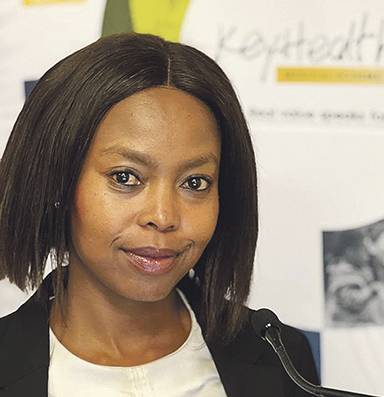
Medical cover companies, like Keyhealth Medical Scheme and Bonitas, have both come up with innovative healthcare options, which keep them competitive in this market. Both have plans at different levels of cost and offering different levels of cover, but both have also embarked on a more proactive approach for their members, with managed care benefits.
Bonitas has recognised that over the years the prevalence of non-communicable diseases, such as diabetes and hypertension, has increased year-on-year – further compounded by the increased burden of mental health, which is an added risk factor.
“One of the key insights we have noted is that mental health prevalence is at an all-time high,” says Callakoppen. “This is exacerbated by factors such as an increased economic burden and increased psycho-social challenges, such as load shedding.
“We have seen a 25% increase in the number of mental health hospital admissions, indicating a need for additional support. This need is particularly high in the 18 to 44 age groups. We further noted that mental health was a key driver for absenteeism in corporate groups.
“For this reason, we have included the Bonitas Mental Healthcare Programme across all plans for 2024 and included depression as a chronic condition. We also offer access to Panda, a digital platform available through the Bonitas app, giving members easy access to expert help, mental health information and community support.”
Being hospitalised can also be a contributing factor to poor mental health and Keyhealth has introduced its hospital@home option. The company consistently monitors its high-risk members, specifically those with chronic conditions, and if there is any negative change in a person’s condition, instead of the person going in and out of hospital over a period of days, an intervention can be made if the environment is suitable and a ‘hospital’ set up at the person’s home, where there is 24-hour monitoring and visits by doctors, nurses and therapists.
“This also means that a patient is not exposed to potential hospital complications,” explains Boitumelo Ndembe, Keyhealth’s clinical specialist. “Our cover also extends into palliative care.”
Both medical aids have partners with walk-in and virtual platforms for their members. Technology is a core component to help their members and they invest heavily in apps and constant improvements.
Their research has identified various healthcare trends and needs and thus both are ensuring these are met by adjusting their respective plan benefits and enhancements as they move into 2024.
“Our new members are 13 years younger than the average, which means we have succeeded in attracting a younger, healthier profile,” says Callakoppen. “We attribute this to offering a diversified product range from hospital plans to network options and Edge plans – the latter aimed at new entrants to the workplace, economically active singles or couples, aged between 18 and 35 and driven by technology and ease of access through virtual integration and digital interventions.”
Posed the question of whether they had limitations in terms of choice of service providers, Callakoppen replied: “In South Africa, healthcare providers are free to charge patients any tariff they see fit. However, with the economic pressures faced by consumers, funding is usually in short supply.
“Through engagement and collaboration, we have implemented partner networks at the most favourable tariffs for our members so that they can avoid out-of-pocket expenses and get more value from their medical aid. This applies to GPs, medication, dentistry, optical, specialists and hospitals and the discounted tariffs can reduce or eliminate co-payments.”
Flexibility promoting choice
“We don’t believe in the notion of dictating a service provider, because this deters the patient from seeking care,” says André Young, chairman of Keyhealth Medical Scheme. “If a scheme doctor is unavailable for a consultation, patients still need to be able to seek treatment as soon as possible, otherwise this drives up the number of emergency room consultations.
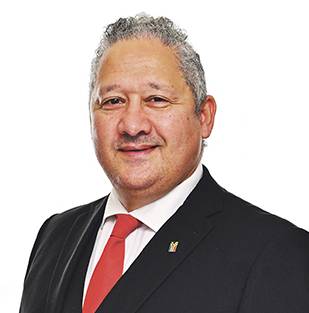
“We are only fairly specific on hospital service providers, however, we are still flexible because we appreciate that certain hospitals are not necessarily accessible in different regions, so members still have choice. Where a specialist hospital is required and our network cannot provide such services, this option is also covered.”
Both companies have increased emphasis on preventative screening, care and monitoring, including wellness checks and health risks assessments. They have also enhanced their different plans for cover for family dependents, such as including the cover of newborns and increasing child-dependant ages.
“We’ve also taken great care to expand our preventative care benefits like including the Human Papilloma (HPV) vaccine on all plans to help prevent cervical cancers,” says Callakoppen.
Virtual healthcare
“Our strategic focus is to enable and advance primary access to healthcare, promoting well-managed, holistic healthcare to encourage healthier patients,” continues Keyhealth’s Ndembe. “For those members with chronic conditions, these need to be managed to ensure that they are compliant to medication and other health regimens. Through members using our virtual healthcare platform, we have access to detection of chronic condition changes and can then put interventions in place.
“We believe in active disease management and through collecting biometric data from patients with chronic conditions, we can ascertain if the patient is on the correct treatment or uncompliant with a treatment. This helps us to engage with the diagnosing doctor, hospitalise and stabilise the patient or consider alternative treatments – and this is not an additional cost.
“We are seeing an increase in cancer, with younger people being diagnosed and this makes it important that benefits are structured to allow for sufficient pre-screening. Partnering up with innovators and innovations in primary healthcare means we can catch conditions earlier, which makes them easier to manage.”
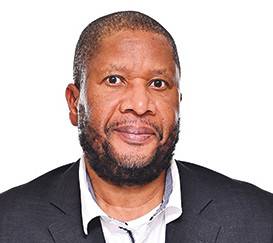
Patrick Masobe, Keyhealth’s CEO, says affordability plays a major role in choice of cover: “Healthcare is expensive and can drive the decision around paying tens of thousands out of pocket or having to seek treatment at a public health facility. We try and stay as adaptive as possible so that our members have the best possible care that they can afford.”
“Health and wealth go hand in hand. We appreciate that many of our members, and South Africans in general, are faced with increasing financial pressures. We have taken great care to balance our benefit enhancements and package options to provide quality healthcare to our members, while still ensuring that contributions remain affordable,” concludes Callakoppen.
For more details, visit Bonitas Medical Aid or Keyhealth Medical Scheme.
The post Medical cover companies up their game in competitive market appeared first on The Mail & Guardian.
Poppy Day: When did we forget to remember?:

In November each year a two-minute silence is observed at 11am on the 11th day, the exact hour, date and month on which hostilities in World War I ceased.
In South Africa, this simple act of remembrance seems to be mainly observed by diminishing numbers of veterans organisations, due in no small part to it being seen by many as a historical overhang from a colonial past.
Remembrance of soldiers who died in battle is a recent phenomenon in the long history of war. In contrast, there are many monuments to military leaders and their victories ranging from ancient Roman triumphal arches to Nelson’s Column in Trafalgar Square.
The rank and file of armies that fought each other were mostly made up of the forgotten members of society often press-ganged into the armed forces. War was also something that happened far away from the home front and casualties numbered in the thousands rather than in the millions.
World War I changed all of that. Many of those who died in battle were volunteers, including from the educated middle and working classes. The sheer number of dead, who were killed by modern weapons of mass annihilation, meant that no household was left untouched by death or injury.
The scale of the dead was such that it was impractical to return their bodies to their loved ones and mass neglected graves were no longer acceptable to a modern society. And so commenced a system of documenting the war dead and marking the graves of soldiers. By the end of World War II, the standard of identifying and remembering those that died in war would be set for generations to come.
South Africa’s role in the memorialisation of the war dead is not insignificant. Although the number of South Africans who died in World War I pales in comparison to that of the main combatants, South Africans did not escape the wholesale slaughter that characterised the Western Front, which is epitomised in the battle for Delville Wood.
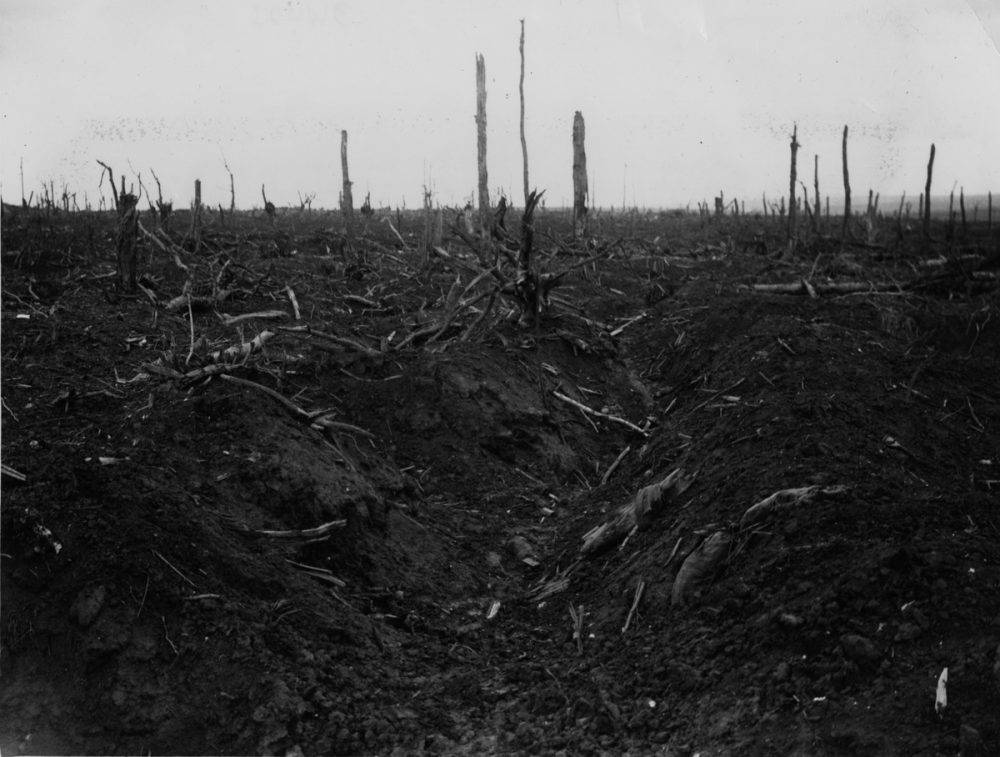
Early on the morning of 15 July 1916, about 3?000 officers and other ranks of the 1st South African Infantry Brigade were massed on the edge of Delville Wood, near the village of Longueval in the Somme Valley region of France. Two weeks earlier, on 1 July, hundreds of thousands of British, French and soldiers of the then British Empire had commenced a large-scale attack on entrenched German and Austro-Hungarian forces along a 24-kilometre front on both sides of the banks of the Somme River.
This Somme offensive was designed to relieve the beleaguered French forces at Verdun and break the stalemate that had prevailed on the Western Front from the end of 1914.
Led by Lieutenant Colonel William Tanner under direction of Brigadier General Henry Lukin, the South Africans had been ordered by the British High Command to take and hold the one square kilometre Delville Wood “at all cost”.
At first the South African forces encountered little resistance advancing into Delville Wood and, by 2pm on 15 July, Tanner reported that all but a heavily defended northern corner of the wood had been captured. Anticipating a German counter-attack, Tanner ordered his men to dig trenches from which to defend their positions.
But it soon became clear that this would be virtually impossible because of the heavy undergrowth and root systems of the oak and other trees that made up Delville Wood. The tragic results of not being able to properly entrench themselves became apparent when the first of many German bombardments were aimed at the easily identifiable target of Delville Wood in the middle of surrounding open fields.
Persistent German counterattacks, each preceded by a bombardment, were staved off, often with savage close quarter fighting. The 16th and 17th of July passed much in the same way. By 18 July, the German forces, unable to dislodge the exhausted South African troops, intensified the bombardment of the wood. From 8am until 7pm on 18 July, German artillery fired thousands of high explosive and gas-filled shells and reduced Delville Wood to the moonscape, typical of many photos of the Western Front. At times 400 shells a minute were falling on the hapless South Africans.
Heavy shelling and control of most of the surrounding area by German forces limited the ability of the Allied forces to relieve the South African position and evacuate the wounded. Tired and exhausted, many troops even fell asleep during the deafening bombardments.
The German counter-attack, following on from the bombardment of 18 July, resulted in most of the gains of 15 July being reversed and the South African troops pushed back to the southern corner of the wood. On 20 and 21 July, the remaining South African troops were relieved by replacement British forces.
The battle for what was left of Delville Wood and surrounding area would continue until 3 September, when Allied forces finally gained control of the area.
Of the 3?143 South African troops who fought in and around Delville Wood, only 29 officers and 751 other ranks answered the roll call on 21??July, the balance being listed as killed, wounded or missing. Those who walked away from the battlefield included Private William Faulds, who was awarded the Victoria Cross after rescuing wounded men on successive days from no-man’s land.
At the end of the battle only one tree remained relatively intact in Deville Wood, and survives today. Three crosses were crafted from the broken trees and returned to South Africa, one of which weeps resin every year on the anniversary of the battle.
The death and destruction experienced at Delville Wood was replicated thousands of times during the Battle of the Somme. At the end of the campaign, one million soldiers from both sides lay dead or were wounded and the total Allied advance measured just 10 kilometres at its furthest point.
The task of identifying and burying the war dead was not administratively advanced at the beginning of World War I.
This Herculean task fell to a volunteer Red Cross unit leader, Major General Fabian Ware. Ware, who had spent time in South Africa as an administrator shortly after the Second Boer War, was horrified by the numbers of unidentified bodies and graves of soldiers who died in the field. His fledging Graves Registration unit would eventually expand and become what is now known as the Commonwealth War Graves Commission.
Vast tracts of land were secured for burials in France and Belgium. It was decided that these soldiers were better honoured by being buried next to their comrades at the scene of the battle where they fell.
A decision was also taken that men and women of all ranks would share the same simple white headstone. The headstones of those who could not be identified are marked simply as “A soldier of the Great War, known unto God”, an epitaph suggested by Rudyard Kipling, whose own son, Jack, was killed on the Western Front.
To memorialise the hundreds of thousands of the “missing”, imposing structures were constructed on the sites of significant battles. Designed by the leading architects of the time, such as Herbert Baker and Edwin Luytens, these memorials bear the names of the thousands whose bodies have never been found, vaporised in the intense shelling or buried deep in the mud of trenches and fields.
Luytens, whose first war memorial was the Rand Regiments Memorial in Johannesburg (dedicated to casualties of the Second Boer War), was also the designer of the Cenotaph in London, which was to become the United Kingdom’s official war memorial.

The ground on which the Delville Wood cemetery is located was secured by Percy Fitzpatrick (he of Jock of the Bushveld fame) and handed to the South African government. Herbert Baker designed the first memorial to the fallen at Deville Wood, which was unveiled in 1926, replicas of which stand at the Union Buildings and the Company’s Gardens in Cape Town.
Deville Wood itself was restored to its original footprint and replanted from trees grown by the Kirstenbosch National Botanical Garden. Two rows of oak trees line the long grassy avenue from the graveyard to the memorial. Each of these oak trees was cultivated from acorns collected from the same tree that had germinated from one of the six acorns that French Huguenot Jean Gardiol had brought to South Africa in 1688 from France.
In 1986, on the 70th anniversary of the battle, a further memorial in the shape of the Castle of Good Hope in Cape Town was added behind the original memorial.
During World War I, a two-minute silence had been observed sporadically in churches in South Africa, including those attended by Percy Fitzpatrick. In Cape Town, the mayor, Sir Harry Hands, whose son had also been killed on the Western Front, initiated a daily two-minute silence signalled by the firing of the noon day gun on Signal Hill for a full year from 14 May 1918 to 14 May 1919.
One minute of the silence was a time of thanksgiving for those who had returned alive, the second minute was to remember the fallen. As the city fell silent that first day, a bugler sounded the Last Post, and the Reveille was played at the end of the pause.
In 1919, Fitzpatrick, struck by this simple act of remembrance, petitioned King George V to formalise a two-minute silence to be observed each year on the anniversary of the end of World War I. As a result, the king invited all Commonwealth countries to observe an annual two-minute silence on Armistice Day (also called Remembrance Day and Poppy Day, commencing on 11 November 1919.
A copy of King George V’s letter can be seen in the Ditsong National Museum of Military History in Saxonwold, Johannesburg.
This act of remembrance now encompasses the remembrance of those who died in subsequent wars.
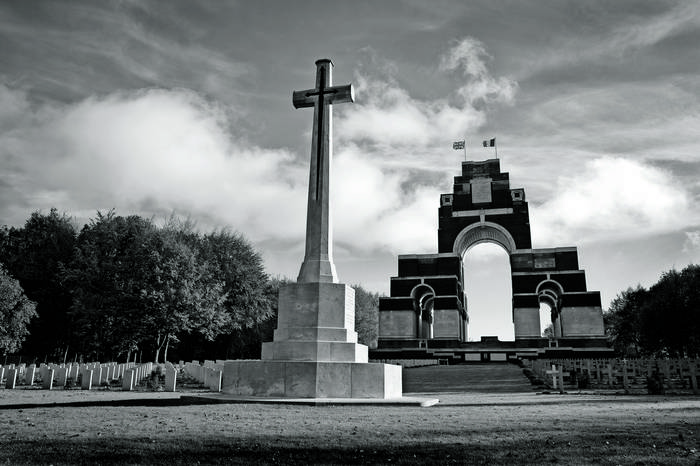
While Deville Wood is the most iconic battle of South African forces in World War I, much criticism has rightly been levelled at the failure of successive South African governments to recognise the achievements of South Africans of other races who volunteered to serve in that war, including members of the South African Native Labour Corps who volunteered to join the Union Defence Force. When the SS Mendi was accidentally rammed and sank near the Isle of Wight, 607 of the non-combatants lost their lives.
Today the Delville Wood memorial commemorates all the fallen of the wars since World War I, including the Korea War, the South African Border War and the internal conflict.
South Africa was not alone in failing to commemorate all of its war dead. In 2022, the Commonwealth War Graves Commission report noted that hundreds of thousands of Commonwealth casualties from World War I, mostly African and Middle Eastern, were not commemorated by name, or at all, blaming pervasive racism and contemporary imperial attitudes.
While the passage of time may explain why the war dead from these global conflicts are no longer remembered, the reason for the muted remembrance of the war dead from more recent conflicts, such as the border war, is perhaps explained by the fact that the dead are tarred with the same brush as those who sent them to war. But to do so is to not know why soldiers fight and how they die.
Over the centuries, ideology or religion may be the reason soldiers are sent to war, but it is not why they fight or die. Ask any conscript in the South African Defence Force (1957 until 1994), of whatever political persuasion, where they would rather have been, it would not have been serving in the SADF. Ask any soldier why they fought, they will tell you they did so because they did not want to let their buddies down.
Ask any soldier who survived how his fellow soldiers died, they will tell you they died screaming for their loved ones or asking for someone to hold them for one last touch of comfort as their life slipped away. No one died in battle shouting praises for the regime that sent them to war.
The act of remembrance is also misconstrued as an act of celebration of war. But you need only watch any Remembrance Day service to know that this is not true. The act of remembrance is about the recognition of the futility of war and mourning the loss of men and women whose future ended too soon in the face of inhuman circumstances.
Next year, a memorial to the South African Native Labour Corps will be unveiled in Cape Town and the opportunity presents itself for civil society to participate in the act of remembrance and reconciliation in an ever increasingly divided society.
What better advocate for peace and humanity can there be that once bitter enemies stand together for two minutes of silence to remember the human cost of conflict?
As poet Laurence Binyon wrote in To the Fallen, “At the going down of the sun and in the morning/ We will remember them.”
This is an updated version of an article first published online in the Mail & Guardian on 24 January 2022. Shaun Read is the founder of Read Advisory Services.
The post Poppy Day: When did we forget to remember? appeared first on The Mail & Guardian.
Submit and get free exposure here: Showcase Your Business | Advertise Your Special Offers.
