‘A state of nothingness address’:
Even before he stood on the podium to give his State of the Nation address (Sona), many opposition parties had already given President Cyril Ramaphosa the thumbs down, with the official opposition uMkhonto weSizwe (MK) party calling out what it deemed his failure to deliver on most promises made over the past eight years as South Africa’s leader.
“This is a waste of time. It is a state of nothingness address. He has not delivered anything in the [nine] Sonas he has delivered,” MK national spokesperson Nhlamulo Ndhlela told the Mail & Guardian.
“Tell me about one infrastructure project he has completed during his tenure. What has Cyril launched that he started? Give me one building that Cyril has opened for public service that he initiated from scratch.”

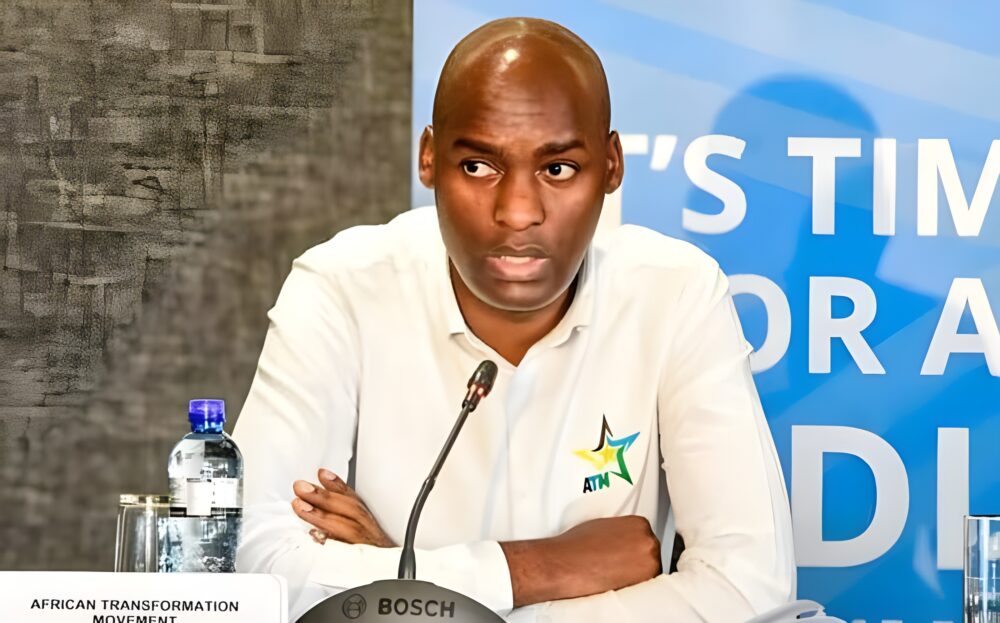
African Transformation Movement (ATM) president Vuyo Zungula was equally scathing, saying years of government failure meant South Africa was not a capable state.
“Since 2018, we have been fed grand promises — a bullet train, a university in Ekurhuleni, a smart city — yet none of these have materialised. Instead, the country is deteriorating before our eyes,” Zungula said.
“Communities in Midrand, at the heart of economic activity, are queuing for water from trucks like refugees in their own country. This is not progress; it is regression.”
Ramaphosa continued to sign off on public-private partnerships (PPPs) while the state abdicated its responsibility to deliver basic services,” Zungula said.
“After nearly eight years in office, excuses have run out. What remains is failure. I cannot ignore the collapse of safety and security under this administration. We are witnessing mass murders almost daily, yet instead of strengthening policing, intelligence and community safety, the president chose to centralise state security in his own office.
“South Africans are not safer. They are more fearful. Every credible metric used to assess governance, service delivery, infrastructure, safety, economic growth and state capacity points to one conclusion.”
He added that Ramaphosa’s presidency has failed and that the gap between speeches and reality grows wider each year.
“I therefore do not listen to Sona to be inspired by words but to measure accountability. By that measure, this president has failed to improve the lives of South Africans and has overseen the steady decline of the country since taking office.”
Sona has become a ritual of MPs “dressing in their matric dance outfits”, made more intolerable by a government of national unity (GNU) that “claps like well-trained seals while Ramaphosa continues to run the country down a path of failed delivery, joblessness and unchecked lawlessness”, ActionSA chairperson Michael Beaumont said.
Inkatha Freedom Party (IFP) chief whip in parliament, Nhlanhla Hadebe, whose party is in the national coalition government, said while there has been measurable progress on certain commitments made during last year’s speech, several critical areas still require urgent and sustained intervention.
“We note modest improvements in the economy, including an uptick in quarterly GDP figures driven by a stabilising energy supply and improved export volumes. Additional positive indicators include South Africa’s removal from the grey list, relatively steady interest rates and gradual economic recovery,” Hadebe said.
“Progress has also been observed in the upgrading of key national road corridors, including sections of the N2 and N3, as well as the rehabilitation of rural bridges in KwaZulu-Natal and the Eastern Cape. The IFP further commends the government’s acceleration of the long-overdue review of the 1998 white paper on Local Government.
“This process is critical to ensuring that governance frameworks reflect current realities, including the reassessment of municipal funding models, the role of traditional leadership and the strengthening of accountability mechanisms for dysfunctional municipalities.”
To get South Africa back on track, a coordinated water security plan is needed, Rise Mzansi said.
In a statement ahead of Ramaphosa’s speech, the party said close to 50% of potable water is wasted due to crumbling infrastructure. Cities, towns and villages are without water, which violates one of the most basic human rights.
It said more should be done to give municipalities the capacity to keep people and property safe.
“Both people and property are unsafe. Communities cannot rely on the police and local authorities turn a blind eye to the enforcement of by-laws. Moreover, public infrastructure is routinely damaged and stripped,” it said. “Better coordination between the [South African Police Service] and local law enforcement is needed.”
The party noted that over 100 municipalities are operating on unfunded budgets and owe creditors — particularly Eskom and water boards — high amounts of money, creating a cycle of dysfunction where municipal funds are spent on paying debts rather than advancing service delivery.
“This punctuates the need to accelerate funding reform for local government. Furthermore, municipalities need to be centres of excellence where capable and ethical technocrats and bureaucrats are given space to make the right decisions, not politically motivated ones,” it said. “Municipalities must move away from manual processes and embark on digitisation. This will improve efficiency and eliminate opportunities for nefarious human intent. Moreover, the Investigating Directorate Against Corruption (IDAC) and the Hawks [Directorate for Priority Crime Investigation] must act swiftly to remove corruption from local government.”
South Africans are facing a deepening national crisis marked by weak economic growth, persistently high unemployment — particularly among the youth — rising violent crime, deteriorating public services and a growing disconnect between political leadership and the lived realities of ordinary citizens, the United Africans Transformation party said.
“It has been far too long that the president presents plans without providing a full and transparent report on what the state has actually delivered since assuming office. South Africans are entitled to a clear account of performance, not promises.”
It said South Africa’s deepening inequality could not be meaningfully addressed without confronting the persistent lack of land access and the continued failure of land restitution. Decades after democracy, millions of black South Africans remained landless and excluded from productive land, secure housing as well as participation in agriculture and spatial economic development, the party said.
The hits and misses under the GNU:
A year after President Cyril Ramaphosa delivered his inaugural State of the Nation address (Sona) as the head of South Africa’s first national coalition government, the record of its performance is a mix of hits and misses.
For the first time since 1994, the ANC had lost its outright majority and entered into a government of national unity (GNU) with former rivals, among them the Democratic Alliance, signalling that it was no longer going to be business as usual and giving hope to many that there would be more accountability.
The arrangement was presented as a reset, a signal that the country could move beyond entrenched partisanship toward collaborative governance. It promised stability and accelerated reform, setting an explicit economic target to lift GDP growth above 3% a year.
Ramaphosa pledged to end load-shedding, revive infrastructure investment, create jobs and intensify the fight against corruption.
A year after the promises were made, the outcomes are mixed — measurable gains in some areas and unfinished reforms or outright missed targets in others.
The country absorbs this week’s Sona against that balance sheet.
The coalition government framed growth above 3% as essential to reducing unemployment and restoring fiscal health, yet the target was not met. The International Monetary Fund (IMF) estimates South Africa’s economic growth at just 1.3% in 2025 and 1.4% in 2026, not sufficient to significantly reduce structural unemployment.
On the plus side, revenue collection improved in 2025 relative to 2024. The South African Revenue Service recorded a net tax intake of about R1.855?trillion for the 2024/25 fiscal year, roughly R114?billion more than the previous year and nearly R8.8bn above revised government estimates. The treasury attributed the outperformance to improved compliance and administrative reforms.
This week, the IMF mission chief for South Africa, Delia Velculescu, noted gradual economic improvement and stronger institutional frameworks, with economic activity expected to improve and inflation to converge on target but said structural impediments, such as weak infrastructure and rising public debt, remained significant barriers to more rapid growth.
In a statement on Wednesday at the conclusion of annual Article IV consultations with Pretoria, the IMF executive board embraced the country’s macroeconomic stability under the GNU but warned that long?standing constraints continued to limit the potential to generate higher, inclusive growth.
“Directors welcomed ongoing electricity and logistics reforms aimed at removing critical impediments to growth through higher private?sector participation and encouraged their resolute implementation.
“They supported additional reforms to improve the business environment, strengthen governance, combat corruption, improve the flexibility of the labour market, address spatial disparities and deepen trade diversification,” the statement said.
The IMF said South Africa’s post-pandemic recovery had also been hampered by repeated global shocks and domestic challenges, among them, more recently, increased protectionism, fragmentation and global trade policy uncertainty.
But because of its ample natural endowments, independent institutions and strong monetary policy framework, the economy has proven resilient thus far.
Energy reform, positioned as the foundation for economic recovery, offers a mix of good and bad.
Ramaphosa committed to implementing the Energy Action.
In his speech on Thursday, Ramaphosa said the GNU had helped to stabilise the country’s economy after years of stagnation, load shedding and investor uncertainty.
He said the GNU isn’t just a political compromise but a constitutional duty rooted in dignity, equality, non-racialism and non-sexism, and argued that collaboration within the GNU has reduced political uncertainty and restored credibility at home and abroad.
Ramaphosa emphasised that the country’s strength comes from its people’s tolerance, generosity and solidarity, and warned that progress could falter without unity, discipline and mutual respect, urging South Africans to “march in one line” despite their differences in order to sustain economic momentum and national cohesion.
Plan and accelerating reforms under the Electricity Regulation Amendment Act.
Last month, Eskom announced that the country had recorded more than 266-consecutive days without load-shedding. Last year, the power utility also reported operational improvements and a return to profitability.
Cabinet’s approval, in October, of the Integrated Resource Plan 2025 — the country’s long-term electricity strategy — provides a clear roadmap for diversifying generation and expanding capacity, including renewables, gas and nuclear.
Yet challenges remain. Grid resilience continues to be uneven while municipalities owe about R105bn to Eskom and generation diversification is incomplete.
Infrastructure investment has moved at a measured pace.
The government announced R940bn in infrastructure over three years, targeting logistics, water, energy and transport.
Some progress is visible. Transnet has reported modest improvements in rail and port performance, while public-private partnerships in logistics have expanded. Several projects have progressed from planning into early execution phases.
However, delivery remains slower than ambition, with many projects stuck at preparatory stages. Procurement delays and capacity constraints continue to plague many municipalities. Parts of Gauteng are failing to provide water to communities.
The lack of proper planning and adequate feasibility studies meant that money meant for upgrading, renewal or installing new infrastructure risks being misspent or even unspent, Wynand?Dreyer, the chairperson of the South African Institution of Civil Engineering advocacy committee on water infrastructure, said earlier this month.
Failures in infrastructure governance and state?owned enterprises pushed up costs, eroded investor confidence and limited growth potential, governance specialist William Gumede said.
He highlighted energy problems and deteriorating water infrastructure as symptomatic of deeper state capacity challenges.
“The main problems that the country is facing currently is that its policies are based on outdated ideologies which lack coherent industrial policy. This, coupled with the state of failing infrastructure, is a concern for the economy and impedes on its growth,” Gumede said.
He said cadre deployment in the mining and infrastructure industries had been a growing concern which had undermined the country’s growth prospects.
“Uncertainty over nationalisation, a black economic empowerment framework that often channels political appointees into partnerships with established mining companies, the poor performance of ANC deployees in ANC departments and laws permitting expropriation without compensation have discouraged new investments and exploration in the mining sector, limiting its potential contribution to economic growth and job creation.”
Job creation, identified as a central pillar of the GNU’s mandate, has registered some incremental gains. The Presidential Employment Stimulus and the Youth Employment Service were expanded, resulting in roughly 248 000 new jobs in 2025. Of those, the Youth Employment Service placed about 200 000 young people in work experience.
In spite of the efforts, youth unemployment remains alarmingly high.
According to Statistics South Africa’s quarterly labour force survey, the unemployment rate among people aged 15 to 24 was about 58.5% in the third quarter of 2025 and 43.7% for those aged 15 to 34, illustrating that temporary placements have yet to translate into sustained employment at scale.
To combat the unemployment crisis, a R20bn transformation fund was launched to support black-owned and small businesses, alongside procurement reforms aimed at widening participation.
However, the independent assessment of impact remains limited.
The pace of disbursement, accessibility and scale of uptake will determine whether the fund shifts ownership patterns or remains largely symbolic. The framework exists but outcomes have yet to be demonstrated.
Governance and corruption reforms have advanced in terms of structures but public trust remains fragile. Institutional changes continue, digital systems aimed at improving public service efficiency are rolling out and anti-corruption units remain active.
Municipal dysfunction, crime and service delivery failures continue to shape public perception. Institutional repair does not immediately translate into public confidence. The mechanisms are in place but trust has not recovered.
Although efforts to modernise the government through digital platforms and identity systems have begun, adoption is gradual and service improvements remain uneven. Modernisation is in progress but its systemic effect remains to be seen.
A year into the GNU, the evidence points less to transformation than to stabilisation.
The most tangible progress has come in more reliable electricity supply and revenue administration, which are both essential foundations for economic recovery.
But South Africa’s broader economic picture remains constrained. Growth is stuck well below the 3% threshold the coalition government itself defined as necessary for meaningful change.
What is missing is scale and speed, analysts say.
The coalition government has reduced volatility and restored a measure of institutional credibility.
Whether it can convert that stability into sustained growth and job creation will determine whether the coalition is remembered as a transitional stabiliser or a genuine turning point in South Africa’s economic trajectory.
SONA 2026: What’s the real dealbreaker?:
South Africa enters 2026 burdened by deepening crises — collapsing infrastructure, rising hunger, chronic unemployment and a political class insulated from the realities of ordinary citizens.
Yet President Cyril Ramaphosa’s eighth State of the Nation address (Sona) unfolded with familiar ceremony: the trademark smile, the polished delivery and the carefully curated optimism.
For millions of weary citizens, anxious about the country’s direction as it approaches 32 years of democracy, Sona has become a ritual of promises rather than a moment of reckoning.
Parliament sits in temporary chambers after years of fire damage, division and bruising debates. The original home of democracy is expected to reopen in time for Ramaphosa’s swansong before he retreats into the sunset — and into the long shadow of Phala Phala, a symbol of controversy and political fracture.
The president’s opening cadence signalled a shift from ceremonial ritual to sober stocktaking, echoing his earlier promise of candour, honesty and humility. This was not a night for flourish or political theatre; it was a moment to confront the country’s anxieties with clarity and purpose.
Yet beneath the gravity, there was a flicker of hope. The president’s presence carried the promise that progress could be consolidated, that reforms in energy, home affairs and economic recovery might form the scaffolding for a more stable future. But the room and the nation waited for something more. They wanted proof of momentum, evidence of execution and a plan that could withstand the country’s toughest realities.
Ramaphosa, the former trade-unionist-turned-billionaire, has served two terms since 2018. His latest Sona arrived amid speculation that his heir apparent could be industrialist and football magnate Patrice Motsepe. But the real question lingered: Was Sona 2026 a moment of genuine strategic direction or another choreographed performance?
Why Sona matters
Despite its drift into spectacle, Sona remains a crucial declaration of intent. It signals to 64 million citizens, investors and institutions what the government aims to prioritise. But Sona is only the overture; the budget — to be delivered by Finance Minister Enoch Godongwana on 25 February — determines whether the intentions can be funded.
Before the address, Ramaphosa visited Khayelitsha for a youth roundtable with the National Youth Development Agency — a symbolic nod to the country’s most urgent crisis: youth unemployment. Nearly half of South Africans aged 15 to 34 remain jobless, with millions more locked out of education and training.
The crises outside
While the president spoke of progress, many South Africans waited for him to acknowledge the line that defines their daily struggle — citizens continue to face dry taps, contaminated water and collapsing infrastructure.
Farmers are sounding the alarm over the spread of foot-and-mouth disease, threatening the nation’s milk supply. Johannesburg, the City of Gold, is buckling under a water emergency that residents describe as a human rights and economic catastrophe. Load-shedding continues. Democracy, they say, dies in darkness — and South Africa has been drifting in and out of the darkness for years.
Sona as spectacle
What should be a solemn moment of constitutional accountability has morphed into a red-carpet parade.
Ministers and MPs glided into Parliament in designer outfits, posing for cameras. For millions watching from overcrowded shacks and load-shedding-darkened homes, this is an insult. It underscores the widening gulf between the political elite and the people they claim to serve.
While scriptwriters polished Sona, the Pietermaritzburg Dignity and Justice Group reported that a basic household food basket has soared to R5 400 — against a working-class wage of R5 000. Ten million South Africans go to bed hungry.
Three decades ago, Nelson Mandela used his first Sona to reset the moral compass of a wounded nation. In 1998, Thabo Mbeki elevated the vision with his African renaissance address and his iconic declaration, “I am an African”. The speeches set a benchmark for honesty, ambition and connection to the people’s aspirations. Today, Sona struggles to meet that standard.
Delivery, not rhetoric
South Africa is not short of speeches, plans or promises. What it lacks is urgency, coherence and a credible path out of the slow-burning crisis of the past decade. The real deal-breaker is not what the president says; it is whether the state can deliver.
For millions of South Africans, Sona has become a jarring spectacle. The red carpet, the designer outfits and the choreographed entrances — all of it feels disconnected from the lived reality of poverty, unemployment and exclusion. Even with a 5% increase, the national minimum wage — edging towards R30 an hour — leaves millions below the poverty line. Domestic workers, many reduced to two or three days a week, are among the hardest hit.
If Sona is to regain its dignity, it must strip away the gloss and return to its core purpose: truth, accountability and a credible plan to rescue a nation in distress.
Jobs: the heart of the crisis
Unemployment remains South Africa’s emergency. The economy is not creating jobs at the scale required to absorb new entrants, let alone reduce the backlog of the unemployed. Small businesses — the engine of job creation — are suffocated by red tape, unreliable infrastructure and limited access to finance. Citizens need a realistic, sector-specific jobs plan with measurable targets, regulatory reform and a strategy to unlock labour-absorbing sectors such as agriculture, tourism, manufacturing and the digital economy.
A generation on the brink
Youth unemployment is not a statistic; it is a national trauma. Millions of young people are locked out of opportunity, education and economic participation. Temporary placements and public works programmes offer relief, not transformation.
The president must present a national skills compact, a modernised technical and vocational education and training sector, a digital skills revolution and a youth entrepreneurship ecosystem that provides capital, mentorship and market access.
Poverty and inequality
South Africa remains one of the most unequal societies in the world. Rising food prices, stagnant wages and limited mobility have pushed millions into deeper hardship. Social grants remain a lifeline for 16 million people — but they cannot substitute for economic opportunity.The president must clarify the future of the Social Relief of Distress grant, outline a strategy to reduce the cost of living and commit to inclusive growth that lifts the bottom, not only the top.
Service delivery
Municipal failure has become a national emergency. Water systems are failing. Roads are deteriorating. Waste management is inconsistent. Billing systems are dysfunctional. Residents protest weekly. The auditor general’s reports show systemic collapse. Sona should have presented a national rescue plan for failing municipalities, professionalised the public service and confronted the political decisions, including cadre deployment, that have hollowed out local government.
Crime and safety
Violent crime, organised crime, extortion rackets and gender-based violence have eroded public confidence in the state’s ability to protect its citizens. Crime is not only a policing issue; it is a governance issue. The president needed to outline a national anti-crime strategy, strengthen South African Police Service leadership and technology, remove rogue and corrupt officers and present a coordinated approach to organised crime.
Corruption
Ramaphosa’s presidency began with a promise of renewal. Yet corruption remains endemic. The Zondo commission exposed the scale of state capture but implementation has been slow and arrests slower. The Madlanga commission has added allegations of political interference in policing and justice. South Africans need a clear timeline for implementing the Zondo commission recommendations, strengthening the National Prosecuting Authority and reforming procurement — the biggest corruption risk. The newly appointed NPA head, Andy Mothibe, inherits a backlog that threatens public confidence.
Energy and infrastructure
Load-shedding may have eased but the energy system remains fragile. Infrastructure across sectors — transport, logistics, water and digital — is ageing or collapsing. Sona should have presented a long-term energy security plan, a logistics recovery strategy for Transnet and the ports and a national infrastructure maintenance programme.
Governance and the trust deficit
Public trust in institutions is eroding. Parliament, municipalities, state-owned enterprises and oversight bodies face credibility challenges. The president must commit to transparent governance, lifestyle audits and rebuilding state capacity in procurement, planning and monitoring.
A vision beyond crisis management South Africans know the problems. They live them. What they need is a vision that is believable, measurable and anchored in delivery.
For Sona to matter, the president must:acknowledge the real state of the nation; present a credible, implementable plan; commit to timelines and accountability and speak to the nation, not the political class.
If Sona is to be more than a ritual, it must be a turning point — a moment when the country hears what the government intends to do, how it will do it, when it will do it and who will be held accountable if it does not.
Marlan Padayachee, formerly a political, diplomatic and foreign correspondent, is a freelance journalist, photographer and researcher.
Submit and get free exposure here: Showcase Your Business | Advertise Your Special Offers.