
Africa may lose bn annually to EU carbon border tax:
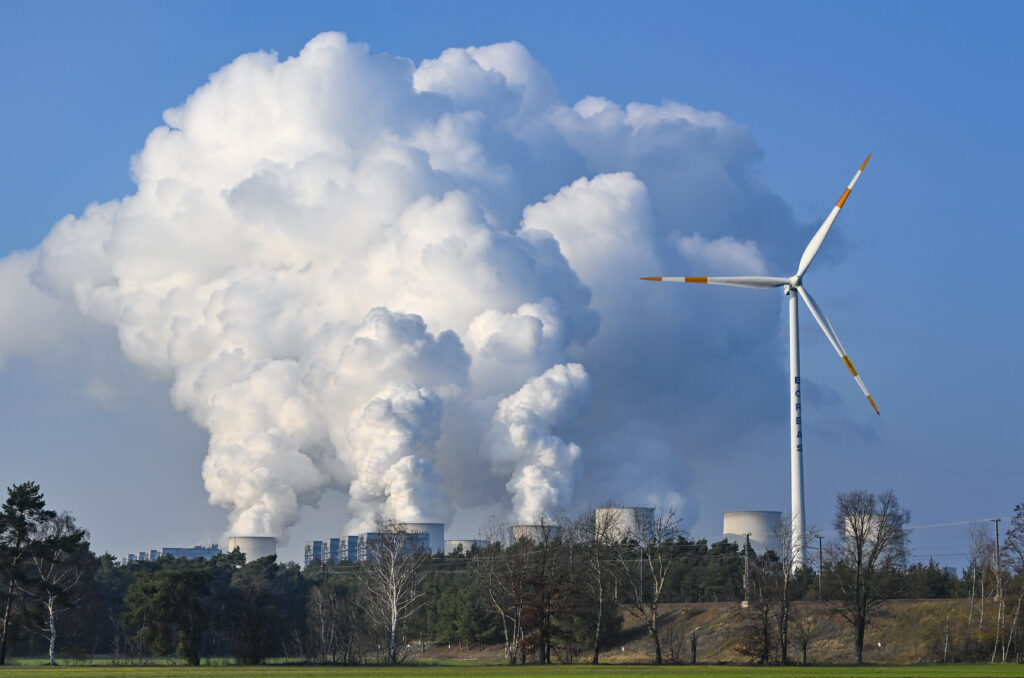
A new European law that imposes the first carbon border tax in the world comes into force in October, and will be applied gradually over the next three years before it is fully implemented.
A carbon tax is imposed on greenhouse gas emissions to encourage companies to adopt clean methods of production.
But firms could get around the tax by moving production units outside the European Union to countries with less strict terms, such as those in Africa, and then exporting products back to the EU. That’s why the EU has come up with the Carbon Border Adjustment Mechanism.
At the moment it costs firms operating in the EU about €80 to emit one tonne of carbon dioxide. Under the new system, importers will be charged the same for carbon emissions as domestic producers are.
The new policy will initially apply to iron, steel, cement, aluminium, fertilisers, hydrogen and electricity generation.
But the mechanism has proved to be highly controversial.
In the global north it has been applauded as a positive climate action. The policy’s architects see it as an opportunity for the EU to play a “leading role at the global level” on climate action.
Climate activists in the global north are excited about it too, although a United Nations Conference on Trade and Development study concluded that emission reduction from the carbon border adjustment mechanism “represents only a small percentage of global CO? emissions”.
In the global south it has been heavily criticised. Critics see it as an industry protection measure that will have negative repercussions on regions such as Africa.
The question being raised is whether such climate action is just.
In our newly released report, we point out that the affected sectors — cement, iron and steel, aluminium, fertilisers and electricity — are key drivers of African economies. We conclude that the new policy will wipe out 0.91% of the continent’s combined GDP (equivalent to a fall of $ 25 billion at 2021 levels of GDP).
To put this in context, the annual losses from the border tax represent, in value, three times the development cooperation budget that the EU committed to Africa in 2021. In 2021 the EU allocated €6.3 billion (US$ 6.8 billion) to the continent.
We find that Africa would be the most affected region, as a share of GDP because the EU represents a key market to many African economies exporting the products covered by the new law.
We conclude that the policy is a significant problem for Africa. It will disproportionately affect African economies even though the continent has a limited carbon footprint.
But also we note that measures like this are here to stay. What’s needed from the EU side is a differentiated approach that can give breathing space for countries to adjust, combined with appropriate finance.
Difficult terrain
Our models show that the effect of the new measures could be mitigated if African countries diverted their exports to other markets, notably China and India.
But market diversification has been a problem for most African economies.
Take the case of Mozambique. Our modelling found that the country is particularly exposed to the new law because of its aluminium exports to the EU while the value of its exports to China is almost negligible.
And there could be more trouble down the road. Reacting to the EU law, other countries which are possible markets for Africa have announced their intention to introduce similar mechanisms in a bid to decarbonise trade.
In March, the United Kingdom opened consultations for its mechanism. In May, India announced that it would retaliate by introducing a tariff system. The United States introduced its own retaliatory measure through the Inflation Reduction Act.
Attempting to calm criticism, Brussels and some European capitals floated the idea of “recycling” revenue from the new policy to help African countries adjust. But the EU also made a binding commitment to use the revenue for its own Innovation Fund. This will fund the development of new technologies in the bloc.
In any case, the anticipated revenue of €1 billion to be generated from the new policy is unlikely to compensate for the higher revenue loss of African countries.
Africa could arguably weather the effect of the law had it been in the process of scaling up renewable energy capacity. Yet, to date, the continent continues to attract a mere 2% of global investments in renewable energy. The climate finance that was promised is not forthcoming. Nor has the EU itself contributed its fair share to international climate finance.
A road map for responses
Countries will need to urgently reach new export agreements and unlock new markets for their exports to reduce the shock from the EU’s new carbon border law. This will be a tall order for which most countries aren’t prepared.
Access to other markets will also depend on the policy direction countries take as they respond to what is seen as a trade war and increased protectionism by the EU.
Considering the continent’s limited carbon footprint and limited challenge to the EU’s industrial base, what’s needed is a differentiated approach that allows countries to adjust, combined with appropriate finance.
Costing the pathway to transition in combination with required policy adjustments should form the basis of an African response. Measures such as these are here to stay. African countries should therefore consider a pathway for green industrialisation and garner support around that agenda through investments.
David Luke is professor in practice and strategic director at the Firoz Lalji Institute for Africa, London School of Economics and Political Science. Faten Aggad, a senior climate diplomacy adviser at the African Climate Foundation, contributed to this article.
The report on which this article is based was a joint project between the African Climate Foundation and the London School of Economics’ Firoz Lalji Institute for Africa.
This article was first published by The Conversation.
– Africa may lose bn annually to EU carbon border tax | The Mail & Guardian
Zimbabwe and the Just Energy transition: An opportunity to expand rural electrification:
Access to energy is one of the priorities of Zimbabwe’s National Development Strategy (NDS 1) for economic growth, which envisages a prosperous and empowered upper middle-income society by 2030. This strategy envisions gross national Income per capita at over US$ 5 000 in real terms by 2030, with energy supply highlighted as one of the major economic growth enablers. Increasing access to electricity is one of the most effective ways of fulfilling Zimbabwe’s development goals and improving the quality of life for the country’s rural populace.
Under the strategy, the priority is not only the development of reliable, adequate, low-priced power, but increased household electricity access, from 52.2% in 2017 to 72% in 2030. The country continues to experience significant electricity shortages, though, partly due to obsolete infrastructure and vandalism as well as growth in demand. Access to electricity in Zimbabwe has grown only slightly from 32.3% of the population in 2014 to 52.75% in 2020, according to the World Bank. By contrast, Kenyans’ access to electricity has grown from 36% to 71% over the same time. There is also a huge rural-urban electricity access divide in Zimbabwe, with only 37% of the rural population having access to electricity by 2020. This figure has probably deteriorated since then. As part of its commitment to bridge this divide, the post-independence government embarked on the Rural Electrification Programme (REP) in 1983. This programme initially targeted growth points or development service centres in rural areas. However, the target was later expanded to countrywide rural electrification, with dedicated funding through a rural electrification levy. Although notable progress has been made, countrywide rural electrification is yet to be realised.
The global transition from fossil fuels to clean energy sources, to which Zimbabwe has committed, is an opportunity for the country to reach these development goals. By tapping into its solar energy potential Zimbabwe can “leapfrog” its presently excluded rural constituency into a clean and sustainable energy future. The concept of “leapfrogging” has gained increasing popularity within the just transition discourse. The concept, as defined by Professor of Environmental Geography at the London School of Economics and Political Science Dr Richard Perkins, is when industrialising nations skip conventional economic growth stages by adopting contemporary resource-efficient technologies to reduce post-consumption repercussions, such as pollution. Greater emphasis on solar and other renewable energy sources will also help Zimbabwe to offset major long-term risks associated with investing in coal – a fuel source which not only has deleterious impacts on Zimbabwe’s environment and ecotourism sector but may see reduced global demand in the coming years. Any investments into coal risk becoming stranded assets in the near future.
Zimbabwe’s current energy mix and strategies to increase supply
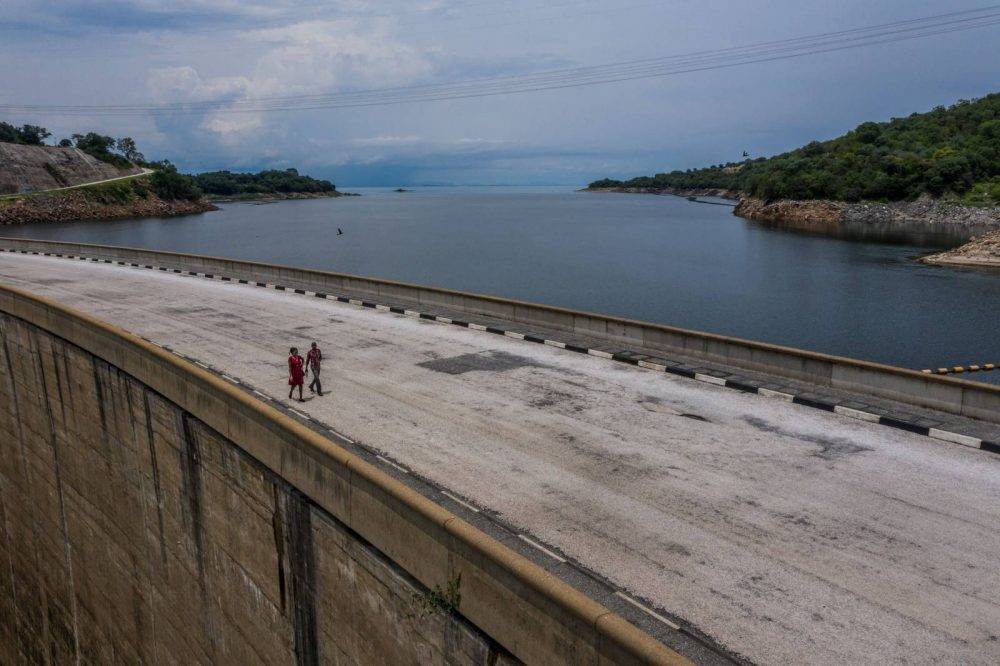
The Zimbabwe Electricity Transmission and Distribution Company (ZETDC), although facing challenges, registered improved power supplies this month (June 2023). Citizens in various parts of the country acknowledged a reduction in blackouts, with some citing an “unusual” experience of at least a week of consecutive days of power supply. This positive development has been attributed to the rising water levels in the Zambezi, given its hydropower generation, as well as expansion interventions at the Hwange power station.
Zimbabwe’s energy sources are a mix of hydropower (70%), coal (29%) and renewables (1%). The country’s major hydropower station is the Kariba South hydroelectric power station. The country also has four thermal power stations in Bulawayo, Harare, Hwange and Munyati. The Hwange Power Station is the largest coal-fired power station in the country (originally 920MW) and the 14th largest thermal station in Southern African.
The energy sector contributes approximately 49% to the country’s total greenhouse gas (GHG) emissions. With part of the rural populace still off the grid and electricity demand for the country on the increase, there is an opportunity to leverage the country’s high solar energy potential. Through its Nationally Determined Contributions (NDCs), Zimbabwe has articulated a commitment to the decarbonization agenda and reducing its greenhouse gas emissions. However, ongoing investments in coal, particularly by Chinese companies, means that coal will remain central to the country’s energy mix for the foreseeable future. The NDS 1 notes that Zimbabwe has vast coal deposits and currently has five coal-to-coke processing plants. The country envisages job creation and generating revenue from the export of coal, coke and coke products and has plans to establish more coal-to-coke processing plants during the NDS1 2021-2025 period.
One of the NDS 1 strategies in establishing coal-to-coke processing plants is the expedition of the establishment of coke oven batteries through provision of land and expediting the processing of mining title applications. The country’s ongoing investments in coal mining run contrary to its 2015 Paris Agreement commitments and the global energy transition agenda. The NDS 1 calls for multi-stakeholder partnerships to enable exploration of the country’s coal bed methane gas resources, which are the largest in the region. With 85% funding from China’s Sinohydro to the tune of $ 1.4 billion, the Hwange thermal power station is undergoing expansion to 920 MW through two additional 300 MW units. One of the new 300-megawatt (MW) coal-fired power generating units started feeding electricity into the national grid in March 2023. The second one is expected to be generating power in October 2023. However, continuing to invest in fossil fuel infrastructure, while seemingly attractive in the short-term, risks huge long-term losses. The International Energy Agency cautions that while there has been a peak in coal use in 2022, mainly due to the impact of Russia’s aggression in Ukraine, through to 2025 “growth in renewables will supply lion’s share of additional power demand, with coal and gas filling the remaining modest gap.”
Despite these investments in thermal energy, more than sixty percent of the population still lacks access to clean energy sources. Given the challenges with obsolete infrastructure and the heightening water scarcity, the country’s current, largely thermal and hydro power mix has no capacity to meet the needs of its excluded rural constituency. Renewable, clean solar energy offers an effective way forward. A 2018 study carried out by Massachusetts Institute of Technology scholars Goksin Kavlak, James McNerney and Jessika Trancik, evaluating the causes of cost reduction in photovoltaic modules from 1980 to 2012, indicates that costs had fallen by 97%. The study also notes that government policy to help grow markets around the world also played a critical role in reducing costs. The continuing reduction in costs and Zimbabwe’s ideal environment for solar energy production is an opportunity to expand the rural electrification programme. This will be an important step in fulfilling both the NDS 1 vision of access to modern energy by targeting the larger part of the populace. It will also set the country on the path to its commitment of a 33% reduction of greenhouse gas emissions by 2030.
One of the important aspects of NDS 1 is the government’s commitment to enable Independent Power Producers access to the country’s electricity market. A good example is the Old Mutual Solar Project partnership. The Old Mutual Investment Group Zimbabwe (OMIZ) is investing US$ 21,5 million into independent power producer, Centragrid Private Limited to support the production of 25 megawatts (MW) of solar power to be fed into the national grid. Such partnerships are key to addressing what is often one of the major hurdles in policy implementation: funding. Partnerships between the government and Independent Power Producers can be a gamechanger in exploiting the country’s vast solar energy resources for the benefit of the already excluded rural constituency.
Sikhululekile Mashingaidze is the lead researcher in the Human Security and Climate Change programme at Good Governance Africa.
– Africa may lose bn annually to EU carbon border tax | The Mail & Guardian
EU talks: Ukraine’s security dilemma after the Wagner saga:
In the just-concluded two-day EU summit held in Brussels, the spotlight remained predominantly on three key subjects: the protracted Ukraine conflict, the delicate art of de-risking from China and the intricate web of migration reforms.
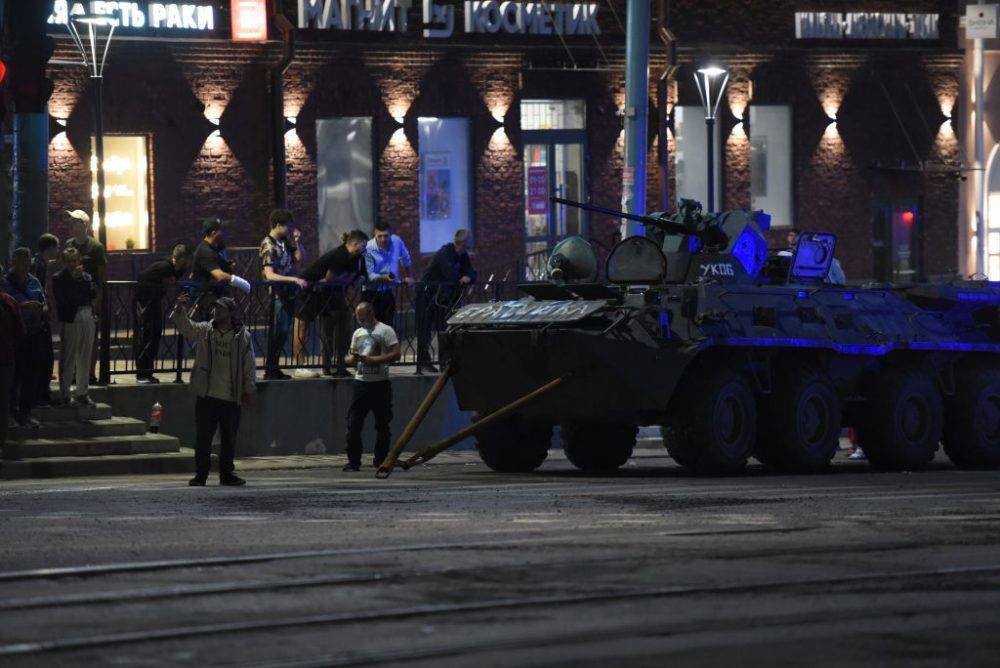
It was the former two points that captured the longest slots at the deliberations, testimony to the sheer gravity these pressing concerns bear on the very fabric of the European continent. However, a subject not part of the official agenda — the repercussions of the surprising mutiny in Russia and its resounding implications for the tenacious reign of President Vladimir Putin — consumed an inordinate amount of the participants’ attention.
This unforeseen spectre cast a shadow over the proceedings, as they pondered the unfolding narrative of power dynamics in Russia and its potential reverberations throughout the international arena.
The Wagner incident instigated a very interesting debate among the European leaders on the question of whether an “ostensibly weakened” Putin — after the Wagner mutiny — has become more dangerous. A prevailing sentiment among the majority of them emerged, suggesting that a “wounded Putin” is poised to escalate his assault on Ukraine.
This perspective gained traction as the leaders speculated on the potential consequences of a weakened Russian leader projecting a heightened level of aggression and hostility towards Ukrainians. Nato chief Jens Stoltenberg, considered to be among the most “updated” individuals on the Russian situation , was cautious while talking on this subject and suggested that it was “too early” to draw conclusions regarding the effects of recent events.
“The mutiny we saw at the weekend demonstrates that there are cracks and divisions within the Russian system. At the same time, it is important to underline that these are internal Russian matters,” Stoltenberg said.
But Ukrainian President Volodymyr Zelenskiy, who addressed the summit via video link, appeared emboldened by the latest development in Moscow and adopted a belligerent tone, thanking the EU leaders for 11th package of sanctions against Russia, which was approved earlier last month and was specifically tailored to impede the circumvention of existing restrictions by other nations and corporate entities.
“We are seeing their weakness, which we so badly need. The weaker Russia is, and the more its bosses fear mutinies and uprisings, the more they will fear to irritate us. Russia’s weakness will make it safe for others and its defeat will solve the problem of this war,” said Zelenskiy, making veiled references to the failed uprising perpetrated by the Wagner mercenaries in Russia.
A considerable faction at the summit rallied behind Zelenskiy’s assertion, affirming that the opportune moment had arrived to strike hard to exploit the vulnerability of an already weakened Putin.
President Gitanas Nauseda of Lithuania, which shares a border with Russia, adamantly maintained that the situation provided ample justification for adopting a resolute stance against Putin. Some say “that a strong Putin is less dangerous than a weak Putin. I don’t agree with that. We have to move forward and be decisive, because now is a crucial moment of history,” Nauseda said, while supporting Zelenskiy’s request to the EU for more military and financial assistance.
The foreign policy chief of the EU, Josep Borrell, unveiled a proposal that could potentially bolster the bloc’s support for Ukraine. Borrell emphasised the importance of capitalising on the existing EU assistance provided to Ukraine, particularly through the European Peace Facility fund. This fund is already injecting billions of euros into financing arms for the embattled country, as well as facilitating a training project for Ukrainian troops.
“The military support to Ukraine has to [be for the] long haul. The training has to continue, the modernisation of the army has to continue. Ukraine needs our commitment to continue ensuring their security during the war and after the war,” Borrell told the media, suggesting the EU could establish a Ukrainian Defence Fund, modelled on the peace fund.
In a display of its advocacy for a stronger security and defence role for the EU, France put forward a proposal on this matter. However, to address concerns from militarily neutral nations and staunch supporters of transatlantic cooperation, including the Baltic states, the final communique was amended accordingly.
These countries perceive European security primarily as a responsibility of Nato, with robust US involvement. Consequently, the final text stated that the EU would contribute “together with partners” and “in full respect of the security and defence policy of certain member states”. This EU statement adds to an ongoing discourse among Nato members and influential military powers, such as the US, Britain, France and Germany, regarding measures to reassure Ukraine of the West’s enduring commitment to bolstering its security in the long run.
Although Ukraine has been insisting that the most effective way to ensure its own security and that of Europe is through Nato membership, Kyiv also acknowledges that such a move is unattainable during the ongoing conflict, while Nato allies remain divided on the timeline for potential accession after the resolution of hostilities.
The upheaval and instability triggered by the Wagner rebellion has compelled the EU to fortify its backing for Ukraine. In the final statement, the EU leaders emphasised their preparedness to join forces with partners in providing future security commitments to Ukraine. This united effort seeks to empower Ukraine in its long-term defence, acting as a deterrent against aggression and thwarting destabilisation efforts.
While most EU nations are also Nato members, they will convene at the alliance summit on 11 and 12 July to explore avenues for extending enhanced security assurances to Ukraine, albeit stopping short of full Nato membership.
The EU and its member countries have already furnished an estimated €75 billion in aid to bolster Ukraine’s military capabilities and ensure the survival of its beleaguered economy. Notably, the leaders deliberated on the use of Russia’s frozen assets, amounting to around €200 billion, for this purpose. They have tasked the commission and foreign policy unit with devising a coordinated approach, in collaboration with international partners willing to join in this move. Nevertheless, concerns persist among several nations regarding the legal foundation for such measures.
The European Central Bank has also cautioned that seizing these assets or their accumulated profits could pose significant risks to the euro’s reputation. Apparently, the EU, desperate to prevent the escalation of fighting and violence from permeating into the neighbouring countries, is going full throttle to snub Putin in this war, which is increasingly turning into a “frozen conflict”.
Dr Imran Khalid is a freelance columnist on international affairs based in Karachi, Pakistan. He qualified as a physician at Dow Medical University in 1991 and has a master’s degree in international relations from Karachi University.
– Africa may lose bn annually to EU carbon border tax | The Mail & Guardian
Submit and get free exposure here: Showcase Your Business | Advertise Your Special Offers.
