
Africans can solve TB, the disease that haunts us. Here’s how:
I was born in Brakpan, Johannesburg, and grew up in eSwatini. People in these two countries share one predominant fear: unemployment.
Other worries in these countries and others in the region include unwanted pregnancies, low income and food safety. The diseases that are dreaded the most are cancer and diabetes. Feared infectious diseases include HIV-Aids, Covid and cholera.
Even though South Africa and eSwatini are among the more than two dozen African countries with a high burden of tuberculosis (TB), drug-resistant TB and HIV/TB co-infections, TB is not feared in the same way.
So many on the African continent are affected by TB, which hits the young and vibrant the hardest in our region and in the world. eSwatini joins the seven most populous sub-Saharan African countries — Ethiopia, the Democratic Republic of the Congo, Kenya, Nigeria, South Africa, Uganda and Tanzania — where TB hits the 25 to 34 and 35 to 44 age brackets especially hard.
It is not just the years of life that this disease takes away from us but also the future leadership and economic productivity of our countries. I see this even within my own family, with one niece being treated for TB and another having survived drug-resistant TB a few years ago.
World TB Day is 24 March, a day when we will hear about ending the disease by 2030 — even though it has been with us forever. With only six years left, that goal seems too distant. To achieve it, we need better awareness, yes. But we also need Africans to be fully engaged with the rest of the world, which includes conducting drug discovery and development research for TB in Africa.
Most of the TB drugs, like the drugs for most diseases that affect Africans, are developed by companies in high-income countries. We saw what that meant in the delayed rate at which lifesaving Covid vaccines reached African countries; the high-income countries that developed the vaccines received them much faster.
This is why, when the Gates Medical Research Institute tests investigational treatments or vaccine candidates, the relationships that we establish with the trial sites in Africa and elsewhere support those facilities when they eventually take the lead in future trials.
It is critical that African scientists tackle African problems, and the reasons extend beyond access. Local scientists have a better understanding of the social fabric and context threatened by diseases like TB; they understand which solutions could be adopted and embraced and which will remain on the shelf.
In September 2023, the United Nations held a high-level meeting where member states agreed to boost the amount of funding for TB research by a fivefold increase by 2027 — but no guidelines on geography were placed on this pledge. More than 90% of current funding for TB research and development comes from North America and Europe, and most of those funds stay in the high-income countries, and train and develop and indeed employ scientists in the high-income countries. Of the high-burden countries, only India has an investment in the field large enough to be noted — at 1.9% of the total global funding.
Funding specifically earmarked for TB (and antimicrobial resistance) research in Africa would ensure that more of it takes place on African soil. Funding is needed to build appropriately equipped research and production infrastructure, much like the mRNA vaccine facility being built in Rwanda.
Such facilities would be staffed with African scientists, who would get opportunities to expand their basic and applied research skills. The H3D Research Centre at the University of Cape Town, led by Dr Kelly Chibale, is one example of how successful African ingenuity can be, with four patents already filed.
Together with the much-needed funding from Africa’s better-resourced foreign partners in wealthy countries, African governments should incentivise African businesses, African foundations and charities, and high net worth Africans to build African research institutes to train, develop and employ African scientists.
Developing medicines for diseases, such as TB, that are killing the African youth and stunting economic growth should be everyone’s priority — in Africa and the world.
It is important that such efforts are not tied to immediate profits, as this leads to disappointment and ends with dwindling funds for research.
Drug discovery is a “long and winding road” that begins with building talent and infrastructure and expanding the critical mass of well-trained drug developers. Investment in biomedical research should be for the sake of expanding biomedical knowledge and training young scientists; the discoveries and the profits will follow.
The timing couldn’t be more appropriate than now as new futuristic technologies — including artificial intelligence, machine learning and high-speed connectivity — are entering the drug development arena.
We can now see a point when the health profile and the life expectancy of people in Africa could be comparable to the rest of the world. Africa and the world should be guided by the belief that all lives have equal value and that health equality is ensured for everyone, on all continents.
Khisimuzi (Khisi) Mdluli is a TB drug scientist and a Discovery project leader at the Bill & Melinda Gates Medical Research Institute.
South Africa swiftly sliding to the right:
In a number of countries the electoral decline of former national liberation movements has engendered the rise of far right, and at times fascist forces. India and Algeria are obvious examples. As South Africa moves towards the election in May, far right and even fascist ideas and images are rapidly metastasizing through society.
No party or personality has the sort of intellectually coherent project that Hindu fascism has built up over decades in India. Figures such as Jacob Zuma (former president and now uMkhonto weSizwe Party figurehead) and and the Patriotic Alliance’s Gayton McKenzie are, like Donald Trump, disinhibited and wholly unprincipled opportunists presenting an incoherent and contradictory political posture to society with fascist elements among others. Nonetheless there is a malevolent kaleidoscope of statements, threats and acts that while not a coherent fascist project are well described as fascist impulses.
There has been a general normalisation of xenophobic posturing and proposals across a range of parties, with the Inkatha Freedom Party (IFP) placing xenophobia at the centre of their programme speaking of “illegal foreigners”, promising to militarise borders and build border walls, deny migrants the right to certain forms of livelihood and so on.
In 2018, ActionSA’s Herman Mashaba notoriously descended into the language of fascism declaring: “We are [not] going to sit back and allow people like you to bring us ebolas.” At the time he had just affected a “citizen’s arrest” of a migrant. Mashaba is not alone in this.
McKenzie is the most obscenely xenophobic politician in the country having called for the children of migrants to be denied access to schools and the mass deportation of Zimbabweans, and declaring: “If there is a South African, Zimbabwean and Mozambican patient on oxygen and I see a South African patient born and bred in South Africa, I will turn the oxygen off so that the South African can live.”
In January, McKenzie took fascist political theatre to a level that made Mashaba look relatively moderate when, along with Kenney Kunene, he, using the language of “cleaning”, made a spectacle of policing the border along the Limpopo River. A year before he had led raids on migrant owned shops in which goods were “confiscated”.
The Economic Freedom Fighters (EFF) also took on the role of the police when they took threatening groups of supporters to “inspect” restaurants to determine the number of migrants employed. There are equally toxic actors outside of electoral politics. Lindi Zantsi, described as an “international evangelist and activist” in one media report, has presented Zimbabweans as a diseased threat to South Africans. Nhlanhla Lux, adopting a military posture, has led his organisation, Operation Dudula, to threaten migrants and force them from their homes.
Like Dudula the EFF and MK Party have both adopted a militaristic posture at times, including the performance if not substance of having their own militias. Panyaza Lesufi, of the ANC, has instituted his own armed and poorly trained militia. When political parties assume the right to take on policing duties, do so in an unlawful manner and flirt with presenting themselves in military terms a society is always in dangerous territory. When calls are made, as they have been, to deploy the army for policing purposes the outcome will inevitably include, as it did during the Covid lockdown, the casual murder of vulnerable people.
Along with xenophobia, dangerous law and order rhetoric about clamping down on crime are ubiquitous. We have a serious crisis of violence that must be addressed as a matter of urgency but increasingly authoritarian rhetoric about law and order can only escalate that crisis. We all know that the police and other armed state actors are habitually violent and that the prisons are full of impoverished people, many of them not convicted of any crime and others convicted of petty infractions of the law.
This kind of political project is a staple of right-wing politics around the world and everywhere results in state violence against vulnerable groups, often marked out by race, nationality and class. Here it can only result in the criminalisation of impoverished people, migrants, sex workers, people living and working informally and people with addiction issues. Social problems like the heroin epidemic which require a compassionate and supportive response will inevitably be met with state violence and imprisonment. The impulse to contain violence in society via an escalation of state violence inevitably escalates violence in society, and encouraging violence in society, such as beating children, always makes society more violent.
The most extreme right-wing statements have come from Zuma who has, using the fascist language of “disease”, promised to separate teenage mothers from their children and send them to Robben Island. He has also promised to impose military conscription for young men, encouraged parents to beat their children, launched an attack on gay rights and proposed elevating aristocratic authority over that of elected representatives. In this regard he is now to the right of the IFP.
Grassroots activists across KwaZulu-Natal report that on the ground Zuma’s new party is openly pushing an ethnic project. Zuma’s party is not alone in this. Mxolisi Kaunda, the ANC mayor of eThekwini, recently blamed Durban’s stark decline on people “from the Eastern Cape”. The ANC has been saying this for years in Durban, but usually off the public record.
Visvan Reddy, an opportunist of Niehausian proportions, who is trying to ingratiate himself with Zuma’s new party, threatened “riots that have never been seen in this country” and declared that “No South African will go to the polls if MK is not on the ballot”. Bonginkosi Khanyile, who was expelled from the Patriotic Alliance before joining the MK Party, has made similar statements.
Liberal parties do not take right-wing positions on social issues such as gay rights but are taking hard right positions on economics and international relations. Economist Duma Gqubule has written that, along with the ANC, members of the Democratic Alliance’s (DA’s) Multi-party Charter (all funded by white capital) are proposing “a mad neoliberal plan … that entrenches the austerity policies that have failed since 2012 and ensures that fiscal policies are not subjected to rigorous democratic deliberation”. In her book The Capital Order, published last year, Clara Mattei showed that austerity, inevitably presented as a technocratic rather than political measure, has always had the political function of weakening the organisation of the working class by entrenching precarious forms of work and life.
The DA and the IFP are, along with organisations such as the Brenthurst Foundation and the Institute for Race Relations, both active participants in a vigorous and increasingly shrill right-wing project that demands that South Africa uncritically affiliate itself to the West, presented as a democratic actor. This project simply elides the numerous coups against elected governments by the US, the long history of US-backed proxy wars, the destruction of countries such as Vietnam and Iraq, the backing of Israel as it destroys Gaza and the imposition of devastating economic policies in much of the Global South by the West.
When the DA approaches and presents the US as an arbiter of democratic integrity it is participating in the long and intensely racialised liberal project of affirming rights for some at the expense or destruction of others. It was well captured by Israel’s President Isaac Herzog when he said that the assault on Gaza is “intended — really, truly — to save Western civilization, to save the values of Western civilization.” It’s equally apparent in the ways in which white lives in Ukraine count for vastly more than Arab lives in Palestine in most liberal discourse, here and internationally..
In June last year, the DA’s John Steenhuisen and G?eordin Hill-Lewis, along with Velenkosini Hlabisa from the socially conservative and economically liberal IFP, joined the likes of Adalberto Costa Júnior from Unita in Angola and Venâncio Mondlane from Renamo in Mozambique at a meeting hosted by the Brenthurst Foundation and the European Solidarity Centre to sign a statement in support of “democracy”. The Brenthurst Foundation includes the former heads of the US and UK military on its board and it is a relentless propagandist for the West. An uncritical association with it can only imply tacit consent for Western imperialism, the most murderous force on the planet.
Perhaps surprisingly the IFP has called for a comprehensive and just peace agreement between Israel and Palestine. While the DA has a long history of support for Israel and Mashaba has taken a “neutral” position in the face of the ongoing crime against humanity in Gaza it is McKenzie who has taken the most extreme position in support of the Israeli state, declaring “My Bible commands me to stay with Israel.”
The media is often complicit in the normalisation of far right politics. It is complicit when it casually reports extremist and fascist proposals such as sending teenage mothers to Robben Island as if they are just another policy proposal. It is complicit when it treats fascistic political theatre as just another click generating spectacle. It is complicit when it uses terms such as “illegal foreigners” rather than “undocumented migrants”.
If we wish to avoid a hard-right alternative to the ANC, possibly an alternative with fascistic elements, we need to move fast to draw and defend basic ethical and political lines.
Richard Pithouse is a research associate in the philosophy department at the University of Connecticut.
Founders of the Constitution look back at us:
Navan Chetty did not always feel comfortable when he worked on the portraits of the 16 prominent South Africans who were largely responsible for facilitating and drafting the Freedom Charter back in 1955.
“It became a form of self-reckoning, and comparing myself to them, I fell short,” the almost 60-year-old artist said in an interview this week about his exhibition at Constitution Hill in Johannesburg. “It prompted me to show more compassion, like these brave and resilient people, and to keep their vision alive.”
The charter is — per Chetty’s curatorial statement — a “groundbreaking document”, which nearly seven decades ago “delineated the collective vision, hopes and aspirations of the South African populace for their future democracy”.
An important document in the struggle against apartheid, it subsequently served as the cornerstone for the development of the Constitution.
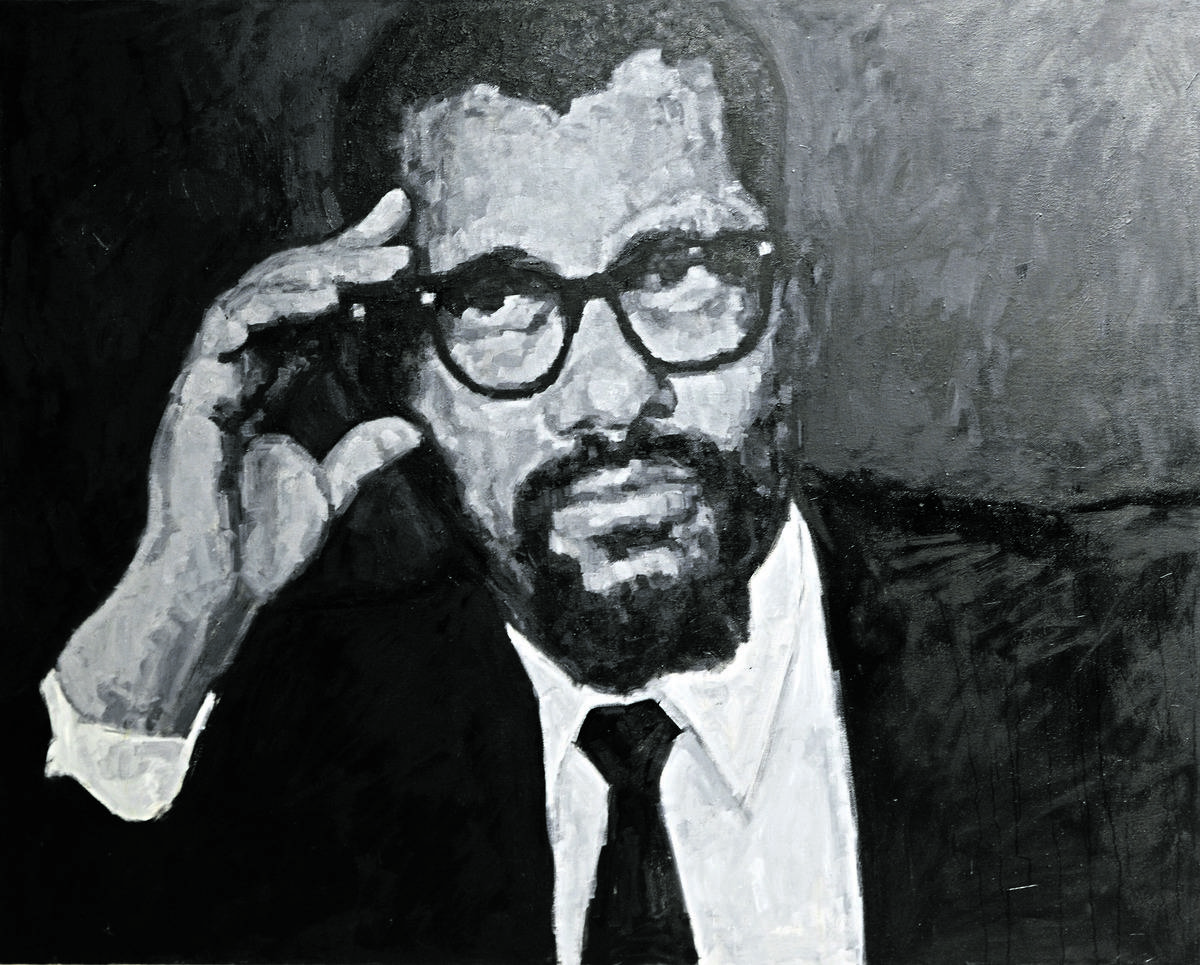
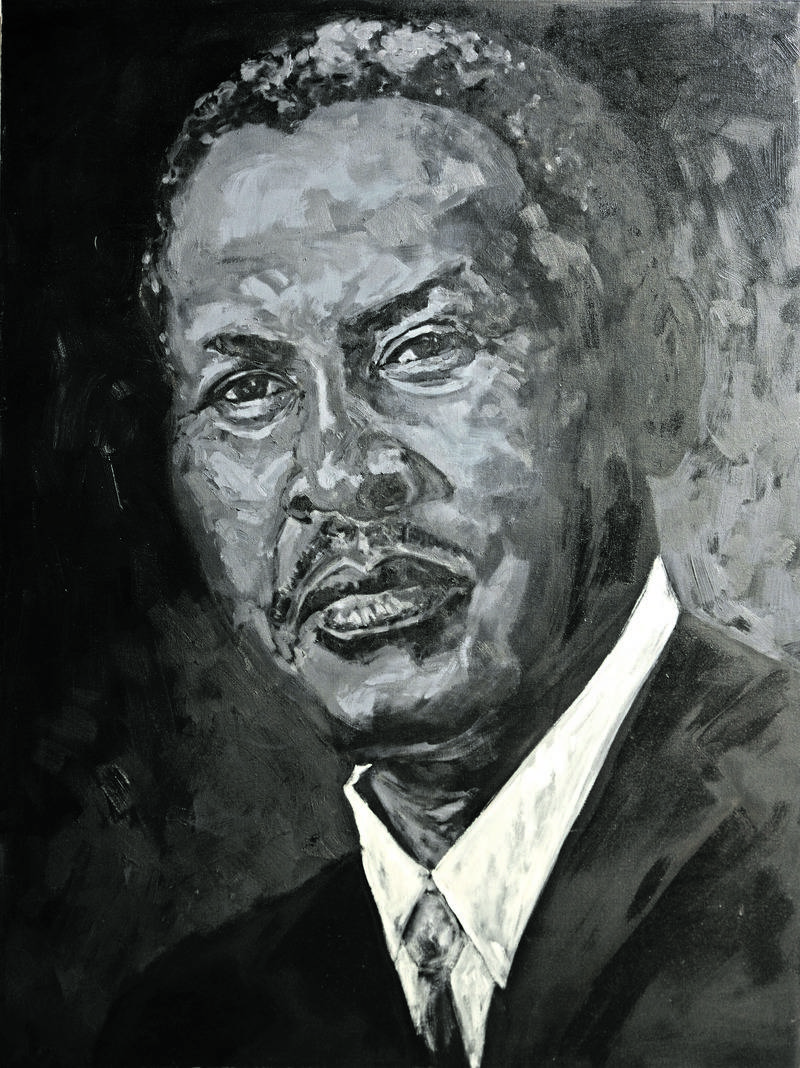
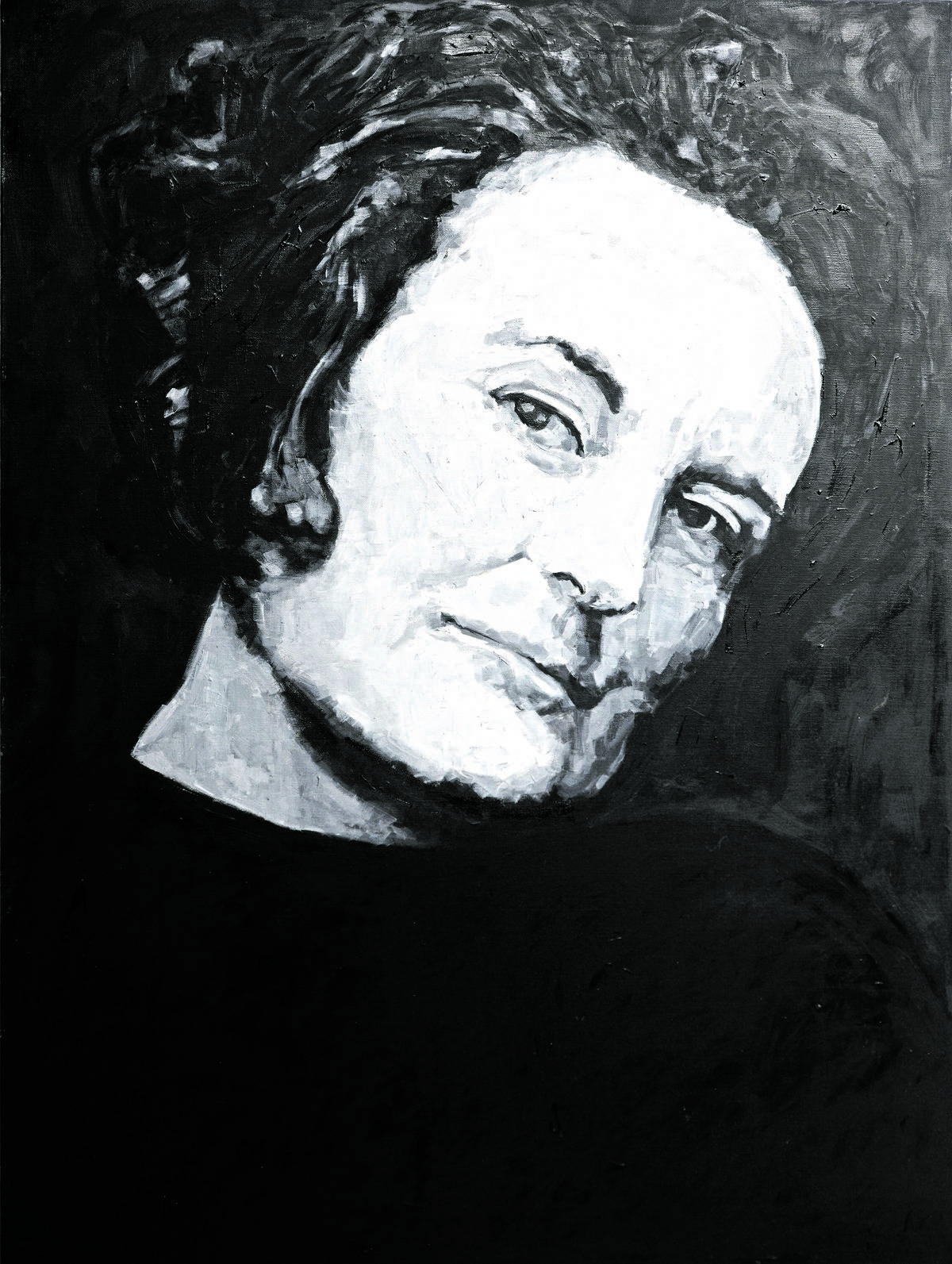
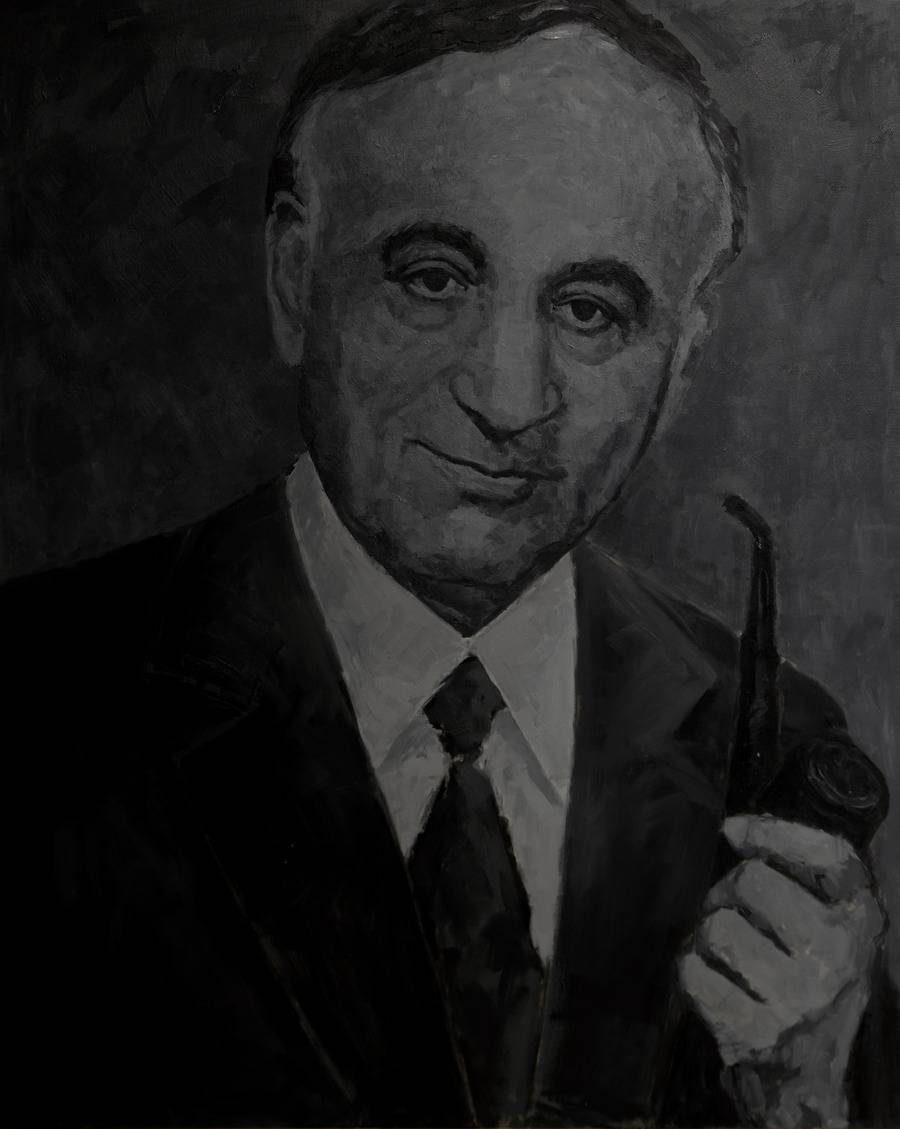
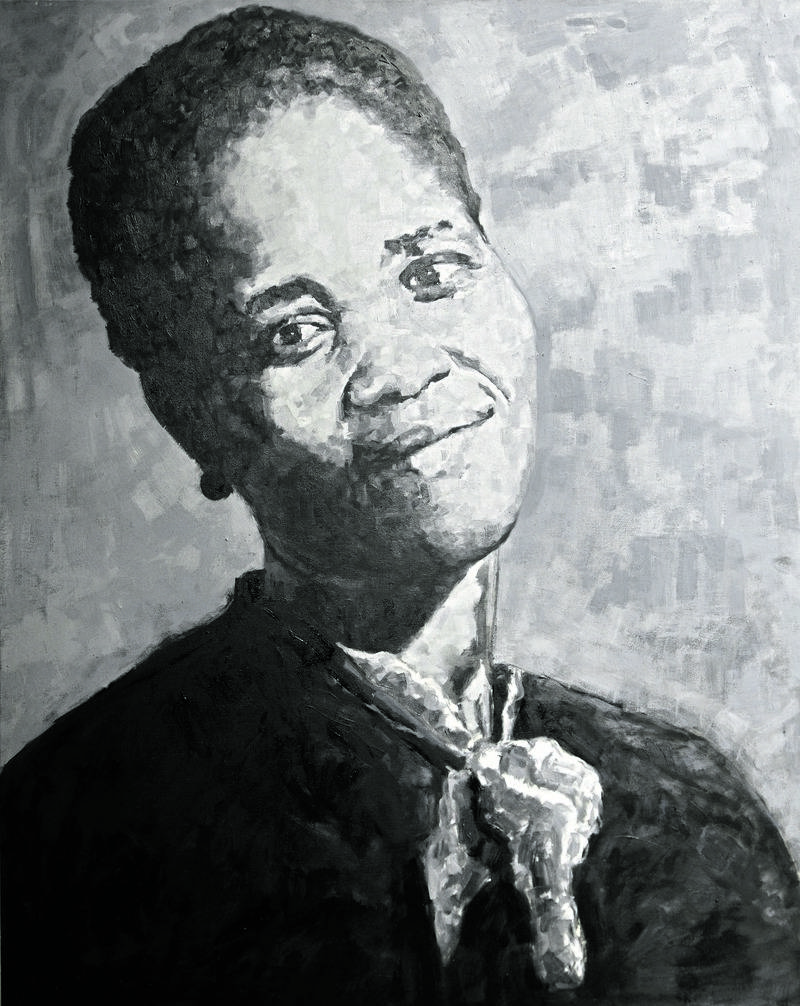
The 16, from diverse racial, political and religious backgrounds, included Albert Luthuli, Walter Sisulu, Lilian Ngoyi, Ruth First, Yusuf Dadoo and Helen Joseph.
“I sourced photographs of them that moved me and I tried to translate that into something monumental to honour and acknowledge these great leaders.”
The Freedom Charter has always had a presence in his life.
“In my youth, I was inspired by leaders of my time of the National Indian Congress in Chatsworth [in Durban],” Chetty said. “Later on, listening to UDF [United Democratic Front] leaders like Terror Lekota and Allan Boesak, the Freedom Charter came up a lot.
“I was taken by how it came about — in a democratic way, people from all corners of the country contributed and was collated into an important document.”
What do the portraits tell us today?
“As an artist, I don’t want to preach. But, if you look carefully, these pictures don’t depict those leaders as heroic — I tried to get a discomfort and unease across in the way I placed them uncomfortably in the frames, as if they are looking on at us, where we are now.”
The Freedom Charter Portraits exhibition runs until 30 April.
Submit and get free exposure here: Showcase Your Business | Advertise Your Special Offers.
