Africa’s Girl Child Dialogues 2023:

Experts share how women can access the mining, ICT and wildlife sectors
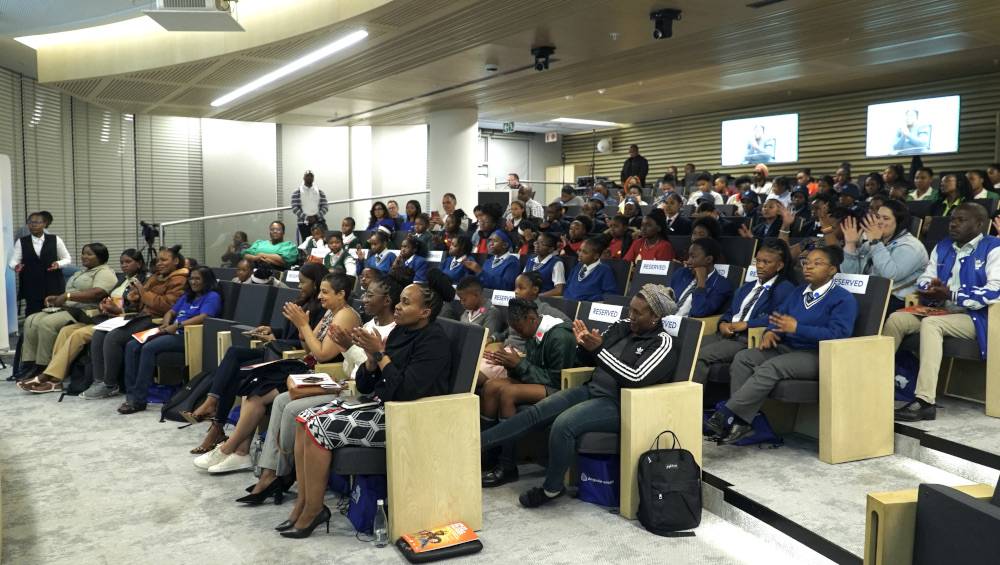
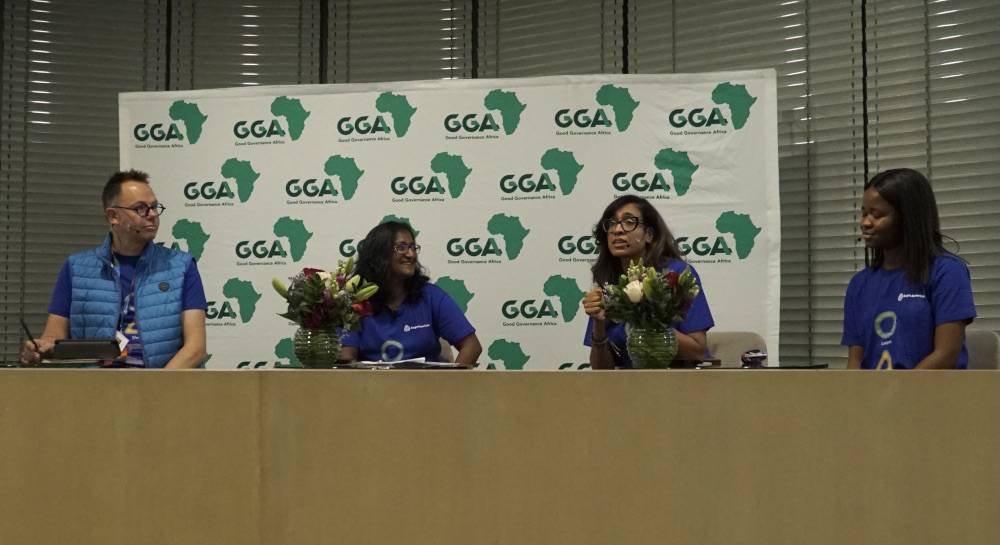
The 2023 Africa’s Girl Child Dialogues, organised by Good Governance Africa and sponsored by Anglo American, Telkom and Boston Media House, took place on Wednesday, 11 October 2023 at Anglo American Corporate Offices in Rosebank, Johannesburg. The vibrant occasion, held on the International Day of the Girl Child, celebrated young women and their potential.
Building on the foundation laid in the previous year, which examined the holistic wellbeing of the girl child, the focus this year shifted towards exploring career opportunities available to women in the mining, ICT, and wildlife industries.
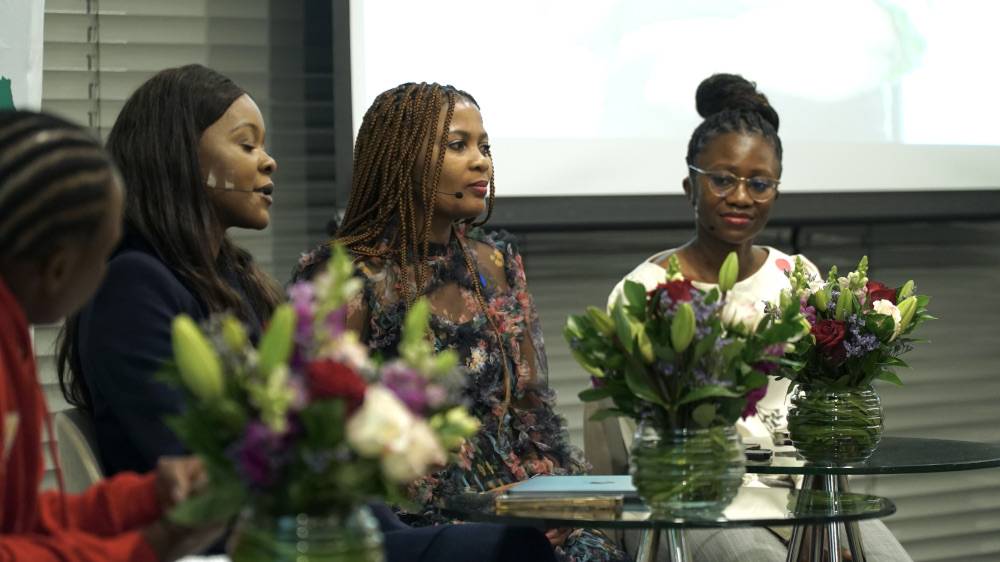
Experts from these three fields — all young, inspirational women who have enjoyed successful careers despite much adversity — shared presentations, provided advice, related how they became involved in their careers and fielded questions from the girls in the audience. Together with breakaway group discussions, this Dialogue made these sectors more understandable and accessible to the youngsters who might be thinking of becoming involved in them. Facilitators Mamiki Masilo and Andile Ndlovu kept the proceedings on track.
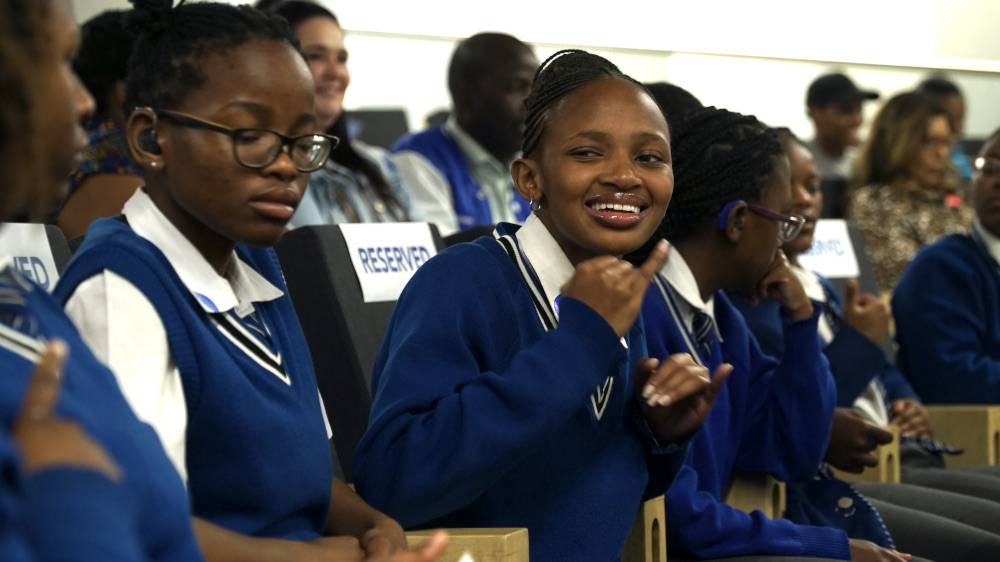
It wasn’t an event filled exclusively with talking. A breathwork session kicked off events and a lively song that examined girls’ and children’s rights was delivered by some girls from Ekurhuleni schools. St Vincent’s School for the Deaf provided three interpreters, who signed the entire conference. Ten of the St Vincent’s girls ended the day’s proceedings with a farewell display in sign language, and a basic lesson in sign language followed.
Dialogue
The keynote address was delivered by Chris Maroleng, International CEO of GGA, who pointed out that it was ironic that he as a man was called upon to speak on the topic which specifically concerned women. He said the women at the Dialogue represented the hope of the country and the potential for development.
Maroleng’s mantra is that “our dreams are valid and are the fuel that drives our success”. He said the girls in the room were selected because they knew how to grab opportunities, and despite poor governance, South Africa is filled with opportunities in the fields of mining, ICT, and wildlife conservation. These sectors were previously male dominated, but are now “blank slates” and have jobs available for everyone. He reminded everyone that they are the architects of their own lives, and that together they can create meaningful change. In closing, he thanked the sponsors behind the campaign.
Linda Vilakazi, Project Sponsor, said the UN declared the International Day of the Girl Child to highlight the many challenges that young girls face, and for the countries they live in to help them overcome these challenges.
Dr Ela Manga provided a powerful lesson on breathwork. She said that working with the breath empowers the female body. Learning to work with your breath is a tool that enables you to navigate hard moments in life, like exams or interviews. Learning to speak properly, from the abdomen, gives power to the voice and your speech. Finding your power centre helps you to focus when you are distracted. She said that when women take care of their bodies, they can tap into their true potential and take care of others.
Simangele Soni, Senior Operations Manager at De Beers Sightholder Sales South Africa, encouraged the girls to dream big. She outlined why girls should consider a career in mining. The industry directly employs half a million people in the country, and many more indirectly. Mining today is focused on sustainable development, working with communities, and on transformation. Women are making a big impact in the industry, which now has many female leaders. It is increasingly incorporating ICT and AI to improve its efficiency, and that provides many more career opportunities for women.
Soni said our early choices are important, and they must not limit us, but open up later so we can make other choices. Taking science as a subject at school enabled her to make many different career choices; she studied chemical engineering at university, with Anglo sponsoring her. The second lesson that she learned is that one must be open to receive advice from others; the third is that everyone is good at something, and that we must learn to help others to harness this unique ability.
Fourthly, she always said yes to any job that needed to be done, and this opened many doors for her. Fifth, having an open attitude enables you to learn new skills and handle any task. The greatest lesson is that “life is about people — take time to stop and actually see people — if you are going too fast, you don’t see those who are walking with you”. There is sufficient grace in this life, said Soni, and if you are given an opportunity, grab it with both hands.
Girls in mining
Marcel Korth, Anglo American Principal: Gender Based Violence, asked the girls to discuss their impressions of mining. One girl said it suggested big men working hard underground, another said it was about extracting minerals. A third talked about mining’s relationship to people and human rights. A fourth girl said many women are afraid of working in the mines because they are male dominated; a fifth said the zama zamas (illegal miners) were a reality in her life; they were dangerous and threatened her community.
Korth said we need minerals to make, among other things, our cellphones, but they must be extracted in an ethical and sustainable way.
Vanessa Naicker, head of Learning and Talent (Platinum) at Anglo American, said that we can see mining through many different lenses. It is dark and dangerous, but it also provides essential minerals and jobs. Mining has sustainability; we need it for our civilization, and it will provide jobs for many years to come, she said. Her advice was to be curious and challenge the way you see the world. Naicker said she’d had many mentors and encouraged the young girls to be open to mentorship. Reading is a great way to learn, said Naicker, and so is using tools like Chat GPT.
Nkhensani Mabasa, a mining safety graduate, said her experience in the mining industry was that it was challenging but also rewarding. The graduate programme had equipped her well for what came later, but her biggest lesson had been that one should never stop learning. If you don’t understand something, ask, she said. Don’t be afraid to take on new challenges; there is always a way to push forward. Mining offers many opportunities; it was not just about digging out minerals, she stressed.
Larisha Naidoo, the head of Anglo American Zimele, said there were many opportunities available in the mining industry. She took on many tasks and this way learned how to solve challenges. Her work was with young people, teaching them skills that can be monetised. Her advice was to learn as much as possible and stay focused on your dreams. Keep a journal so that you can get to know yourself, and practise self-reflection, she said. While you are learning, put what you learn into action – “activate your bravery to do the things that you fear the most, which is when you really shine.”
Girls in technology
In her speech, Toni Ramatswi from the Telkom Foundation touched on the topics of Artificial Intelligence, machine learning and deep learning, and the history of how we arrived at this technology. Machines, she said, will soon be learning from each other and one day arrive at Super Intelligence. China had rolled out AI on a big scale and was using facial recognition for tasks such as “paying by smiling” whereby you literally pay for a meal by smiling at a screen, which then uses facial recognition to debit your account.
Where does Africa fit into the AI race between the East and the West, asked Ramatswi? She said there were “pockets of excellence” in Africa; in Ghana, for example, drones were being used to recognise crop diseases. AI needs to be trained to reflect what being African means, she said, AI would not always do tasks for our benefit unless we trained it to do so. Today, Ramatswi added, computer chips are being implanted in people’s brains; soon we will be cloning body organs, and in the future we may “live forever” through cloning, which raises many philosophical and ethical issues.
She told her audience that there were many job opportunities in the ICT field: just the fact that AI needed to be “policed” necessitated job creation. Every career you can think of can be linked in some way to AI, said Ramatswi. In the field of beauty, for example, there were AI filters and avatars.
Sonwabise Mzinyathi, the Chair of the SA Women in ICT Forum, said she works on promoting women in the IT sector. Studies have shown that women often fall out of the ICT field because they can’t see themselves entering the executive sector. There were also “boy’s clubs” which had “meetings before meetings”, which women were not part of. There were also cultural issues, especially around having children. The workplace might have changed when they returned from maternity leave, and as women were usually responsible for raising their children rather than their male partners, this created problems for them at work.
Rudzani Badza, a Southern Labs Institute of Technology graduate, said the IT field was very broad, and offered endless opportunities. For instance, being part of a system meant that you take on different roles as the system evolves. There are data analysts, project managers, people who test systems, and people who communicate with key stakeholders.
Badza said that any technological skill can be learnt, but your attitude is what really counts. “Do it scared,” she advised; be prepared to learn new things. Regarding mentorship, you must show that you are willing to be taken under a mentor’s wing.
An audience member asked how technology will change our lives, to which Badza gave an example of a child who thought of putting solar panels on school bags, which enabled children to have power and study when they got home if there was no electricity. Technology has also created many jobs; there are now many delivery companies created because of the Covid lockdowns, which employed people to deliver food and other goods.
Girls in wildlife
Lewyn Maefala from Transfrontier Africa, has worked for many years for the all-women anti-poaching unit the Black Mambas and started the Bush Babies Environmental Education Programme. She said conservation was there to preserve our environment and endangered species, but people had to be educated about this work. Different methods were used to educate children about conservation, such as using puppets and touching snakes so that children overcame their fear of them. She mentioned the Scout and Bush Grannies programmes, and how they changed people’s attitudes and behaviours.
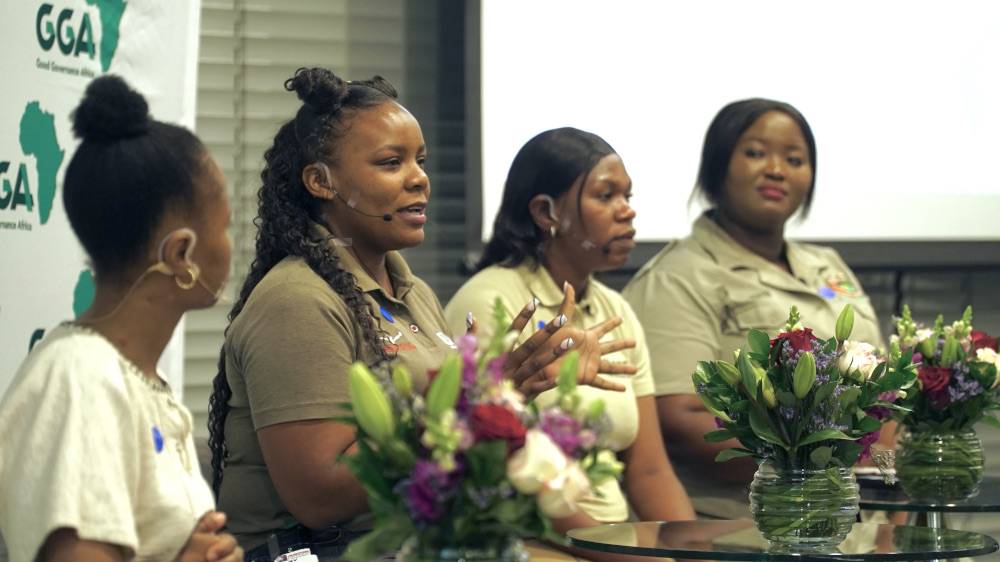
Maefala said the Black Mambas were her mentors, who patrol game parks with the Big Five without weapons and defy the usual role model of women “belonging in the home”.
Promise Mkhantshwa from the Global Conservation Corps became involved in conservation and nature through her grandfather, who worked in the Kruger National Park. She met a guide who “spoke her own language”, which encouraged her to pursue a career in conservation. She said there were many opportunities in the conservation field that didn’t involve being in the bush. There were several universities that offered courses related to conservation, but you don’t need a degree to work in this field, she said.
Lefa Malapane, also from the Global Conservation Corps, said one barrier to young women becoming involved in conservation was a lack of information. Many think it is a male-dominated field, she said, especially at the executive level, but this was changing. Technology was playing a role in conservation, she added, by tracking the movements of certain endangered species, for example, and for rangers to communicate with each other.
Wrap-up of breakaway sessions
Comments from the children included the fact that they had learnt a lot about the various sectors, but that there was still much to learn. The opportunities for learning were available, for deaf girls as well as those who can hear. The information was inspiring and motivating; a lot was shared, but the various sectors felt more attainable now. One girl said she had thought mining was something that men did, but she had learnt that women were making a big impact there. She now knew about bursary opportunities and realised there were opportunities in IT within the mining sector.
Closing remarks
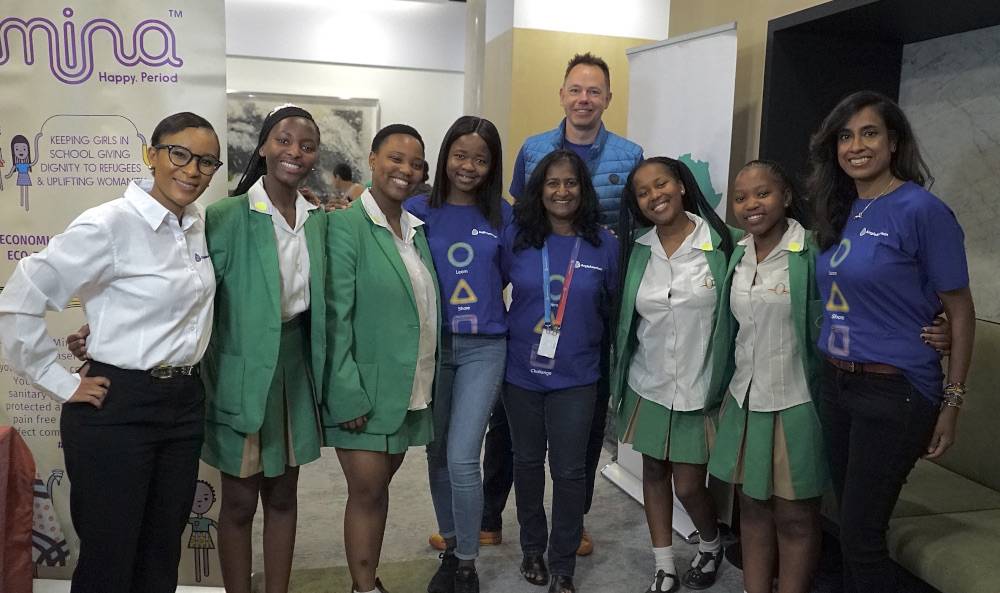
Kutlwano Selemale, employee engagement specialist at Anglo American, said the change South Africa needed was in the hands of the girls present: what you put in is what you get out. She thanked the sponsors and all the organisations involved: Afrika Tikkun, Mina Cups, Palesa Pads, uBambiswano and St Andrew’s School for Girls, Rotary International, Aluta Null, the Mail & Guardian, Southern Labs, Transfrontier Africa, the Women in ICT Forum, Global Conservation Corps, and Boston City Campus, which made bursaries available.
For more information, visit Good Governance Africa here.
The post Africa’s Girl Child Dialogues 2023 appeared first on The Mail & Guardian.
Gordhan’s dangerous board games:

The minister’s conduct was called into question during this week’s national working committee meeting, sources said
The post Gordhan’s dangerous board games appeared first on The Mail & Guardian.
Spirited away by a voice of gold:

Being called “The Voice” is no small responsibility.
Because of his exquisite instrument of wonderment, Vusi Mahlasela is not only a national treasure, but also a global icon. Furthermore, as a traditional healer who recently completed his initiation rituals, the African folksinger is also a conduit for the voices of the ancestors.
We are sitting in a small office at Planetworld, a sound equipment provider and studio north of Sandton in Johannesburg.
I have been given a 30-minute gap for an interview after Mahlasela’s sound-check and that evening’s launch of his album Umoja to media and some music industry types.
Next door, a bass drum is thumping to the engineer’s desire.
I’m buzzing after being delighted by the 58-year-old’s effortless voiceworks at the rehearsal as we sit down for our chat, with his long-time manager Brad Holmes, promoter extraordinaire, faffing over Mahlasela.
The revered singer-guitarist is looking frail after serious diabetes-related health issues but he gently indulges the effervescing Holmes for the friend and comrade he is.
“We must manage your energy. Where do you want to relax before the show? Which shirt do you want to wear — the golden one?”
That sorted, he leaves us to continue our conversation.
So, that voice. What’s it like hearing your own gorgeous voice?
“I know I’m called ‘The Voice’, but I’ve never taken any voice lessons whatsoever. It is just natural. It sounds different when I speak.”
So far, so obvious.
But then a confession by The Voice: “So, I don’t like hearing myself…”
Still, he is aware of the power of his voice which touches people around the world — something Mahlasela humbly accepts.
After a concert in Norway, a family originally from the Congo came to thank him — their five-year-old son loved the show and so did the parents.
The dad told him a wonderful story: “You know, your music is really great and all that. But you know what happened? My wife was pregnant. And then she went into labour and we didn’t know what to do, because our apartment building’s lift wasn’t working at the time,” the father told Mahlasela.
“Her water broke and I panicked. But there was a tape cassette and I just put it in the player and pressed ‘play’. It was your music … then she relaxed and gave birth.”
Mahlasela has a gentle smile on his face. “How beautiful. And then they named the boy after me, Vusi.”
After the concert, little Vusi met big Vusi. The former is probably the only Norwegian Vusi there is.
An American woman once told him after a performance in the States, “Coming to this show, it was more like a church for me … the message and everything.”
That’s why she bought 13 CDs to give to all her family, spreading the musical word.
Unsurprisingly, Mahlasela sees the world through spiritual lenses: “I am a spiritual person, very much so.” Becoming a sangoma, he followed in his late mother’s footsteps.
He believes he channels messages from his ancestors — “the underground”, as he refers to them. They speak to him in his dreams, Mahlasela tells me. He then relays that in his music.
When I ask him if an over four-decade veteran like him gets nervous before a show, he draws an analogy with a priest on a Sunday morning.
“It’s good for a priest to be nervous before he preaches. So, nervousness is good. It’s natural.”
When Mahlasela was still at school in Mamelodi, Pretoria, already making music, there was the obvious question: “What do you want to be?”
“I did not finish school because I was involved in politics, through activism. I said my wish, ‘I wanted to be a doctor or a priest.’ Now they’re telling me, ‘But you’re already doing it with your music. You’re preaching and you’re healing.’”
Produced by Joe Arthur, the 10-track Umoja was recorded at Flame Studios at Constitutional Hill in Johannesburg. It’s Mahlasela’s eighth studio album since his 1992 debut When You Come Back.
“Umoja means spirits,” he explains. “The album is a tribute to our spiritual beings.”
On it are collaborators including Malian singer-guitarist Habib Koité, saxophonist Steve Dyer and actor-singer Maduvha. It’s a multilingual album, with songs in English, Sepedi, Tshivenda and Swahili. The Voice —or maybe The Tongue? — has a natural aptitude for languages.
“I speak maybe 17 languages. I’m the first recipient of a multi-lingual award that was given to me by the Pan-South African Language Board.”
Our man Holmes pops his head around the door. “How long to do?”
“Fifteen minutes, please?”
“Okay, 10.” And he’s off. I rush with Mahlasela through the songs on Umoja (see sidebar).
Before we wind down, the veteran troubadour tells me this is his first album launch. Unlike Gallo Music, the previous guys “didn’t do launches. They just released albums.”
An hour and half later it’s showtime and Holmes gently accompanies his friend Mahlasela up the side stairs onto the stage.
Dressed in that striking golden shirt, black trousers and shiny black leather shoes, the music man picks up his sunset orange guitar. He’s in the spotlight and we’re spellbound, as he, his excellent band and the magnificent Maduvha, who occasionally shares vocals, take us seamlessly through the songs on Umoja.
Each song beguiles us because, as Mahlasela says, “The songs are like my children.”
But like a good showman, he ends with a crowd-pleaser. As always, his heartfelt take on Weeping leaves no eye dry in the house.
Still a watchdog on country’s social issues
Vusi Mahlasela didn’t think he would be writing political songs for his latest studio album Umoja.
When the activist-singer started his 41-year-long recording career in 1992 with his debut album, When You Come Back, apartheid was in its dying throes. Or so we all thought two years later when the country elected its first black president, Nelson Mandela.
But on the new album several tracks address pressing societal issues in a country where the poor are getting poorer.
“I was not really looking that one would be writing this or getting to get subjects like this. But now I think one has been put here as a watchdog.
“When we went to the election to vote for Mandela, it was more about freedom.
“But it’s no longer about freedom now, it’s about quite a lot of things and about the economy. Things that we didn’t think we would still be fighting today.”
Tlala Mpekole, for example, is about the politics of hunger and poverty, says Mahlasela. He cites the example of the desperate Eastern Cape woman who killed her children and then herself, because she could not afford food for them.
“The message here on this song is there’s no excuse for not sharing.”
On Thuto, which means education, Mahlasela warns: “The education we are given, it is that they make you do things that they want, so that they could enslave you.”
Lerato (love) is one of three songs that Mahlasela recorded in New York with South African-born drummer Ian Herman and Malian singer-guitarist Habib Koité — he added the lyrics afterwards.
“So, I just listened to what we’ve recorded and then something came to me — choose love because it’s better than hate.”
The album opener, A Dance of Life, which features Maduvha on vocals in Tshivenda, is an earth prayer dance.
“When the Khoisan dance, the diamonds will come closer to the earth’s surface,” and he adds with a chuckle: “That’s probably why Paul Simon called his song Diamonds on the Soles of Her Shoes.”
Azamali celebrates musical ancestors, such as guitarist and fellow Mamelodian Philip Tabane, whom he describes as his “guru”.
It also showcases Mahlasela’s superb guitar work.
“That’s the typical Mamelodi sound. It’s about the ancestors like him and I’m showing my love for the malombo sound there. I’m still very much inspired by Malombo’s music.”
With the hymn, Sietsi la Letswalo (directly translated as “troubles of the conscience”), Mahlasela pays tribute to his late mother.
“I’ve put it on the album because my mother loved this.”
The post Spirited away by a voice of gold appeared first on The Mail & Guardian.
Submit and get free exposure here: Showcase Your Business | Advertise Your Special Offers.