
ANC lambastes DA over cadre deployment records, hours before deadline:

As the clock moves closer to 5pm Monday, when the ANC must hand over its records on “cadre deployment” to the Democratic Alliance (DA), the governing party has lashed out at the main opposition and MP Leon Schreiber, who lodged the application for the records, accusing both of “gaslighting” and “deliberate disinformation”.
The ANC said in a press statement that although it would hand over the records, the opposition party and Schreiber were both “fully aware” that deployment committee minutes for five years could not be found.
The ANC told the Zondo commission probing state capture in June 2021 that despite a “thorough search” for the minutes of its national deployment committee, it could find no documents “for the period December 2012 to December 2017”. This was when President Cyril Ramaphosa chaired the committee.
“Dr Leon Schreiber and the DA are fully aware [of] these facts, but have chosen to engage in deliberate misrepresentation, threats and false expectations of what might be contained in the records,” the ANC said in Monday’s statement.
Nevertheless, the party said it would hand over “all records that have been found, and give an explanation regarding those records which either do not exist, or have not been able to be found”.
It added that “precautions” had been taken to comply with the Protection of Personal Information Act, “to protect the personal information of those who have not given consent for its release”.
The ANC continues to maintain that deployment by political parties is not unique to itself, reiterating that its cadre development policy and deployment strategy are “designed to advance the constitutional goal of transformation”.
In his state capture report, Chief Justice Raymond Zondo found that the ANC believed it was “entitled” to deploy “its people” to the boards of state-owned enterprises, even if this was to the detriment of the entity and the country.
It also found that the deployment committee made recommendations or stated preferences when it came to educational institutions, judicial vacancies, local government and international organisations, among others.
Zondo said that the deployment policy was both unconstitutional and illegal, violating the Public Service Act and several subsections of the Constitution, and played an enabling role in state capture.
Ramaphosa has defended the practice. Both he and ANC chairperson Gwede Mantashe told Zondo, when appearing before the commission, that the committee did not decide on appointments.
In his findings, Zondo said it appeared “that the committee does not always merely make recommendations but in fact often instructs appointing authorities on who to appoint”.
The constitutional court last Monday dismissed the ANC’s application for direct leave to appeal a high court order that compelled it to submit documents on the decisions taken by the cadre deployment committee.
The ANC had asked the DA for an extension to Friday this week to get the records together but the DA denied this. “They have known about this for three years,” Schreiber told the Mail & Guardian on Monday.
He said that the deployment documents — “minutes, CVs, email threads, WhatsApp discussions and other relevant documents relating to the committee” — were to be sent electronically to the DA’s legal team and would thereafter be “meticulously” studied.
Responding to the ANC saying in its statement that it “would be regrettable if Dr Schreiber misuses the noble provisions of our Constitution which guarantees citizens the right of access to information for narrow party-political advantage”, Schreiber said noble provisions existed to serve the public.
Noble provisions were also intended to “get behind the reasons for state capture”, he added, and the reasons for service delivery failures.
“If I read between the lines on that particular sentence, [the ANC] is saying we should not share politically sensitive information but it is clearly in the public interest,” he said. He added that if the ANC was intimating that the records would be redacted, the DA would seek legal advice.
He said that in the minutes submitted to the Zondo commission, the first item was the adoption of previous minutes, so clearly the missing minutes existed.
The DA has said publicly that if the ANC did not comply with the constitutional court ruling, it would petition the court to charge the party with contempt.
In its statement, the ANC said it was “proud of its cadres who have achieved great outcomes for South Africa, and those who are shoulder to the wheel, driving transformation and societal renewal in challenging socio-economic circumstances”.
How public influence over economic matters is eroded:
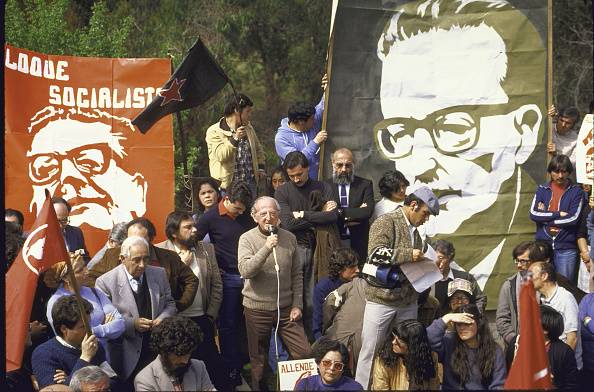
Marxist theorists contend that history follows a spiral trajectory, repeating itself while introducing new layers of complexity with each iteration. Drawing from this spiral analogy, I posit that discernible repetitions occur across time and space, contributing to the persistence of imperialism in a territory now called South Africa.
Despite its imperfections, criticisms of the ANC might be exaggerated, considering the influence of external actors who contribute substantial layers to the already imperfect situation. Since 1994, South Africa has been undergoing experimentation in terms of economics and human rights, and the focus on eradicating apartheid was given a subsidiary role. South Africa continues to go through its own spiral trajectory: economic imperialism is strong and deepens wounds created by apartheid.
At the United Nations General Assembly in December 1972, Chile’s president Salvador Allende expressed his frustration with embedded forms of imperialism that posed threats to his country. Allende’s powerful speech is an illustration of a recurring pattern in the Global South: the gradual erosion of public influence over economic matters. This “deterritorialisation’”manifests through an ever-growing separation between economic concerns and public debate, both domestically and internationally.
In simpler terms, economic factors such as investment and natural resource exploitation are increasingly divorced from the realm of public debate. They are instead controlled by the private sphere (including transnational and international arenas). As the public-private divide widens, it normalises the exclusion of economic matters from democratic discourse and decision-making, reinforcing inequalities and eroding public good.
As the Global South progresses through its historical “spiral”, informal discourses championing capital interests alter the language used to frame crucial issues. Terms such as nationalisation are reframed as “expropriation”, and sovereignty over natural resources and the right to economic development towards the apolitical human rights terminology.
Also, concepts such as business and human rights due diligence championed by the developed North present a problematic narrative. They position old imperial powers as the “saviours” of “pagans” they exploited, thereby obscuring historical power dynamics and raising concerns about neo-colonial intentions. The civilised world is suddenly concerned about the soulless, uncivilised people who were once deemed to bear real rights because of their apportioned sub-human status.
This gradual linguistic shift normalises “deterritorialisation”, the erosion of national economic control, often achieved through increasingly informal interventions or external mechanisms imposed at the international level. Presently, numerous soft-law and hard-law approaches aim to separate economic interests as a public good from states and their populations. Some notable examples include trade agreements, UN Guiding Principles, the Kimberley Process and Organisation for Economic Cooperation and Development Guidelines for Multinational Enterprises.
All this unfolds under the pretext of dubious international law principles originally designed to safeguard the interests of old powers at the expense of the Global South. Rather than overt aggression, the modern twists in this rapidly turning spiral involve embedded economic and diplomatic pressure, subtly swaying countries towards policies favouring external capital.
The Chilean experience and economic subversion
On 21 September 1970, Allende was elected president and implemented significant economic reforms that affected the interests of the United States and the Chilean elite. This led to internal and external pressures against Allende’s government.
Nonetheless, Allende continued to nationalise industries aiming to benefit the state and promote social welfare. His economic agenda and potential threat to external interests culminated in a US-backed coup in 1973. Allende took his life during the coup, ushering in the dictatorship of Augusto Pinochet.
Pinochet’s policies deepened Chile’s economic dependence and facilitated exploitation by foreign corporations, representing another twist in the spiral of imperialism persisting even post-colonialism. This pattern continues to be observed in the Global South, with corrupt leaders enabling continued imperialist influence. Conditions are nurtured for an adversarial relationship between “savages” (dictators) and “victims” (citizens), requiring the saviour from the North in the shape of old powers, the UN and international civil society.
Knowing his economic reforms faced opposition domestically and abroad, Allende sought solidarity from the Global South during his UN address. This coincided with prevalent Third World economic considerations and decolonising rhetoric at the UN, particularly reflected in General Assembly Resolution 1803 (XVIII) on the permanent sovereignty over natural resources. Allende warned against a “reflex modernisation” model excluding millions from progress and condemning them to suffering.
Furthermore, Allende drew parallels between Chile and other developing countries facing similar problems, suggesting a broader struggle against a system perpetuating inequality. His speech played a significant role in galvanising support for the developing world and its economic struggles. His words resonated with many countries and his call for solidarity helped to lay the groundwork for the New International Economic Order (NIEO) movement, which was short-lived.
Nevertheless, the Chilean coup and its aftermath continue to spark debate, particularly regarding the implementation of neoliberal policies by the Chicago Boys, a group of Chilean economists trained at the University of Chicago.
Make the economy scream
In his book The Chile Project: The Story of the Chicago Boys and the Downfall of Neoliberalism, Sebastian Edwards attempts to separate the neoliberal project from the brutal Pinochet regime that first put it into practice. He argues that the policies brought relative prosperity to Chile and defends the Chicago Boys’ reputation. But critics say he downplays the human rights abuses and negative social consequences of neoliberalism under Pinochet.
Chileans in Chicago-style economics did not start in Chile but gained expression and prominence there. Otherwise known as the Chile Project, local students were indoctrinated with the power of self-interested, rational markets and the folly of state economic planning. They were also trained to view the welfare state with deep suspicion. After the Cuban Revolution in 1959, the Chile Project became integral to Washington’s Cold War strategy, which has been the case long after the Soviet Union collapsed.
With Allende’s overthrow in 1973 and the establishment of a US-backed anti-communist regime, the Chicago Boys, now well-connected and prepared, played a pivotal role in implementing neoliberal policies, unintentionally supporting a dictatorship that curtailed labour rights. In this regard, Chile pursued vigorous privatisation of education and its social security programme, with Pinochet’s 1980 constitution criminalising strikes by public sector workers.
At the macroeconomic level, Chile abandoned efforts to build a diverse and resilient national economy, opting to specialise in low-value exports such as fruit. This neoliberal experiment handed control of prices to market forces, potentially leaving the country vulnerable to external shocks and exploitation. In a surprise turn of events, Chilean industry leaders were pleasantly stunned when Finance Minister Sergio de Castro permitted them to charge whatever price they wanted for basic consumer goods such as cooking oil.
Despite his general support for neoliberalism, Edwards admits the harsh realities of Chile’s economic transformation. The “shock treatment” caused immense unemployment, failed expectations and led to a devastating recession. He recognises the irony of implementing these reforms under a dictatorship and concedes the privatisation programme enriched regime allies through undervalued asset sales. Moreover, the lauded pension system fell short, and inequality worsened even by South American standards. Edwards even refers to an “apartheid” fuelled by neoliberalism.
Siyabonga Hadebe is a PhD candidate in international economic law and a labour market expert based in Geneva.

Two executive education courses offered: Strategic Analysis and Corporate Foresight, and Transformational Leadership
Following its bold migration to the TSIBA Business School’s state-of-the-art campus in Cape Town, this forward-thinking institution now brings executive education at a global level to this international city.
In a unique education collaboration, Zurich-based SBS Swiss Business School will offer two of its most sought-after executive education offerings at TSIBA Business School in March and April 2024.
SBS Swiss Business School and University of Applied Sciences Institute is a leadership and management institution dedicated to preparing students for careers in the global economy. Cutting edge theory and immersion in international experiences enable SBS course participants to learn far more than management theory and practice. Participants acquire new ways of thinking that can profoundly change their lives and the success of their organisations. Towards a broader and shared mission of building leadership capability, the SBS collaboration with TSIBA Business School not only brings the best of international business education to Africa and to Cape Town, it also supports the broader mission of TSIBA — to profoundly change the future trajectory of South Africa’s future business leaders.
Facilitated by Dr Michael Gerlich, PhD, MBA (Cambridge), the following two certificate programmes will run at the TSIBA campus in Cape Town in March and April respectively.
- Strategic Analysis and Corporate Foresight – 26 to 28 March 2024
- Transformational Leadership – 2 to 4 April 2024
Dr Michael Gerlich is the Head of Centre for Strategic Corporate Foresight and Sustainability at SBS. He teaches undergraduate and postgraduate students and supervises doctoral candidates. In addition to his work with SBS, Dr Gerlich teaches at the London School of Economics and Political Science and at Anglia Ruskin University, Cambridge. His distinguished academic contributions are showcased through his publications in leading journals, his role as a reviewer for notable publishers and speaker at international conferences. His 2023 publication, the Handbook of Strategic Analysis and Corporate Foresight serves as a crucial resource for both students and practitioners, underlining his significant impact on academic and practical realms of strategic management and foresight.
“In an era of escalating complexity, characterised by volatility, uncertainty, complexity and ambiguity (VUCA), the traditional paradigms of corporate strategy find themselves increasingly inadequate,” says Dr Gerlich. “As entities tasked with the stewardship of vast resources — financial, human, and environmental — corporations must now exhibit qualities of adaptiveness, resilience and foresight hitherto unparalleled. This sets the stage for an inquiry into the transformative role of strategic corporate foresight and transformative leadership in engineering hyper-adaptive organisations.”
- The three-day STRATEGIC ANALYSIS AND CORPORATE FORESIGHT certificate programme provides participants with an in-depth understanding of the analytical frameworks and foresight tools to create better strategies.
In an era defined by constant change and uncertainty, the ability to anticipate future trends, risks, and opportunities is more critical than ever for the survival and success of any organisation. Traditional strategic planning methods often fall short in preparing businesses for the ever-changing external environment. It is here that the twin disciplines of Strategic Analysis and Corporate Foresight come into play.
- The TRANSFORMATIONAL LEADERSHIP certificate programme also runs over three days of immersive learning, and provides participants with the inspiration, hands-on tools, and knowledge to enhance your emotional and leadership skills for leadership and managerial solutions and results.
In times of rapidly changing business contexts and globalised work, leaders and managers depend more than ever on their people to get results. Employees thus represent both a key resource and a liability for managerial success. Tapping the full potential of employees requires leadership and people management skills that stretch beyond ordinary managerial competencies.
The venue where the Strategic Analysis and Corporate Foresight and the Transformational Leadership programmes will be taking place is at TSIBA Ndabeni, 51 Old Mill Road, Ndabeni, Cape Town.
SBS Swiss Business School and TSIBA Business School share a commitment to excellence in business education and to the principle of exceptional value. Accordingly, SBS programmes offered in collaboration with TSIBA are priced for participants from and in Africa.
Interested participants and parties can contact Graham Moore at TSIBA Business School on info@tsiba.ac.za or on graham.moore@tsiba.ac.za for seat availability, confirmations and pricing information.
Visit www.tsiba.ac.za, call 021 532 2750, WhatsApp on 057 814 5960 or email on info@tsiba.ac.za for more information and check TSIBA social media:
https://www.instagram.com/tsibaed/
https://www.youtube.com/channel/UCqP85uAlE6c7k8fSZCeaCXA
https://www.linkedin.com/company/tsiba/
https://www.facebook.com/TSIBAed
About TSIBA Business School
TSIBA Business School, registered as TSIBA Education NPC, is a not-for-profit accredited higher education institution which provides fully-funded, and quality tertiary education to talented and ambitious students from at-risk communities in South Africa.
At TSIBA, all undergraduate students study on full or highly subsidised scholarships, thereby removing financial barriers to quality tertiary education.
TSIBA works to transition talented young people from unemployability into active economic citizenship through access to quality business education and leadership development, an aim which we believe is paramount given the massive levels of youth unemployability in South Africa.
Since inception in 2004 we have provided over 8 500 annual tuition scholarships to students who otherwise would not have had the opportunity to access and complete tertiary studies with a relevant and accredited business qualification. This level of financial assistance is made possible through empowerment and philanthropic initiatives.
Submit and get free exposure here: Showcase Your Business | Advertise Your Special Offers.
