
ANC leaders accused of corruption and ‘capture’ of Joburg entities:
The ANC in Johannesburg has allegedly captured city-owned companies Pikitup and Johannesburg Water with the appointment of relatives who did not apply for posts.
In addition, a report detailing R1.3??billion of corruption unearthed in a forensic report was covered up.
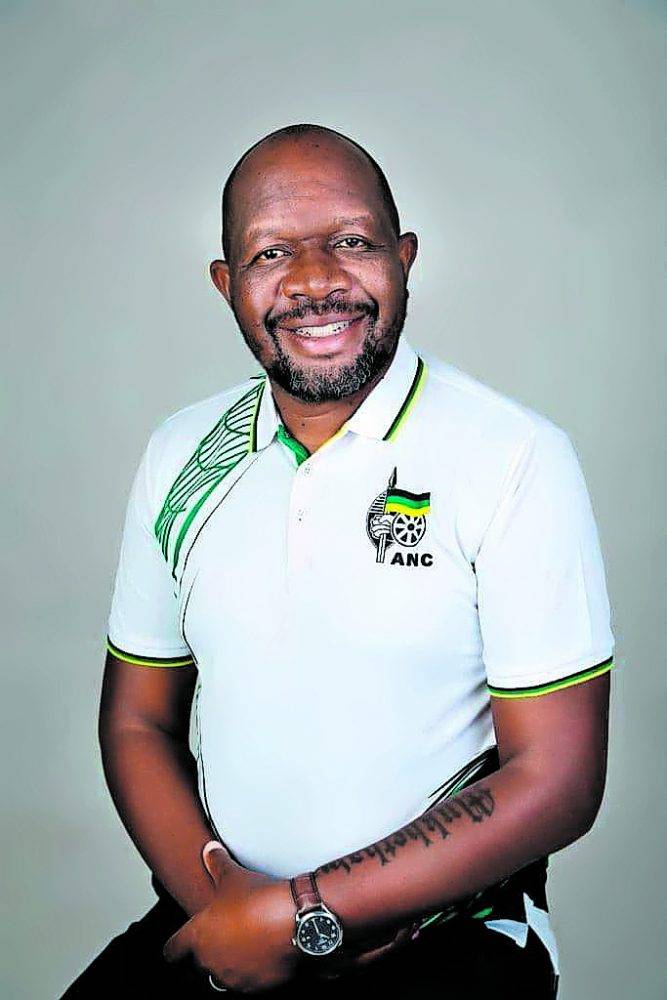
At Johannesburg Water, Sasabona Manganye — the ANC’s Johannesburg region secretary and a member of its top five officials — has been implicated in alleged nepotism regarding the vacant R2.6??million-a-year chief operations officer position at the company.
Senior executives and managers at Johannesburg waste management company Pikitup employed their relatives as part of the 300 general workers hired in February at its 12 ??depots.
Two senior city officials told the Mail & Guardian that the ANC had “captured” Johannesburg entities despite not holding an outright majority in the council.
“It used to be the high-paying jobs that ANC leaders used to influence in favour of their members or relatives. It now seems like general worker positions that pay R15??000 a month are also not exempt from the ANC’s interference,” said one official, who asked to remain anonymous.
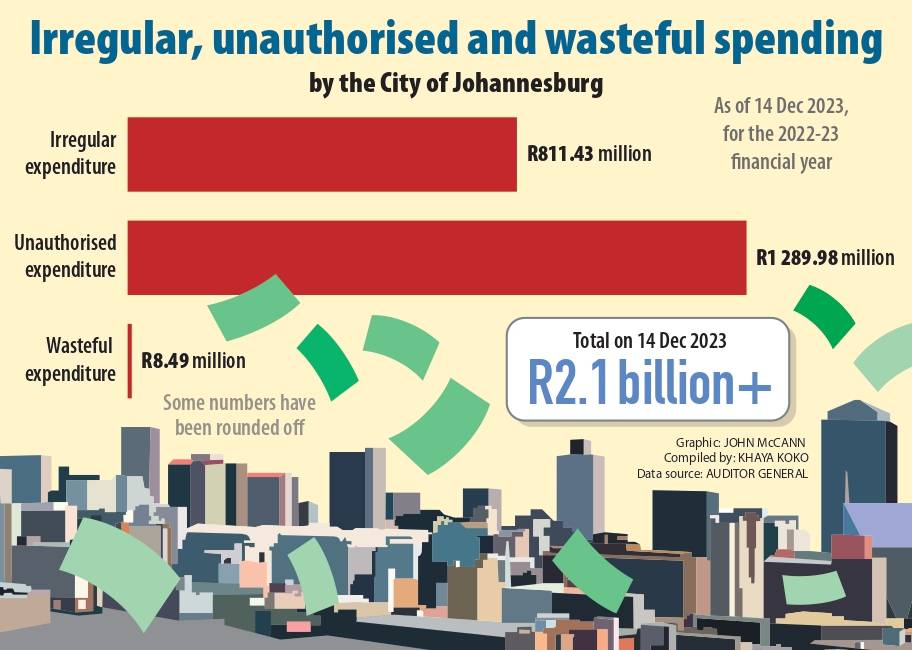
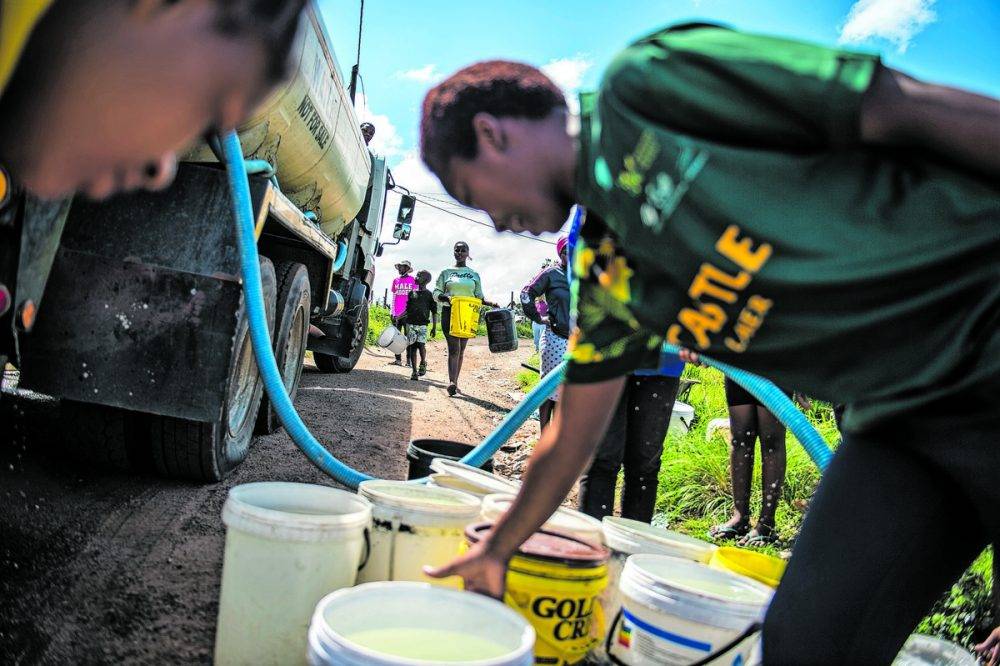
The apparent shenanigans at Pikitup and Johannesburg Water come as residents have to endure uncollected waste, particularly in the city centre, and crippling water cuts since March in a city that has had unstable leadership, with four different mayors since the November 2021 local government elections.
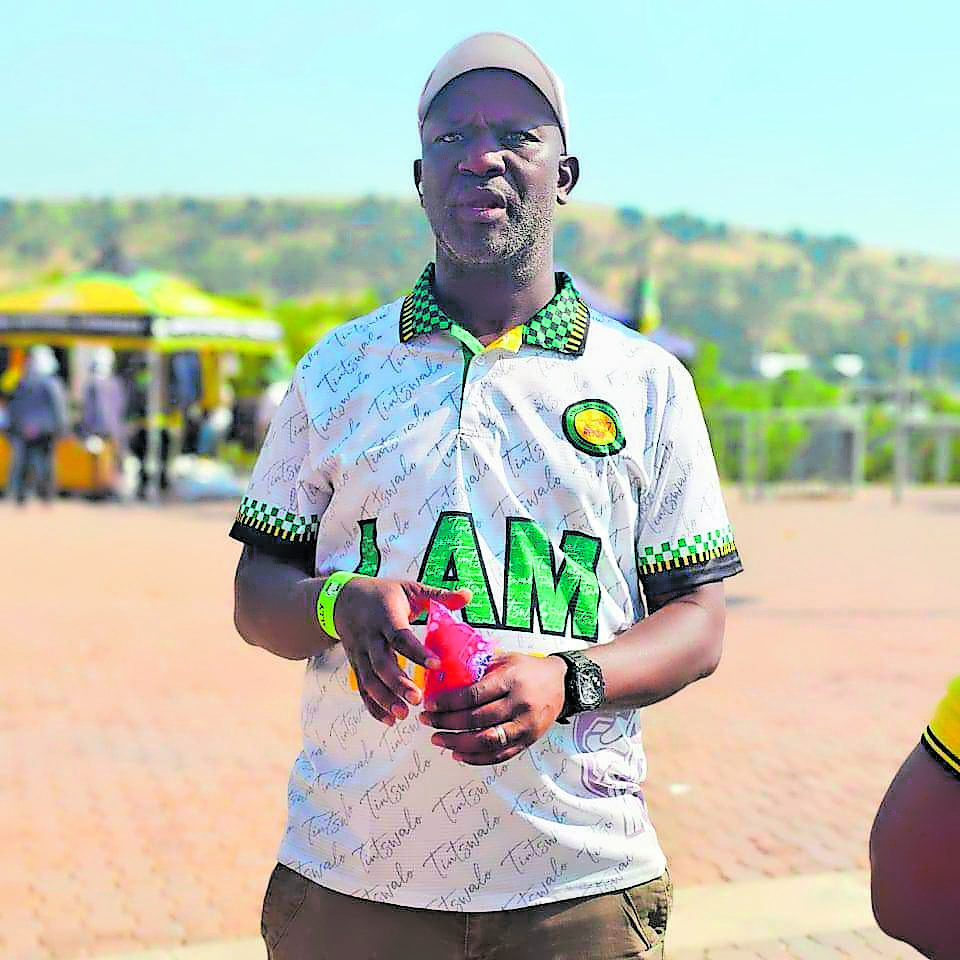
Maxwell Nedzamba, Pikitup board chairperson and treasurer of the ANC in Johannesburg, has three relatives employed as general workers at Pikitup’s Midrand, Roodepoort and Central Camp depots, despite not appearing on the city’s official list of 17??073 people who applied for the positions.
As treasurer, Nedzamba is one of the ANC’s top five officials in the region.
The list of candidates who applied for jobs does not include Nedzamba’s relatives, whose names are known to this publication. The relatives, who share the same surname as the ANC’s regional leader, are however recorded on the final spreadsheet of appointed workers.
According to travel logs from Pikitup, the entity directed its driver, identified as Stanley Minnie from city records, to use a company vehicle to fetch Nedzamba’s family members from Johannesburg Park Station after arriving by bus from the Venda area of Limpopo.
A highly placed Pikitup source said Minnie was unaware who he was sent to fetch at the station.
“Stanley arrived at Park Station and saw people with heavy luggage that he had to drop off in Diepsloot,” said the source, who asked to remain anonymous.
Kagiso Lusithi, Pikitup’s general manager for security and facilities, and Dumisani Langa, the employment relations general manager, also have relatives with the same surnames working at the entity’s depots without applying for the jobs, according to official city records.
Moreover, Nedzamba chairs the board that rejected a November 2022 forensic investigation and rehired, on a fresh four-year contract that began in June last year, Pikitup chief financial officer Litshani Matsila, who was found to be “grossly dishonest” in losing about R1.3??billion through “fraud and corruption”.
Interestingly, Matsila also has a sibling appointed as part of the 300 general workers. Matsila’s family member, who will be 42 years old in October, was placed at the Norwood depot and does not appear on the list of applicants, but was hired in February.
In a statement sent to the M&G and signed by Nedzamba and Bukelwa Njingolo, Pikitup’s managing director, the city-owned entity defended the reappointment of Matsila as chief financial officer.
The statement added that the November 2022 findings were “nullified” because the September 2022 “special meeting” which led to them was convened by the previous Pikitup board without “seeking approval from the city as the shareholder” after exceeding the allocated number of gatherings they can hold in a financial year.
Matsila was suspended and then found guilty on six counts of fraud and corruption after the forensic investigation’s findings before his initial four-year contract expired in February last year.
But he was temporarily reinstated the following month by the new board chaired by Nedzamba after it was appointed by then-mayor Thapelo Amad. Matsila’s fresh four-year term was ratified in June.
“During his suspension, the CFO [chief financial officer Matsila] lodged a grievance with the city against the unprocedural process that was followed by the board in processing allegations against him. The city manager [Floyd Brink] wrote to the board to remedy the defective processes,” Nedzamba and Njingolo stated, adding that a legal opinion that the board sourced “confirmed the unprocedural aspects” of the Matsila inquiry.
The findings against Matsila stated that he was “a threat to the best interests” after he “abused his powers” in awarding about R1.3??billion to 18 companies to provide Pikitup with 124 vehicles for waste management operations at four depots.
The 18 companies were “unsoundly and unreasonably” appointed on a 24-month “as-and-when” basis following the 31 July 2020 lapsing of the previous 32-month lease agreement Pikitup had with the rental company Avis, the report stated.
Pikitup has only 24 functioning vehicles out of roughly 130 needed to do its work.
“In addition, the CFO, after the appointment of the service providers for ad hoc services, would receive requests for augmented services, such as trucks and other services, directly from the depots — a system which he had implemented contrary to either any discernible SCM [supply-chain management] or fleet management process,” reads the report.
“Thereafter, and without any due SCM or official procurement process, the CFO would unilaterally select the service provider to provide the service(s) requested.”
But Nedzamba and Njingolo said this week that the “illegal” report into the senior executive was “rejected” by the new board, which — “as part of remedying the process [that] was now declared flawed” — commissioned a new investigation into Matsila using the City of Johannesburg’s Group Forensic and Investigation Services (GFIS).
They added that the new inquiry’s report was tabled to the board last month. “The report found that the allegations against the CFO were not substantiated, which resulted in the exoneration [of] the CFO,” they stated.
But the M&G has seen the invoices and “fraudulent” payment details to the 18 companies cited in the November 2022 findings, while Nedzamba and Njingolo did not provide details of the new investigation submitted last month.
Although Pikitup said in its statement that it would not answer “each and every allegation” contained in the M&G’s questions, the entity confirmed that unsuccessful candidates in the recruitment of the 300 general workers embarked on protests that disrupted waste management operations.
Nedzamba and Njingolo stated that the city manager “demanded that a full forensic investigation be conducted into these allegations of impropriety and nepotism”, adding that GFIS was tasked with the inquiry, which was “still under way”.
They however said that to ensure “transparency, impartiality, integrity, and credibility”, the recruitment was outsourced, and none of the senior officials alleged to have family members employed by Pikitup were involved in the hiring process.
“While we intend to handle this response in such a manner that it doesn’t preempt the outcome of the independent investigation, evidence in our possession does confirm that all appointed candidates to the 300 positions went through the same application process as centrally handled by the city,” reads the statement.
“Our undertaking and commitment are that should the investigation implicate any of our employees in improper misconduct, full and harshest sanctions will be taken following a process of consequence management and remedial actions.”
Three weeks ago, the M&G reported that Gugulethu Phakathi — Johannesburg Water’s former board chairperson who sits on the structure as a non-executive director — was shortlisted for the chief operations officer post after the May job advertisement was allegedly tailored to suit her qualifications. This was after Phakathi did not meet the original academic requirements when the vacant post was earlier advertised in December.
Notes from a 2 July meeting of the ANC’s regional executive committee detail that the office bearers, including chairperson Dada Morero — who is also the city’s mayoral committee member for finance — should investigate Manganye’s alleged interference in local government appointments.
The M&G’s 5 July report noted that the chief operations officer post that Phakathi and two others were shortlisted for initially required, among other things, a National Qualification Framework (NQF) postgraduate degree in business management or engineering at level eight when it was advertised in December. Phakathi did not fully meet the requirements, having a University of Johannesburg bachelor of technology (BTech) in mechanical engineering, which is an NQF level seven qualification. Her qualifications were catered for in the May job post.
It has now emerged that the ANC in Johannesburg ordered an investigation into its secretary, Manganye, and his alleged influence in ensuring that Phakathi received the executive position.
Phakathi, according to her social media pages, is an active member of the ANC in Johannesburg, and regularly attends and hosts political programmes for the organisation, including running the ANC Women’s League’s young women’s desk activities against gender-based violence.
The M&G spoke to several members of the ANC in Johannesburg’s regional executive committee, who detailed the structure’s concern with Manganye’s alleged “bulldozing” of the Johannesburg Water board to appoint Phakathi.
One said deployments to city-owned entities were usually discussed among the regional office bearers, which includes Nedzamba, Manganye and Morero as the treasurer, secretary and chairperson, respectively, of the ANC in Johannesburg.
The source added that Manganye “tried to smuggle in” Phakathi’s appointment as Johannesburg Water’s chief operations officer without discussing it with the office bearers.
“Phakathi’s appointment was dismissed outright because of the water troubles in the city. When he [Manganye] failed to smuggle in Phakathi’s appointment, he went directly to the [Johannesburg Water] board members, who pushed officials in the entity to advertise the post, which had as its minimum requirement an NQF level eight,” explained the insider.
Another source in the ANC’s regional executive committee described a February meeting of the structure, where a committee member alleged that two directors sitting on the Johannesburg Water board claimed that Manganye was “putting them under pressure to employ Gugu”.
“The pressure from Manganye resulted in the re-advertisement of the position to suit Gugu. The regional executive committee was disturbed by the allegations — causing the meeting to last past midnight, having begun at 6pm — and a resolution was taken for the regional office bearers to investigate the claims against Manganye,” the source added.
The insider’s views were supported by another regional executive committee member, who said the investigation into Manganye was postponed owing to the ANC’s campaign for the May national and provincial elections.
The second regional executive committee member said the structure met on 2 July, and resolved that the regional office bearers should continue with the inquiry into allegations against its secretary.
When contacted for comment, Manganye said he was “shocked” at the allegations against him, adding that the ANC in Johannesburg’s spokesperson, Masilo Serekele, would respond on his and the party’s behalf.
Serekele denied that the regional ANC held any meeting that resolved to investigate Manganye, despite being provided details of the gathering by the M&G.
“There have never been any ANC regional meetings, which discussed any appointments into municipal entities.
“This clearly exposes how much you have been misled for [a] cheap political agenda that seeks to cast aspersions in the office of the regional secretary,” Serekele said.
He did not answer questions on the alleged capture of the ANC in Johannesburg, including the political implications for the party in
promoting good governance in the city.
The revelations come as Morero is set to replace Kabelo Gwamanda as Johannesburg mayor with the support of ActionSA’s 44 councillors in the 270-seat council.
No party holds an outright majority, with the ANC having the most seats at 91 followed by the Democratic Alliance with 71.
ActionSA leader Herman Mashaba, who had previously stated that his party would “never” work with the ANC, made an about-turn on Monday by saying his party would support the ANC’s candidate for mayor.
“It’s the current mayor [Gwamanda] that we do not want, this job is way beyond his capacity. We are not going to dictate who the ANC must put forward. The only thing we said to the ANC is that please give us someone who can serve the residents of Johannesburg,” Mashaba said.
The long and short of a 50-year artistic career:
It is 2pm on Tuesday and the exhibition’s opening to the public is just four days away — Saturday morning.
There is a flurry of activity in the adjoining spaces at the Goodman Gallery here in Parkwood, Johannesburg, but Sue Williamson is not flustered.
The celebrated 83-year-old artist has done this before. Several times and across the world. In fact, it is exactly 30 years ago that she had her first solo show at the Goodman when it was still in Hyde Park, not far up Jan Smuts Avenue.
The hum of post-lunch traffic is our faint soundtrack. The winter sun is streaming into the gallery’s coffee shop, where Williamson and I are sitting on a turquoise coach, and we have gone back in our conversation to that exhibition three decades ago.
“Yes, well, of course, 1994 was a pretty important year, and I had been invited to show on the Havana Biennial in Cuba, and Linda Goodman offered me a show in her gallery, so some of the work then was a preparation for that biennale,” she tells me.
Among others, she had an installation work called The Last Supper Revisited on show.
It was a glass-top table, with little bricks of resin, with scraps of materials that she had picked up in District Six inside. That was after the brutal forced removals of that community from the white part of Cape Town to the Cape Flats.
“And I remember visiting students from the University of Pretoria looking at the installation, asking ‘What is this?’, ‘How do you sell this work?’, ‘Is this art?’ and ‘Why are you doing this?’” she says, with a smile.
Also on show on the exhibition — “I think it was just called Sue Williamson’s Selected Work …” — was a large work called Native Life in South Africa, The Screen.
“It was four door-sized steel slabs with the pages of a brochure that had been published in 1936 on one side, presenting South Africa as this exotic country where you could come and experience all these strange races.
“And on the back of it, it was plastered with newspaper cuttings from Umsebenzi, a Communist workers’ newspaper, covering fights on the shop floor and showing a very different side of South Africa.
“That is something that I do quite a lot in my work, is try to show the whole two sides of the same thing, without really taking sides, as it were,” Williamson says.
This will also be the approach with this latest exhibition at the Goodman Gallery, plus, again, the use of news media and archival references.
Titled Short Stories in a Longer Tale, it examines six key moments (the short stories) in South and West Africa’s complex and layered history (the longer tale), using printmaking, photography, drawing, video, embroidery and installation.
For this show, the artist will share historically significant work from her 50-year career, as well as newer works.
As a journalist, I am interested in Williamson’s approach and the media she uses.
“The distance between journalism and art? Well, as a journalist, you have to write down the facts,” she responds. “As an artist, I have more freedom. You can kind of leave out some things if you want to.
“So, I think it’s more open, in a sense. You’re not trying to encapsulate all the facts for your audience. You’re trying to give them a space to think through it a little bit and perhaps provoke them.”
To me that sounds like good journalism.
It is not surprising Williamson’s work has journalistic elements to it.
“I wanted to be a journalist in the first place because I was interested in stories and people and things that happened around in our lives.”
She started as a young reporter at the Daily News in Durban, before switching to copywriting, and she went to New York to work as an advertising copywriter.
“It was only there, for the first time, that I started to take art classes in the evening. I started to marry the two careers together. But that interest in people’s stories continues.”
Newspapers have often featured in her work over the past 50 years.
“I’m still using newspapers. I’m still very interested in media,” she explains. “I’m always interested in subtext. Why has this been written? Who’s writing it? Why is it written in this language? Who are they appealing to? All these questions come up for me.”
Williamson also uses other media in her work.
There is the powerful For Thirty Years Next to His Heart which was made in 1990. For it, Williamson repurposed the dompas that Ngithando John Ngesi, a dockworker, carried for three decades.
The artist photocopied its encrusted pages, stamped by bureaucrats of the oppressive system, and recomposed them into the 49 panels of this gridded work.
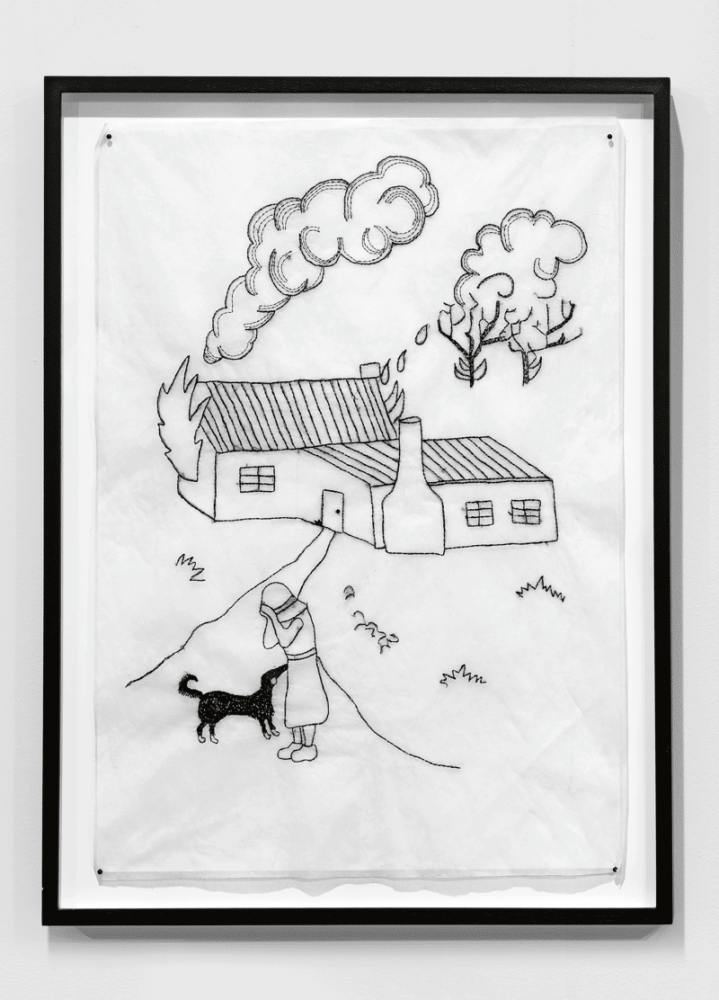
On the latest exhibition, one of the six “short stories” focuses on the Anglo Boer War, now known as the South African War, in which Britain tried to regain control over her old colony between 1889 and 1902, sending 400?000 soldiers to quell the Boer republics.
Called Stories for Children, this series consists of embroideries based on the illustrations in My Anglo-Boereoorlog Storie-Inkleurboek (My Anglo Boer War Story Colouring Book), which she bought in the gift shop at the Anglo-Boer War museum in Bloemfontein in the late 1980s.
The pictures and text in the book attempted to explain the horrors of that war to an Afrikaans-speaking child. Echoing them, Williamson’s images are hand-embroidered in black cotton on to white organdie; a labour relating to the handmade toys made by the women in the British concentration camps.
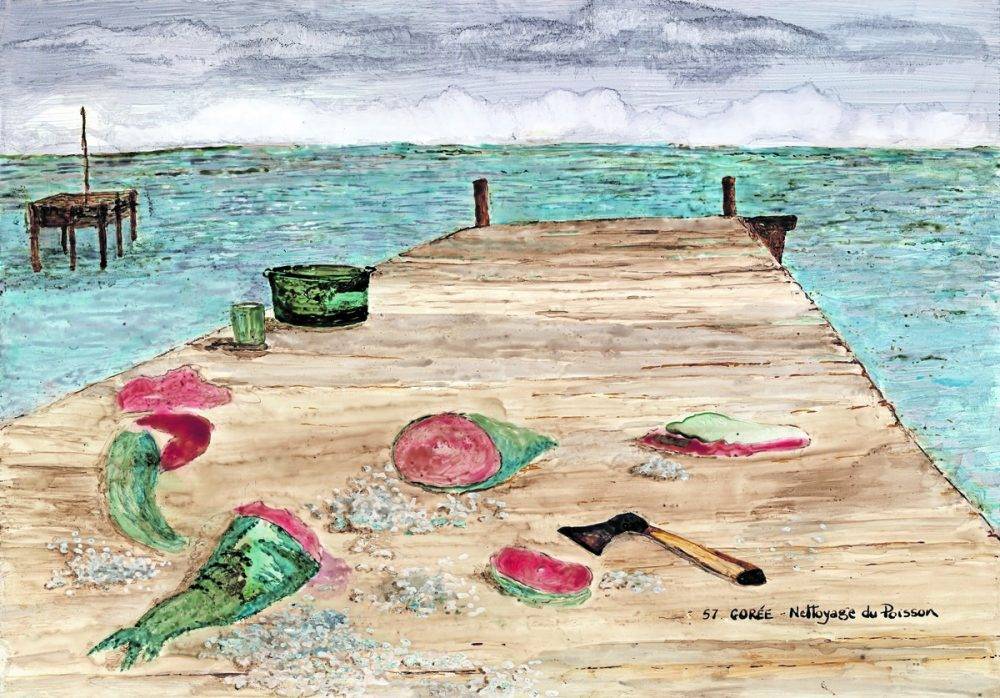
Looking further back on the continent’s timeline, the ink drawing series Postcards from Africa is based on photographic postcards sent in an era of colonial expansion.
Here, the artist redraws the landscapes and situations imaged in these old photos but the people who once stood so stiffly in many of them are no longer required to be present.
Williamson’s creative ideas of portraying the lives of ordinary South Africans go back to the late 1960s.
“I lived in the States for five years. I came back here in the late Sixties, right at the end of the Sixties. And felt very helpless not being able to do anything very much about what was obviously a very unfair situation.
“But in getting involved in activist activities through organisations, I began to feel that I had … it’s about the legitimate voice as well.”
But it came with a dilemma.
“You don’t want to tell other people’s stories for them. And it’s always a question in this country about who speaks for who and who has the right to tell this story.
“And it’s something that I get questioned about. Why do you feel that you can tell these stories?
“But, at the same time, I think the story is important to be told. And I always make quite sure that, if I’m going to tell somebody stories, that they’re totally amenable to that.
“And so it’s about respect. I think respect is really important when you’re working with people’s stories.”
Williamson, like so many left-wing journalists of my generation, has had an activist bent too. The stories that she has been telling do take sides. Even though she portrays, as she said, “both sides”, her focus has been on important milestones in our people’s struggle against apartheid.
Short Stories in a Longer Tale celebrates them.
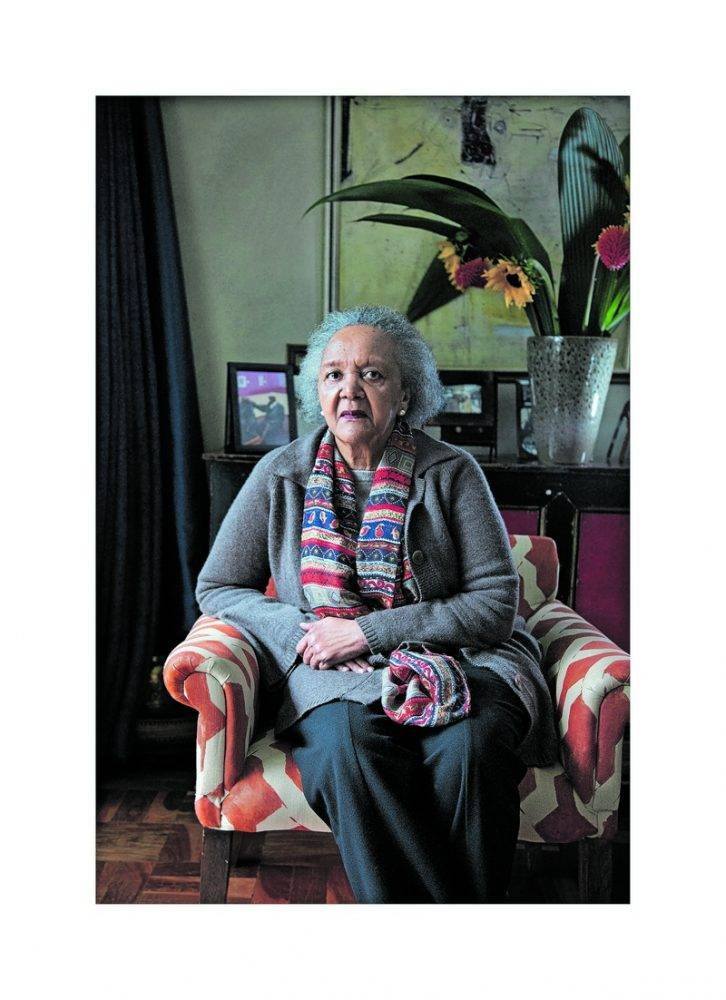
The brave activism of women in the apartheid years, 1948 to 1999, has been a key focus for Williamson. Taken from her All Our Mothers series is a photographic portrait of struggle stalwart Ray Alexander, known for her lifelong fight in support of the rights of workers.
This is echoed by the installation A Chair for Ray Alexander, which pays homage to Alexander’s reputation for always listening to others. Sitting with her chin on her hand in a listening position, Ray seems to be inviting the viewer to sit down and tell her their troubles.
Across from the Alexander works are 13 photo portraits from the ongoing series All Our Mothers. They include Barbara Masekela, Rica Hodgson, Gertrude Shope, Ilse Wilson, Amina Cachalia, Ruth Mompati and Sophie Williams-de Bruyn, the only surviving leader of the famous Women’s March on the Union Buildings in 1956.
Next to her hangs a picture of Rebecca Kotane, who died a couple of years ago in Soweto.
“I took one photo of her,” Williamson smiles as she recalls the shoot. “And then, when I took it back to show her, she said, ‘No, it made my legs look fat.’
“She was 102 … and I said, ‘Well, let’s do another one then.’ She was such a sweet person. She was lovely.”
Around the corner in the gallery’s main exhibition space are works focusing on our country’s dark past. With the onset of the Truth and Reconciliation Commission, long-hidden truths emerged. Cold Turkey: Stories of Truth and Reconciliation, a forerunner to the artist’s Truth Games series, tells the story of the horrific experiments police hit squad commander Eugene de Kock carried out to test a cassette player that was also a bomb.
Nearby is Untitled (St James Massacre), which records in low resolution a TRC hearing filmed on a Sony Handycam from an ancient TV set in New York.
I put it to Williamson that it also seems like art as documentaries.
“I think of myself almost as a documentarian in a sense. I think the documenting side is very important.”
She says when she did the Truth Games series about the important cases which were coming before the Truth and Reconciliation Commission, one of the reviewers said, “Well, she’s just reproducing all the images which we see.”
“And I thought, yes, but it’s not for now. It’s so that 20 years on people can be reminded what those cases were and what this moment was.
“So, it is about laying down memories of, you know, comments on, things that have happened that are happening now, so that we can remember about it.”
Williamson’s covering of the past is not an exercise in nostalgia.
“I think that memory and archiving is incredibly important because I don’t think you can really understand the situation in a country if you don’t know what the history has been,” she says firmly.
“You have to know where you’re coming from before you can make a proper judgment about where you are right now.”
And right now has seen the sudden re-emergence of former president Jacob Zuma in the national political arena. His comeback is marked by reshowing Williamson’s 2014 work Pass the Parcel, Jacob, which followed the story of his rape trial through a series of newspaper cuttings highlighting the uneven power dynamics between Zuma and his accuser.
Williamson delved back into her experience as a journalist all those years ago.
“Well, I was the junior in the newsroom — my first job on the Daily News in Durban was to cut up the newspapers each day and stick stories in what were called guard books, which were used for reference — well, you know, we’re talking about a very long time ago.
“So, I had to cut them out, stick them in these books and stamp dates on them. That habit of collecting press cuttings has stayed with me all my life.”
She did that again in the Zuma rape case.
“I kept all the clippings, and you’ll see them up, and it follows the case along about how” — she trails off for a moment — “there’s only one picture of the person who’s accusing him but they’re all these ones of Zuma and how his daughter actually saves him.
“So, it’s about how powerful men abuse their roles and how women suffer. It’s about gender violence.”
This Goodman show comes ahead of a major retrospective of her five decade-long career, which will open at Iziko South African National Gallery on 19 February, titled There’s Something I Must Tell You: A Retrospective.
Surely it doesn’t mean that you’re retiring?
“No, no. Artists don’t retire. I’m working five, six days a week every week. What would I do if I retired?
“What would I retire to? I can’t even imagine.”
Williamson gets a mischievous smile on her face.
“Now I’ve told my studio mates, if I don’t appear after a few days and it smells a bit funny, you’d better come and look. But don’t write that!”
I plead because it is such a nice line, especially coming from a person who is already busy on new work for after the retrospective.
“Okay,” she relents, the smile back on her face.
Short Stories in a Longer Tale is on show until 24 August at the Goodman Gallery in Johannesburg.
Justin Timberlake is not kidding in this movie:
I have a confession — I am a fan of American singer Justin Timberlake. His funk-soul music reminds me of Michael Jackson.
As a white singer, Timberlake stays in his lane. Although he sings in a genre many would consider black music, he does not come across as trying to appropriate black culture.
He does not dress and speak like a “wanna-be urban gangsta”. You know the type — they say “aks” instead of ask, wear stereotypical hip-hop-type clothing and so forth. Complete pseudos!
But did you know that Timberlake released a new album in mid-March, titled Everything I Thought It Was? I vaguely recollect an interview on the BBC’s The Graham Norton Show, when he also performed a song off the album, but it got no airplay of any real significance.
This is not the first time there has been a lack of traction for Timberlake’s musical offerings. In 2018 he released a country album Man of the Woods, which he described as “Americana with 808s” (a famous drum machine manufactured in the early 1980s).
But, unlike his first three albums, Justified (2002), Future Sex/Love Sounds (2006) and The 20/20 Experience (2013), Man of the Woods generated little critical excitement.
It is not that these two most recent albums were bad. It is just that they were quite forgettable and, for me, had no standout tracks.
In 2021, smack-bang in the middle of the pandemic, the Fisher Stevens-directed movie Palmer starring Timberlake was released, also to no fanfare or meaningful coverage.
The reviews were iffy. On Metacritic, it scored an average of 53 out of 100, based on 21 critics.
Timberlake takes the part of Eddie Palmer, who was once a star high school quarterback but is now a recently released convict on parole.
So, it’s a life with not much to write home about. It is set in a typical mid-West Bible Belt one-horse town. Its one bar plays country music and everyone drives a pick-up truck.
The school janitor is an old black gent while the principal is white.
When Palmer’s grandmother dies, he gets stuck with Sam (played by Ryder Allen), an abandoned, gender-confident 10-year-old boy. Palmer becomes his temporary guardian.
In the movie, the way Timberlake looks, he would not seem out of place at a Trump rally. Note, not his views, purely his looks, because he could easily pass for what is referred to as “trailer trash” or “redneck”.
It is a far cry from his Señorita and SexyBack days, where he would not have been out of place in a Prince music video. We need to recall Timberlake has played the white hip-hop poseur in movies such as Alpha Dog and a sex symbol in several other movies. But, in Palmer, Timberlake does not seem out of place in conservative middle America.
A lot of the movie revolves around Palmer and his discomfort with Sam, who seems to be gay, and is not scared to show it. Sam is openly effeminate, wears colourful hair clips, loves make-up, plays with dolls, shows an affinity for hairdressing and has tea parties with girls.
As I watched Palmer squirming and looking as if his entire understanding of life is being threatened, my mind wandered from what I expected would be Hollywood’s sugarcoating of very real social challenges back to the time when I stayed in the south of Gauteng. It was in the early days of the post-apartheid era. My young family moved into a posh, suburban townhouse complex in the heart of the Vaal Triangle, in the industrial town of Vereeniging.
The complex had a communal pool, with a braai area and tennis court. At times, it felt like we had arrived. A far cry from the Group Areas Act areas we had grown up in.
Most of the families in the complex were white, mainly Afrikaners. One day, while in the pool with my son and daughter, a five-year-old blonde girl turned around and, in a hushed tone, said: “My mommy does not like me playing with kaffertjies.”
I was gobsmacked. I did the usual and tried to educate her about how wrong the word was and how her mommy was wrong to refer to anyone using that word.
And, as I watched Palmer’s discomfort, I thought of that little white girl — she must be in her late twenties now. How would she handle it if her boss was black? Or, heaven forbid (sarcasm intended), if she fell in love with a black person? What would that do to the lives of her parents?
Yes, we must deal with the racists, homophobes, the generally sick of mind. But do not for a second think their evil ways will triumph. And that’s how life gets you to change. Your children’s choices will force you to change. You might not want to be open and honest with yourself but children have a way of ensuring that your bad ways are tested and exposed. (Spoiler alert: Timberlake’s romantic interest in Palmer is black.)
Donovan E Williams is a social commentator. Follow him on X/Twitter @TheSherpaZA.
Submit and get free exposure here: Showcase Your Business | Advertise Your Special Offers.
