ANC proceeds to sue De Ruyter for defamation:
The ruling party wants a retraction and apology from the former Eskom CEO for implicating it in crippling corruption at the power utility
Review: Asus Zenbook 14 Flip OLED:
Reviewing laptops as a journalist is always centred more around work and less around play. I usually follow the same set-up to pull documents from the cloud to work seamlessly from one operating system to another. A Microsoft 365 subscription allows me to pick up where I left off when it comes to moving between devices and being OS-agnostic.
But this is not what I experienced while using the Asus Zenbook 14 Flip OLED. This time around it was a lot about play, and not just work. Sure, I could easily do what I needed to during business hours, but I could pick it up after hours for a different experience.
The reason it has “Flip” in the name is that as a 2-in-1 laptop, it flips all the way to 360°. You can open it traditionally like a laptop, fold it all the way across to use it like a tablet, or use it in a tent mode. When flipped all the way, the keyboard faces outward, but hitting the keys accidentally on your lap while scrolling won’t affect it in any way.
I could sit on the couch and second screen with it, while tuned into episodes on my smart TV. I could browse on it as a secondary device instead of my phone, like most of us do nowadays anyway. The one downside in using it this way is when the screen shut off, I had to flip it back to laptop mode to unlock the screen again.
I found myself propping it up in tent mode to browse content from my streaming services. Watching videos while keeping it at an angle that was comfortable started growing on me very quickly.
The flip form factor is in tune with how we consume content, even when travelling and working on a plane. The laptop will sit in a way that is comfortable to your surroundings, making it easier to get things done on the fly.
The laptop has a 2.8K OLED display, so everything looks good on it. Bright colours appear vibrant, and dark colours are deep — it has Pantone validated colour accuracy, which would be useful for designers. It has a 2880×1800 resolution in a 16:10 ratio that supports a 90Hz touch display. A stylus pen is included in the box.
You can see everything in high-res, which appears crisp, even down to the text on your email. If you like this level of detail, you will appreciate the display even more.
Given that it has a stylus, this appeal to creatives as well. However, I’m not in the habit of using one, so I didn’t find it useful for my day-to-day use.
That said, the experience was smooth while browsing and using multiple browsers and apps. I didn’t find the laptop struggling or lagging for what I needed to do daily. I’ve not tested it for things like video editing because I do that on my smartphone.
The Zenbook 14 I had on review is powered by Intel’s 13th-gen Core i7 processor with Iris Xe graphics, 16GB of RAM, a 1TB solid state hard drive, and a 75Wh battery.
Ports include 1x HDMI 2.1; 1x USB 3.2 type-A; 2x USB-C Thunderbolt 4; and a 3.5mm audio jack. It has built in speakers and a microphone, Harman/Kardon sound and is powered by Windows 11.
It also has an AI camera and audio system for video calls using Asus’ noise-cancelling technology and supports face login.
This is the only variant that Asus will sell in South Africa, but to be honest, good hardware is easy to come by today. What sets laptops apart from each other is the experience and software each one brings with it.


The Zenbook Flip has the “My Asus” app built-in, accessible on the menu bar at the bottom of the screen. It has useful info like everything about your machine, a user manual, product registration and option to upgrade the warranty.
It also has personalisation options to tweak it to your preference, like the fan profile, AI noise cancellation, sound modes, screen modes, dynamic screen refresh, the Number Pad or Function Keys plus a link to customer support. You can also monitor your software updates from it.
There’s another app called GlideX to pair your smartphone or tablet to, so it will mirror your device. This works for anyone who wants to demo an app on a big screen.
I enjoyed using the Zenbook more for recreational use and the personalisation that it brought, which could easily be overlooked if you don’t go into it. I found it easier to manage than default Windows.
The keyboard is springy and feels good to type on, it’s not loud or distracting, but I also used it a lot in touchscreen mode as a tablet. It has a large multi-touch touchpad that supports gestures.
The battery was average, but likely because of the bright OLED screen usage. You could also dim the screen, as with most laptops, to get more battery life out of it.
When it came to recharging, it took a while to fully charge. It does not support “fast charge”, something I’ve become accustomed to on smartphones, but I did use it with a portable battery during load shedding.
The placement of the charging port does not interrupt when using the screen folded to a full 360 degrees or tent mode, but I found that it heats up a bit while using it in that mode as the fans get partially covered.
The Asus Zenbook 14 Flip OLED is a laptop for work and play; excellent for an on-the-go lifestyle as it weighs 1.5kgs. It offers personalised software and is packed with good hardware. The USB-C ports are a bit too close to each other, and battery life is not the greatest.
The Zenbook 14 Flip comes in at R29 999 and is competitively priced for a 2-in-1 running Intel’s 13th-gen processor. Other brands to consider in the segment are HP, Dell, or Microsoft.
Four words to sum up 40 years of business success:
The founder of FirstRand says the group prospered because it constantly diversified
Receiving an honorary doctorate from the University of Pretoria is “a huge honour and very unexpected”, says Dr Laurie Dippenaar, a UP alumni and retired captain of industry who co-founded some of South Africa’s biggest and most successful financial institutions.
Dr Dippenaar, who was awarded an honorary doctorate on 21 April 2023, says his 40-year career as an entrepreneur in financial services can be described in four words: “traditional values, innovative ideas”.
“Of course, it’s an oversimplification, but if you needed to sum up our success in only four words, it would be those four words.”
In the late 1970s, a few years after graduating from UP with an MCom degree and then qualifying as a chartered accountant, Dr Dippenaar and two partners started Rand Consolidated Investments with initial capital of R10 000.
“We went from three people to about 45 000,” he says, referring to FirstRand, which today has total assets of R2 trillion and is the largest financial services group, by market capitalisation, in Africa.
How did they do it?
Start with the basics and grow
“You start with a basic idea that you think will turn out to be profitable. In your first year, you are just trying to survive and then if you are successful with your original idea, you expand it. Ours was an expansion that took 40 years of good strategic decisions.”
The main thrust of these strategic decisions was to constantly diversify the income of the group.
Starting out with project finance for public utility companies and municipalities, Dr Dippenaar and his partners diversified into merchant banking, then life insurance, followed by short-term insurance, health insurance, and so on.
“We kept on diversifying, which made the group more resilient and robust,” he says.
The brands they created or expanded are household names today, including OUTsurance and Discovery. The group also merged with brands such as First National Bank, Rand Merchant Bank, First Rand, Momentum Life and Wesbank.
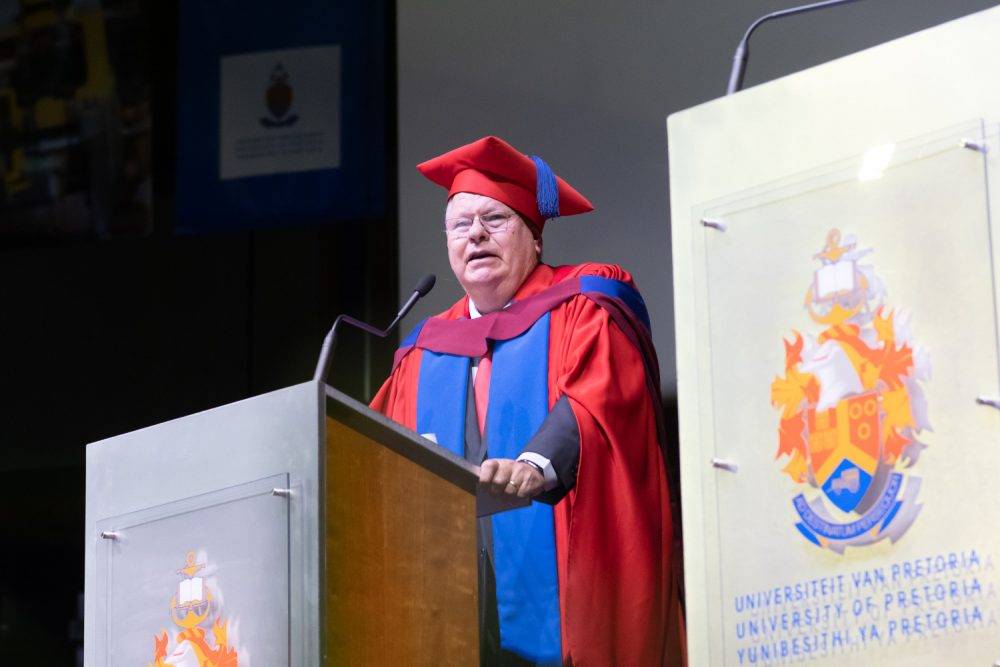
Dr Dippenaar was chairman of all these companies during his four decades in financial services.
Meanwhile, not content with creating some of the most famous financial institutions in South Africa, he served in the governing bodies of various educational institutions, not least UP, where he served for 24 years, only stepping down about two years ago.
Witnessing the transformation first hand
“I am probably the longest-serving Council member ever,” he says, explaining that every time he decided to call it a day, he was asked to stay on. “Fortunately,” as he puts it, the Minister of Higher Education and Training decreed that the maximum term a university Council member could serve was nine years, and so he was finally able to retire.
“I really enjoyed my time with the Council. The transformation from the time I joined to today is amazing. The Council used to be a collection of pale males from industry. Today, it is diverse in terms of gender, demographics and skills, and of course is a lot larger.”
Dr Dippenaar continues to co-sponsor the Laurie Dippenaar/FirstRand Postgraduate Scholarship, which awards bursaries annually to South Africans for postgraduate studies abroad, in any discipline, at an international university of their choice.
Together with his eldest son, he also looks after the Dippenaar family investments and is as up to date as ever on current financial and economic trends.
A capable state
Youth unemployment is a serious concern, as is South Africa’s grey-listing by the Financial Action Task Force.
“To increase employment, we need economic growth and for the economy to grow, we need a capable state, and for a capable state, we need a meritocracy and a good supply of educated people.”
He says Singapore, which has a civil service based entirely on meritocracy, is a shining example of what can be achieved when government officials are appointed on merit, not loyalty.
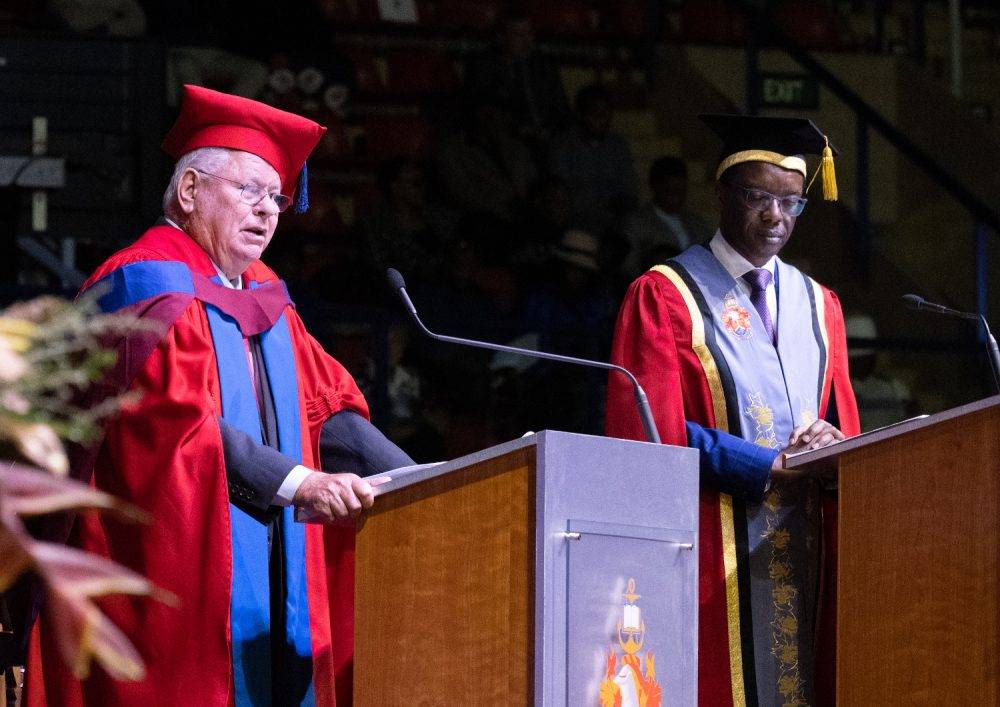
On the subject of South Africa’s grey-listing, Dr Dippenaar has this to say: “Our banks were not found wanting. The country was grey listed because the state was not prosecuting financial crimes. The banks would report irregularities, and nothing would come of it. Has anything flowed from Zondo (the inquiry into state capture)? No one has been in court yet for the VBS Bank fraud and collapse. Hopefully, something positive will happen.”
Still, there are some beacons of excellence to look to.
“A qualification from a world-class, prestigious university like UP is highly regarded in the business world, society at large and internationally. An honorary doctorate from UP is a huge honour.”
Submit and get free exposure here: Showcase Your Business | Advertise Your Special Offers.