
ANC takes ward off DA-IFP coalition in eThekwini, halting slide:
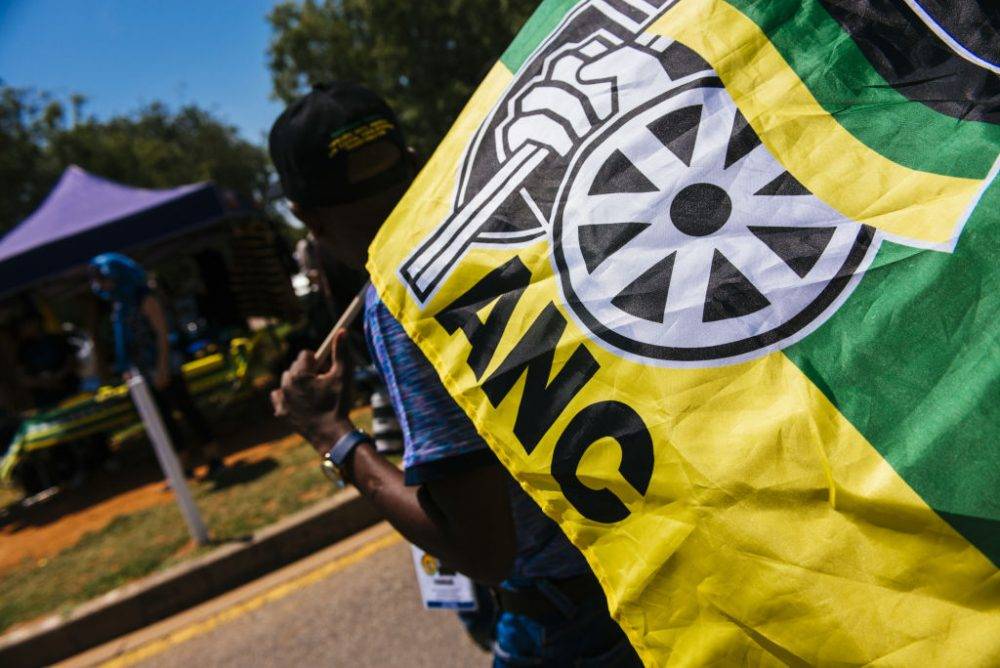
The ANC has ended its losing streak against the opposition coalition in KwaZulu-Natal, taking eThekwini’s ward 9 off the Democratic Alliance (DA) in the latest round of by-elections.
The governing party’s candidate, Siyabonga Nala, took 70.34% of the total votes cast, nearly twice what the party took in November 2021, and defeated the DA (28.07%), which previously held the ward.
The by-election was called after Pearl Msomi, the DA councillor for the ward, which covers Hillcrest and Molweni, died in June.
The Inkatha Freedom Party (IFP) did not field a candidate through their arrangement with the DA and instead backed that party’s Sibusiso Malunga.
However, this time out the arrangement did not work, and the ANC took the ward, finally ending a run of 10 by-election losses to the DA-IFP coalition.
The party’s provincial leadership welcomed the result, saying that it was a sign that the ANC was set to retain power in the face of a challenge from the Multi-Party Charter for South Africa in next year’s national and provincial elections.
“The ANC has cocked a snook at the multi-party charter by overwhelmingly trouncing them in what should be seen as a dress rehearsal for the 2024 provincial and national elections,” provincial spokesperson Mafika Mndebele said.
The ANC retained ward 6 in the Thaba Chweu municipality in Mpumalanga, where its candidate, Siphiwe Mhlanga, took 44.71% of the vote.
The result saw the ANC get significantly fewer votes in the ward than in November 2021, when it took 77.81% of the vote, but more than enough to hold off challenges from an independent candidate, the African Christian Democratic Party, the Freedom Front Plus and the African Unity Movement.
In eKhuruleni’s ward 23, DA candidate Arthur Goslin won 96.44% of the vote, up on the 84.96% that it secured in the last local government poll.
The ANC’s Rosslyn Alexander got 83 votes out of nearly 7 000 cast, while Economic Freedom Fighters (EFF) candidate Mmapule Aphane got 23.
In Lekwa municipality in Mpumalanga, independent Jacobus Stoltz, who had previously stood as an Freedom Front Plus candidate, retained the ward with 71.97% of the vote.
Stoltz beat candidates from his former party, the ANC, the EFF and the DA to improve on his performance in 2021.
The post ANC takes ward off DA-IFP coalition in eThekwini, halting slide appeared first on The Mail & Guardian.
Research bodies say surveys aim to inform voters, not influence them:

Three surveys released over the course of the past seven days all point to a loss of its parliamentary majority by the ANC in the coming general elections, and to an increasing likelihood of a coalition government at national level.
The polls — by the Social Research Foundation (SRF), Ipsos and the Brenthurst Foundation/SABI Strategy Group — also all indicate that the governing party is on the brink of losing control of both Gauteng and KwaZulu-Natal to the opposition Multiparty Charter for South Africa.
All three polls were conducted among samples of registered voters across South Africa and are aimed at providing a snapshot of the political mood in the country, but critics have claimed an alignment with the opposition parties on the part of some of the agencies.
The research groups say their polling simply reflects the attitudes and responses of respondents and that the findings are aimed at informing the choices of voters, rather than influencing them.
The SRF recently published surveys that suggested support for the ANC would drop ahead of the 2024 national and general elections, pegging its potential share of the vote next year at 45%.
The SRF’s latest poll on KwaZulu-Natal predicted that the ANC is unlikely to retain its majority in the province, with or without a high turnout of voters. It suggested the ANC would drop to 40% in the province with a 66% voter turnout and receive 41% with a low turnout of 49%.
SRF associate Gabriel Makin said the agency’s focus on KwaZulu-Natal was motivated in large part by the recent string of by-elections that saw an Inkatha Freedom Party resurgence.
“We wanted to see; does that trend in by-elections reflect overall in the trends that we see in the province because obviously, when you look at by elections, you can only glean so much because they’re very localised,” Makin said.
He said the reason for the survey was not only election polling but also to test the overall climate of opinion in matters such as the Ingonyama Trust.
“Similarly, we see that there’s kind of a lack of public opinion polling on stuff like the importance of traditional leaders and the Zulu royal household in politics. So those more personal opinions are what really motivates us to conduct these polls,” he said.
The process of conducting polling includes phoning a demographically and geographically representative sample of voters.
“It has to be random so that we don’t have any bias slipping into the surveys,” Makin said, adding that the SRF team tried to reach a sample of respondents that would match the reality on the ground in terms of registered voters in the province.
“The surveys themselves can last anywhere between 25 to 40 minutes, depending on the speed at which people answer but we ensure that we get as many people to go through all of the polls as possible,” he said.
In February, Andrew Kerr, a professor at the University of Cape Town’s School of Economics, criticised the SRF in an opinion piece published by Business Day.
He said SRF chair Frans Cronje’s relationship with the Institute for Race Relations (IRR) as a former director called into question the polling group’s independence. The IRR has in the past been rumoured to have links to the Democratic Alliance.
“Based on its director and who reports the results in Business Day, the SRF does appear to be linked to the IRR. That is important information because some of the SRF surveys ask people about who they might vote for or their views on political coalitions, and the IRR might not be impartial about these matters,” Kerr wrote.
Makin said the SRF works to ensure that it doesn’t introduce bias into its reports.
“We only report on the data,” Makin said, also denying the SRF had any affiliation to the DA. “We’ve been called many things in my time at the SRF. DA supporters is just one. We’ve also been told that we are trying to protect the ANC because we wrote a piece that was in favour of the general Energy Action Plan and Minister [Gwede] Mantashe attempts to focus on the coal power plants.
“I think it’s probably a good indication of our political neutrality that it isn’t clear exactly, that after every poll, there is a different group that is angry at us and a different group that is happy with us. And to be completely forthright we are open to conducting meetings with any political party that wants to talk to us.”
Rural provinces prove difficult in conducting polls, Makin said, adding that the methodology used by SRF, and in part the language barrier, can be a problem.
“There is a certain degree of suspicion that people might have towards a random call coming from a person you don’t know, saying that they’re affiliated with an organisation that you’ve never heard of, and then asking you very intense questions about your political opinion,” he said.
Market-research company Ipsos’s knowledge director, Mari Harris, said polling was a mixture of art and science.
Its latest poll was released on 25??October, based on 3??600 interviews in June and July.
The Ipsos research puts support for the ANC at 39%, DA (16%) and EFF (15%) among the registered voters.
Ipsos’s Pulse of the People series conducts face-to-face interviews with respondents who are asked to mark their choices on an imitation ballot paper on the computer.
“This is done to simulate a real ballot paper and ensure a secret ballot,” Harris said.
Looking at a different analysis of these results, the Multiparty Charter for South Africa led by the DA looks to draw about 31% to 33% of the vote at this stage, the poll found.
Ipsos is the most widely regarded polling research organisation, operating in 96 countries and often used by political parties as a yardstick for elections.
Harris said although a lot of polling organisations in the United States were allied to political parties, South Africa’s polls were mostly independent.
“One has to be very, very careful when you look at these things. First of all, I would say, who is this organisation? Where are they affiliated? Who paid for this? It does happen that an organisation can pay and they sort of determine what is asked.”
She said it was important for polls to be designed to be unambiguous. Harris said people need to keep in mind the date of the poll because opinion can change rapidly.
She added that it was important to specify the sample size interviewed.
“Your sample size determines your sample error. Every sample has an error so you need to specify your sample error in your technical detail as well. Sample error is influenced by your sample size, the methodology used and your response from it.”
The Brenthurst Foundation survey made similar findings, polling the potential collective performance of the Multiparty Charter for South Africa parties in addition to the individual performance of them and the ANC.
The foundation was set up in 2004 by the Oppenheimer family, and has been active in the country — and on the continent — in the political space, and has been accused by its critics of pushing a neoliberal, pro-United States agenda in both. Its director, Greg Mills, is a former adviser to the Nato command in Afghanistan.
Brenthurst director Ray Hartley said the poll was a follow-up on one they had done a year ago and had incorporated reactions to the multiparty charter because it was a new development on the political scene whose impact needed to be assessed.
“I don’t think it was particularly driven by the moonshot coalition as such. We are trying to have some kind of consistent, external polls conducted from outside the country,” Hartley said.
The research had been conducted for the Brenthurst Foundation’s own research purposes, and to “have some kind of confidence about what is happening in our political sphere,” Hartley said.
Hartley said the multiparty charter initiative was “interesting” and increased political competition in South Africa. “We believe that greater political competition is needed in this country. It makes all the parties perform better if there is increased political competition, and the moonshot certainly does that. As to whether we endorse the moonshot, I don’t think that is really relevant. That’s really up to the voter.”
The Brenthurst Foundation had decided to work with SABI, which had conducted a 15-minute telephone interview with each respondent, because it was not working with any South African party during this election cycle.
Hartley said there was no involvement of former DA officials in the Brenthurst Foundation and SABI.
The post Research bodies say surveys aim to inform voters, not influence them appeared first on The Mail & Guardian.
War on Gaza shows the bias of the ‘international community’:

The 7 October attack by Hamas on Israeli civilians was a war crime and, like every war crime, an outrage.
Nevertheless, it is disconcerting how much of Western reporting and analysis of the war on Gaza, including our own media, has portrayed the Hamas attack, often referred to as “unprovoked”, as the first volley thrown in this conflict.
History matters. Context matters.
The war on the Palestinian people has been ongoing since the Nakba in 1948 when Palestinians were expelled from their homes and lands. This led to the creation of the state of Israel and to the permanent displacement of Palestinians. The United Nations has passed hundreds of resolutions with regard to the treatment of Palestinians by Israel including the demand for Palestinians to be given a homeland and for Israel to stop encroaching on more Palestinian land.
These resolutions have all fallen on deaf ears, with Israel being given free rein and a licence to do as it pleases by its main supporter, the United States. In recent years, fuelled by the right wing and Zionist government in Israel, more and more settlers have been allowed to invade the West Bank, pushing Palestinians into tighter and tighter spaces. The violent dispossession of Palestinians is ongoing.
The reporting and analysis of the war on Gaza has further shown the hypocrisy that guides the self-described “international community’s” geopolitical viewpoint. Just like the Russia-Ukraine war, which has been reported as if it just happened out of a vacuum without any context, so has the attack by Hamas and the war on Gaza.
The hypocrisy is deafening, when Israel, an occupying force, is being supported by the same people who want Ukraine to be freed from the clutches of Moscow. Israel is an occupying settler state, which has stolen the land, lives, and futures of the Palestinian people. It annually receives billions of dollars in military aid from the US so that it can “defend itself” against the people it is occupying. Since 07 October Israel has been given carte blanche by the US and its allies to visit collective punishment upon the people of Gaza in an horrific ongoing war crime. In the West Bank attacks on Palestinians by settlers have been increasing and the Israeli army has bombed the Jenin refugee camp.
As with the Russia-Ukraine war we are constantly being told that there is one legitimate narrative about the war on Gaza. When the hospital in Gaza was attacked, killing hundreds of people, patients, medical staff and civilians seeking shelter, we were told to believe that this was not part of Israel’s efforts to rid Gaza of Hamas. No irrefutable proof has been presented — by either warring party — to prove their claims that it was the “other side” that caused the death of hundreds of civilians. Yet, rather than waiting for clear evidence, we are just supposed to believe that this one time, out of thousands of Israeli strikes on Gaza, this one attack on a Gaza installation did not come from Israel.
The greatest cruelty that has been visited upon the people of Gaza must be the instruction by Israel for those in the north to leave their homes and go south. Where are they supposed to go? Where would you go if overnight you were told to uproot your family and leave your home? Would you go, especially given the history of Palestinians being forcibly removed from their homes that has continued from 1948 and into the present, leaving them as permanent refugees?
What is it that makes the people who have been standing on soap boxes screaming for Pretoria to side with Ukraine to be silent on the decades old plight of the Palestinians? Why are these same people not calling for Palestinian land to be returned, for a people to have the right to self-govern and determine their futures like everyone else? Why are the lives of 1 400 Israelis worth an entire people and way of life? Why is a country allowed to shut down access to the bare necessities of water, food, and fuel for more than two million people because of the actions of Hamas, a group of around 40 000 people? If lasting peace and the protection of civilians are truly the end goal, why does the US and its allies continue to block resolutions for a ceasefire in Gaza?
We need a clear explanation for these double standards. And, indeed, that explanation is clear: racism. The lives of Palestinians simply don’t count the same as the lives of Israelis or Ukrainians for much of the Western media, and its local affiliates. It is a double standard, fully backed by the US and a number of other Western states such as France, Germany and the United Kingdom, that emboldens the Israeli state to subject Palestinians to ever more brutal forms of oppression.
The audacity of the Israeli ambassador to call on the UN secretary general to resign is astounding. Stating the plain fact that the Hamas attack on Israel was not the start of this current conflict is not sedition. In no way is it support for terrorism. Nor is stating the fact that Israel’s collective punishment on Palestinians is a contravention of international law anything other than a plain fact. The arrogance of the Israeli state, a deeply racialised arrogance, is such that it sees fit to tell the UN, the one organisation of the people of the world, that it cannot state plain facts.
According to the Truth and Reconciliation Commission (TRC) 71 people were killed in Umkhonto weSizwe (MK) operations between 1976 and 1984. The TRC states that 52 of those killed during this time were civilians. When MK operatives killed civilians in the Church Street bombing in Pretoria in 1983 the apartheid regime did not respond by bombarding Atteridgeville, Mamelodi and Soshanguve. When ANC operatives set off the explosive at Magoos Bar in Durban in 1986 that killed three, the regime did not raze uMlazi, KwaMashu and Wentworth. That is what the Israeli army is currently doing, with the US providing Israel with more weapons and advising its army on tactics to further this collective punishment on Palestinians. The Western states that like to call themselves the “international community” are actively supporting the commission of an appalling set of war crimes.
The UN is, in principle, an organisation of all the states on the planet but it has been hamstrung and rendered useless in dealing with this conflict. UN Security Council members have been unable to agree on a resolution to deal with the conflict in Gaza. This is further evidence of the need to restructure the UN system and other international institutions to make them genuinely inclusive and representative. But that is unlikely to happen in the near future because the current system favours the powers that be and allows them to by-pass the UN and do as they will. Indeed, the “international community” sets itself above the UN.
Israel’s refusal to negotiate and the failure by Israel’s friends to push it to negotiate has the capacity to push the world into another great war. The geopolitical situation is more fragile than at possibly any other time since the end of World War II. This is especially so given the Russia-Ukraine war, the tensions in the South China Sea, the coups in Central and West Africa as well as fragile states in the Sahel, wars in Yemen and Syria, tensions in the Balkans, the stagnant global economy, high costs of living and now the war on Gaza.
South Africans who have lived through apartheid cannot be silent in the face of the atrocities taking place in Gaza. Just as the apartheid regime had to sit at the table and negotiate with its arch enemy, the ANC, also named a terrorist group by the US, so too will the Israelis need to sit with Hamas and the Palestinian Authority.
Only in talking and seeing each other as human beings is there a possibility of hope and a way to resolve this conflict. This is not an intractable matter, it is only being made so by people who in service of their own interests are unwilling to give a little and take a little. Compromise is about everyone walking away from the table having gotten something and lost something.
Nontobeko Hlela is a research fellow with the Institute for Pan African Thought and Conversation at the University of Johannesburg. She writes in her personal capacity.
The post War on Gaza shows the bias of the ‘international community’ appeared first on The Mail & Guardian.
Submit and get free exposure here: Showcase Your Business | Advertise Your Special Offers.
