ANC youth league presidential candidate lobbies for second secretary general:

Collen Malatji, who received an endorsement from Gauteng, is hoping to add more women to the league’s leadership
Khayelitsha families want asbestos roofing removed:

Families living in houses built in the 1990s in Khayelitsha, Cape Town, are demanding that the national department of human settlements remove the asbestos roofs and replace them with safer materials.
Last month about 150 residents of Makhaza, Khayelitsha, marched to parliament to insist that the department give them the title deeds to their homes and relaunch a project to replace their old asbestos roofs with zinc sheeting or tiles.
Some of the residents have been staying in houses which are not registered in their names for over three decades. Some, such as community leader Nolitha Nyoka, moved into empty houses intended for people evicted from nearby Mandela Park in the 1990s.
When some of the families for whom the houses were intended rejected them, the buildings were quickly occupied by backyarders from Makhaza, with the help of ward councillors at the time.
“The houses are still registered in the names of the residents who rejected them. We never received title deeds,” said Nyoka.
She said previous attempts to get title deeds had failed. But some of those who had rejected the houses were returning to claim them as they had not been able to get houses elsewhere because records show they already have houses.
On 5 April, Nyoka received an eviction order from the registered owner of the house.
“I can’t vacate the house now because I have been staying in it for 21 years. I raised my kids in that house, renovated and extended it and fenced the yard.”
The improvements had cost her about R100 000, she said.
Muneera Allie, spokesperson for the Western Cape department of infrastructure, said it and the City of Cape Town would “approach the national department of human settlements regarding a policy change” to resolve the title deeds problem.
“The key challenge is that the properties were transferred in the early 1990s and require the consent of those registered title deed holders to effect transfer to the current occupants,” she said. “In the absence of such consent, the matter requires either a court to sanction the transfer or a possible amendment to the Housing Act.”
Another bone of contention in the community is that many families in Makhaza live in houses roofed with old, damaged asbestos, said ANC ward councillor Lucky Mbiza.
The government had rolled out a project to replace the asbestos with tiles and zinc sheeting in 2018 but it stopped when Covid-19 regulations came into effect in 2020.
“We want the government to restore the project,” he said.
Siyabulela Phezi said the house which he and his wife moved into in 1992 needed fixing. The asbestos roof was damaged and the rain came in and drenched his furniture, he said.
“I want the government to replace the old asbestos with zincs because I have no money to buy material to roof my house again,” said the pensioner.
Allie said the provincial department “did not have a specific project to remove asbestos in Makhaza”.
The department had introduced the Kuyasa Housing Retrofit Project in 2018 to fix 2 373 houses.
“Repairs included the replacement of damaged zinc roofing structures, the installation of ceilings, doors and windows, and electrification,” she said.
More than 430 units had been repaired in the first phase of the project but then the project was put on hold, she said, as budgets were reallocated due to the pandemic.
Subsequently, the “department re-prioritised its budget allocation to the provisioning of basic services and the upgrading of informal settlements”, she said. The department would review the issue in terms of “its current funding availability” and “would need to engage with the national department of human settlements”.
Questions sent to Nozipho Zulu, head of communications at the national department of human settlements, had not been answered at the time of publication.
This article was first published on GroundUp
Crisis looms as South Africa bleeds veterinarians:
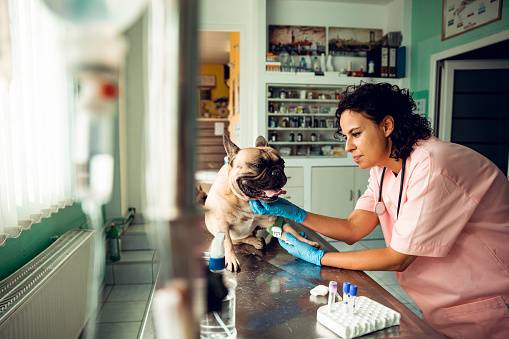
A potential crises in animal health and food safety and security is looming because of a shortage of vets in the country, with the South African Veterinary Council (SAVC) concerned that the situation has been exacerbated by the removal of vets from South Africa’s critical skills list in 2022.
Reinstating vets on the list would help the country retain qualified vets and aid foreign veterinarians who want to practise here.
To this end, the SAVC has been liaising with the department of agriculture, land reform and rural development (DALRRD) and both are engaging with the department of home affairs.
Alarming recent statistics show high numbers of vets leaving the country. This means South Africa faces a severe skills shortage in a profession that is deemed critical to ensuring food safety and security.
A recent survey by the South African Veterinary Association (SAVC) found that a fifth of vets aged 25 to 29 polled intended to emigrate.
Our own records show that we are losing up to 150 vets a year to emigration, as there are between 10 and 15 vets a month requesting letters of good standing from the SAVC to enable them to practise abroad — be it temporarily or permanently.
Something urgently needs to be done to stem the exodus of these highly qualified and sought-after professionals, provide more tertiary training opportunities for vets in South Africa and make it easier for foreign vets and foreign South African-qualified students to practise here.
The situation is raising alarm in a country that only has 60 to 70 vets per million citizens, far below the international norm of 200 to 400 vets per million.
Already, there is anecdotal evidence that some veterinary positions, in both the private and public sectors, cannot be filled. Such a shortage could have an adverse effect on the availability and provision of veterinary services, especially to rural communities, with a devastating impact on livestock health and food safety.
To remedy the situation, the SAVC has been talking to DALRRD and other stakeholders to urgently put vets back onto the critical skills list when it comes up for review. This is not only so that South Africa can meet its animal healthcare needs in the future but also to ensure food safety and security.
As more young South African vets consider leaving the country, one solution to fill the skills gap is to encourage overseas-trained vets to come to work here. However, the removal of vets and veterinary nurses from the critical skills list in February 2022 made it harder, if not impossible, for foreign vets to obtain a work visa for South Africa.
Veterinarians who qualified in the UK and Australasia may practise in South Africa without having to write SAVC exams. In order to do so, they first have to perform a year’s compulsory community service through DALRRD once they have registered with the SAVC.
However, with the removal of vets from the critical skills list, qualified foreign vets are likely to run into difficulties obtaining work permits and posts in South Africa because their skills are not listed as being scarce.
Furthermore, foreign students who qualify as vets at the Faculty of Veterinary Science at the University of Pretoria — the only accredited tertiary education facility in the country offering a Bachelor of Veterinary Science degree — are also not able to complete the year of community service that would entitle them to work here.
This means there is little incentive for these young professionals to remain in South Africa to carve out a career.
All of this makes it difficult for foreign vets and students to come to South Africa to add capacity to our veterinary profession, which is facing a severe skills crisis.
While we need to look at retention strategies and accrediting more tertiary education facilities to offer a veterinary science qualification, which is in the works, the SAVC continues to engage with the government and stakeholders to take urgent steps to address the skills deficit in the veterinary profession.
We need to curb the brain drain and ensure our country has enough vets to meet its current and future animal healthcare and food production needs.
Submit and get free exposure here: Showcase Your Business | Advertise Your Special Offers.