
Artists’ blitzkrieg: Criminalised, cancelled, fired, censored:
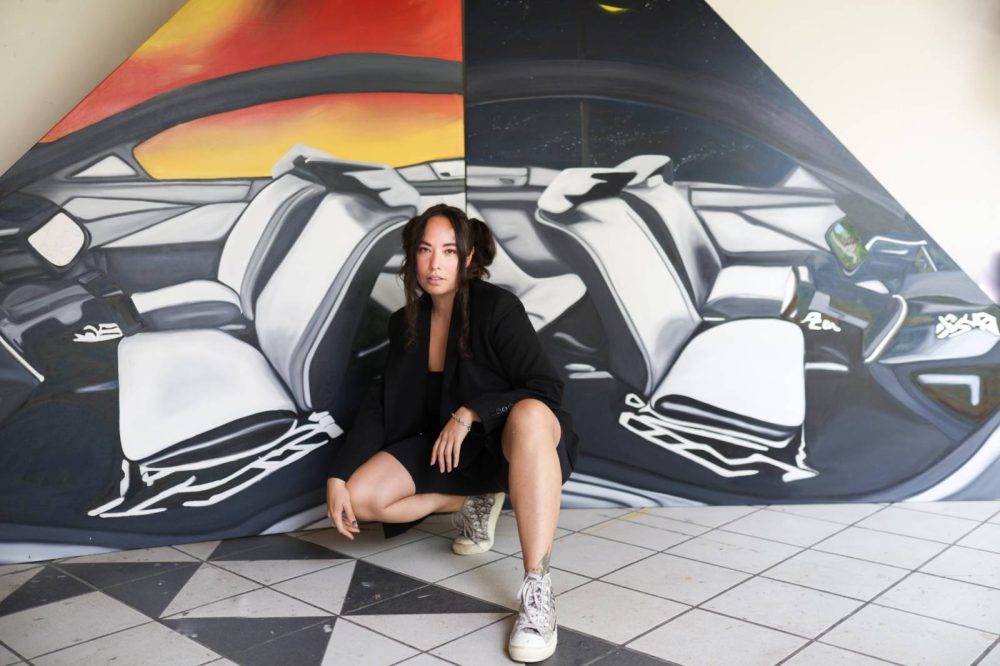
The artist Frieda Toranzo Jaeger’s Jewish grandfather fled Nazi Germany to escape the Holocaust and settled in Mexico. That is where she was born in 1988 and grew up.
Toranzo Jaeger went to the German School in Mexico City, and studied art in Germany, where she was based in Berlin for almost nine years. She returned to Mexico during Covid and since then has divided her time between the two countries.
Last month, Toranzo Jaeger, whose Palestine-related work featured prominently at the Venice Biennale this year, was approached to do an exhibition at the Leopold-Hoesch-Museum in the German city of Düren.
In addition, she was awarded a $ 19?000 (R350?00) stipend by the private Günther Peill Foundation —enough to take care of the following two years. Toranzo Jaeger was also bestowed $ 10?500 to produce a catalogue for the exhibition, which was scheduled for 2026.
But things soon started to unravel.
Two weeks ago, the foundation and the museum pulled the plug on the funding and the show.
Toranzo Jaeger says it was because of her “like” of a fellow Venice Biennale artist’s pro-Palestine Instagram post in July. There was also her signing a petition of the Strike Germany movement which urged artists not to associate with institutions that “police the politics of their artists”.
A statement, quoted by ARTNews, said: “Since cooperation would imply that the museum and the foundation meet the conditions set out in Strike Germany and support the demands, they will not enter into this,” and therefore the three parties “mutually decided to refrain from the intended cooperation on the scholarship and exhibition”.
But, in fact, it was an email to the foundation and museum from freelance journalist Kito Nedo that caused the wheels to come off.
He pointed out that Toranzo Jaeger had signed the petition and asked, “What character will this exhibition have?” — an exhibition two years down the line.
In further emails — which by now involved the local ministry of culture — he provided screenshots of pro-Palestine posts that she had liked.
“So, the foundation and the museum arranged a call with me,” Toranzo Jaeger tells me in an interview. “I didn’t really know what the call was about.
“And first what they did is they tried to bully me … so that I cancel myself. Which is just insane, right?”
Nedo’s persistent emails, which were shared with me, clearly worked.
“So, they literally bullied me into signing this statement,” says Toranzo Jaeger. “And I told them, ‘Okay, I’m going to agree now to do the statement. But after that I’m going to speak my truth because I don’t care.’”
The journalist never contacted the artist. I approached him for comment via email but he had not responded by the time of publication.
ARTNews managed to get hold of Nedo, who said that the emails were not for publication and declined to comment further.
The Düren spokesperson confirmed to the publication that “an unnamed journalist” had alerted them to Toranzo Jaeger’s support of Strike Germany.
Toranzo Jaeger tells me she declined another project because of the promised assignment. Fortunately, she is “good for next year … then you have to figure something out”.
About the principle of losing the work she says: “Now I get why Nazi Germany happened — because everybody’s so complacent and silent … and everybody’s afraid to lose their job and to lose funding.”
But what happened to Toranzo Jaeger is far from an isolated incident. In fact, this has become a disturbing trend in Germany.
Right-wing journalists are serving as snitches, police and arbiters of “Staatsräson” — the authoritarian turn in German memory culture that has accompanied debates about the Holocaust, anti-Semitism and Israel-Palestine.
Staatsräson, according to the online journal Sada, is “a cornerstone of German foreign policy, which sees Israel’s security as intrinsically linked to Germany’s national interest — and which many German decision-makers see as a logical consequence of Germany’s responsibility for the Holocaust”.
It also has led to Germany unconditionally supporting Israel’s genocide in Gaza.
Scouring mostly the social media activity of artists, curators, academics and film directors, these journalists download posts and make screen grabs of what someone “likes”.
They send this “evidence” of their “anti-Semitism” to the cultural institution, university or funding body with which the artists are associated, as well as to officials in government departments such as the ministries of culture and of education.
The reporters concurrently publish an article in the press. It is important to note they conflate anti-Zionism and criticism of Israel with anti-Semitism.
Berlin-based artist and former head of the city’s visual artists’ union Zoë Miller describes it as online surveillance defamation.
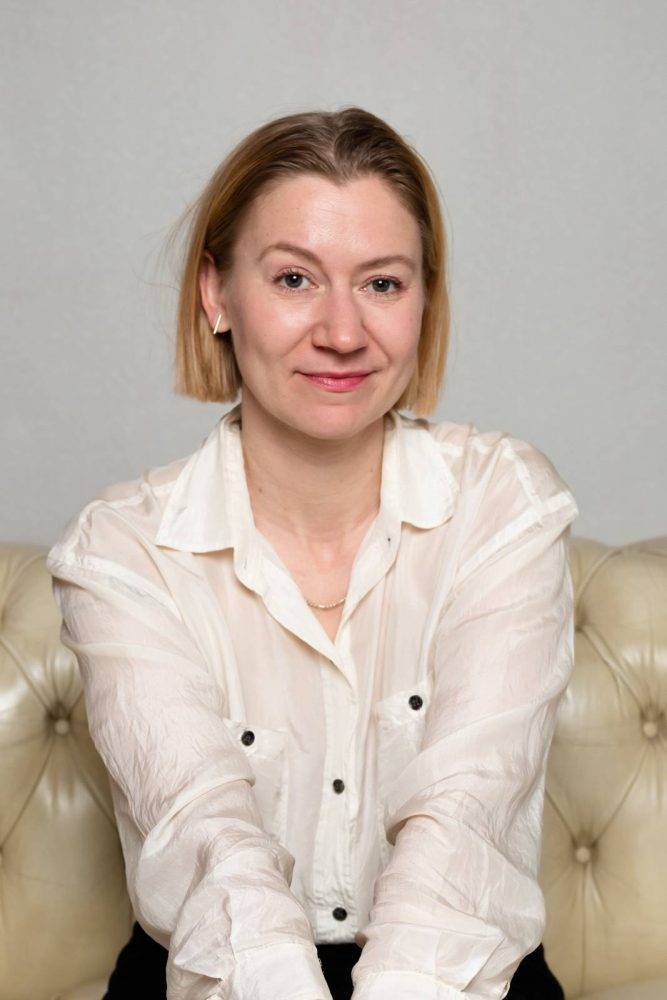
“And I think it’s a particularly egregious mix and dangerous mix of roles to be both the detective, prosecutor and the journalist, you know, kind of like the executioner and the judge at the same time.”
It is effectively blacklisting where you can’t prove that you’re on a blacklist, for it is not an actual written blacklist, Miller explains.
“Most people, artists especially, can’t afford to go to a lawyer to see if they have rights that are being infringed on when they’re being cancelled,” she says.
“You have no chance at all of proving that your political opinions have anything to do with your career being destroyed.”
So far, more than 200 people have been cancelled, censored, fired or criminalised because of this, according to Archive of Silence, a crowdsourced archive documenting silenced voices in Germany.
In a recent speech at Berlin’s Neue Nationalgalerie, American photographer and activist Nan Goldin pointed out that a quarter of those “silenced” are Jews.
Author Naomi Klein, suggested: “At this rate, Germany is going to run out of Jewish intellectuals to ban.”
This was after the awarding of the Hannah Arendt Award to intellectual Masha Gessen was initially cancelled, or “postponed”, to use the favourite euphemism in Germany.
The respected South African-born Jewish artist, public intellectual and academic Candice Breitz, who is based in Berlin, had an exhibition cancelled in the German city of Saarbrücken in April.
“Welcome to the Bad Jew Club, dear Masha Gessen,” Breitz posted on Instagram, “as defined by a nation that has deep experience in sorting and pillorying Jews.
“As painful, stressful and anger-inducing as it may be to contend with German self-righteousness around Jewishness, German censure is fast translating into a badge of pride for progressive Jews.”
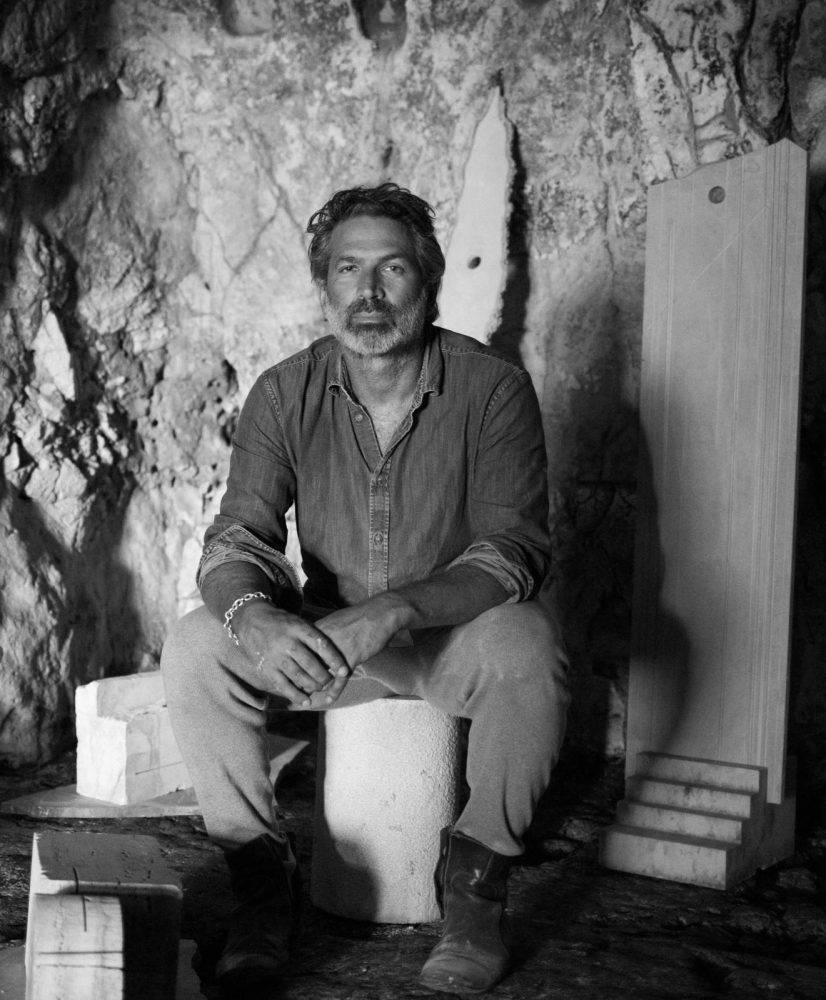
Berlin-based artist, educator and activist Adam Broomberg is one of them. Like Breitz, the 54-year-old was born in Johannesburg and grew up in South Africa at the height of apartheid. With an older left-wing brother, he became politically involved as a teenager.
Broomberg is a prominent pro-Palestinian activist. On 20 May last year he attended a joint rally of Palestinians and Jews in Berlin. Organised by Jüdische Stimme (Jewish Voice), it was convened to commemorate the Nakba (the Palestinian catastrophe) 75 years ago.
“It was a very wholesome event, there were kids, there were elderly people, on a lovely spring afternoon,” Broomberg tells me.
Suddenly the riot police arrived and Broomberg found himself confronted by a line of them.
“I tried to engage them in conversation and said to the one policeman, ‘I have a right to be here, you know, I’m Jewish. I also go to the commemoration of Kristallnacht every November. Unlike my grandmother, who didn’t have the right to be here.’
“I said to the policeman, ‘Can I ask, where was your grandmother during the war?’
“He ignored me and when the conversation was over I turned around and walked away.”
At this point three of these “giant riot police pounced upon me from behind, really violently arrested and handcuffed me”.
Broomberg was charged with resisting arrest and grievous bodily harm, even though an ambulance was called for him.
He is due to appear in court on 13 January.
Broomberg is also no stranger to being cancelled.
“It’s important to note that this predates 7 October, the strategy of targeting specific voices that show solidarity for the Palestinian struggle or criticise the state of Israel in any way,” he says.
“And almost using a tweezer, removing them from any position of cultural influence.”
Recently, one of his works that deals with death and grief in memory of his late mother, which was meant to be shown at a museum in Kassel, was pulled.
Broomberg was a short-tenure professor in the media arts department at the Karlsruhe University of Arts and Design (HfG), from 16 October last year to 16 February.
“At my first meeting with the rectorate, the governing body, I was sat down and told in no uncertain terms they knew exactly who I was, what my politics were and what my skills were, and that they were fully supportive of me and my work,” he says.
But then, early this year, a common denominator entered the scene — a journalist called Boris Pofalla, who does most of his writing for the pro-Israel, right-wing newspaper Die Welt. Pofalla, who appears fixated with Israel, in reply to questions I sent him said he had visited the country numerous times and had lived there.
Broomberg says Pofalla allegedly approached the university and the ministry with some of his “social media posts … that was ‘evidence’ of my ‘anti-Semitism’”.
Pofalla also wrote a piece for Die Welt titled The Obsession of Adam Broomberg, which described the academic as being obsessed with criticising Israel and accused him of anti-Semitism.
“Using the word ‘obsession’ is interesting because it kind of pathologises me,” says Broomberg, “someone who has, since the age of 15, been active in various struggles, including apartheid, and spending months galvanising the international art community to support Ukrainian artists fleeing the country after the Russian invasion.”
Broomberg says his contract came to an early end as a result of this.
“I have it in writing that I was to no longer enter the building, have access to students or any privileges … And that started before the end of the contract.”
I asked the university’s rectorate if Pofalla had contacted them regarding allegations about Broomberg being an anti-Semite and other accusations. Thomas Frohlich answered: “The university was contacted regarding certain Instagram posts by a visiting professor.”
Broomberg says the university hired a law firm to assess him.
Frohlich responded: “We have commissioned a law firm to support us in communicating with the media and to provide a legal assessment of the posts.”
He conceded that Broomberg wasn’t informed of this investigation.
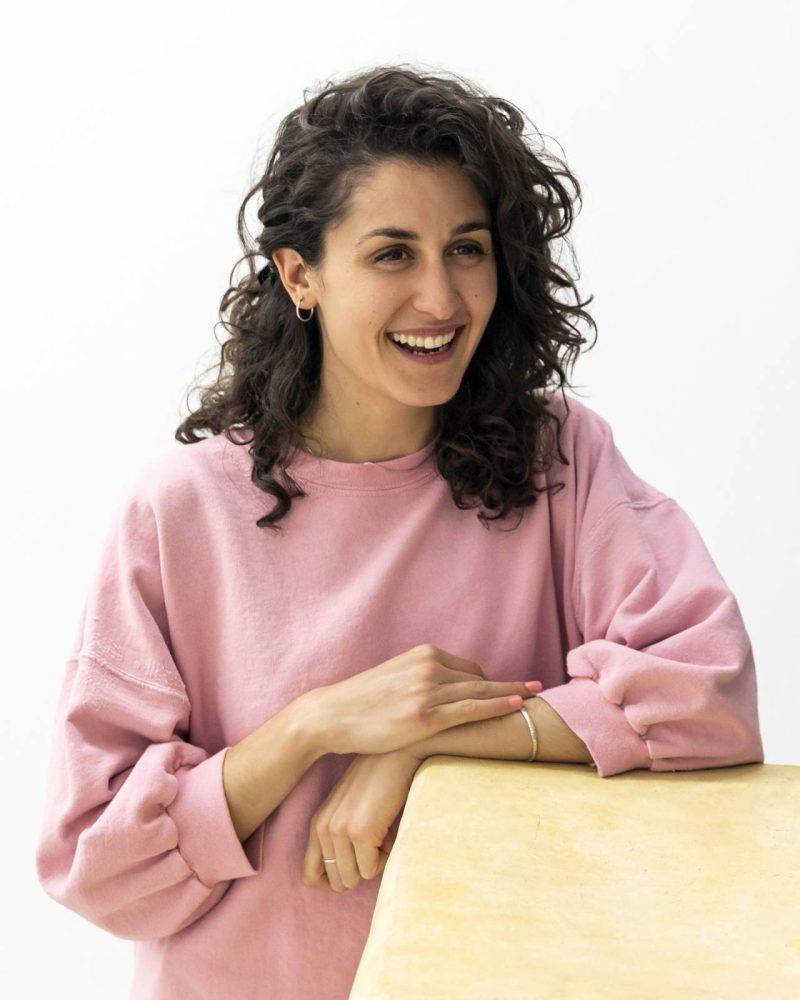
Internationally renowned Palestinian artist Jumana Manna, who has been based in Germany for over a decade, was on the receiving end of Pofalla’s sharp pen for social media posts on 7 October last year, when Hamas attacked Israelis at a concert.
Manna gave context on the art forum Hyperallergic on 1 November: “On hearing early news that Hamas militants breached the barrier surrounding the Gaza Strip, I shared a few stories on my Instagram page.
“One of the stories was a photo reel showing the scene of a rave celebrating ‘peace and love’ a mere three miles from the highly militarised concrete walls imprisoning Gaza. More than two million people, mostly refugees, sequestered inside these walls and under siege since at least 2007, are forced to live in an open-air prison that subjects them to conditions that violate international law.
“Seeing these borders momentarily torn down and flown over, many Palestinians were moved by the stubborn and creative will to break free from captivity. Images of the parachute gliders appeared in our feeds alongside a tractor destroying the apartheid wall.
“We hoped this moment of fugitivity might restore the potential for life, liberation and dignity for all in this wretched land, for this nightmarish fantasy of one-sided normalcy to end. These feelings were necessarily short-lived. We continue to watch in horror, along with the rest of the world.
“At the time I shared my stories on Instagram, the extent of the violence had not become apparent. What was an angry comment on the cynicism underlying the reality of this party: ‘normalcy’ for some and imprisonment for others, was misused to accuse me of taking pleasure in the massacre, which I fully reject. What I regret is not being more precise in the formulation of my politics.
“My Instagram content was taken out of context and mis-framed by the German newspaper Die Welt, notorious for its bad-faith journalism.
“A smear campaign ensued, magnified by vindictive trolling that exaggerated and distorted my comments.
“International institutions that have worked with me in the past or present are being harassed and pressured.”
Manna tells me there was clearly an organised effort to check what people from the cultural scene posted from 7 October onwards.
“Basically, taking screen grabs out of context and exaggerating and manipulating the meaning or adding a cynical interpretation to them.”
Manna believes there is an audience in Germany that is ripe for these kinds of misinterpretation.
“And what flies in Germany doesn’t fly in other countries,” she adds.
Manna says Pofalla wrote the first article after her social media posts, “which was enough because it got the defamation campaign started and now there’s a network of trolls, right-wing groups and journalists that continue to parasitically feed off it”.
It is being used to put pressure on the institutions where pro-Palestine artists worked to demand they don’t employ “anti-Semites”.
“And the institutions have consistently caved into the pressure,” Manna says.
“As a result of that article, there was a domino effect of cancellations of my commitments — shows, film screenings and teaching — in Germany.”
Fortunately, she is a globally established artist, and her career and economy do not depend on Germany.
But people who do depend on jobs in Germany for their income have had their livelihood taken away.
“What’s taken away from me is any possibility to participate in the cultural and public life of Germany,” she says, “a country I’ve lived in, am a permanent resident of, and paid taxes in for 12 years now.”
Like Manna, the Die Welt man also roasted Lebanese-born Berlin curator Edwin Nasr on his pages.
Pofalla also did not give Nasr an opportunity to respond, which is something taken very seriously by the German press.
Pofalla did not reply to my specific question about whether he gave them a “fair opportunity to respond”.
Nasr posted disappearing stories on Instagram on 7 October, including one captioned “poetic justice”.
“A day after my stories got posted, we came to know more details about what had happened at the Nova festival and I probably would have been much more careful in explaining my actual position so as to block out these types of false and malicious recuperations,” Nasr tells me.
Pofalla not only pounced on it for Die Welt but also filed a criminal complaint against Nasr.
Last month, a German court convicted Nasr and ordered them to pay a fine of €1?000 (R20?000). The court proceedings lasted only 30 minutes.
Nasr, who grew up in Lebanon when the south of the country was still occupied by Israel, tells me it was a bizarre experience.
“It felt like I had to overly perform atonement in a sense, a year into Israel’s ongoing genocide against Palestinians in Gaza as well as its savage attacks against civilians in my own country,” they said.
“Who was I even being asked to apologise to? It was all quite a surreal thing to do within a German court, of all places, and in a country responsible for orchestrating the systematic murder of more than six million European Jews.
“It’s funny how, in these moments, your entire subjecthood and the history of your people and their struggle gets completely washed away, if not erased, in the name of German perpetrator narcissism.”
I ask Nasr about the German response to pro-Palestine artists since 7 October.
“To relentlessly go after people for their positions on Palestine has become a celebrated pastime activity within the cultural sector here … and it creates these cyclical sets of responses and counter-responses, dramas that I feel this provincial microcosm somehow lives for.”
Pofalla was in the court when the judge fined Nasr. In response to my emailed question about how he felt, the journalist said: “It is sad that people in the cultural sphere are driven to these levels of hate, but as adults, they have to live with the consequences of their actions.
“Edwin Nasr has had a fair trial. There are no winners in this.”
However, shortly after Nasr’s sentencing, a friend posted an Instagram pic (I saw a screengrab) of the journalist holding a trophy like a cup-winning football captain with the caption: “Boris Pofalla after suing anti-Semites.”
Fusion food without the confusion:
How do you know which Johannesburg businesses did well this year? Go to the city’s fanciest restaurants round about now and see who has their Christmas parties there.
A week or so ago, I was invited to an early lunch at such an upmarket establishment — the spacious, month-old Italian restaurant called Sinn in Sandton. Black, grey and red colour scheme, golden lights low, plush black leather and dark wood furniture, with a panoramic vista over Sandton’s my-brash-capitalist-glass-cathedral-is-bigger-than-yours landscape but a better view is towards the luxurious open-plan kitchen.
From that kitchen, I have just been served freshly baked sourdough bread and homemade butter by the wonderfully attentive waiter who, like all the staff, is dressed in black with fancy black-and-red sneakers.
In the centre of the kitchen is the maestro chef Enrico Persegani, not performative like Gordon “Fucking” Ramsey, but more a low-key conductor making sure his relatively new orchestra in the kitchen, on the floor and behind the two bars don’t play a sour note to the fast filling restaurant.
There are several big tables of giggling people who will for a change make their bosses pay, big time. And hope the expensive booze doesn’t mean Monday morning is spent with HR issues about vaguely remembered misdemeanours with Clive from IT.
I am not a big fan of food fusions — I remember a place in Pretoria where they served boerewors pizza. I bet it is still going strong but that moer-on-top style is not for me, dankie.
Sinn is doing a bit of the fusion thing too — but promises it is in a subtle, playful way, sticking firmly to classic Italian tradition. Put differently, it is finding harmony between Italian tradition and innovation. And luckily not too much of the Boetie-goes-to-Rome thing on the menu.
So, despite my fusion scepticism I decided, ‘Why not go for the biltong arancino?’ — Italian rice balls stuffed with mozzarella and creamy dry wors, coated with pangrattato (crispy breadcrumbs), served with smoked tomato sauce.
Beautifully presented, it was scrumptious. As I resisted licking the plate, the charming Persegani joined me for a quick chat before the 1pm proper stampede started — because then, as he says with a smile, “This place is going to explode.”
Originally from the Italian city of Cremona, he first visited South Africa last year, as part of his job opening restaurants all over the world. After experiencing the richness of our food culture, Persegani officially relocated in May to start Sinn.

The dishes are inspired by childhood memories of meals prepared by his 93-year-old grandmother.
I confess that his type of fusion — well, based on my starter — works very well.
He explains his approach: “You know, why not take, for example, my grandmother’s recipes, twist them, redesign them, make them a little bit more modern and test them on the market?” he says.
“Then, obviously, in Italy we have salami, right? Before coming here I didn’t know about biltong.”
I gather that he includes dry wors under the biltong umbrella.
“So, I see everyone with this biltong going around, everyone crazy with biltong — it’s basically a mini dry salami. And I couldn’t find amazing quality salami here like in Italy.
“I was, like, at this point, I would rather swap it with something more local that people love and twist it inside my recipe.”
In addition to the fusion elements, Persegani designed his menu by looking at the map of Italy: “Five recipes from the north, five from the middle, Rome area and five from the south.
“And then I work on that. Then I thought, ‘People here are crazy for meat, okay — braai and all this kind of tradition.”
He pauses and chuckles.
“But now that the restaurant is open I realise that they look more for seafood because you guys don’t have sea nearby so everyone goes crazy for seafood. Now I’m already preparing the next menu with instead of more meat, more seafood.”
On the menu is a pasta dish based on a family recipe: Nonna’s butternut and ginger ravioli. It was inspired by his grandmother’s cooking. I ask him what she thinks about her grandson’s latest venture.
“Oh, she’s very proud. I grew up staying with her so obviously we were cooking together and, in Italy, usually the grandmother stays at home and cooks for all the other family members.
“We have a big 14-seater table and we all sit there and my grandmother prepares dinner and lunch. That’s how the passion started and that’s how I learned from a very young age.”
At one of the bars, someone drops a glass. Persegani flinches slightly.
“Do you ever think, ‘What the fuck am I doing?’” I ask.
“Oh my God, every day. I already knew it was hard,” he says.
“Obviously, a new country, new way of managing the business. Different people, different approaches. Obviously, I had more to learn and in a very fast way.”
He is philosophical.
“You will never be successful if you don’t suffer first. And the restaurant business is something where you need to sacrifice everything. Your life, your free time, your private life, everything. There’s no life. I’m here all day. Every day.”
Meanwhile the Sinn machine purrs on smoothly. But I realise the conductor has to get back to his kitchen.
“What should I order as a main?,” I ask before he goes.
“Osso buco hotpot,” he says without hesitation.
This braised beef dish is slow-cooked overnight, Persegani says, so it is “super soft”.
“There’s still the bone and the marrow inside. Then everything gets assembled and then reheated in the wood fire oven.”
It is served on a Parmesan risotto.
Not too long after my waiter opens the hotpot with a dramatic flourish.
The dish was perfect, melt-in-the-mouth deliciousness. My mouth is watering again, just typing this.
SCORE: C+
Despite the ANC losing its majority after the 29??May elections, President Cyril Ramaphosa has kept it in power through the government of national unity (GNU) and has overseen the swift transition to a multi-party government, which he has managed to hold together since the end of June. Ramaphosa may be a lame duck president who spent most of his first term governing by committee and deferring decisions while battling to assert his control over the governing party, but he has shown dexterity, determination and decisiveness in the first six months of his second term. Disputes between the coalition partners are piling up, but the lights are still on, economic prospects have slightly improved and the political will to deal with corruption appears to have finally been summoned up. Ramaphosa has shone internationally, but remains less than decisive when it comes to dealing with corruption-accused ANC colleagues, as evidenced by his reshuffle — rather than firing — of Thembi Simelane.
Submit and get free exposure here: Showcase Your Business | Advertise Your Special Offers.
