
Audi A5 is a statement of luxury:
The last few Audi’s I’ve had on test have all left me more than satisfied. From the small A3 all the way to their flagship performance SUV, the RS Q8, Audi has just been finding the sweet spot when mixing comfort, technology and looks.
When the A5 was launched last year, I noticed that this model began a shift in the brand’s design language and styling. It’s almost more sharp and refined with elements that really embrace the technological shift that vehicles have undergone in recent years.
From the outside, it no longer looks like it’s keeping up but it’s staying ahead. At the front, a wider and flatter Singleframe grille with a three-dimensional honeycomb structure is framed by slim, precisely drawn headlights. Together, they create a focused and assertive look.
The clean lines featured on the side of the car run seamlessly towards the back. However, it is the back that makes this vehicle.
The continuous three-dimensional lightstrip flows across the rear giving the car a striking presence on all fronts.
Another excellent element on the outside is the minimalist door handles. Rather than mechanical pull levers, they use electric touch-sensitive handles featuring integrated inductive sensors. When you slide your hand into the flush recess, the electronic sensor registers the contact and activates an electric release mechanism to pop the door open.
It’s also wonderful to see people who don’t know how it works try and pull it. But once you pull it and jump in, that’s where you really want to be. Although I am heartbroken by the fact that Audi seem to have ditched their well integrated infotainment display for a curved dual-screen, I have to say that it still looks stunning.

The infotainment screen is now 14.5 inches while the digital instrument cluster is 11.9 inches. A 10.9 inch passenger screen is also available as an extra and this one is beautifully integrated into the dashboard.
In total, that’s over 37 inches of display in the front of the vehicle. While there has been a lot of moaning about this, I quite like when brands embrace technology. It shows their willingness to evolve to a new consumer.
It does mean that buttons might be sacrificed, which is never a good thing but it doesn’t make the interior any less stunning.
Another highlight of the interior was the giant moon roof which comes equipped with switchable transparency. The push of a button allows you to choose exactly how much light you are willing to let into the vehicle.
I was in the entry-level S-line and the only issue that I had was that the white seats, which looked exceptional, were prone to shoe marks and easily messed up, especially with a toddler around.
But other than that, it’s a fantastic and peaceful interior that extends the minimalist concept Audi has embraced but it’s not all over the place. It also offers practicality. The rear seats are spacious and although it might not look like it, the boot has 445 litres of capacity, which means that family holidays should not be a problem at all.

When you begin driving the A5, that’s when you notice that this is elite German engineering.
It comes in two powertrains and both are powered by the same 2 litre turbocharged petrol engine but one is a front-wheel drive that pushes out 146kW of power and 340Nm of torque while the flagship model is an all-wheel-drive that delivers 200kW of power and 400Nm of torque.
As mentioned earlier, I was in the entry-model, which meant that I enjoyed less power but this vehicle is not about that.
While 146kW and 320Nm is more than enough, the A5 is more about comfort. It’s more about soaking up the road ahead with ease while you enjoy the warm interior.
It’s still agile but the highlight for me is just how smooth the drive was. It makes you want to always take the scenic route just so that you can spend more time in the car.
The fuel consumption is also a bonus. I averaged 7.5 litres/100km which combined highway and urban driving.
Pricing and verdict
The Audi A5 is available in four variants: Audi A5 Sedan TFSI 146 kW S line: R 1 123 000, Audi A5 Sedan TFSI 146 kW Black Edition: R 1 166 800, Audi A5 Sedan TFSI 200 kW quattro S line: R 1 238 000, Audi A5 Sedan TFSI 200 kW quattro Black Edition: R 1 281 800. At just over R1.1 million, the car is worth every penny for the space, luxury, design and comfort it offers.
Audi has also not slacked on the technology and has produced a well-crafted product that continues the generational run they have been on in recent times.
The Audi A5 was awarded the best car in the premium category at the SA Car of the Year awards on Wednesday.
African hospitality for an event to remember :
Diplomacy, international collaboration, tourism and cultural engagement took centre stage at the inaugural Ambassadors Forum, an exclusive diplomatic gathering hosted at The Palace of the Lost City at Sun City in North West.
The prestigious event brought together ambassadors, diplomatic spouses and distinguished guests from across the globe for a weekend dedicated to strengthening international partnerships, celebrating cultural exchange and advancing meaningful dialogue on social development and tourism in South Africa.
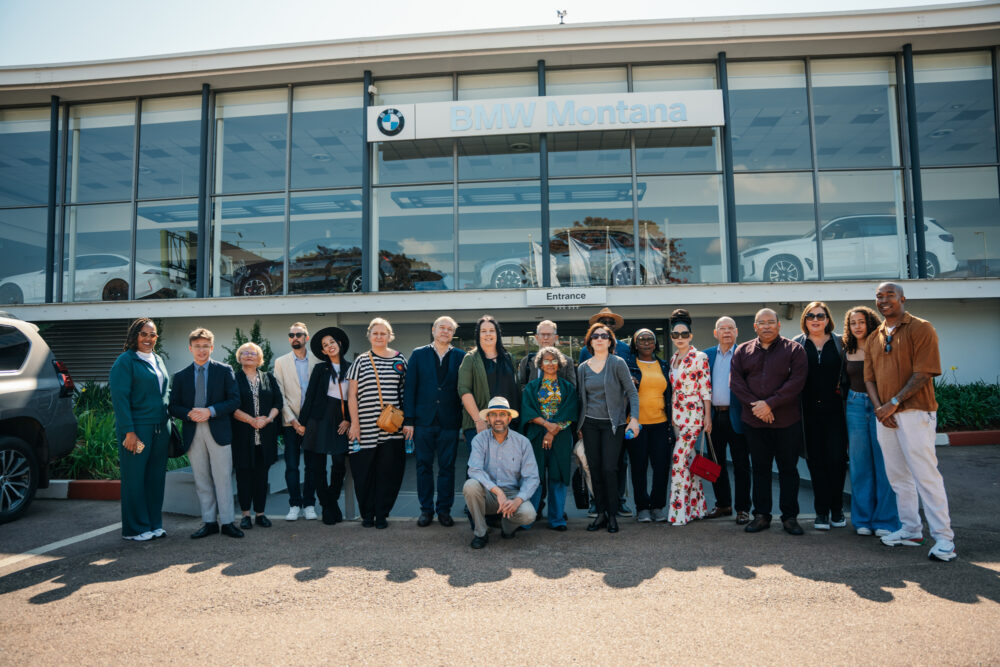
Ten ambassadors and their spouses, representing Romania, Serbia, Greece, Côte d’Ivoire, Colombia, Finland, Brazil, Paraguay, Cuba and Ecuador, attended the forum, creating an atmosphere of international exchange and camaraderie.
The event carried the theme “Advancing Social Development Through Diplomatic Partnership”, reflecting the growing importance of collaboration between nations and communities.
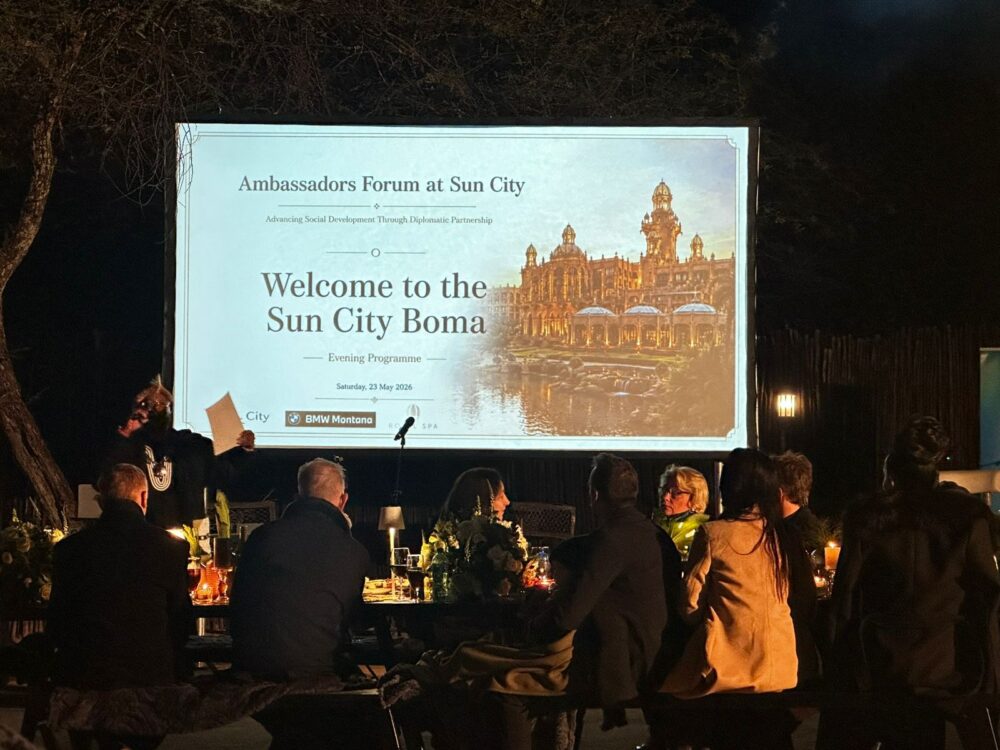
The celebrations unfolded in memorable fashion at Letsatsing Boma, where guests were treated to a gala dinner beneath the African sky. Traditional dancers welcomed attendees with energetic performances, while fires around the boma created warmth and atmosphere as evening temperatures dipped. The setting offered guests a distinctly South African experience — dinner under the stars accompanied by cultural performances and the spirit of African hospitality.
Guests were transported from The Palace to the venue aboard Mankwe GAMETRACKERS vehicles, adding a touch of safari adventure to the evening. Upon arrival, ambassadors and guests enjoyed welcome drinks before proceeding to the formal programme.
The evening was opened by programme director Stoan Seate, who welcomed guests and set the tone for an evening focused on dialogue and collaboration.
Sun City general manager Brett Hoppe welcomed attendees and spoke about the significance of hosting leaders and dignitaries at one of South Africa’s most iconic tourism destinations.
A formal welcome to the North West province followed with an address by Kgosi Motsepe, who highlighted the importance of traditional leadership structures and cultural heritage in South African society. His remarks reinforced the value of preserving local identity while embracing international cooperation.

As guests enjoyed the evening’s starter course, co-convenor Wendy Mosetlhi reflected on the journey and impact of the Ambassadors Forum.
Her remarks were followed by a presentation marking “One Year of The Diplomat Feature in the Mail & Guardian”, delivered by yours truly, who reflected on the publication’s first year and its role in providing a platform for diplomatic engagement and storytelling.
Since its launch, The Diplomat has profiled ambassadors and international relations initiatives, offering readers insight into the work of foreign missions and the people who shape global partnerships.
The anniversary celebration therefore represented not only a milestone for the publication but also recognition of the relationships built through diplomatic storytelling.
North West Premier Lazarus Mokgosi also addressed the gathering, underscoring the province’s commitment to strengthening tourism, investment and social development opportunities through international partnerships.
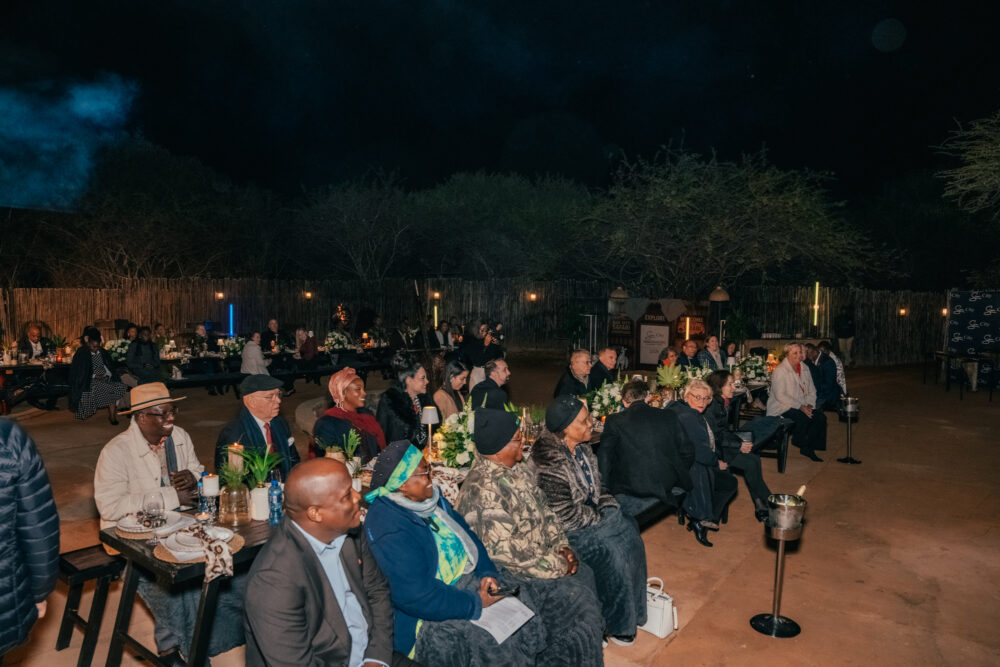
The evening’s centrepiece was the Ambassadors Dialogue led by Jonathan Denga, North West provincial director of biodiversity management and conservation.
Titled “South Africa Through a Diplomatic Lens: Tourism, Culture and Social Development”, the discussion explored how diplomatic partnerships can contribute to social progress, tourism growth and cultural exchange.
The dialogue examined South Africa’s position as a destination for meaningful global engagement and considered the role of diplomacy beyond political and economic discussions. Contributions from the ambassadors of Brazil and Finland enriched the conversation, with insights focusing on international collaboration and the value of cross-cultural engagement in creating stronger communities.
The discussion highlighted how tourism and culture increasingly serve as instruments of diplomacy, creating opportunities for nations to build understanding and encourage development through people-to-people connections.
Corporate partnership also formed an important component of the evening. BMW Montana corporate sales manager Gerhardus Dreyer addressed guests and reflected on BMW’s long-standing presence in South Africa.
Beyond the company’s automotive legacy, he highlighted several community projects supported by BMW, including blanket drives and initiatives aimed at creating meaningful experiences for children undergoing cancer treatment.
His remarks reinforced the evening’s broader message that social development requires cooperation between public institutions, diplomatic communities and private sector partners.
As dessert was served, the evening moved towards its conclusion with a vote of thanks delivered by co-convenor Sipho Masebe. Moses Kotane Local Municipality mayor Nketu Nkotse then offered closing remarks, thanking ambassadors for their participation and sharing reflections on the needs and opportunities within her rural municipality.
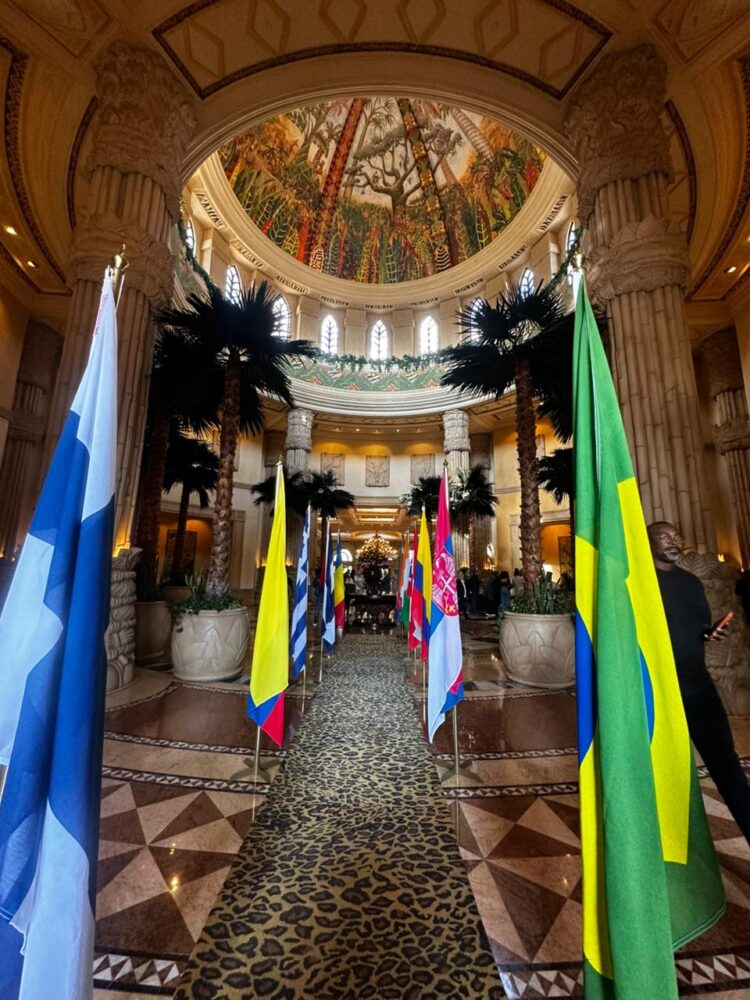
The evening concluded with return transfers to The Palace, ending a programme that successfully combined diplomacy with cultural immersion.
The experience continued the following morning with a buffet breakfast at Crystal Court at The Palace before ambassadors and their partners enjoyed a wellness experience at The Royal Spa. Spa manager Lena Manamela welcomed guests to the tranquil retreat, where lush gardens and the soothing sounds of flowing water created a serene environment before treatments began.
Luxury and hospitality remained central throughout the weekend, with BMW Montana providing a fleet of premium vehicles that transported ambassadors to and from Sun City. The collection of luxury vehicles offered guests comfort and elegance synonymous with the BMW brand.
More than a celebration of a publication anniversary, the Ambassadors Forum 2026 reflected the evolving role of diplomacy — one rooted not only in policy discussions but also in human connection, cultural understanding and shared commitment to social progress.
As The Diplomat enters its second year, the event demonstrated that diplomacy is increasingly about building bridges that extend beyond borders and into communities.
Reflecting on xenophobia in South Africa:
The violence against foreign Africans has undermined and will continue to undermine the African National Congress’s foreign policy of positioning South Africa as a so-called moral force.
It will undermine South Africa’s influence in Africa as well as in continental and global institutions. It is likely to result in African countries not supporting South Africa as it pushes for reforms to make global trade, institutions and technology transfer fairer to developing countries and will undermine the country’s efforts to push for social justice around the world.
It was reported that several African ambassadors and high commissioners snubbed South Africa’s flagship Africa Day event this week in Moruleng by not attending, in what was seen as a protest against attacks on foreign nationals from African countries.
Demonstrations against migrants, mostly from other African countries, have been building for months after a flare-up late last year when undocumented foreign nationals were blocked from accessing clinics and hospitals. Vigilantes are threatening to remove undocumented migrants by 30 June.
Many progressive South African civil society organisations, Pan-Africanists and activists against rights violations elsewhere have either strongly supported the violence against African migrants or have remained silent.
South Africa has significant trade relations with African countries. South Africa’s trade with the rest of Africa accounts for about 24% of the country’s total global exports. South Africa is central to African continental institutions, such as the African Union and the Pan-African Parliament and to pushing for a pro-African global agenda.
Expanding African trade is key to South Africa’s trade diversification strategy. Rising xenophobia in South Africa will undermine the country’s Africa trade expansion strategy.
Some of the influx into South Africa of migrants from failing African countries has been self-inflicted by the ANC government. In its long-standing foreign policy, the party has supported autocratic African governments misgoverning their countries, forcing citizens to search for food and jobs elsewhere.
Most African countries are still battling the impact of economic crises caused by the Covid pandemic, Russia’s war against Ukraine and now the US and Israel’s war with Iran. The US, under Donald Trump, has introduced high trade tariff barriers, which have undermined African, developing and industrial economies.
The US has cut development aid to African and developing countries.
The governments of most African countries are deeply corrupt, make patronage appointments to the state rather than appointments based on competence and award government contracts through patronage-based empowerment approaches.
Many adopt ideological, populist or nonsensical policies that have failed elsewhere, resulting in economic decline, state failure and political instability. Instead of deepening democracy, strengthening good governance, tackling corruption and introducing merit, many failed African governments cling to power.
A third of African countries are run by coup leaders who promise democracy, resource empowerment for ordinary citizens in the public and private sectors and transformation.
However, these promises have largely benefited the connected.
Another third of African countries are run badly by long-ruling autocratic liberation and independence movements or family dynasties. These autocratic regimes violently crush all domestic opposition. Many ordinary African citizens, fighting for survival under these regimes, often have no choice but to search for livelihoods elsewhere.
With many African economies in dire circumstances, run autocratically, corruptly and incompetently, with hungry citizens blocked from seeking refuge in the US or developed countries, South Africa and neighbouring African countries perceived to be relatively economically stable and better governed become alternative options for many Africans oppressed by their governments.
The US and many developed countries have in recent times tightened their borders to block migrants from Africa and developing countries from entering their shores.
South Africa’s economy is also facing multiple crises, state and infrastructure failures and the collapse of the rule of law because of corruption, incompetence and anti-business, populist, ideological and patronage-based ANC policies.
The collapse of the rule of law in South Africa has allowed shadow informal groups, whether gangsters, minibus taxi operators or construction mafias, to dominate key sectors of the economy.
As the ANC declines, many breakaway parties from the ANC and new extra-parliamentary groups, are weaponising the foreign African migrant issue as a route into politics, in similar ways to how populist politicians exploit South Africa’s apartheid past, racial divisions and apartheid legacy of poverty and lack of opportunities to secure votes.
South Africa’s border management, like home affairs and the rest of the public service, has been plagued by incompetence, inefficiency and corruption because of cadre deployment, cadre-based BEE and the failure to hold officials accountable because they are linked to the ANC or ANC-aligned trade unions. Nonsensical policies have also undermined the capacity of the border management public service.
Infrastructure supporting border management — roads, digital technology and logistics — has also been neglected, in the same way as other state infrastructure. The state and security agencies delivering many border management services have also been decimated by cadre deployment, BEE and corruption.
If all Africans from other African countries left South Africa, jobs for locals would not automatically appear, public services would not suddenly become more effective, the housing needs of the homeless and those in informal settlements would not immediately be relieved and crime would not be eradicated unless the real causes are addressed with the political will that has so far been lacking.
What should be done? Corruption in the border management public service, SOEs and security services needs to be tackled. There must be merit-based appointments. Employees in the sector have to be held accountable, regardless of their connections to the ANC.
Civil society organisations will have to play a stronger oversight role to ensure that the border management public service, SOEs and security services are honest, deliver efficient services and make personnel and contract appointments based on merit.
The national government must also end ideological, anti-growth and anti-business policies that collapse businesses and cause unemployment. It must genuinely tackle corruption, introduce merit-based appointments and reform state BEE contracts.
World-competitive public education, including STEM education and industry-relevant subjects such as accounting, economics and entrepreneurship, as well as service competence and broad reading and thinking skills, must be at the centre of education policy. This means there cannot be a 30% pass mark or mathematics literacy.
South Africa cannot continue with a school system in which close to 500 schools do not offer mathematics, more than 2 000 schools do not offer economics and more than 900 schools do not offer physical science. Vocational education, technical colleges and artisan training must be dramatically expanded. Appointments to vocational, technical and higher education institutions cannot be based on cadre deployment, nor should procurement be based on cadre-BEE, as is currently the case.
Businesses have to be closely involved in providing and guiding technical and vocational education, rather than politicians or state officials who have never worked in the real economy.
South Africa’s foreign policy must be changed immediately so that it no longer supports autocratic African governments that suppress their citizens while destroying their states and economies, forcing hungry citizens to flee to South Africa and other countries.
South Africa’s foreign policy must instead push for democratisation in other African countries and for prudent economic policies. South Africa must make its trade policies more pragmatic rather than ideological or based on past liberation struggle relations, diversify its trade, and ensure the country is not captured by one country, whether China or the US.
Citizens must hold their leaders and parties accountable for supporting autocratic governments in Africa, as this will continue to destroy African economies and force hard-pressed citizens in these countries to seek refuge in South Africa.
Voters must oppose cadre deployment as a policy through which politically connected ANC cadres are repeatedly appointed to different state departments, SOEs and agencies based on political connections rather than skills, recycling failure repeatedly.
Voters must also oppose BEE policies that enrich politicians, civil servants and trade unionists. Only BEE policies that build small businesses, foster technical and vocational skills, create artisan training, deepen STEM school education, strengthen industry-relevant economic, accounting and service skills and build public housing and infrastructure should be supported.
Most importantly, ordinary black South Africans will only secure a better life if voters stop supporting people who have never worked outside politics or the state and stop supporting leaders who are corrupt, incompetent, unruly or violent.
Black voters will have to make the psychological transition to voting for leaders and parties based on competence rather than colour, ethnicity or liberation struggle credentials.
Voters must also stop supporting leaders based on their struggle-song singing ability or ‘revolutionary’ slogan shouting. They must stop supporting leaders who are violent, who call for ‘revolution’ and who blame all South Africa’s problems on apartheid, colonialism, ‘white monopoly capital’, the World Economic Forum, a global Western conspiracy or communities and groups that are different from them, or who weaponise South Africa’s historical ethnic and racial divisions.
The danger is that, after blaming all South Africa’s problems on foreign Africans while continuing to ignore the real reasons for both South Africa’s problems and the presence of undocumented foreigners in the country, many people may then move on to blame groups in South Africa that are racially or ethnically different from them for the country’s ongoing problems.
William Gumede is an associate professor at the School of Governance, University of the Witwatersrand and author of South Africa in BRICS (Tafelberg).
This is an edited extract of his presentation prepared for the Africa Day roundtable discussion, ‘Africa Reimagined: Sovereignty, Governance, Youth and the Continent’s Future’, hosted by the SABC’s SAFM.
Submit and get free exposure here: Showcase Your Business | Advertise Your Special Offers.
