Authors’ advice is on the money:
For many working professionals, engaging with their financial problems is stressful and can even lead to mental health issues.
In a declining economy filled with anxieties and uncertainties about our financial security, how can individuals and families have better conversations around money?
“It’s not just about money mistakes; it’s about how our money traumas and family dynamics shape our spending habits,” says author and money trauma coach Vangile Makwakwa.
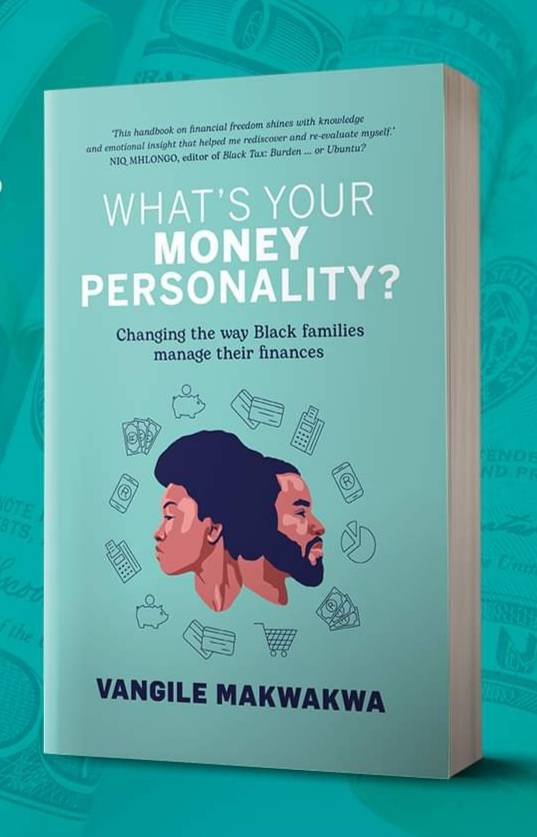
In her book What’s Your Money Personality? Changing The Way Black Families Manage Their Finances, she explores the money traumas troubling many individuals and families — particularly in black communities.
Makwakwa’s aim was to help readers explore the individual money styles within their families.
“By understanding their money archetype or money personality and the associated core wounds, readers can gain insights into how they shape their family dynamics and their relationship with money.”
“Black tax” is another complex and sensitive issue some working professionals battle with. A term originating in South Africa, black tax refers to the financial responsibility assigned to high-salaried people to support their less fortunate family members.
Some see this as a burden, while others believe it is an act of humility and a way to counter the poverty affecting many communities.
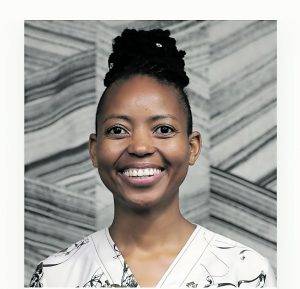
“If we truly want to end the cycle of poverty, we should commit to doing black tax differently, by making sure that we don’t become our children’s black tax when we retire,” says author and self-leadership coach Ndumi Hadebe. In her book Handle Black Tax Like A Pro, Hadebe offers a guide for working professionals struggling with this issue.
Both Makwakwa’s and Hadebe’s books provide a refreshing perspective, inspiring black working professionals and their families to engage differently on money matters, which can cause conflict, depression and break-ups.
During our interview, both authors encouraged healing from money traumas through honest conversations with themselves and their loved ones.
Money troubles can hinder you on the road to starting a career, family or marriage. And money wounds, among other unresolved and even invisible wounds, come to bear when people are confronted with challenges around finances.
As a money trauma coach, Makwakwa observed how many people unknowingly block their financial abundance, engage in reckless spending and struggle to save — without comprehending the root causes. This lack of awareness holds back professionals and their families.
“It’s like you’re cruising along, thinking you’ve got your strategy in place, and then, boom, you’re frozen, unable to take action,” she explains. Makwakwa’s views on money were developed as a child witnessing the constant arguments over funds among family members. She contends that money trauma is a trans-generational epigenetic inheritance passed from one generation to another.
“It’s been a continuous journey because money trauma isn’t a one-and-done deal. It’s an ancestral thing, a process ingrained in our DNA by the countless ancestors we carry in our bloodline.”
She admits that writing the book was no walk in the park because she had to confront her own money traumas. In 2022 and last year, she went through some seriously dark times in her business and money was at the heart of it all.
And, as if that wasn’t enough, she found herself going through a public shaming on social media.
This led to an internal struggle, Makwakwa adds, of wanting to run away, to not be vulnerable, to shy away from putting her story out there.
Hadebe’s money struggles were around black tax expectations from her loved ones.
Feelings of annoyance, guilt, fear and resentment when engaging with finances, Hadebe argues, are negative emotions linked to money traumas.
These low-vibration sentiments affect our ability to connect with the frequency to empower our ability to earn more money and better manage what we do have. She contends that creating boundaries is a difficult, but necessary, decision for one’s mental and financial health.
Hadebe believes boundaries are the foundation for us to be aligned with our innermost selves.
Better money management is an act of self-love and helps us reclaim our personal power.
Like Makwakwa, Hadebe’s writing process was cathartic. By the time she started writing her book, she had been on a personal journey of applying healthy boundaries for more than a year.
“So, it was fairly doable for me to set boundaries across the board — for money, time and energy.”
Hadebe quickly learned that she had to be honest and upfront about what she could and couldn’t afford.
“I was no longer concerned about being judged or labelled,” she says.
The conversation around money matters can, however, be sensitive, especially among black families in the lower economic strata.
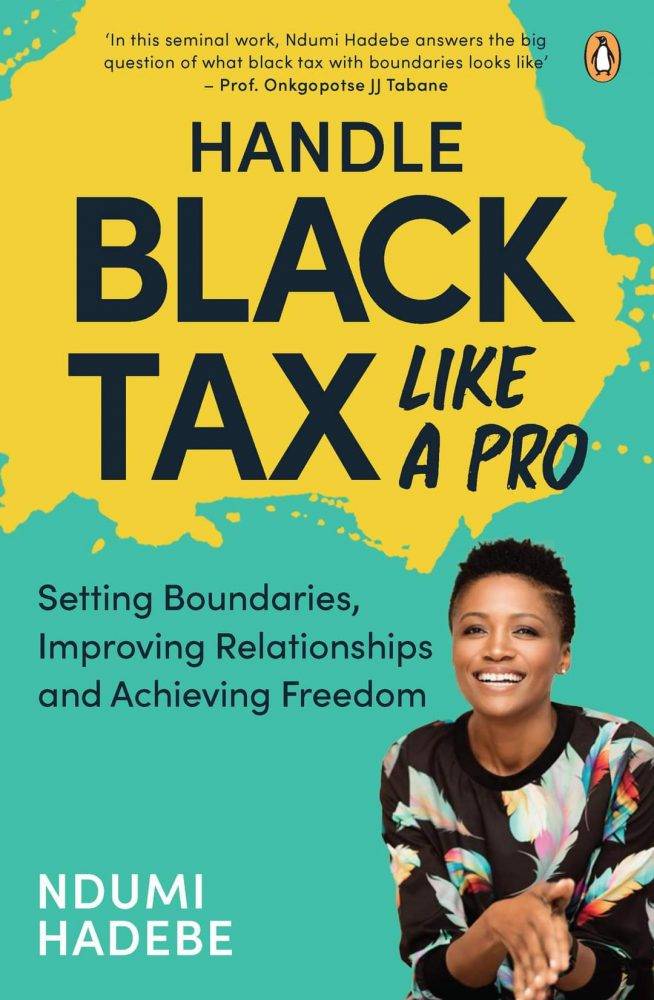
It is important for us to become familiar with talking about money matters, in general, with our families, when they are genuinely invested in our growth and progress, Hadebe says.
For the payer of black tax, there must be a focus on addressing the issue with love and compassion.
“People shouldn’t wish the issue of black tax away by not talking about it. As difficult as it may be, it must be discussed.”
Hadebe adds that it’s advisable that you assess thoroughly how much you can afford to allocate to your family’s needs.
“Once you’ve communicated what you can afford, you can take action based on the budget set.”
She adds that selling the idea of ending the cycle of poverty for yourself and the entire family is also vital.
“Let them see that your financial boundaries are there for your benefit, theirs and future generations.
“It might take time for them to get it but you keep it at it through love and compassion.”
Makwakwa agrees with Hadebe on the enormous impact of having daily talks about money.
Of course, some people might feel anxious about starting the conversation, due to fears of being shunned or seen as boastful.
Joining a community focused on money issues can go a long way to helping with financial management, Makwakwa advises. However, the pursuit of personal mastery should be the priority.
For those who can afford it, Makwakwa suggests getting a financial adviser, a money coach or even a life coach.
She concludes that money isn’t just about the numbers, it’s about our core wounds from childhood and our family dynamics.
“It’s about the intricate dance we have with money and the relationships we build around it. So, next time someone says financial literacy is the key, remind them that it’s a bit more complex.”
Both books aim to foster better money relationships that can pave the way for collective generational wealth, particularly for black working professionals and their families.
SAPS, Metro to guard council staff as violent eThekwini strike continues:
KwaZulu-Natal premier Nomusa Dube-Ncube has promised a crackdown to stop the violent municipal workers strike from further disrupting council services, which the city hopes to have fully restored by the end of the week.
This comes as rubbish continues to pile up across the city, after municipal services were halted by a wildcat strike over pay by members of the South African Municipal Workers Union (Samwu) last Wednesday.
Large parts of north, west and south Durban were left with no water over the weekend after strikers destroyed valves on a number of reservoirs and sabotaged pipelines in a bid to force the city’s hand by disrupting services.
Businesses in the Umgeni Road and Springfield Park areas were forced to close shop, while municipal staff who were not taking part in the strike were prevented from going to work on Friday and Monday.
A number of incidents of violence and vandalism took place on Friday, when council vehicles were used to dump rubbish in the streets and block access to city facilities, and a number of stoning incidents were reported in the Umgeni Road area on Monday morning.
Durban was at the epicentre of the violent July 2021 riots that followed the jailing of former president Jacob Zuma and there are concerns that the strike might lead to widespread violence and looting in the city.
At a media briefing in Durban on Monday, Dube-Ncube and eThekwini mayor Mxolisi Kaunda had promised that the disruption of services would be halted and that those responsible for violence and vandalism would be prosecuted.
Dube-Ncube said the provincial cabinet had met at the weekend and had held discussions with the national security cluster ministers about how to deal with the crisis in the city — and to bring to book those responsible for violent actions.
Dube-Ncube said that while the right to strike was guaranteed, workers did not have the right to destroy infrastructure, deprive residents of services and infringe on the rights of other citizens.
“Government cannot accept nor allow anarchy to prevail,” Dube-Ncube said. “Lawlessness will not be allowed to prevail.”
Dube-Ncube said that initial arrests of strikers involved in damaging infrastructure and other violent acts had taken place and that video footage was being assessed to bring criminal charges against others.
“Government will no longer tolerate the atmosphere of fear, trespassing on premises and forceful removal of staff from their work posts, denial of patients their rights to gain access into healthcare facilities, including vandalism of critical infrastructure, such as water and electricity,” she said.
The scenes witnessed over the past few days were “pure criminality, economic sabotage and tantamount to treason”.
While the municipality was still assessing the impact and financial implications of the strike, it had met the business community to brief them about what steps it had taken to bring the situation under control.
These included the establishment of a technical task team, involving all levels of government, to co-ordinate interventions and provide additional security and police to protect facilities and non-striking workers.
“Metro Police and private security have been sourced to escort staff to service delivery points including clearing of roads, electricity faults, water leaks, burst pipes and refuse removal. Both the municipal and provincial law enforcement agencies are on high alert and will act,” she said.
Key staff would work remotely, while contractors would be brought in, under escort, to help with refuse collection and to restore electricity and water to areas which had been hit by sabotage.
Police were analysing video evidence and would charge staff who destroyed property or misused council vehicles; while the co-operative governance ministry had put together a team which would help fasttrack internal disciplinary cases.
Legal action would also be taken to recover damages from both individuals who had been involved and from Samwu, who went on the unprotected strike in a demand for pay parity with Ekurhuleni and Johannesburg.
Dube-Ncube said the matter was being discussed between the unions and the government at the local government bargaining council and not in talks with individual councils.
She said eThekwini would push ahead with enforcing the high court interdict it had secured against the strikers last week and that those who continued with violent disruption of services would be charged for doing so.
Workers had been instructed to return to work and would not receive payment or benefits for the period during which they were involved in the illegal strike.
“It is of grave concern that Samwu and striking employees are in breach of the court interdict, and therefore in contempt thereof, as incidents of violence and intimidation directed to staff members and vandalism have continued unabated,” Dube-Ncube said.
In response to questions as to whether the strike might have been “hijacked” by the ANC’s internal political battles, Kaunda said he would leave it up to the security cluster to comment on that.
On Friday, members of Jacob Zuma’s uMkhonto weSizwe party marched in Durban against service delivery failure and were joined by striking Samwu members.
“I would rather leave that to the law enforcement agencies,” Kaunda said. “They are all working in the city. Intelligence, the police and the SANDF [South African National Defence Force] are all combining efforts. They are the ones who will be able to tell us exactly what their sources are gathering at the local level.”
Kaunda said the extent of the damage to infrastructure and the cost had not been established as yet but that he hoped that services would be restored by Friday.
“We cannot tolerate this behaviour from our workers to continue in the city as it is happening. By the end of the week, we want stability in every aspect of our work,” he said.
Samwu said in a statement that it had met to discuss the “impasse” with the city and that it would meet council leadership on Wednesday to discuss their demands.
The union had bailed out a number of its members who had been arrested during the strike.
While Samwu respected the court interdict, “the union continues to explore alternative avenues to address grievances and compel the employer to fulfil its obligations”.
Nathi Nhleko resigns from ANC, calls out ‘lunacy’ of Fikile Mbalula:
Former Police Minister Nathi Nhleko, who gained notoriety during the Nkandla scandal, has resigned from the ANC.
This follows an exchange with party secretary general Fikile Mbalula, who accused Nhleko of lying in parliament in defence of former President Jacob Zuma during the inquiry into the Nkandla scandal.
“Consequently, and regrettably, I resign from this African National Congress as its current values and principles are not aligned to mine,” Nhleko said.
In a letter addressed to the Albertina Sisulu Branch secretary Tolo Fakazi, Nhleko said that Mbalula’s accusations demonstrated “the bankruptcy, lunacy, and the defunct manner of thinking by the Secretary General, which has unfortunately defined the barren form the ANC has undertaken”.
“In the past few years, I have observed that I no longer recognise this ANC that I joined, the ANC whose only aspiration was to liberate our people. The ANC as a liberation movement spoke and acted strongly on good ethics; a collective approach; was people focused; and emphasised on humanity and freedom for all,” he said.
Nhleko said he had observed fundamental shifts in the ANC that were sad. It was “painful” to see an organisation he loved dearly turning into something unrecognisable, he said.
This included the gradual dismantling and privatisation of state-owned enterprises; the transfer of control of vital sectors of the economy to the “white dominated private sector”; the reduction of state influence and oversight in critical sectors which could potentially compromise public interest and welfare, and the reduction of employment within state owned enterprises which, he said, leads to job losses.
“The above stated points represent a deviation from the ANC founding principles, as starkly illustrated by [the] newly found emphasis on austerity measures. These austerity measures are characterised by severe reduction on social spending. For instance, social grants benefiting the elderly have been consistently increasing up until 2018 by 8% annually. Since 2018 the figure of 8% has been reduced to 4% annual increases, with a projected 2% to 3% annual increases for the Medium-Term Expenditure,” he said.
ANC spokesperson Mahlengi Bhengu-Motsiri confirmed that the party had received Nhleko’s resignation, adding that he had exercised his democratic right.
Bhengu-Motsiri defended Mbalula against Nhleko’s criticism, saying that the ANC had full confidence in the secretary general’s ability to captain the ship.
“There is nothing special [in Nhleko’s resignation], any member can resign. We have had members resign before.”
She said that if Nhleko had concerns over the way the organisation was run, he should have consulted the senior leadership.
The former minister said that the party was “ravaged” by its leaders tackling each other on public platforms.
“We have witnessed situations where matters that ideally should have been handled amicably internally by our structures end up in courts and in public discourse. This demonstrates that the centre is no longer holding in the ANC,” he said, adding that upon reflection he could not continue as a member of the party.
“It is difficult to continue watching people in my community and all over our country suffer because of the failures of an organisation that I am part and parcel of and can’t do much to serve their lives for the better.”
Nhleko graded his record of service as “impeccable”, saying that he had executed work assigned to him, “to the best of my ability and commitment and did not disappoint the ANC”.
During his tenure as police minister, Nhleko was exposed as a Zuma henchman, instituting investigations into Zuma’s political foes. The auditor general also found that the financial management, governance, control and leadership of the department under Nhleko had regressed and was inadequate.
He was also the subject of a R114-million civil claim in which it was alleged that Nhleko played a role in clandestine activities to fund a union to rival the Association of Mining and Construction Union.
Submit and get free exposure here: Showcase Your Business | Advertise Your Special Offers.