Beachwood developer accuses project’s opponents of ‘fearmongering’:

Residents and environmental activists are against a hotel and housing development on the golf course which they say could lead to environmental problems
Dentists warn of teeth-fixing products touted by influencers:
By flashing a perfect smile, online beauty influencers have proven adept at convincing their young followers that they too can have blindingly white, perfectly aligned teeth for very little money, time or effort.
But the teeth whitening or straightening products these influencers are promoting — often via sponsored ads on social media platforms such as Instagram and TikTok — can be dangerous if used incorrectly, dentists have warned.
And some companies pushing the inexpensive, at-home products have fallen far short of their lofty promises.
The US-based firm SmileDirectClub aggressively advertised online for its “clear aligners”, which are plastic braces worn daily to straighten teeth.
However, the firm filed for bankruptcy in December, leaving many customers in the lurch.
Chantelle Jones, a 32-year-old Briton who paid the firm £1,800 ($ 2,300), only had her top teeth straightened and never received the bottom moulds.
“I’m not sure if I’m going to get any money back,” she told the BBC last month.
The company has announced its “Lifetime Smile Guarantee” simply “no longer exists”, advising customers to seek professional help.
But because a dentist did not initiate the process, they would “have to start everything from scratch”, French dental surgeon Genevieve Wagner told AFP.
These types of products are not used solely for aesthetic purposes, said David Couchat of the French Federation of Orthodontics.
“Aligning a few incisors can happen quickly but there is a lot of work to be done afterwards about how someone will use their jaws to chew,” he said.
Whiter shade of pale
The simple online tests offered by these products cannot detect bone loss, tooth loosening or gum disease, said Christophe Lequart, a dental surgeon and spokesman for the French Union for Oral Health.
But if the products are used by customers with such problems, it could lead to serious long-term damage, he warned.
Other products promoted by enthusiastic beauty and wellness influencers include teeth whitening strips, pens, gels, lamps and toothpaste.
Some of these products are sold online for as little as $ 20 — compared to potentially thousands for a whitening procedure carried out by a dentist.
The active whitening ingredient in many of these products, the chemical compound hydrogen peroxide, is strictly regulated in the United Kingdom and European Union.
The concentration of hydrogen peroxide cannot exceed 0.1 percent in over-the-counter products in the UK and EU. Dentists, however, can use or prescribe products that have up to six percent.
That did not stop the French influencer Poupette Kenza from pushing Crest 3D Whitestrips, which tests have shown contain up to 10 percent hydrogen peroxide.
Late last year, the French authorities fined Kenza 50,000 euros ($ 55,000) for promoting the banned product, which regularly gets millions of views on TikTok under hashtags such as #crest3dwhite.
‘Big scam’
When used in large quantities, hydrogen peroxide can be harmful — particularly if applied to cavities or diseased gums.
Before whitening, dentists clean teeth to remove any surface discolouration, a process which does not happen for at-home products bought online.
Dental surgeon Lequart said that using too much of these products can cause irritation or even lead gums to recede — an early warning sign of future tooth loss.
One online customer said the Crest strips “lighten teeth several shades, of course, but give a horrible sensation during hot or cold meals”.
Lequart said that “on social networks, the target audience is relatively young and concerned about savings”.
This could lead to a potential “disaster in terms of oral health”, he added.
Wagner emphasised that most young people have perfectly healthy teeth and should not use “whitening products, which damage their teeth prematurely via acids”.
Lequart cautioned that before-and-after whitening images on social media are often touched up using Photoshop.
And Couchat pointed out that influencers promoting these products often have expensive porcelain veneers covering their original teeth.
“They are taking advantage of people’s credulity. It’s a big scam,” he added.
These veneers are also popular among Hollywood stars, a common inspiration for many dreaming of a whiter smile.
© Agence France-Presse
In the last week of 2023, Somaliland’s president Muse Bihi took a short flight to neighbouring Djibouti. After a long and difficult year, he needed a win.
He did not get one there.
Bihi leads one of the most politically unique – and diplomatically sensitive – places in the world.
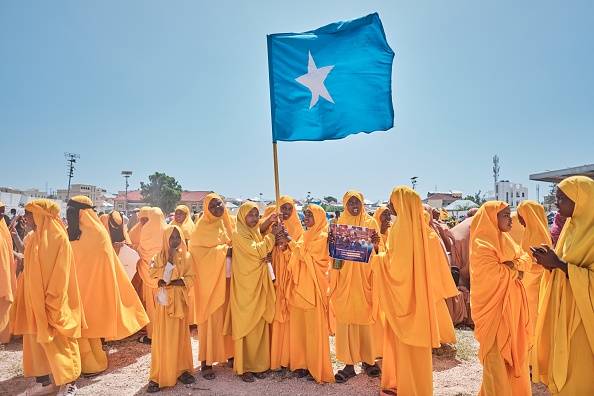
Somaliland declared its independence in 1991, and has governed itself ever since. It has its own flag, currency, and national anthem. But no one else recognises its sovereignty, and its territory is claimed by the federal government of Somalia.
In Djibouti, Bihi met with that country’s president, Ismail Guelleh, and Somalia’s president, Hassan Sheikh Mohamud. He was hoping to advance negotiations on Somaliland’s status.
Instead, he was told in no uncertain terms that recognition of Somaliland’s independence was off the table.
Frustrated, Bihi visited Addis Ababa, where, on New Year’s Day, he made a dramatic deal with Ethiopia’s Prime Minister Abiy Ahmed – one that could redraw the map of the Horn of Africa.
The text of the deal – which at this stage is just a memorandum of understanding, with details to be hammered out later – has not been made public. It was signed in such haste that even members of Bihi’s cabinet were not consulted beforehand.
According to official sources, the deal will give landlocked Ethiopia access to a 20km strip of Somaliland’s coastline for the next 50 years. In return, Ethiopia will recognise Somaliland as an independent state – or so Bihi’s administration claims. Ethiopia has not confirmed this detail, but it has not denied it, either.
The quest for international recognition has been the driving force in Somaliland’s politics for more than three decades, and to be the president that delivered Ethiopia’s support would secure Bihi’s legacy – and potentially his re-election later this year.
“Recognition by any state, but particularly Ethiopia – which is the seat of the African Union, a regional power with considerable clout – would potentially create some momentum behind Somaliland’s quest for recognition,” said Matt Bryden, co-founder of Sahan Research, a Nairobi-based think tank.
The deal with Ethiopia also helps to distract from some of Bihi’s other, more immediate problems. He is facing enormous political opposition to his decision to delay presidential elections, which were originally scheduled for 2022. They are now planned for late 2024.
And his military engagement last year in the contested Las Anod region backfired spectacularly: not only was Somaliland defeated by local militias, losing a significant chunk of its military capacity in the process; but the human rights violations committed in the process totally undermined Somaliland’s reputation as a regional bastion of democracy and the rule of law.
Against this backdrop, the deal with Ethiopia is a political lifeline for Bihi – and should help him shore up his power base in Somaliland’s heartlands. If, that is, Ethiopia upholds its side of the bargain.
Running dry
Abiy Ahmed was supposed to visit Hargeisa last week. At least that’s what sources in Somaliland’s presidency hinted to the local press corps, who spent the week anxiously tracking flights online. He would have been the first-ever foreign head of government to visit Somaliland’s capital city – but he never arrived.
Abiy has been under immense pressures of his own. Tensions still simmer in Ethiopia’s Tigray region, after the conclusion of a brutal civil war in 2021 – won by Abiy’s federal forces, with a lot of help from Turkish drones. A new conflict is brewing in the Amhara region, where the Fano militias – originally empowered by Abiy to fight in Tigray – feel abandoned by his government. The relationship with neighbouring Eritrea has frayed badly in the wake of the Tigray conflict.
Domestically, a sluggish economy, hit hard by the Tigray war, has led to a sharp rise in the cost of living.
So Abiy, too, needs a win – and for an Ethiopian leader, wins don’t come much bigger than access to a port. Ethiopia is the world’s most populous landlocked country. Its port access disappeared when, after a bitter civil war, Eritrea declared its independence in 1991, leaving 120-million people without a direct route to the sea.
This has had enormous political and economic repercussions. The United Nations estimates that landlocked developing countries are on average 20% less developed than they would be if they had access to the sea.
“Effectively, as a country you are crippled,” said Timothy Walker, who researches African maritime issues at the Institute for Security Studies. “Without it, you are always at a disadvantage.”
Currently, most of Ethiopia’s trade goes through the port of Djibouti, which costs Ethiopia an estimated $ 1.5-billion every year in fees – and leaves it vulnerable to any policy changes by Djibouti’s government.
In recent years Abiy, who wants to turn Ethiopia into a continental superpower, has made sea access into a nationalist rallying cry. “Ethiopia has a natural, historical, political and legitimate right for access to the Red Sea,” he said in a speech last year, saying that the rapidly-growing population cannot continue to live in “a geographic prison”.
The proposed deal with Somaliland would undoubtedly help Ethiopia break free from this prison – but not everyone thinks it is a good idea.
Choppy waters
International support for the deal has been non-existent. The African Union, the Arab League and the Organisation of Islamic Cooperation have all reaffirmed their support for Somalia’s territorial integrity. So too have the United States and the European Union.
Unsurprisingly, the reaction has been strongest in Somalia itself, with a furious President Mohamud declaring the deal “null and void” on national television. “We will defend our territory and we will die for it,” he said, later warning that the deal could strengthen Islamist militant group Al-Shabaab.
The bombastic rhetoric disguises several fundamental weaknesses, however. “Somalia doesn’t have an army capable of projecting influence beyond its borders. It barely controls parts of southern Somalia,” said Sahan Research’s Bryden.
More significant still is the presence of large numbers of Ethiopian troops within Somalia itself – there to secure vast swathes of territory against Al-Shabaab. Were they to withdraw, there would be a serious security vacuum across southern Somalia which the federal government does not have the capacity to fill.
“The federal government in Mogadishu is in a difficult position,” said Dr Peter Chonka, a senior lecturer in global digital cultures at King’s College London. “The irony here is that for all of the protests about Somalia’s sovereignty, the federal government and the federal member states still need Ethiopia to be an active security partner within the country against Al-Shabaab.”
That leaves Ethiopia, for now, in the driver’s seat. But pushing ahead with the controversial deal is not without risks for Abiy: neighbours Djibouti, Egypt and Eritrea have both signalled their unhappiness with his plan, further raising regional tensions.
Relations with Egypt are already poor after Ethiopia opened a giant hydroelectric dam on the Nile River.
The vociferous diplomatic resistance may explain why Abiy has not yet travelled to Somaliland to seal the deal – and why the proposed port will remain in the centre of a diplomatic storm for some time to come.
Submit and get free exposure here: Showcase Your Business | Advertise Your Special Offers.