
A few days before the release of his new album, Sun-El Musician sounds like a man suspended between exhaustion and exhilaration.
“Yeah, actually, it’s all of the above as a creative,” the artist whose real name is Sanele Sithole tells me when I ask if he’s feeling excited or nervous. “I think you get to a space where you’re just like over the whole thing. It’s because it’s a lot of work. But there is some excitement just for people to hear the songs for the first time.”
It’s an honest answer. After four years without a full-length project, Under the Sun arrives on Friday February 13 as both a return and a reset. A 17-track Afro-house offering released through his own label, Under Da Sun, the album brings together a formidable constellation of collaborators; from Nasty C and Deborah Cox to Msaki, Youngr, Manana, Mnqobi Yazo and a new generation of emerging voices.
But right now, in the quiet before release, he’s living with the strange emotional whiplash of finishing an album.
“I’ve loved some of these songs and I hate some of them now,” he laughs. “And until I give it out to the people and then I fall in love back again. So it’s kind of a weird place to be in right now. So, yeah, I’m kind of all over the show, really.”
“Plus I’m a perfectionist, so I keep tweaking until they’re out,” he says. “As a matter of fact, even when they’re out, I’ll still be like, should have done this to that part. So it’s just like a never ending process of just trying to make it sound better, I guess.”
There is relief, though, in surrender. “That love and hate until you give it to the people and then they go crazy. Like, okay, I need to let go.”
Letting go has been a long time coming.
Although his debut Africa to the World (2018) and its successor To the World & Beyond (2020) were certified Platinum and African Electronic Dance Music followed in 2021, he could have released something much sooner. The songs were there. The demand was there. But the feeling wasn’t.
“I could have released an album a long time ago,” he says. “But I felt like I wasn’t feeling anything around all that time and I was going through this newness that I’m actually just like embarking on now.
“So at that time, I just felt like it was going to be just like an album made by a machine if that makes any sense where I could have just put a bunch of songs together and just got it out. I felt like I needed to go through a certain emotion or just a feeling like that’s where I’m at right now.”
Under the Sun is, in that sense, an album born of timing. Some of the tracks are years old, others are recent. “It’s always like that when you’re working on an album anyways,” he says. “There’s songs that won’t make the cut on this album. Maybe they could work in the next two years or next year or this year later. It’s just always those. I guess it’s a timing thing.”
Timing and instinct have long defined Sun-El’s approach. Since his earliest releases, he has resisted fitting neatly under genre umbrellas. Afro-house may be enjoying a global surge but he refuses to chase trends.
“Afro House is really just becoming like a very cool space right now,” he says. “But it’s always been there. I don’t necessarily feel like that [pressure] because I’m always trying to make something fresh, new.”
Sometimes even he struggles to categorise his work.
“Sometimes when I look at some of my songs, I don’t even know if I can put them under the Afro House umbrella but I can put them under the dance space,” he says. “I’ve always not been a person who was kind of feeding into certain spaces since my first single. So it’s always just been, I guess it was just like I was just trying to find newness all the time.”
Newness, for him, often begins with people. Under the Sun is as much about collaboration as it is about sound. Alongside established stars are emerging artists whose names may be unfamiliar; for now. Sun-El has built a reputation for spotting something before the rest of us do.
“There’s always this little special thing,” he says of discovering new voices. “Maybe they could be just singing in a very different way. They have a very different, unique voice that I’ve never heard before.”
He is drawn to what doesn’t quite fit. “I always liked unique voices so it just feels fresh when it’s introduced, which is very risky. It’s such a hard journey but it’s beautiful. And I just love going through those challenges,” he says. “Can I work with this person? Can I make an Afrikaans song, you know, sound cool to a person who’s never even heard Afrikaans?”
Even when working with major names, his process remains rooted in connection. “We firstly have to connect and talk about stories,” he says. “How you grew up or whatever. Just finding a way to connect just as human beings first.”
And once they step into the studio? “Yes, it can be very scary having somebody who’s very big in their career. But once I’m in the studio, it just switches up everything because I’m in my world now. I’m like, okay, I’m in control now.”
With Nasty C, he recalls simply immersing him in the sound. “I just made him listen to it. Just like a bunch of just, like, crazy stuff. I was like, yeah, I don’t know what to call it either. But it’s my sound.”
The Covid-19 pandemic reshaped some of this process, forcing remote exchanges. But even then, his aim remained the same: “My approach is to always create a world where it’ll be comfortable for you to express yourself easily so you can feel vulnerable enough for you to express yourself.”
That vulnerability threads through the album’s themes. Take Music, a collaboration with Nasty C, Lorine Chia and Touchline.
“It’s actually a song that Lorine and I worked on remotely,” he says. “She sent me stems and stuff and I worked on it. And then it’s been sitting in my archives for like four years.”
When Nasty C heard it, something clicked. “He liked it and loved the message because we had talked about the whole journey of going to the US and then kind of not really getting the whole vibe and then coming back home just feeling like you didn’t give it your best or something like that.”
Other songs challenge him linguistically and culturally. Muloro marks his first venture into Venda. “Why does it feel like they’re not a part of SA much?” he wonders. The track is down-tempo, a deliberate contrast to his high-energy catalogue.
“Monna Hela is my first Setswana song,” he adds with pride. “I’m so proud of those lyrics because I just felt like I didn’t want it to be too serious. Luckily, I had different folks who are from Botswana who kind of were guiding me.”
The album’s intro, Ilembe featuring Mnqobi Yazo, was initially composed for the Shaka series. “It was solely meant for the Shaka Series Season 2,” he says. “But they had said to us, we still get to keep the masters. So I was like, okay, let’s put it on the album.”
If Under the Sun feels expansive, it’s because Sun-El’s world has expanded too. Before South Africa fully embraced him, Botswana did. “The funny part is the first country that embraced me was Botswana before South Africa,” he says. “I did a lot of trips to Botswana. At some point, the guys that were booking me there were like, ‘I think you should just get a house and a wife. It’s done.’”
Kenya followed. “I would love for anyone who makes music to experience Kenya at least once,” he says. “That’s how crazy and beautiful those people are and how they receive music. Whether you’re known or unknown, they don’t care. You just need to play something that they like.”
Watching audiences sing along to IsiZulu lyrics they didn’t fully understand affirmed his melodic instincts. “They’re singing along. Vibing all the way, you know, because it’s just following the melody,” he says. “It needs to be super hooky. From start to finish, the instruments to lyrics and everything needs to be a hook.”
From Zambia to Mozambique, London to New York, he has learned that big cities, powered by the internet, often catch new sounds first. “I was just like, I’m learning so much as everything was just happening.”
Now, as Under the Sun prepares to enter the world, he stands at what he calls “chapter two.” “This is my label. This is when I’m starting my own journey, which is chapter two,” he says.
“Chapter one was where I had signed artists and everything. But this time around, I’m just independent. I’m just doing my own things. I’m starting my own shows. Hopefully they turn into festivals.”
But first, the music. “Firstly, we have to start with the album,” he says. “Obviously, the music always just has to lead to the whole vibe and then it’s just the rest will just follow.”
Under the Sun arrives not as a calculated commercial move but as the sound of a man who refused to release an album until he felt something real. It carries the fingerprints of years; archived ideas, new languages, old friendships and global stages.Right now, he is somewhere between love and hate, fatigue and anticipation. Soon, the songs will belong to the people. And if history is any guide, he will fall in love all over again.
The last time I spoke to Gregory Maqoma, he was retiring.
Or at least that was the language we reached for then, retirement, an ending, the quiet folding away of a body that had carried the emotional and political weight of South African contemporary dance for over two decades.
He was stepping off the stage, he said, hanging up his dancing boots, loosening his grip on the centre of the frame. It felt final, like the closing chapter of a long incandescent book.
And yet here we are speaking again, not about an ending but about Genesis.
“I never said I was stopping work,” Maqoma corrects gently, when I bring this up. “The break is me not being on stage.”
That distinction sits at the core of Genesis, Maqoma’s latest work and his return to the Baxter Theatre for its world premiere from 18 to 21 February 2026. Framed as a groundbreaking dance opera fusing dance, music and poetry, Genesis is not a comeback to the stage but a reconfiguration of power, labour and vision. Maqoma is no longer the body through which the work speaks. He is the architect.
Renowned choreographer Maqoma is the founder and creative director of Vuyani Dance Theatre, established in 1999.
“For the last 25 years, I have been on stage,” he says. “I now step out of that so I can really be involved in the choreography and the making of work and not the literal form.”
What emerges from that stepping back is a work of formidable ambition. Genesis, subtitled The Beginning and End of Time is a poetic and visceral meditation on creation, collapse and the possibility of beginning again. It follows Maqoma’s critically acclaimed Exit/Exist (2023) and Cion: Requiem of Ravel’s Bolero (2024), both of which enjoyed triumphant seasons at the Baxter and together form a loose philosophical continuum. But where those works were anchored by Maqoma’s own body as protagonist, Genesis disperses authorship across an ensemble, a score, a libretto, a stage picture that feels at once expansive and intimate.
At its conceptual centre is a desire to return, not nostalgically but radically.
“Genesis is a desire to return to the beginning of time,” Maqoma explains, “but also to allow ourselves to immerse in the revolutionary ideas of those people who have spoken quite extensively about Black consciousness and how we need to tune into our humanity — the sense of consciousness of who we are and culture being the datum that should lead in on spirit.”
This is not abstract theorising. Maqoma situates Genesis firmly within the present moment, shaped by contemporary leadership, global instability and the repeated failure of systems that continue to produce inequality and violence.
“I’m looking at the world leaders currently and the decisions that they are making that are affecting humanity,” he says. “And this word Genesis is saying we must begin again. Maybe we need to pause and restart. And perhaps through that, we can be able to eradicate all that has failed, including those who are leading us into tragedy.”
It is a sobering proposition but one that resonates deeply within Black intellectual and artistic traditions. The work leans heavily into Black Consciousness philosophy, not as a historical reference point but as an unfinished demand.
“We see history itself but we haven’t really got it,” Maqoma says. “We haven’t listened. We haven’t acted in a way that the sense of consciousness of who we are can really prevail and really lead in the operations of how we conduct ourselves as Black people.”
He speaks about borders, land, redistribution concepts that are widely discussed and endlessly debated but rarely embodied in lived practice.
“We know about it,” he continues. “But we have not really put it into our conduct.”

For Maqoma, dance is the space where that embodiment becomes possible. Asked how such dense philosophical material translates into movement, he returns again to the body, not as metaphor but as structure.
“The body is an architecture,” he says. “That’s how I’ve been treating it. We carry all these insurmountable world phenomena in our bodies, in our minds and in our thinking. We are aware of them and they have taken a toll on us. They weigh on our bodies.”
Creation then becomes an act of release.
“When we create work, it’s for me to unleash that weight, to offload that weight,” he explains. “And to allow others who work with me, through music, through design to build on that architecture as well.”
This is why Genesis is described as a dance opera. Not as a borrowing from European forms but as a reclamation of something that has always existed within African performance traditions.
“We cannot separate music from the dance, or the dance from the music, as well as storytelling,” Maqoma says. “Our ancestors used to tell stories under the tree, with a dancer and singing being part of that. That whole experience was put apart by Eurocentric ideas of making theatre, of making dance separate. With this work, we are saying as part of this Genesis, we reclaim what has been lost.”
The creative team assembled for this work embodies its holistic vision. A live musical landscape is performed by Mthwakazi Chosi, Annalyzer, Yogin Sulaphin and Xolilisle Bongwana, under the musical direction and with additional composition by Nhlanhla Mahangu. Poetry is delivered by Anelisa Phewa, while a libretto by acclaimed writer Karthika Nair grounds the work in lyricism and imagination.
Visually, Genesis is approached with equal rigor. Costumes by Jacques van der Watt of Black Coffee Fashion frame the body without overwhelming it, while lighting by Oliver Hauser and set design by Willy Cesar foreground space, line and form. Everything, Maqoma says, is architectural.
“The setting itself, the music itself, the questions, everything is architectural in its movement,” he explains. “The costume does not take over the conversation around the body. It becomes the bone.”
“By removing myself from performing, that in itself is something of a different degree for me,” he reflects. “But more importantly, Genesis takes on a very different approach to movement.”
It is, by his own admission, his most daring work to date.
“It is expansive. It is immersive. It is brave,” laughing softly. “I thought Exit/Exist was brave. But this has really pushed me onto the edge of making theatre and I like it. I like to push myself. I like to challenge other artists that I work with.”
And yet, for all its scale and ambition, Genesis is also deeply intimate. It asks audiences not simply to watch but to sit with discomfort and memory and the unsettling possibility that what we need most is not progress but return.
Returning to the Baxter Theatre, Maqoma says, feels profoundly significant.
“The Baxter has long been more than a venue in my journey,” he notes. “It has been a partner in my becoming a dancer and choreographer. Their support allows me to confront time itself in Genesis, its violence, its grace and its invitation to begin again.”
After Cape Town, Genesis will transfer to the Joburg Theatre from 19 to 22 March 2026, before embarking on an international tour. Maqoma’s calendar is full, he has work in the UK, multiple productions running back to back but there is no sense of burnout in his voice. Only momentum.
Listening to him now, it becomes clear that retirement was never the story. Transformation was.
Genesis does not announce the end of Maqoma’s artistic life. It marks a reorientation, away from the singular body, towards a collective imagining of what performance, consciousness and humanity might still become.
When I ask Joburg Film Festival (JFF) curator Nhlanhla Ndaba how you even begin to narrow down more than 700 films into a festival programme, he doesn’t start with numbers or spreadsheets.
He starts with a feeling.
“The first thing that we do,” he tells me, “is come up with a theme. That theme guides everything.”
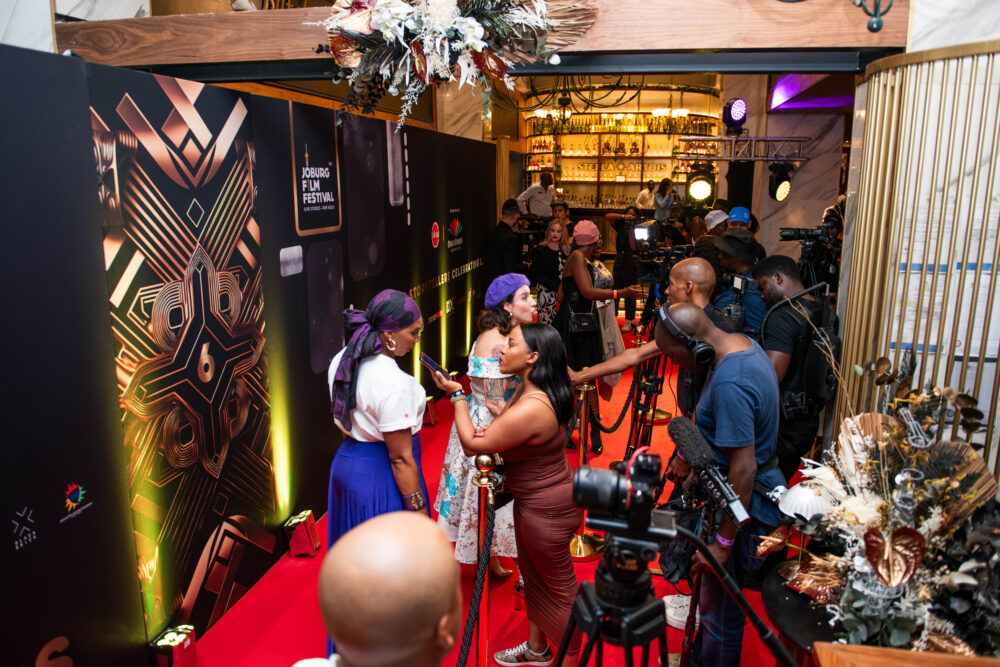
The 2026 JFF, running from 3 to 8 March, arrives under the ambiguous yet intriguing banner Feel the Frame.
This year, Ndaba and the festival’s leadership team want audiences to look beyond directors’ names and lead performances and instead pay closer attention to the invisible labour that makes cinema possible: sound, cinematography, editing, costume, make-up and lighting.
“The people behind the scenes are often left out,” Ndaba says.
“Yet they’re the ones who make things happen.”
It’s an idea that feels especially resonant in a moment when the South African film and television industry is under severe strain.
But before the conversation turns to crisis and survival, Ndaba is eager to talk about craft, about cinema as something to be experienced, not just consumed. The philosophy shapes the festival’s programme in more ways than one.
For much of its history, the Joburg Film Festival operated through direct curation: the team sought out films rather than inviting submissions. But Ndaba realised something was missing.
“We weren’t getting enough prominent African and South African films,” he says. “And when I dug deeper, I found that a lot of filmmakers didn’t even know how to submit to the festival or that they could.”
The solution was simple but transformative: an open call, with a particular emphasis on African cinema.
The response has grown dramatically. This year’s edition received 770 submissions from 98 countries, including 691 films via open call and 87 from distributors the festival has long-standing relationships with.
“It sounds exciting,” Ndaba says, laughing, “but it’s terrifying.”
Watching that many films fairly, thoughtfully and with care requires infrastructure. For the first time, the festival brought in a team of four film readers from different levels of the industry to assist with the initial viewing process.
“We didn’t want anyone’s work to disappear into a void,” Ndaba explains. “Every film deserves to be seen properly.”
Each film is scored across multiple criteria: story, direction, performance, editing, sound and music. To move forward, a film needs to score at least eight out of 10.
“We set the bar high,” he admits.
“Sometimes it feels like we’re shooting ourselves in the foot. But standards matter.”
The rigour is intentional. Ndaba is candid about wanting to challenge a local industry that, in his view, has grown too comfortable repeating familiar visual and narrative tropes.
“There’s nothing wrong with kasi stories,” he says. “They’re a good entry point. But you can’t remain there forever. You have to evolve.”
From those hundreds of submissions, the reading team narrows the field to roughly 120 films. From there, Ndaba and his festival programmer, Jack Chiang, take over, eventually selecting 123 films: 60 feature-length titles and 63 shorts, grouped into themed 90-minute blocks.
African films are prioritised but never by default.
“We’re not going to take your film just because it’s African,” Ndaba says. “The story still has to work.”
When I ask Ndaba about the themes that emerged most strongly this year, he talks about family, migration, colonialism, patriarchy, ageing, self-determination and war.
They’re heavy words but the films he highlights approach them with nuance and emotional depth.
One of the most striking titles is 1001 Frames by Iranian film-maker Mehrnoush Alia, a film that interrogates power, exploitation and toxic masculinity within patriarchal systems, including the film industry itself.
“It’s about how women perform under pressure,” Ndaba says. “And how they resist.”
The festival has partnered with non-profit organisation Sisters Working in Film to host a post-screening panel addressing real-life experiences of abuse and exploitation on South African film sets, an example of how Feel the Frame extends beyond the screen and into difficult, necessary conversations.

Another Iranian film, It Was Just an Accident by Jafar Panahi, arrives with a heavy political charge. Panahi made the film while under house arrest and since then, his cinematographer has also been arrested.
“The film is about censorship and the psychological toll of authoritarianism,” Ndaba says.
“The fact that people were arrested for making it already tells you everything.”
Closer to home, Kabelo, directed by Carl Houston McMillan and starring Warren Masemola, explores identity, aspiration and exploitation; the quiet pressures that shape who we choose to admire and why.
“It asks: Who do you look up to?” Ndaba says. “And what does that say about you?”
If Feel the Frame is about looking at things differently, then films like Kokuho embody that ethos. The Japanese, Oscar-nominated title explores mastery, sacrifice and the tension between inherited status and earned excellence.
“It questions what it really means to be exceptional,” Ndaba explains. “And who gets to decide.”
That tension also runs through Late Fame, starring Willem Dafoe as a retired poet unexpectedly pulled back into the spotlight by a younger generation. The film meditates
on nostalgia, legacy and the uncomfortable space between reverence and projection.
“They see him as a living legend,” Ndaba says. “He doesn’t.”
Technology and authorship come into focus in Memory of Princess Mumbi, a Kenyan mockumentary by Damien Hauser that uses AI as both a tool and a subject.
“It’s about authenticity in a world shaped by algorithms and what human connection means now,” ,” Ndaba says.
But perhaps the most quietly radical film Ndaba mentions is Retreat, a thriller directed by Ted Evans, who is deaf, with an entirely deaf cast.
“It shows you how sound and lighting can tell a story,” Ndaba says. “Even without sound.”
Set in a commune under threat, the film relies on visual tension, movement and atmosphere.
Ndaba insists that even if the subtitles were removed, the story would remain legible, a profound reminder of cinema’s expressive range.
However, African cinema remains the festival’s heartbeat. Ghanaian filmmaker Zoey Martinson’s The Fisherman, the first Ghanaian film selected for the Cannes Film Festival, reimagines folklore to explore generational tension, tradition and modernity.
There’s a talking fish, yes, but also a meditation on ambition and compromise in a rapidly changing society.
From South Africa comes The Trek by Meekaaeel Adam, set entirely in the Karoo and framed through supernatural forces that haunt a 19th-century Dutch family crossing contested land.
“The land isn’t just a backdrop,” Ndaba says.
“It’s alive. It’s judging them.”
The film interrogates colonialism not as history but as an ongoing moral and spiritual reckoning, a theme that feels particularly urgent at this moment.
Given the current turmoil in the local industry including shrinking budgets, stalled rebates and widespread job losses, I ask Ndaba what role a festival can realistically play.
“A festival isn’t just about films,” he says. “It’s about bringing people into the same room.”
Through JBX Talks, the Joburg Film Festival hosts industry discussions involving producers, funders, government bodies and filmmakers; conversations that are often impossible elsewhere.
“At a protest, you hand over a memorandum,” Ndaba says. “Here, you actually talk.”
He speaks candidly about the importance of the DTIC rebate, recalling how it enabled films he worked on for Netflix to be completed.
“Without it, we would’ve had a 50% shortfall,” he says. “That’s the reality.”
For Ndaba, the festival is both mirror and meeting point, reflecting the state of cinema while offering space to imagine alternatives.
“We need to talk about the future,” he says. “Streamers, funding models, international collaboration. These conversations can’t wait.”
As our conversation winds down, I think about the festival’s theme again. Feel the Frame is both an instruction to notice craft and an invitation to sit with discomfort, complexity and care, to experience cinema as something layered
and alive.
From deaf-led thrillers to AI-inflected mockumentaries, from Iranian political resistance to Ghanaian folk tales and Karoo-set reckonings, the 2026 Joburg Film Festival promises a programme that asks us to pay attention.
Submit and get free exposure here: Showcase Your Business | Advertise Your Special Offers.
