
Born Free: From Washington to Sandton. The politics of a diplomatic fallout. – Podcast episode one.:


Leadership Excellence Celebrated at Africa Rising Leadership Summit & Awards:
The inaugural Africa Rising Leadership Summit & Awards brought together Africa’s most visionary minds for a groundbreaking two-day event dedicated to redefining leadership in the digital age on the 27th and 28th March. Held at the Inanda Club Sandton, this premiere gathering united business pioneers, digital innovators, entrepreneurs and industry leaders under the theme “The Path Forward – Empowering Africa’s Future through Leadership in the Age of Digital Transformation”.
The summit, hosted by MC Dr Nompumelelo Nkosi-Ntombela, was a melting pot of ideas, energy and collaboration with an outstanding lineup of speakers who captivated audiences with their insights on leadership and transformation. Esteemed business leaders such as Nonkululeko Gobodo, Dr Charles Cotter, Kutlwano Ngwarati, Max Moyo, Akhona Qenqge and Gugu Mkhize inspired delegates with powerful keynotes emphasising the importance of innovation, adaptability and leadership in powering Africa’s future.
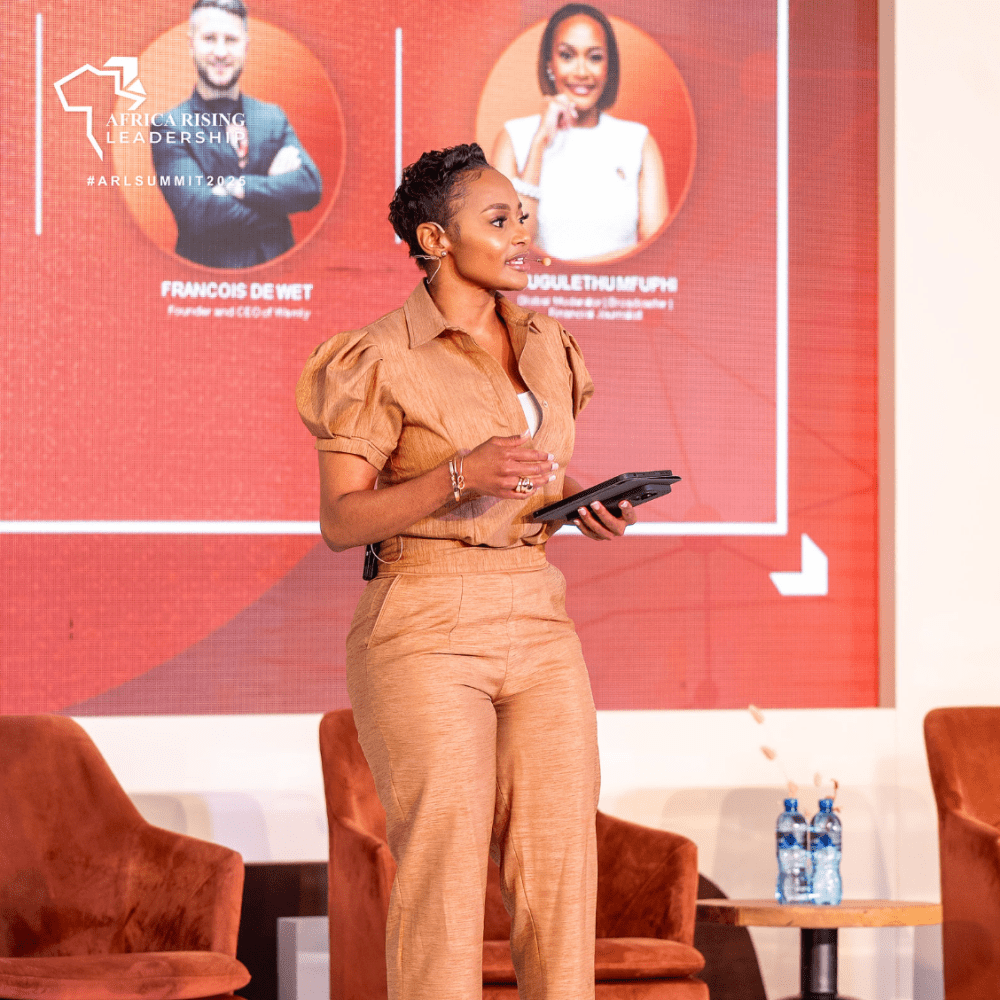
Across the two days, these influential voices set the stage for deep and meaningful discussions encouraging delegates to lead with purpose. Kicking off the summit, a series of dynamic panel discussions took centre stage addressing the critical topics shaping Africa’s growth trajectory. In conversations moderated by Africa Rising Leadership Founder & CEO Nomazibulo Tshanga experts such as Dr. Tshidi Gule, Dr. Jerry Gule, Antoinette Roberts and Boniwe Dunster explored the importance of reskilling leaders in a rapidly evolving digital landscape. While conversations with Simo-Sihle Mvinjelwa, Palesa Moeketsane, Devandre Lawrence reinforced the power of transformative leadership. AI-driven leadership was another hot topic in a panel moderated by Onke Dumeko with Esther Munyi and Fikile Mdiniso urging leaders to balance technological advancements with ethical decision-making.
On the final day of the summit, Kaya FM’s Gugulethu Mfuphi engaged Belinda Knight, Themba Chakela, Nomvula Nxumalo & Francois de Wet in robust discussions on The Future of Leadership in an AI Driven World. While Ipeleng Mkhari, Zizipho Nyanga and Lucky Litelu championed the important role of Entrepreneurship in the Digital & Innovation Era. The summit closed with an impactful discussion unpacking on how to drive transformation and leadership Excellence in conversation with Sylvester Chauke, Zwelethu Bashman and Batandwa Damoyi.

Our Vision For the Africa Rising Summit & Awards is to make Leadership more accessible and more impactful. Young professionals, emerging entrepreneurs & business executives often lack access to the right mentorship and the right platforms” commented Nomazibulo Tshanga, Founder & CEO of Africa Rising Leadership “I am really encouraged by the great response to this inaugural event, the empowering messages shared by our speakers & the robust discussions we had with panellists. It was heart-heartwarming to honour remarkable leaders in business who are doing the work every day to empower Africa’s future” she reflected.
The summit culminated in a spectacular Awards hosted by our MC…Unathi Ncunyana recognising the trailblazers shaping Africa’s future. The Africa Rising Leadership Awards 2025 honoured visionaries across various categories including:
Digital Entrepreneur of the Year:
Mamela Luthuli (Founder and CEO – TakeNote IT)
& Zibusiso Mkhwanazi (Executive Chairman – Avatar & M & N)
Digital Transformation Leader of the Year
Lynette Magasa (CEO Boniswa Group)
Emerging Women Leaders
Gugu Mkhize (CEO – INSETA)
& Buhle Hanise (Head of Business Restructuring Service – BDO South Africa)
Top Entrepreneur of The Year
Thandeka Mngomezulu (Founder & CEO -TotalServe)
Impactful Leader of The Year
Akhona Qengqe (CEO KFC Africa)
Emerging Leader
Godiragetse Fareed Mogajane (CEO Delivery – Ka Speed)
Impactful Woman Leader
Nomvula Nomie Nxumalo (Executive Head People & Transformation – MiWay)
Lifetime Achievement
Ipeleng Nonkululeko Mkhari
The Africa Rising Leadership Summit & Awards is just the beginning of a transformative journey cultivating a platform for a new wave of leaders to drive Africa’s Forward. Follow our pages for more details on http://www.africarisingleadership.com/ & https://linktr.ee/africarisingleadership
Postgraduates’ needs are not recognised and addressed:
Postgraduate students in South Africa face a myriad problems that often go unnoticed and unaddressed, from funding shortages and academic pressures to inadequate support systems.
While undergraduate students enjoy substantial representation and advocacy through student representative councils (SRCs), postgraduates are left to fend for themselves. The SRC primarily focuses on issues affecting undergraduates, leaving postgraduate concerns sidelined. This lack of representation exacerbates the difficulties postgraduate students face.
One of the most pressing problems for postgraduates is the lack of funding opportunities. The National Research Foundation (NRF), once considered the backbone of postgraduate funding, now funds only a fraction of eligible applicants. This leaves thousands of students unable to pursue their studies because of financial constraints.
Many young people continue with postgraduate education not out of choice but necessity; with limited job opportunities available, furthering their studies becomes a desperate attempt to improve their prospects. Many would opt out of postgraduate studies if given the chance for stable employment and financial independence.
Adding to these financial woes is the issue of registration fees. Universities require postgraduates to pay substantial upfront fees to register, which many cannot afford. Worse still, if a student has previously signed an Acknowledgement of Debt for unpaid fees, they are now required to settle part of that debt before being allowed to register for the new academic year.
This policy disproportionately affects unemployed students who cannot pay off these debts. For many postgraduates from disadvantaged backgrounds — where education is seen as a beacon of hope, and no one in their homes has ever graduated — these financial barriers extinguish that hope entirely.
Accommodation is another significant problem for postgraduates from rural or low income areas. Many find themselves squatting with several others in overcrowded rooms near campus because they cannot afford proper housing. For some, even basic meals are uncertain. How can a student focus on academic success when they don’t know where their next meal will come from or whether they’ll have a safe place to sleep? Education becomes less about empowerment and more about survival under these conditions.
The withholding of qualification certificates by universities because of unpaid fees further compounds these students’ problems. Institutions argue that this policy ensures debts are repaid, but it creates a vicious cycle for graduates. Without their certificates, many cannot apply for jobs that could help them earn the income needed to settle their debts. Employers typically require qualification certificates — not just transcripts — as proof of academic achievement. Universities must reconsider this approach and release certificates upon graduation while pursuing debt repayment through other means. This would enable graduates to seek employment and break free from the cycle of poverty.
Another overlooked issue is the insistence by some universities on face-to-face lectures for postgraduate programmes such as honours and advanced diplomas. This approach unnecessarily strains students who often have other responsibilities or live far from campus.
Institutions such as Walter Sisulu University and the University of South Africa have embraced online learning for these students, allowing them to study from the comfort of their homes while managing their personal lives. This model is particularly beneficial for students who might otherwise be forced to squat with multiple others on campus, struggling to afford basic necessities. Universities that still prioritise in-person lectures should consider adopting this flexible approach to alleviate postgraduates’ financial and logistical burdens.
The problems postgraduates face extend beyond funding and logistical issues. Many students struggle with research components because of insufficient guidance from supervisors, who are themselves overwhelmed or busy building their academic lives. This leads to delays in completion and high dropout rates, further clogging the postgraduate pipeline.
Universities must invest in improving supervisory capacity and providing targeted support services for postgraduates. Collaborative supervision models and workshops on research methodology could go a long way in addressing these issues.
Universities need to rethink their postgraduate education approach to address these issues comprehensively. They must prioritise flexible learning options like online programmes, increase funding opportunities through partnerships with private organisations and ensure that SRCs advocate for postgraduate concerns as vigorously as they do for undergraduates.
Postgraduate students are not just an extension of undergraduate education but a vital part of South Africa’s knowledge economy. Ignoring their needs undermines their potential contributions to society and stifles innovation at a time when it is most needed. South Africa’s higher education system must recognise that postgraduates are future researchers, leaders and innovators. Universities can unlock their potential and ensure they thrive academically and personally by addressing their concerns with urgency and empathy.
In addition to these problems, postgraduates often face isolation and disconnection from the broader university community.This isolation can lead to feelings of loneliness and disengagement. Universities need to create spaces and programmes that foster community among postgraduates, such as dedicated study areas, social events and peer support groups. This would help build a sense of belonging and connection among students who are often overlooked in campus life.
Last, universities must talk to postgraduate students to understand their specific needs and concerns. Regular forums and surveys can help identify areas lacking support and inform policies that better address these gaps. Universities can create a more inclusive and supportive environment that fosters academic excellence and personal fulfilment by listening to the voices of postgraduates and acting on their feedback. This approach will benefit individual students and contribute to a healthier, more vibrant academic ecosystem that benefits society as a whole.
Lindokuhle Tonono is an Honours student at the University of South Africa.
Submit and get free exposure here: Showcase Your Business | Advertise Your Special Offers.
