Business urges eThekwini metro to rebuild infrastructure, prepare for climate change:
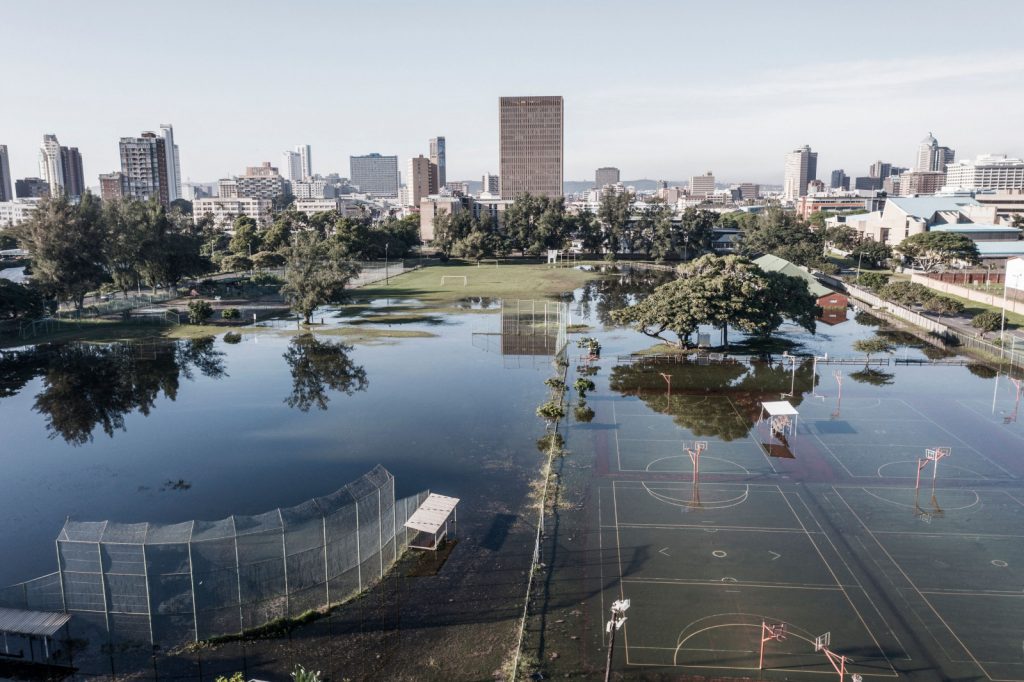
Durban businesses have criticised eThekwini metro for the slow pace of rebuilding the city after the July 2021 riots and April 2022 floods and for not sharing a detailed infrastructure plan to mitigate the effect of adverse weather conditions brought about by climate change.
The Durban Chamber of Commerce and Industry (DCCI), reacting to the findings of an interim report released by eThekwini metro this week, which estimated the cost of the most recent heavy rain on 27 June at “R287 million and counting”, called for the city to fast track its rebuild, saying businesses are worried about the insurability of their operations.
eThekwini said in a statement that the recent rains had “left a trail of destruction” across several wards, running into millions of rands, according to an interim progress report presented to the city’s executive committee on Thursday.
“The report sheds light on the extent of infrastructure damage, which is at an estimated cost of a staggering R287 million and counting. It also highlights the unfortunate loss of 11 lives and the widespread devastation inflicted upon homes, roads, and water and stormwater systems,” the statement read.
The interim report said that since the onset of the rainfall on 27 June, assessments of 1 019 households found that 3 031 people were affected, including 1 270 children. The municipality opened two shelters in Amaoti (ward 53) and CVV Church (ward 95) to house about 500 people.
The disaster management team, in collaboration with humanitarian agencies, the department of social development, and other social partners, had conducted the assessments and provided support to victims, it said.
Gift of the Givers Foundation Community Liaison Officer Bilall Jeewa said mostly older and poorly built homes had been flooded during the 27 June rains and the organisation had provided victims with 550 food hampers as well as building materials.
“As the situation continues to unfold, more incidents are being reported,” the municipality said.
The report recommends that the executive committee, city manager and chief financial officer reallocate budgets to fund the damages and create reserves for future disasters.
“It further proposes authorising departments to initiate procurement processes for the rehabilitation of the infrastructure,” the municipality said.
Palesa Phili, chief executive of the Durban Chamber of Commerce and Industry, said that although the impact of the 27 June storm was not as bad as the April 2022 floods, it was a cause for concern.
“As organised business, we have not received any reports of major damages by businesses. However, based on our observation, small businesses and informal traders are worst affected by adverse weather conditions,” she said. “Many of these businesses are dependent on foot traffic and daily cash flow to sustain their operations.”
Phili said many businesses rebuilt and re-engineered their business operations after the July 2021 unrest and April 2022 floods. But, infrastructure restoration, which is the responsibility of local government as part of its service delivery mandate, was “happening at a very slow pace”.
“To date we have not received a detailed infrastructure investment plan from the city outlining the technical and risk mitigation measures. The city of Durban [eThekwini metro] remains vulnerable to adverse weather conditions. Unless drastic actions are implemented, we will be writing the obituary chapter of our city. The current state of our infrastructure requires urgent attention,” she said.
“The city’s supply chain management process, combined with corruption and political meddling, are at the heart of the service delivery challenges. Rebuilding the city’s once strong governance processes will be at the heart of turning around infrastructure delivery.”
Phili said organised business was continuously in contact with the government to form a public-private partnership to develop a feasible financial model for water and sanitation, electricity distribution and stormwater systems.
It has also called for the implementation of mechanisms to help strengthen the city’s resilience and mitigate against future risks, including an infrastructure emergency war room comprising the public and private sector; an infrastructure investment plan; and the development of a dashboard for monitoring progress.
“Many businesses in the South of Durban have raised concerns of their insurability against future flooding,” said Phili. “As organised business, we are deeply concerned as the South Durban Basin is home to the country’s largest manufacturers. If the city cannot provide a detailed plan outlining risk mitigation measures regarding its infrastructure, we believe many of these businesses will consider sourcing alternate investment destinations.”
This would have adverse effects on the local economy and its international profile, she said.
The interim report will be submitted to the National Disaster Management Centre through the Provincial Disaster Management Centre for further support and intervention. Its final approval will take place during an upcoming full council meeting.
National Arts Festival: Rising above the political malaise:
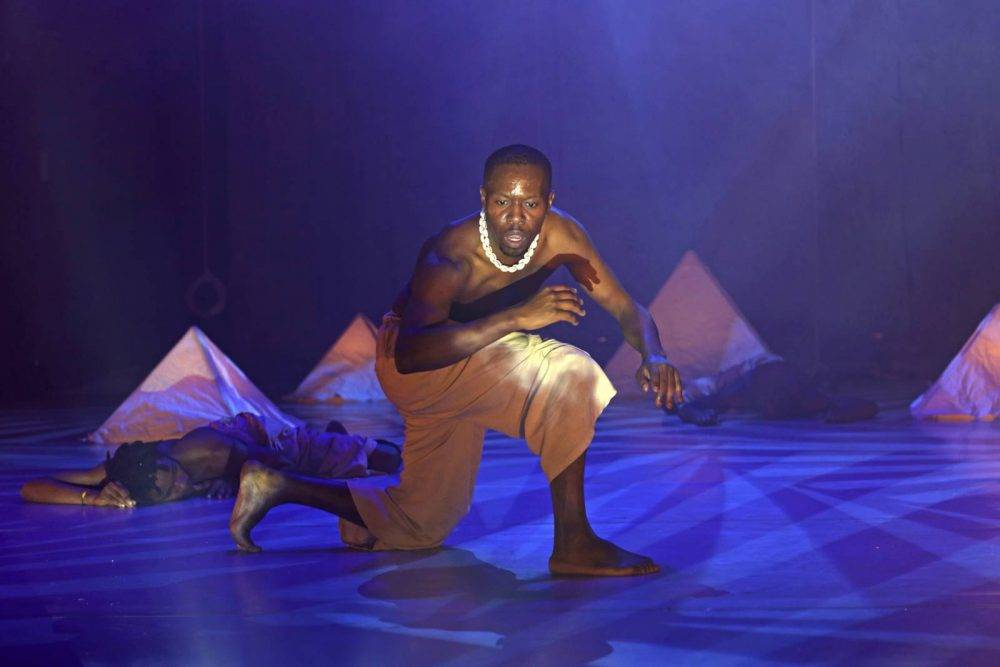
National Arts Festival 2023 has been and gone.
When Monica Newton took over from Tony Lankester as CEO in 2019, she couldn’t have known what she was letting herself in for.
The 2020 event had to go completely virtual because of Covid-19, at very short notice in terms of the timelines of such a large event. The following two years presented similar planning nightmares, although 2021 was clearly going to be virtual. Last year remained difficult as the festival returned to in-person shows but with Covid restrictions. Two big complications were whether in-person would go ahead and whether load-shedding would sabotage events.
Nonetheless, 2022 went ahead and was successful, if on a smaller scale than pre-Covid. Not only was the programme smaller but the Village Green market was significantly downsized.
This year, there were additional challenges, with ongoing failures of the Makana municipality to get its act together to deliver basics such as supplying water, fixing potholes and keeping streets clean.
Makhanda (formerly Grahamstown) and the festival rose to the occasion. Festival managed thousands of social employment fund workers to clean up and to fill potholes. Residents, students and civic movements worked hard to pressure the local government to get its act together, resulting in a somewhat better water supply than we have had in years.
Even in a less-than-ideal environment, was the festival worth it? I review a few shows to illustrate what you missed, if you were not here.
On the night of 23 July, I attended a performance of one of the world’s top orchestras, the Boston Philharmonic Youth Orchestra, conducted by the incomparable Benjamin Zander. In his mid-80s, he is unlikely to be back, despite his excellent health, so this was a once-in-a-lifetime opportunity.
An enthusiastic house was treated to his interpretation of how Beethoven would have wanted the fifth played, as well as Strauss’s Ein Heldenleben and an encore. With the excellent acoustics of the Guy Butler Theatre, we could hear every note. Zander’s commentary between pieces was another delight not to be missed. All this for the extraordinarily low price of R100.
Another exceptional performance was Daniel Anderson in Vincent, ably accompanied by pianist Jacques du Plessis. In an emotional roller-coaster ride, he captured the shambolic genius of Vincent van Gogh, somehow weaving in works from such dissimilar backgrounds as a stirring rendition of Marvin Gaye’s What’s Going On and Roxanne by The Police. Plus, of course, Don McLean’s Vincent (often mistitled as “Starry, Starry Night”).
There was much more to his performance than I can convey in a short review. At the age of 23, Anderson has a great future ahead; it was a real treat to see and hear him perform.
A very different show was the play The King of Broken Things, in which Cara Roberts plays a differently abled boy who struggles to fit in, but relates to broken things. Much outside his life is only hinted at — the absent father, the frustrated mother who struggles to cope, others who do not understand him, children who tease him.
Yet the focus is on how he is able to relate to broken things and turn them into something creative. The subtext — people who are regarded as broken are special. Anyone who has dealt with people who have social adaptation issues, such as those on the autistic spectrum, will find this deeply moving but, as theatre, it works in an interesting and different way.
Stage props spring to life in unexpected forms. The sole character is developed and made sympathetic without being didactic. Roberts carries off the role so convincingly that it is hard to believe that the actor is not a little boy but a woman three times the portrayed age.
Yet another great performance was an energetic revitalisation of the old anti-apartheid classic Woza Albert. Thulani Mtsweni and Hamilton Dhlamini play multiple characters with energy and wit. They revive memories of how things were in Deep Apartheid, with pass laws, racist insults and demeaning behaviour. But they also remind us how much we miss genuine struggle heroes like Albert Luthuli, Robert Sobukwe and Steve Biko, who were prepared to give up everything for freedom.
With minimal stage props, miming and vocalising non-existent effects, and impeccable delivery, they bring this classic to life.
These small slices of festival show that it is still a world-class event and highly accessible, with many shows priced in the region of R100. It showcases top national and international talent — some emerging, some well established.
What about Makhanda as a venue?
The area where the majority of shows were on had had the potholes fixed and water was back on for most of the time. However, residents and civil society still have a battle ahead to get the government to perform. This is the wider story of South Africa — most of the country is blighted by dysfunctional, corrupt government.
Makhanda ought to be a developmental hub for the Eastern Cape, with one of the country’s top universities, the provincial seat of the high court and a strong cultural history. It ought to be a major tourist attraction, with its significance in the colonial wars recognised by renaming Grahamstown after Makhanda, a key fighter against colonial power. It is also the place where Biko (if for negative reasons) was inspired to found the Black Consciousness Movement.
Yet, despite all these advantages, residents and civic organisations are in a constant battle to stop the decline, as the government either wilfully neglects its job or actively connives with the capture of state resources.
As a city with great history and cultural resources, it should be the natural home of the country’s most significant cultural event. Residents believe this, anyway, and will fight to keep it that way.
What, exactly, the government wants, aside from creating more opportunities to loot public resources, is anyone’s guess.
But the overall picture is that the festival is alive and well. See you here next year. We will fight to make it happen and value your support.
Philip Machanick is an emeritus associate professor of computer science at Rhodes University and former Makana Citizens Front Councillor.
Like Banyana Banyana, Ace Magashule boots people under the bus:
Thursday.
It’s early, but affidavits are flying.
Ace Magashule, who left the ANC on a free transfer — politically speaking — last month,
has turned on his former comrades at Luthuli House, who are attempting to avoid paying a R105 million election debt from 2019 — and having the party headquarters attached
— so the affidavits are flying fast.
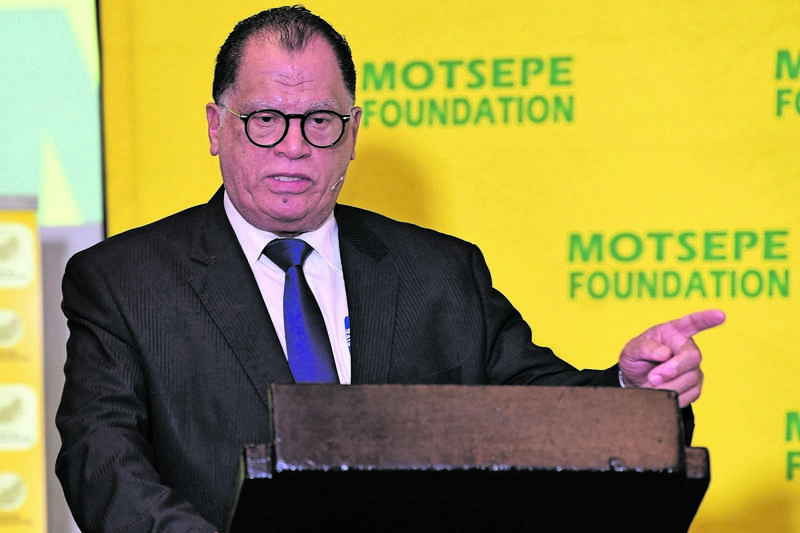
Almost as fast as the promises to actually pay Banyana Banyana squad members their Fifa incentives for the World Cup flew from the lips of South African Football Association
(Safa) boss Danny Jordaan, once the players had — rightly — gone on strike and thrown him and his greedy cohort under the bus.
By Wednesday Jordaan’s threats of expelling the players had morphed into commitments to pay — along with a R6 million intervention from the Motsepe Foundation — and a choreographed presser to try to save face.
It was pretty clear from the body language of the players and coaching staff present that they are tired of hearing from Danny that the cheque is in the post and would only believe
the Safa hierarchy when they got the ping from their bank.
One can’t blame them.
The team have made it clear that they’re united, not scared to down tools and take things public, so Safa can expect another revolt if they plan to renege on the promise to pay once the TV cameras are focused elsewhere.
I wouldn’t if I were them.
From a broader perspective, Jordaan and Safa have just discovered what happens if you try to come between ama2000 and what’s theirs.
The $ 30 000 per player from Fifa must have been looking like a lovely Christmas bonus for the Safa elite —another sweetener for “doing a good job” at the expense of the players — but the 2000s were having none of it.
It’s a thing of great beauty, actually, how Banyana straightened Safa out and got their money, despite all the threats, bullying and silver tongued deviling.
Respect.
Perhaps their generation will do the same at the polls next year.
Ace, like Banyana, is in a throwing-under-the-bus mood. Expulsion, like non-payment, will do that.
Ace has hurled the party’s secretary general, Fikile Mbalula, and deputy president Paul Mashatile under the wheels of Putco’s finest with his affidavit backing Ezulweni Investments’ claim against the party.
Magashule was still the ANC secretary general at the time the contract with Ezulweni for 30 000 PVC banners with Cyril Ramaphosa’s head on them was concluded on the eve of
the 2019 general elections.
The ANC hasn’t paid Ezulweni, despite winning the election, so the company has gone to court and secured an order against the party, along with two writs of execution to allow it to seize assets if the party doesn’t have cash.
Ace knows where the bodies are buried — metaphorically speaking — at Luthuli House and appears to not to be shy when it comes to pointing them out, now that he’s been
shown the door for refusing to apologise for suspending Ramaphosa for suspending him.
Magashule has thrown his weight behind the bid by Ezulweni to seize Mbalula’s signed Beyoncé memorabilia and K-Ci & JoJo posters — along with Luthuli — in lieu of R102 million with interest has placed him and Mashatile (then the ANC treasurer general) at the scene of the crime.
The party is disputing the contract, and crying fraud, so Ezulweni has brought in a forensic expert — and Ace — to establish that Mbalula, Mashatile and Ramaphosa knew about the contract.
The matter is heading for the supreme court of appeal, where the ANC wants to introduce new evidence that it said it didn’t have in 2019, or that it didn’t know it had, or something along those lines.
It’s an ugly, sordid mess, and most definitely not the kind of pre-season Mbalula and the ANC would have wanted ahead of the 2024 elections.
It’s not particularly good news for Mashatile either, given that his bodyguard detail got caught on camera kicking their fellow citizens unconscious on the side of the N1 in broad
daylight, on top of rumours of an impending “send nudes” drama.
It’s not just the threat of liquidation, or the continual airing of the party’s dirty linen, which is bound to get dirtier the closer we get to the elections, that will be giving the ANC sleepless nights going into its elections campaign.
Who is going to give the party credit facilities for its banners and T-shirts, its rallies and logistics, for the 2024 national and provincial election campaign, knowing that they still haven’t coughed up for 2019, when they actually won the election?
I certainly wouldn’t.
Submit and get free exposure here: Showcase Your Business | Advertise Your Special Offers.