Civil society coalition says heads must roll over Terbufos poisoning deaths:
Heads must roll for the regulatory failure that caused the “utterly unacceptable” deaths of six Soweto children who ingested the highly toxic agrochemical Terbufos, a coalition of civil society organisations and unions have said.
The potent organophosphate is outlawed in the EU, but legally registered for agricultural use in South Africa, according to the coalition, which includes the African Centre for Biodiversity, groundWork, Friends of the Earth SA, Women on Farms Project and the Commercial Stevedoring, Agricultural and Allied Workers Union.
It said the children’s deaths illustrated that its use is “clearly inadequately regulated”.
Monica Sebetwana, aged 6 years, Ida Maama, 7; Isago Mabote, 8; Njabulo Msimanga, 7; Katlego Olifant, 7 and Karabo Rampou, 9, of Naledi in Soweto, died last month after ingesting Terbufos.
The Naledi tragedy is not an isolated incident, the coalition said.
“It exposes the daily reality of many families who live in informal or unserviced conditions that are driven to use highly toxic solutions for pests. It also shines a light on farm workers and their families, who are continually exposed to toxic chemicals in their daily work and dwellings.”
Terbufos is an agricultural insecticide with neurotoxic effects, which is commonly sold as a “street pesticide” in South Africa. The World Health Organisation has classified it as a class 1a compound, the most toxic category for any pesticide.
The coalition members said they had campaigned for years, calling for the banning of highly hazardous pesticides, including Terbufos, and for stricter regulation and proper enforcement, “to no avail”. Not even a “damning report”, released in July by Marcos Orellana, the UN special rapporteur on toxics and human rights, “evoked a decisive response” from the government regarding the regulation of hazardous substances.
Orellana’s report said regulatory gaps and enforcement shortcomings had led to the emergence of street pesticides, which are widely available in markets, and used in informal settlements to combat rat and other pest infestations, aggravated by the absence of good sanitation services.
“Street pesticides are either legally registered for agricultural use but decanted into unlabelled containers and used illegally for domestic pest control or they are unregistered products, probably imported illegally.”
Many children had been poisoned or died after eating, drinking or handling hazardous street pesticides.
In 2022, there were 34 poisoning cases, including five deaths in Gauteng from an organophosphate, “probably Terbufos”, the report said.
“Local experts and medical professionals also flagged … that pesticide poisoning cases in South Africa were grossly underreported.”
Research at a large Cape Town mortuary published last year showed that Terbufos was the cause of more than half of child deaths in a 10-year review of fatalities in which pesticide poisoning was suspected.
“Terbufos and methamidophos are highly hazardous pesticide active ingredients registered in South Africa for agricultural uses, yet commonly sold as street pesticides for domestic use in lower socioeconomic areas,” the study said.
It said reducing availability of toxic pesticides, especially the illegal selling of street pesticides, and providing less-toxic alternatives to poorer communities, would reduce deaths.
Orellana also raised concern about the “corporate capture” of South Africa’s regulatory system, including pesticide registration processes, and the role of scientists in this.
Orellana’s findings should have been an international embarrassment for the government, said Haidee Swanby, coordinator of South Africa People’s Tribunal on Agrotoxins. Instead, its response to his report was “defensive and callous”.
She said there was no recognition of the suffering caused by regulatory negligence and the “cosy relationship with industry” nor any sign of a will to address the serious harms caused by agrotoxins under their watch.
No one should have access to Terbufos, Swanby added.
“First, it should have been banned already anyway and, second, if you’ve decided not to ban it, you should really be keeping your eye on it. But that’s not happening. It’s the most toxic poison there is and it should only be available to registered people [and] it should be highly regulated.”
She said, initially, the chemical industry body CropLife put the spotlight on foreigners and spaza shop owners by claiming a banned substance, smuggled over the border, was responsible for the children’s deaths but toxicology tests confirmed they were caused by Terbufos.
CropLife did not respond to the Mail & Guardian’s inquiries.
Terbufos has been banned in the EU since 2009 but continues to be manufactured and exported from Europe. To export chemicals that are known to have carcinogenic potential to developing countries is deplorable, said Colette Solomon, the director of the Women on Farms project.
“The deaths of these children illustrate the deadly consequences of maintaining this racist double standard in the pesticides trade,” she said.
Government ministers need to be held to account for “a system that allowed Terbufos to be used in South Africa under the conditions it was used”, said Leslie London, a pesticide expert at the University of Cape Town’s School of Public Health.
The Rotterdam Convention, to which South Africa is a signatory, “would have at the very least required some notification, but the minister responsible [former forestry, fisheries and environment minister Barbara Creecy] withdrew the regulations”. Last month, Dion George, the new environment minister, issued updated regulations.
Similarly, London said, the department of health holds the obligation to enforce the Hazardous Substances Act, “yet there is complete inaction”.
“Whoever sold the Terbufos should have a register that the department of health is able to inspect. It’s convenient to blame the vendor, but government departments, including health, agriculture, labour and environmental affairs, are complicit in this failure to protect public health.”
The department of forestry, fisheries and the environment referred the M&G to the department of agriculture, saying: “That department is the authority responsible for regulating pesticides, and every time we receive prior informed consent notification, we consult with them to ensure we do not allow substances that are not registered in the country.” The agriculture department did not respond to requests for comment.
Orellana said in his report he was pleased to learn that the department of agriculture, land reform and rural development was to ban the sale and use of certain highly hazardous pesticides from 1 June 2024.
“Nonetheless, all hazardous pesticides that have been banned in their countries of origin should also be banned in South Africa.
“Enforcement of the legislation that governs pesticides in South Africa falls under several departments, leading to coordination issues.”
The primary legislation, the Fertilisers, Farm Seeds, Seeds and Remedies Act No. 36 of 1947, fell under the responsibility of the department of agriculture, land reform and rural development. Orellana said it was outdated and widely perceived to be inadequate.
In its response to Orellana’s findings, the state said the various spheres of government cooperate to prevent and manage health effects linked to pesticide exposure.
“In line with the international commitment, South Africa is working towards the phasing out of highly hazardous pesticides, where the risks have not been managed and where safer and affordable alternatives are available, and to promote transition to and make available those alternatives by 2035.”
It acknowledged the Act was old.
South Africa was reviewing the legislative framework that governed pesticides to address gaps and to improve safety measures for human health and the environment, the state said. It would improve transparency, public participation and access to information.
The coalition’s demands include government accountability and cohesion; charting a route out of toxic agricultural practices; inclusive, transparent decision-making and an end to double standards.
London said urgent action is needed to correct the “gaping hole” in regulatory oversight and improve enforcement, as well as to address government’s “deference to industry” at the expense of the health and lives of children, farm workers, small farmers and environmental integrity.
“We don’t have proper whole-of-government approaches. The regulation of pesticides is left to a department that has no expertise in health or environmental protection. We continue to register and allow chemicals banned in other jurisdictions.”
He said the pesticide registration system was antiquated: “There is no transparency, no notification to the public of pesticides that are being registered. There is no system to indicate what the public can scrutinise in the dossier. There is no plan for re-evaluating existing chemicals in light of new science.”
There are no mandatory levers to ensure industry takes responsibility despite it being a principle in the National Environmental Management Act (Nema).
“Nor [is there] any mechanism to ensure polluter pays, nor a risk-averse approach adopted to registration,” said London. “All of these (and more) are principles in Nema that cannot be upheld by a 75-year-old piece of legislation. It is not fit for purpose.”
Enforcement relies on the police to prosecute someone using a pesticide in contravention of the law.
“Given how overburdened SAPS [South African Police Service] is by serious crime, and that it is not coping with the most basic of policing functions, it is not surprising enforcement practically is non-existent.”
London had never heard of anyone — other than a professional pest-
control operators — being charged for, let alone convicted of, a crime under the 1947 Act. “It’s a model of enforcement doomed to failure.”
Facelift for mansion owned by ‘Wonga coup’ plotter Thatcher and Gupta state capture fugitives:

The Gupta mansion in Upper Constantia, Cape Town, bought earlier this year by a European business person, is undergoing extensive renovations.
After the Guptas fled South Africa, the property was neglected, with cracks appearing in the wall paint and holes in the roof that caused substantial water damage.
The buyer, Hugh Vincent Cooke, is restoring his new primary residence — which has seven bedrooms, six bathrooms, two garages, a guardhouse and a one-bedroom cottage — to its former glory, and is also revamping the damaged and outdated interior. The monthly rates are R11??577.
After navigating two court interdicts against the sale, Cooke then waited a full year for the transfer of the 8??105m2 property.
The Gupta company Islandsite Investments 180 (Pty) owned the Upper Constantia property before it was seized by the National Prosecution Authority in 2021 with combined assets worth more than R500??million. The Guptas bought the property from Mark Thatcher for R17??million in 2005.
In 2004, Thatcher was found guilty of his involvement in the “Wonga Coup”, a failed attempt to overthrow the Equatorial Guinea government. Thatcher, the son of former British prime minister Margaret Thatcher, admitted that he provided financial backing for the operation and was fined and given a suspended jail sentence in South Africa.
Islandsite Investments was owned by Atul and Rajesh Gupta, along with their wives, Arti and Chetali. In one of the company’s audited group financial statements, signed off by KPMG, it is stated that the company operates as an investment holding firm, with investments in properties and various companies. In 2018, the company entered voluntary business rescue.
Ironically, the opening letter of the document states, “Directors are also responsible for the preparation of financial statements that are free from material misstatement, whether due to fraud or error.” This letter was signed by Atul and his wife, Chetali.
Islandsite Investments was one of the companies the Guptas used to transfer millions of rands through inter-company loans. At that time, business rescue practitioners questioned the fleeting money transfers, but no valid answers were provided.
Before the property was sold, Islandsite Investment submitted an application to the Free State High Court on 20 April 2023. The application was represented by Ronica Ragavan, a director involved with various Gupta companies holding more than R100??million of assets. Some of the assets mentioned in court filings by the Asset Forfeiture Unit included 73 properties and cars such as a Porsche Cayenne, a Lamborghini and a Rolls Royce.
The applicants submitted their application because they believed the property was listed for sale at an undervalued price. According to the deeds office, Islandsite Investments purchased the property for R17??million, while the municipal valuation of the property in 2018 was R22.2??million.
Islandsite Investments was subject to a Prevention of Organised Crime Act (Poca) order that appointed a curator to oversee its assets, including the property located in Upper Constantia.
The interdict was brought against Cooke and the business rescue practitioners, Kurt Knoop and Johan Kloppers, who were appointed under the Act.
Despite multiple communications from the applicants, the curator of the Upper Constantia property proceeded with the sale without the applicants’ consent.
Islandsite Investments was in voluntary business rescue, which seems counter-productive to what the business rescue practitioners were trying to achieve.
The applicants subsequently sought an urgent interdict to prevent the transfer of the property to Cooke. They argued that they had not been consulted and that the sale process was flawed. The property was “under offer” for one year during the court proceedings. The final interdict was lifted in December 2023, and the property was transferred in January this year. The home sold for the full asking price of R20?? million.
Interestingly, an 8??971m2 property on the same street (Dawn Avenue, Bel Ombre) sold for R54??million and transferred at a similar time.
The Upper Constantia area has been a hotspot for property lately, according to Arnold Maritz, co-principal agent for Lew Geffen Sotheby’s International Realty in Cape Town’s southern suburbs and False Bay. This year, 63 properties have been sold and out of those properties, 21 had a price tag of more than R20??million.
Richard Hardie, the Hardie Property agent who sold the Gupta mansion to Cooke, described the condition of the property as “unfortunate”, which was reflected in the sale price.
“You couldn’t live in it; the damp was off the charts, doors were missing and there were no working lights or electricity,” he said.
He clarified that the Guptas did not leave the property in this state of disrepair. Instead, it had been left unattended for seven years, exposed to harsh winter seasons. Such old houses generally require more tender loving care than modern ones, and the Upper Constantia mansion had not been maintained.
Several Gupta companies have been placed under business rescue over the past few years, resulting in the sale of many of the family’s properties. One of these companies, Confident Concept (Pty) Ltd, included the Guptas’ Saxonwold house located at 18 Avonwold Road in Johannesburg.
On 19 November 2019, this property was auctioned off by Park Village Auctions for R2.6 million. The deeds office said Confident Concept (Pty) Ltd acquired the home for R3.2??million.
Several government ministers often visited the 1??199m2 property.
Another Gupta property that was also seized was their mansion at 5??Saxonwold Drive. According to the deeds office, the 4??207m2 property is still registered under Confident Concept. The Guptas bought the property for R14??million in 2004. Neighbours have filed numerous complaints regarding the property, citing neglect and the presence of illegal structures. Security personnel on site have been instructed not to speak to the media.
The Guptas also owned properties in uMhlanga, KwaZulu-Natal, and commercial property in Midrand, Gauteng.
All proceeds from the sale of Gupta properties were given to the business rescue practitioners, who then distributed the funds to the appropriate creditors.
Meanwhile, the directors of Islandsite Investments, Atul and Rajesh Gupta, are fugitives on Interpol’s wanted list.
Ask Ash is a new column that examines South Africa’s property, architecture and living spaces. Continue the conversation with her on email (ash@askash.co.za) and X (@askashbroker).
How a desert garden is saving the Northern Cape’s endangered plants:
The new botanical garden in Sendelingsdrif is a living bank of South Africa’s rich succulents indigenous to the Richtersveld.
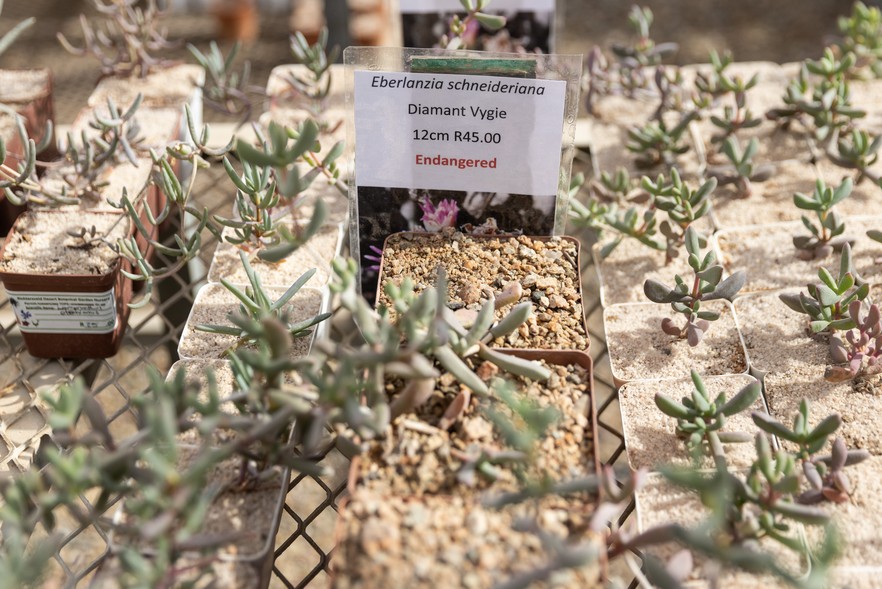
Many succulents are endangered — on the verge of extinction — because of poaching, mining, climate change, and overgrazing. This garden is a beacon of hope amid the rapid decline of these plants.
The Richtersveld Desert Botanical Garden, which opened in August this year, is the country’s first botanical garden in the desert biome.
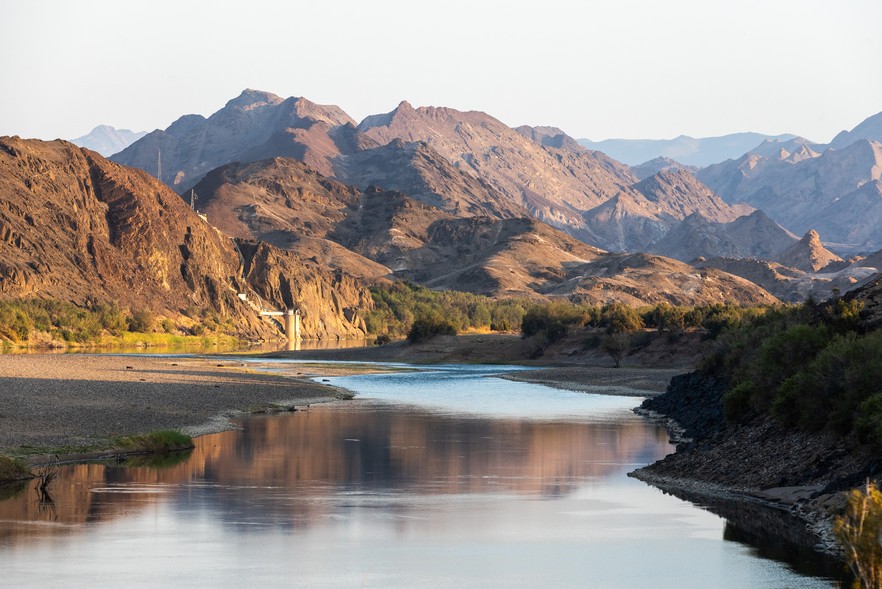
Located in the Ai-Ais Richtersveld Transfrontier Park along the border between South Africa and Namibia, the garden is a partnership between the South African National Parks (SANParks) and the South African National Biodiversity Institute (SANBI).
The garden has been in the works for several years. In 2014 Sendelingsdrif, a small border town, almost became a ghost town when some nearby mines closed down. SANParks staff aimed to give the town a facelift, said Pieter van Wyk, nursery and botanical curator at the botanical garden.
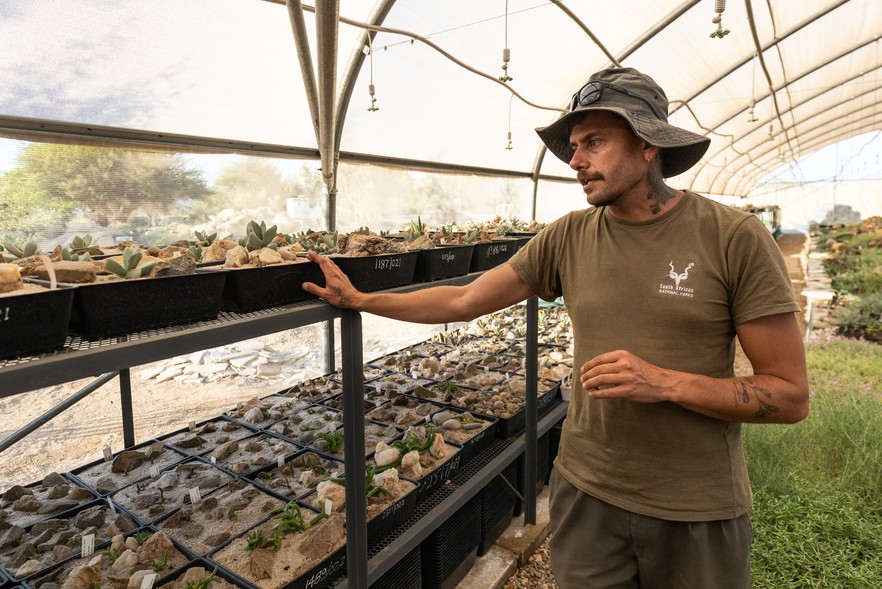
Van Wyk, a self-taught botanist, was assessing plant populations in the region when he realised that many species were going extinct.
“I quickly realised we’re sitting with a serious problem in the Richtersveld — and that was before poaching. When poaching came, it just escalated,” said Van Wyk. In 2021, there were over 400 species that had the potential of going extinct without intervention, he said.
Van Wyk said the aim of the garden is to create a living bank of these plant species currently under threat. “We already have so many species that are alive because of this facility, which otherwise would’ve been gone,” he said.
The botanical garden includes a conophytum house, which hosts hundreds of the tiny succulents, and many which are red-listed because of demand on the black market.
“Poaching has become so extreme. If these species go extinct in the wild, at least we have a backup plan to reintroduce them,” said Van Wyk.
Despite being a desert region, the garden is rich in unique flora with thousands of endemic species found in this biome. Some of the plants are single habitat species. Some have likely been wiped out in the wild in recent times because of human activity.
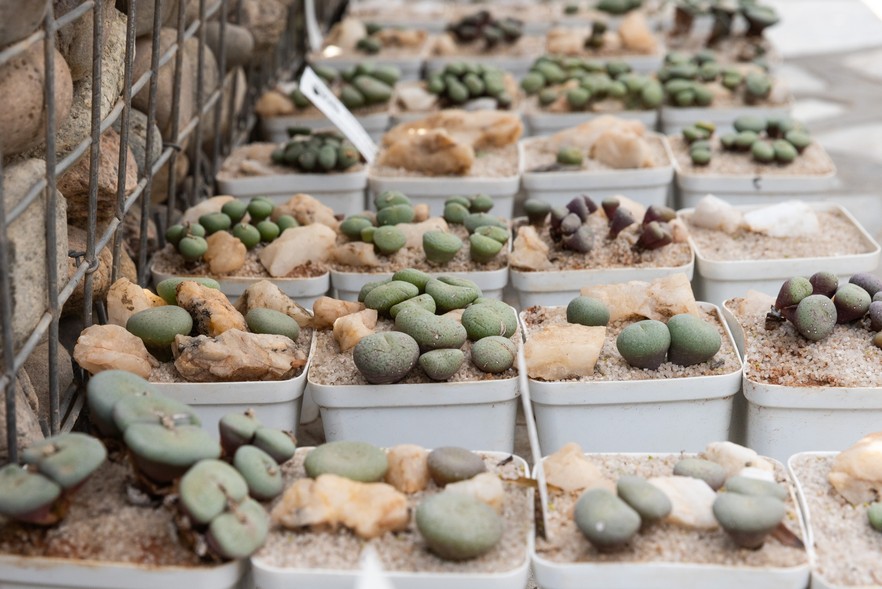
The garden is open to the public and includes facilities that hold plants saved from poaching, plants saved from mining sites, and a nursery that sells indigenous plants. There is also a Nama kraal, an education centre for the local community.
Van Wyk said that when the poaching crisis struck in 2019, they were quickly flooded with poached material.
From 2019 to date, SANBI has received over a million plants confiscated by law enforcement. But this number only represents about a quarter of plants taken from the wild that are intercepted by law enforcement, said SANBI spokesperson Nontsikelelo Mpulo.
These plants remain with the police until legal proceedings are concluded, “after which they will be transferred to state ownership through agencies like CapeNature or the Northern Cape Department of Agriculture, Environmental Affairs, Rural Development, and Land Reform (DAERL),” said Mpulo.
The poaching crisis has since improved, which SANBI attributes to collaborative efforts between provinces, and “harsher sentencing” especially in the Northern Cape. Last year about 200,000 plants were confiscated, and so far this year only about 30,000 plants have been confiscated.
Mpulo added that SANBI’s focus is on “developing a conservation collection and ensuring that botanical gardens across South Africa and globally can house these unique specimens, preserving them for future generations”.
Eventually, the hope is to reintroduce some of these plants into their natural habitat in the Richtersveld. “Some of the species are key species in the ecosystem,” said Van Wyk.
But there are some places where it might not actually be possible because habitats have been destroyed, such as at mining sites. “We need to protect this … It is part of our natural heritage,” he said.
This article was first published by GroundUp.
Submit and get free exposure here: Showcase Your Business | Advertise Your Special Offers.