Clean air crisis: Sub-Saharan Africa left with less than 1% of global funding:
Outdoor air quality funding to sub-Saharan Africa collapsed by 91% in just one year, falling from $ 129 million in 2022 to a mere $ 11.8 million in 2023.
This left the region with less than 1% of global clean-air finance, despite having the fastest urbanisation rate in the world and some of the highest pollution burdens on the planet.
At the same time, development finance for projects that extend fossil fuel use surged by 80% worldwide to $ 9.5 billion — more than 2.5 times the amount directed toward clean air.
These findings come from a new report, released on Wednesday by the Clean Air Fund and the Climate Policy Initiative, which is the only global analysis of international development funding for tackling air pollution.
The dramatic drop in funding for sub-Saharan Africa was driven largely by one major donor stepping back, explained Vumile Senene, the country lead for the Clean Air Fund in South Africa.
“That shows just how fragile and concentrated current funding is,” he said. “The whole picture can shift on the decision of a single institution. We are watching closely to see whether this proves to be an anomaly or the start of a much more worrying trend.”
Senene said the lesson is clear — sub-Saharan Africa urgently needs more diversified and sustained investment.
“Donors should be helping countries build the technical and institutional capacity to act on air pollution, not stepping back. Without that, we risk locking in decades of dirty, high-emission growth and leaving some of the world’s most vulnerable populations behind.”
The Japan International Cooperation Agency (Jica) and the Asian Development Bank provided two-thirds of global outdoor air quality funding from 2019 to 2023. Jica was the largest donor overall, while the bank was the largest outdoor air quality donor by far in 2023, providing 44% of funding.
The fall in funding has left cities in sub-Saharan Africa, some of the world’s fastest-urbanising and most polluted, in a “clean-air finance desert”, even as they urgently need investment to manage population growth and emissions, said Senene, the former director of air quality management at South Africa’s then department of environmental affairs.
Funding is also failing to reach populations with the highest exposure. Only two of the 10 countries with the highest PM2.5 (fine particulate matter) concentrations — Bangladesh and India — appear among the top 10 recipients of air quality funding per person in 2023. The remainder — the Democratic Republic of the Congo, Burundi, Rwanda, Equatorial Guinea and Cameroon — received almost no support, despite high pollution and rapid urbanisation.
The report noted a “regional disparity”, where funding is still highly concentrated in just three countries, the Philippines, Bangladesh and China, which together received 65% of global outdoor air quality funding between 2019 and 2023.
“With sub-Saharan Africa experiencing the fastest rate of urbanisation in the world, which brings drastically increasing air pollution and greenhouse gas emissions, action on air pollution is much needed,” it said.
High stakes
Air pollution is one of the world’s largest environmental health crises, causing an estimated 5.7 million deaths annually — a figure projected to rise to 6.2 million by 2040, without stronger action.
In Africa, independent analysis estimates that there were 1.1 million premature deaths in 2019 from toxic air — more than deaths from tobacco, alcohol, traffic accidents and unsafe water combined.
Nearly 2 000 children under five die daily from air pollution, while exposure increases risks of asthma, strokes, heart attacks, cancer and dementia.
In South Africa, dirty air was estimated to cause 30 million lost workdays in a 2025 report, translating into billions in lost productivity. Independent analysis suggests that, in 2019, air pollution caused an estimated 25 800 premature deaths in the country, representing 5% to 6% of all fatalities.
Beyond human health, air pollution damages ecosystems and biodiversity and is closely linked to climate change through fossil-fuel combustion.
In May, the World Health Organisation’s World Health Assembly endorsed a voluntary target to halve the health impacts of human-caused air pollution by 2040, marking the first time air quality has been included in a WHO roadmap with a clear global health target.
South Africa holds the G20 Presidency under the theme “Solidarity, Equality, Sustainability”. For the first time, air quality has been placed on the G20 environment and climate workstream as a standalone priority, signalling growing recognition of its importance for health, development and climate.
“This is not symbolic,” Dion George, the minister of forestry, fisheries and the environment, said in the report’s foreword. “Clean air is central to health, to development, to climate ambition and to justice.
“It also aligns with our broader mandate — by investing in cleaner energy, sustainable mobility and robust environmental governance, we can grow the economy, create jobs and strengthen the ethical and capable institutions our people deserve.”
Fossil fuel finance surges
While outdoor air quality funding plummeted, support for fossil-fuel-prolonging projects grew sharply. These are projects that extend or lock in fossil fuel use, even if they aren’t direct investments in coal, oil or gas.
“This includes fossil fuel infrastructure, like refineries or coal plants, but also related projects, such as airport expansions, that increase long-term demand for fossil fuels,” Senene said.
“But what data shows is that the biggest sums are still going to clearly fossil-heavy projects, such as a $ 1.5 billion coal plant in Bangladesh and a $ 1.4 billion oil refinery upgrade in Iraq. These drive air pollution and undermine global health and climate goals.”
These are the kind of projects that should not be funded by development finance and “that will be taken away from any positive air quality projects”, he said.
“We had hoped that fossil fuel-prolonging funding had decreased. We saw this a couple of years ago, followed by an increase last year. It’s hard to know exactly why this is happening. Some of it may be due to the emergence of new development donors or increased reporting but we do know that this funding needs to stop and be redirected toward clean energy and air quality.”
According to the report, some countries with the highest pollution levels, including parts of sub-Saharan Africa, receive more fossil fuel-prolonging finance than clean-air funding, “perpetuating a cycle of vulnerability”.
Notably, it cited how in 2023, Bangladesh, the leading recipient of fossil fuel-prolonging funding between 2019 and 2023, received $ 1.1 billion more in fossil fuel-prolonging funding than total air quality funding, despite having the world’s highest annual mean concentrations of PM2.5 in 2022.
“It seems counterproductive to finance both fossil fuel-prolonging projects and air quality projects, because any air quality benefits that result will be at least partly counteracted by increased air pollution from fossil fuel sources,” the report said.
“However, the data shows this happening with some donors. For example, the Japan International Cooperation Agency scores highly as a funder for total air quality funding, but in recent years has also been responsible for significant fossil fuel-prolonging investments, including the Matarbari ultra super critical coal-fired power project in Bangladesh, which represented 56% of Bangladesh’s total fossil fuel-prolonging finance in 2023.”
‘Africa’s pollution challenge growing faster’
Senene added that there is no official benchmark for “adequate” clean-air funding for sub-Saharan Africa, but “it’s clear we’re nowhere close”.
Even returning to 2022 levels of about $ 130 million would only restore the region’s previous baseline. To meet real need, funding would have to rise into the hundreds of millions — if not billions — each year.
“The number matters less than the direction of travel. Africa’s cities are growing fast and the pollution challenge is growing faster. What’s vital now is that investment reaches the people breathing the dirtiest air and that donors use existing climate and health finance to deliver clean-air benefits, rather than creating another small pot that can vanish overnight.”
The authors urge governments and development banks to embed clean-air objectives in climate and development finance, direct more resources to regions like Africa and end aid that prolongs fossil fuel use.
Senene highlighted the air quality toolkit for development finance institutions, which was launched in April and endorsed by key institutions.
“It shows how integrating clean air into climate and development projects can deliver multiple benefits — better health, stronger economies and faster climate action — without requiring new streams of finance.”
He added that the launch of the Africa clean-air plan earlier this year provides a framework for donors to support regional, national and local action.
“We can also see South Africa leading globally to drive air quality action, through making air quality a priority in the G20 this year. We need finance to follow this leadership.”
ANC MPs steer clear of Mchunu link during grilling of Nhlanhla Mkhwanazi:
ANC MPs avoided making direct reference to suspended Police Minister Senzo Mchunu as parliament’s ad hoc committee on police corruption continued questioning KwaZulu-Natal police commissioner Lieutenant General Nhlanhla Mkhwanazi on Wednesday.
Instead, the MPs focused on corruption in the judiciary, the role of former ANC member Brown Mogotsi, threats to Mkhwanazi’s family and alleged leaks from the National Prosecuting Authority (NPA).
ANC legislator Xola Nqola asked Mkhwanazi about the so-called “Big 5” cartel — an organised crime network allegedly led by murder suspects Vusimuzi “Cat” Matlala and Katiso Molefe. The pair, who were arrested in December 2024, are accused of drug trafficking and contract killings, and are central to the ongoing parallel Madlanga commission of inquiry into police corruption.
Nqola however made no reference to Mchunu’s alleged role in the disbanding of a task team on political killings, instead asking whether the executive had approved the disbandment and calling it “unwarranted”, given the team’s success in addressing political killings.
Mkhwanazi responded: “The minister, having that experience of coming from that province, goes against his own boss, the president of the republic who, in public in May 2018, said the political killing must stop; the minister says political killing happened before 1994.”
National police commissioner Fannie Masemola has testified at the Madlanga commission set up by President Cyril Ramaphosa that the task team’s arrest of Matlala and Molefe triggered Mchunu’s sudden directive to disband the unit. He said this move undermined investigations and was “an overreach into SAPS [South African Police Service] operational matters”.
Ramaphosa appointed the commission, chaired by retired justice Mbuyiseli Madlanga, in July after Mkhwanazi addressed a media briefing about alleged political interference and criminal infiltration of SAPS. Testimony over the past two weeks has exposed an intricate web linking police generals, political figures and drug cartels to the dismantling of the task team.
Without naming Mchunu, ANC MP Thokozile Sokanyile asked Mkhwanazi on Wednesday whether “the minister” did not have the prerogative, as chair of the interministerial committee on political killings, to dissolve the task team.
“When he takes a strategic decision of this nature, it should follow the chain of command,” Mkhwanazi replied.
The uMkhonto weSizwe party’s Mandla Skosana pressed Mkhwanazi about North West businessman Mogotsi’s access to crime intelligence information and whether Ramaphosa had approved the disbandment.
Mkhwanazi said Mogotsi’s involvement was “a violation of the safety” he seeks to protect as a police officer.
Crime intelligence head Dumisani Khumalo has told the Madlanga commission that phone records from Matlala’s arrest linked him to Mogotsi — an associate of Mchunu — and deputy national commissioner Shadrack Sibiya, who has also been suspended.
Khumalo said these communications revealed payments made to politicians and efforts to manipulate Independent Police Investigative Directorate investigations to protect syndicates.
Mogotsi acted as a middleman between Mchunu and Matlala, facilitating payments for confidential police information and funding political activities, including “expenses related to ANC delegates”, Khumalo said, adding that attempts to disband the political killings task team were “due to the influence of a particular organised crime cartel over the ministry of police”.
Referring to this on Wednesday, Mkhwanazi told the ad hoc committee: “This is the highest infiltration you can think of. He [Mogotsi] had claimed to be a politician. The minister himself claimed to be his comrade. I believe when he said ‘comrade’, he meant a member of his political party. Although, surprise, of late, he is no longer a member of that political party.”
He added that Mchunu “invited someone who does not have political standing to be involved in policy matters”.
“He is going to have serious consequences going forward.”
The Madlanga commission has summoned Mogotsi to respond to the allegations levelled against him by Mkhwanazi and Khumalo.
Mkhwanazi told the committee that he was unaware of Ramaphosa’s reported dissatisfaction with the task team but noted that the president had applauded it in media interviews.
On Tuesday, Mkhwanazi said the team had been established in 2018 after Ramaphosa visited KwaZulu-Natal amid escalating assassinations of local councillors and political figures. He added that this had led to the arrest of several police officers implicated in political killings and corruption.
Some of the imprisoned officers were feeding information to “some of the honourable members in this parliament … and they’re feeding them with information”, Mkhwanazi told MPs.
Mchunu, who has denied any wrongdoing, is expected to testify during phase two of the Madlanga commission’s hearings. Khumalo’s testimony is set to continue when the commission’s inquiry resumes on 13 October, having adjourned last week after the crime intelligence boss fell ill.
Vision 2025: How South Africa’s gambling landscape is changing:
Like most of the markets that have a significant bearing on their regional tone, South Africa is an influent player when it comes to regulatory trends in the world of gambling. Given that its gambling-related policies are quite influential as a model of wide applicability in the context of Africa, it’s always worth examining them.
The last statement is even more relevant when it comes to the permutations that we see in the industry worldwide. We are seeing a tandem of both the liberalization of this medium and the tightening of regulations.
Lawmakers and executive officials have recognized the financial viability of having a regulated market, which means a controlled environment that generates tax revenue. Moreover, there is more and more recognition of the inescapable fact that citizens will find ways of gravitating toward gambling services, even if they are illegal and outside regulations.
Plenty of markets have showcased that providing a competitive and satisfying gambling environment generates interest in playing by the rules. However, the societal discourse around the psychological effects of gambling has given rise to the need for tight control over the propagation of this phenomenon.
South Africa shows a penchant for using such gambling services. Data sourced from BetOnValue suggests that users located in the nine provinces of South Africa are actively trying to access offshore gambling services. As such, relevant details from the 2025 South African gambling regulations landscape are worth an article such as this one.
The current regulatory landscape
For anyone who is not necessarily aware of how the regulatory landscape appears, most of it is under the sign of the National Gambling Act of 2004. Starting with a tradition in the latter half of the 17th century, gambling has been taboo, and the statecrafting and political developments of South Africa have moved the landscape.
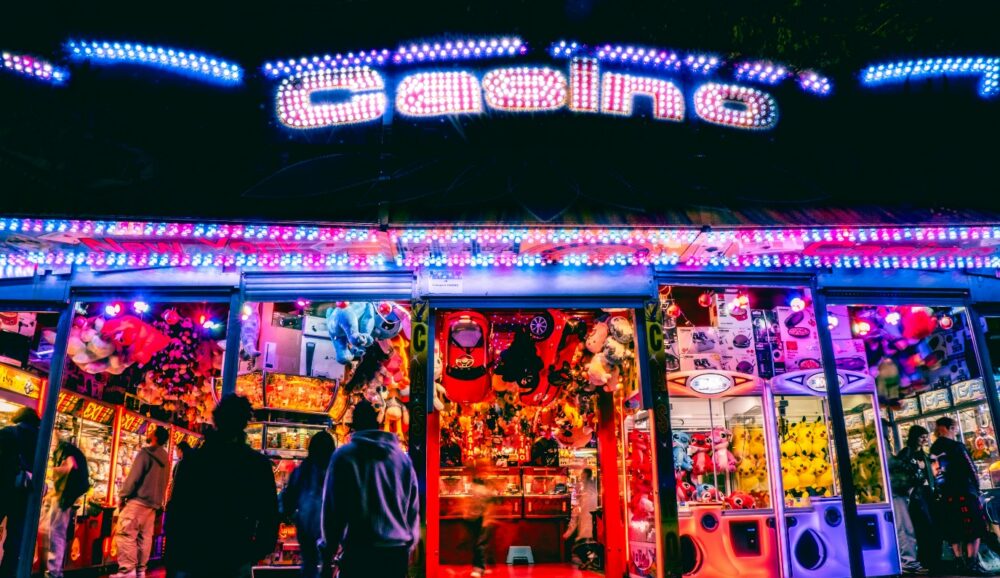
The first major development after the democratization of the country was the National Gambling Act of 1996, opening the way for a licensed casino system and the establishment of a national lottery.
The 2004 Act, followed by the National Gambling Amendment Act of 2008, has been the main piece of legislation that has shaped the board.
The most interesting part about this situation is the somewhat compromising element. While the 2005 Act technically restricts online casino gaming on a national level, there is quite a bit of legislative autonomy for each province to regulate online gambling operations. It is up to them to decide what goes within their jurisdiction.
As a result, we see quite a few online-operated brands that provide casino games under the express acceptance of provincial control boards. They are accompanying elements of sports betting, which is legal in South Africa. It’s also very popular, culminating in happenstances like Betway’s sponsorship deal with the PSL.
Currently, there are tens of operators that are distributing sportsbook services, courtesy of both the National Gambling Board and province-level licensing.
The Remote Gambling Bill is still up in the air
The proposed Remote Gambling Bill is a slow-moving project that aims to be a game-changer in South Africa. It’s one of the most contentious pieces of legislation in the country’s relationship with this type of entertainment. It’s a matter of perceptions, since its detractors see it as opening the floodgates rather than bringing regulatory openness, clarity, and control.
The Bill has been a point of incredibly contentious discourse as recently as August 2025. Makashule Gana, an MP representing Rise Mzansi, has been extremely vocal about the moral corrosion that he considers online gambling to be. His statements back in 2024 have been particularly antagonizing, finding the medium to be extremely problematic.
The most recent development with this piece of legislation that has been a sore point in the South African Parliament is its status. The Trade, Industry & Competition (DTIC) Portfolio Committee has yet to discuss, as of two months removed from the redaction of this article.
Recent changes of note
Despite the stalling of the regulatory process that would further liberalize and implement market-wide legislative standards, the South African gambling scene has not been stalling completely.
There are methods of advancing and refining the experience of gamblers around the country, even if it is on a very simple level. This is the kind of development that we can identify as relevant in the 2025 South African gambling scene.
More clarity on advertising rules
The Advertising Regulatory Board of South Africa released a Gambling Advertising Appendix at the end of 2024, with the complete implementation coming this year.
Aligning with the framework of the Gambling Act of 2004 and the wishes of the Gambling Board, this appendix made things exceedingly clear when it comes to the rules that operators must respect in the effort to market their services.
The principles, which are in tune with all the other jurisdictions in the world that keep things tight, require transparency and detailed disclosure, with details such as:
- Clarifications on the language and message of gambling advertisements. It must not be indecent, misleading, and ensure that they do not promote gambling to excluded people and minors.
- It must be clear that gambling is not a skill-based activity, nor is it a form of investment. As a result, it cannot bring the automatic covering of losses, financial security, or prosperity.
- It must not promote gambling as a free or discounted activity under any circumstance.
Intense clampdowns on unlawful gambling
This action does not require a whole lot of introductions. Simply put, government authorities, via the National Gambling Board, have taken the necessary steps to curb illegal gambling.
The truth is that there are thousands of casino platforms that operate either semi-legally or illegally by providing offshore-based remote gambling services. As mentioned above, there has been a very clear sub-market that has been trying to captivate South African players by leveraging ZAR as their main currency, for example.
In an effort to curb this kind of exposure, authorities have been cracking down on operations accepting South African players, making sure that there is less (preferably none) access to such illicit gambling.
Stronger player protection policies
Given that they are somewhat aligned in the same spectrum as the policies added to the advertisement rules, we could’ve added them to that section as well. However, there are certain elements that stick out to a degree that they deserve their own highlights.
We have identified them as follows:
- Warnings related to the possible effects of gambling. The risk of compulsive gambling must be a disclosed detail on every piece of advertising. The age barrier of 18+ is also a method of reminding citizens about the legal age of gambling.
- The front-and-center promotion of the National Responsible Gambling Programme. Since it provides a knowledge hub, self-exclusion, and even a parent zone, this program is a crucial element that deserves recognition, as identified by the NGB.
- Any form of media must dedicate at least 10% of its space (in an abstract sense, since radio ads are audio content) to the promotion of responsible gambling messages.
- For minor protection, there must be express avoidance of advertisement placements near media content, venues, or schools.
Conclusion
To conclude, South African gambling finds itself in quite a complicated position in 2025. The government is tightening its grip on the market in an effort to contain its unfortunate effects. However, it still operates on relatively old legislation, and any breakthrough doesn’t really seem to be too close to the horizon. If you’re from any of the provinces and have access to gambling of any kind, only do so legally and play responsibly!
Submit and get free exposure here: Showcase Your Business | Advertise Your Special Offers.