Climate change will force 113 million Africans to migrate by 2050:
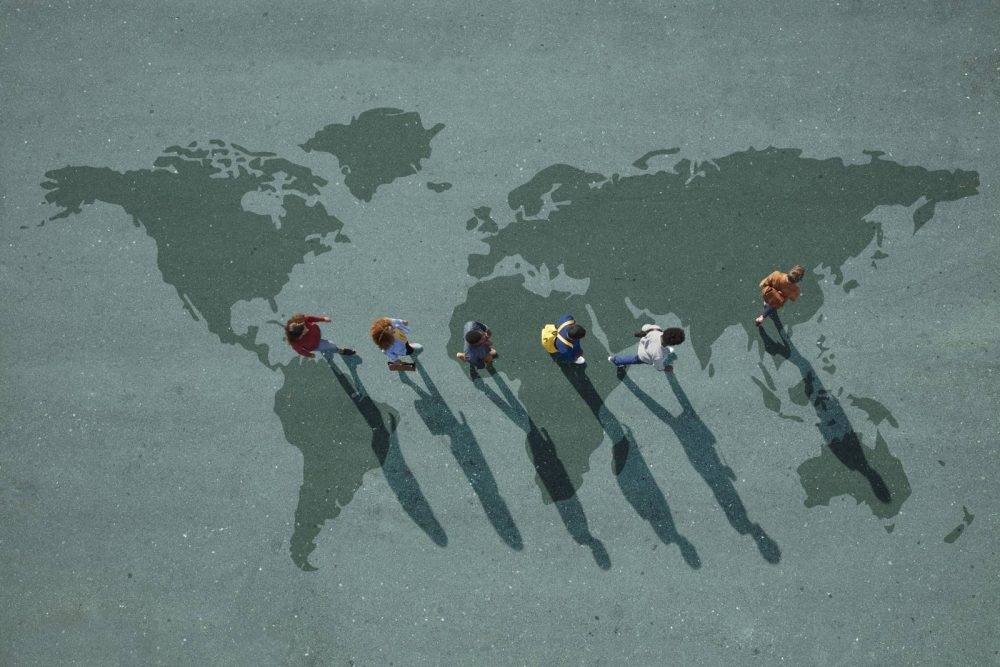
By 2050, up to 5% of Africa’s population — potentially 113 million people — may have to leave their homes because of the effects of climate change, a figure that is up from 1.5% today.
The majority of this movement will happen within countries, rather than across borders, according to the recent African Shifts report.
The report, produced by the Africa Climate Mobility Initiative (ACMI), documents the realities of climate-forced migration in Africa and possible scenarios for future climate displacement.
Climate mobility refers to the movement of people pushed by the adverse effects of sudden or slow-onset climate impacts.
Within the next 30 years, the Intergovernmental Authority on Development (IGAD) region in East Africa, an area of 5.2 million square kilometres that comprises Djibouti, Eritrea, Ethiopia, Kenya, Somalia, South Sudan, Sudan and Uganda, could see up to 10% of the population — about 55 million people — forced to move within their countries.
Rural areas will see farmers leaving rain-fed lowlands and pastoral lands, the report said. “At the high end, pastoral areas in Rwanda could see around three million people leave due to adverse climate impacts. Meanwhile, the population in Ethiopia’s pasturelands could grow by 279?000 people by 2050 due to climate mobility.”
Along the coasts, sea level rise and flooding will force people to move out of low-lying areas. Coastal areas around Africa could lose up to 2.5??million people by 2050 from steady sea level rise, flooding and other climate stressors.
Africa’s cities will be dynamic hotspots of climate mobility. “Cities will continue to grow swiftly, although, on a continental scale, climate impacts could force up to 4.2 million people out of urban areas by 2050.”
Only when extreme social or environmental conditions force a second migration do people cross over into another country.
Between 2020 and 2050, the movement of people across borders in response to climate change is expected to be relatively small. Across Africa, 500??000 people — and potentially up to 1.2??million — are projected to migrate to a neighbouring country.
Most cross-border movement will be in Southern Africa, where mobility between neighbouring countries is forecast to increase because of favourable climate impacts on crop yields that could enable people to undertake longer journeys.
About 200?000 to 800?000 people could be moving between neighbouring countries in the region by 2050. At the country level, Zimbabwe, Malawi, Uganda and Zambia could see the largest increases in emigration from climate impacts, while South Africa, Zimbabwe, Mozambique, Botswana and Kenya are forecast to see the largest increases in climate-driven immigration.
For people facing climate stressors on the continent, climate mobility is likely to be a “response of last resort. Most Africans are attached to their land and homes and don’t aspire to leave their communities. Half of the men and 40% of the women surveyed expressed hope and optimism for the future, despite experiencing severe climate disruptions,” according to the report.
For those who have relocated or consider moving, climate stressors are usually not the primary reason. “Climate impacts generally act alongside other drivers such as the search for education and job opportunities, access to livelihoods and social services and the draw of family ties.”
The report argues for an approach that anticipates climate mobility, giving people, institutions and governments time to prepare for such events, said Sarah Rosengaertner, the global lead for knowledge and practice at the Global Centre for Climate Mobility, and Nick Simpson, senior adviser and Africa lead for knowledge and practice at the ACMI.
“Informed migration in full knowledge of climate risks can, when well supported by local, national, and regional policies, help reduce vulnerability, build resilience, and prevent future loss and damage.”
They added that the report notes that climate change is already having a significant effect on mobility patterns in Africa, “with many people being forced to move due to droughts, floods, and other climate-related events”.
“People-positive adaptation” that plans for climate mobility is required to strengthen the resilience, Rosengaertner and Simpson said.
“If properly managed, it could enable some people to stay where they are rooted, help those who aspire to move to do so in a safe and informed manner, support communities that receive migrants, and anticipate and plan for situations where whole communities may need to relocate.”
This could include providing access to climate information, boosting climate literacy, training, promoting sustainable livelihoods, improving infrastructure and services and ensuring that the rights and needs of migrants are protected, they said.
Training could be offered to young people, who are typically the first to move, to give them the green skills needed to make a positive contribution to their new locations.
The report’s findings also highlight the need for investment in research and data collection to better understand the dynamics of climate-induced mobility in Africa.
The international community’s response to the links between climate change and migration remains “hamstrung by the fact that this issue is nobody’s mandate”, Rosengaertner and Simpson said. “The response remains fragmented between processes on climate change, migration, human rights, development, and peace and security.”
The most explicit commitments on climate migration can be found in the Global Compact for Migration, but the compact is non-binding and only addresses international migration, not movements within countries, they pointed out.
Africa is ahead of other regions when it comes to the availability of legal frameworks that could be mobilised to address the issue of climate mobility.
“The Organisation of African Unity Convention on Refugees provides protection for people fleeing ‘events seriously disturbing public order’ in either part or the whole of their country of origin or nationality. The Kampala Convention on Internally Displaced Persons recognises ‘natural or human-made disasters’ as a ground for recognising protection needs.”
Member states of IGAD are leading the way by ratifying the Protocol on Free Movement in the IGAD region.
They argue that these provisions could inform ongoing discussions in other regional economic communities on ways to protect citizens. “The main challenge is ensuring wide ratification and effective application of existing instruments at national levels.”
Many African countries face significant resource constraints, which can limit their ability to invest in climate-resilient infrastructure, social services, and other adaptation measures, Simpson and Rosengaertner said. Laws and policies on migration, refugees and displacement have a part to play in addressing climate mobility in the continent.
Poverty and inequality make people more vulnerable to climate change.
“Low levels of climate literacy across Africa are likely to affect people’s decision-making in relation to mobility, and thereby their vulnerability to climate change, whether they stay or move. This connection between understanding climate risks and climate mobility is important because planned movements tend to have more positive outcomes than forced or reactive movements.”
Improving awareness of climate change and climate risks, together with access to localised climate information help people make informed decisions on how to cope and adapt, including by moving, either temporarily or permanently.
Competition authority gives thumbs up to SAA-Takatso deal:

The Competition Commission has recommended that the Competition Tribunal approve the proposed merger between Takatso Aviation and South African Airways (SAA) subject to divestiture and employment conditions.
The divestiture condition means that Global Aviation, the operator of low-cost airline LIFT, will have to leave the Takatso consortium. In a statement, the commission said if the merger went ahead with Global Aviation and Syranix, which co-owns the LIFT trademark, as minority shareholders of Takatso, the SAA deal would decrease competition in the domestic passenger airlines market.
“Takatso will have access to SAA’s competitively sensitive information by virtue of its majority stake in SAA, pursuant to the proposed merger. This concern is further exacerbated by the fact that the domestic passenger airlines market is highly concentrated, barriers to entry are high and is amenable to coordinated effects,” it said.
“To remedy this concern, the commission and the parties have now agreed to a divestiture condition in terms of which Global Aviation and Syranix will completely divest from Takatso prior to the merger’s implementation.”
The competition watchdog said it considered that this fix-it-first remedy is appropriate in the circumstances given the extent of the concerns identified.
The divestiture and employment conditions were initially rejected by the parties resulting in the commission initially taking a decision to recommend a prohibition of the merger.They later agreed on the conditions, including that for a “moratorium on merger-related retrenchments and to maintain a minimum number of employees at SAA”.
The commission said the merger does not raise any other substantial public interest concerns and so the Competition Tribunal would now consider its recommendations and make a decision on the deal.
The deal has been dogged by controversy since the public enterprises department announced two years ago that it had chosen Takatso consortium as its equity partner to take over 51% of SAA, which had been placed under business rescue.
Africa wants to ban skin lighteners containing mercury:

Africa wants to amend the global mercury treaty by imposing a ban on skin-lightening products laced with the highly toxic metal.
The amendment proposal by Botswana and Burkina Faso, on behalf of the African region, seeks to amend the Minamata Convention on Mercury — a treaty to protect human health and the environment from the adverse effects of mercury — to ban the sale and offering of sales of cosmetics containing mercury.
Despite known health risks, mercury is used because it suppresses the production of melanin and removes age spots, freckles, blemishes and wrinkles. Adolescents use skin-lightening creams, because mercury acts as an antibacterial on acne.
These products are hazardous to human health and have been outlawed in numerous countries. At least 10 African countries — South Africa, Kenya, Côte d’Ivoire, Ghana, Uganda, Tanzania, Rwanda, Nigeria, Cameroon and South Sudan — have adopted regulations to curtail toxic skin lighteners. Since 2015, eight have taken steps to rein in these toxic cosmetics.
The Zero Mercury Working Group, an international coalition of more than 110 public interest environmental and health NGOs, applauded Africa’s proposal.
“Over the years, the African region has taken a leadership role in phasing out mercury in products, including in lighting, dentistry and now skin-lightening cosmetics,” said Rico Euripidou, of groundWork, an environmental justice service and developmental nonprofit. He said toxic cosmetics are a “global mercury crisis warranting coordinated international collaboration”.
The convention requires that each party shall not allow the manufacture, import or export of mercury-added cosmetics that have a mercury content above 1ppm (parts per million), including skin-lightening soaps and creams.
According to Africa’s proposal, made ahead of the fifth meeting of the Conference of Parties to the Minamata Convention on Mercury in October, “the proliferation, trade and sales of mercury-added skin-lightening products often continues unabated in local markets and increasingly, since the pandemic, though the internet”.
It said internet sales of such products probably involve illegal activity by online platforms, decentralised third party sellers and producers “hiding in the shadows” — and there is insufficient awareness of health risks from mercury-added skin lightening products.
“Without national collaboration and a globally coordinated effort, on both [the] supply and demand side, skin-lightening products trade and sales will persist into the foreseeable future long after all other Article??4 banned products are eventually eliminated.”
Skin-lightening products containing mercury have health risks, especially to pregnant women, according to the proposal.
“Mercury can readily enter the body via absorption through the skin, inhalation or orally. Regular use of mercury-added skin-lightening products reduces the skin’s resistance to bacterial and fungal infections and can lead to rashes, skin discolouration and blotching. Long-term exposure may also damage the eyes, lungs, kidneys, digestive, immune and nervous systems.”
Africa wants to eliminate the 1ppm mercury threshold for banning cosmetics. By doing this, “parties with limited capacity could utilise handheld devices (XRFs) to efficiently conduct market surveillance through inexpensive screening for mercury-added skin-lightening products,” it said, noting there are many countries that have no threshold limit in their regulations.
Euripidou explained: “If we eliminate that artificial threshold, what it effectively says is that anything contaminated with mercury is illegal and there are tools that customs officials can use, which are handheld devices called XRF machines.
“They can just point it at cosmetic shipments and if there is any mercury whatsoever, then you know that shipment is contaminated and you don’t have to worry about testing it at that 1ppm threshold.”
Africa proposes additional steps be taken to curtail sales and offering of sales, including setting national objectives to develop and implement strategies to discourage marketing, advertising and display.
It said that several countries, including South Africa, Nigeria and India, have policies discouraging the promotion of skin-lightening products, with South Africa’s policies stopping advertising on television.
The proposals said the widespread use of skin-lightening products — with or without mercury — are a “symbol of societies grappling with colourism. In fact, the World Health Organisation recommends not to use skin-lightening products as skin is beautiful and we should love it as it is.”
Monitoring the industry is necessary to identify manufacturers who may be breaking the law. It said mercury was seldom listed in the ingredients list. “Requiring licensing of products and product ingredient approvals could address this issue.”
The proposal suggested that online platforms be part of developing and implementing product safety pledges and that interministerial coordination could help control the illicit trade in a country.
To facilitate consumer awareness, physicians and dermatologists and beauty centre workers must be educated.
In 2012, a study by Ncoza Dlova of the University of KwaZulu-Natal, which investigated the contents of the top 10 best-selling skin-lightening creams on the market in South Africa, found that nearly half of the products contained mercury, although this was neither declared on the ingredient listing nor the packaging label.
In her 2015 epidemiological study on skin-lightening practices of South African women of African and Indian ancestries, Dlova concluded the use of these cosmetics is common among darkly pigmented women of both ancestries.
“Despite more than 20 years of governmental regulations aimed at prohibiting both the sale of cosmetics containing mercury, hydroquinone and corticosteroids, and the advertising of any kind of skin lightener, they are far from having disappeared. The main motivations for using these products are the desire to treat skin disorders and to achieve a lighter skin colour,” the study said.
A study in Ghana found that 70% of patients with kidney disease had a history of using bleaching creams, while a Nigeria study found that more than 30% of women who used bleaching creams experienced skin irritation.
Since the 1990s, South Africa has taken progressive steps to regulate mercury in skin lightening creams, groundWork’s Euripidou said.
“However, the concern and this is an ongoing and systemic thing, is that the sale, manufacture and global distribution of skin-lightening creams with mercury is still carrying on unabated and the reason is because there’s a market for it. There’s a whole lot of embedded race and colonial issues in the idea that having a lighter skin is more preferable than having a darker skin.”
This is spurring the global demand for these dangerous products.
“And because we don’t have good controls over the importation of goods … if you have the importation of these creams that are going to get sold in the informal sector, at taxi ranks, at spaza shops, there’s absolutely just about no way that our custom officials believe that they can control it.”
To date, major online platforms are not held accountable for facilitating the sale of often illegal high-mercury cosmetics, said Michael Bender, international co-coordinator of the Zero Mercury Working Group. “If adopted, the sales ban can help prevent marketing of toxic and often illegal cosmetics.”
Euripidou added the online sale of skin-lightening creams with mercury is almost like a “new frontier” for the sale and distribution and “global continued contamination with mercury because it’s so unregulated, it’s so easy for it to happen and it’s such a big problem”.
Africa’s proposal would effectively ban the manufacture of skin-lightening creams at the source. Euripidou said it wasn’t a mystery where they’re originating from. “We know that a lot of them originate in Pakistan, the Caribbean and the West Indies …
“So it’s not as if we don’t know what kind of control measures we need to take. If these control measures are adopted into the Minamata Convention, then we’ll know that we’re addressing the root cause and the origin of where the problem arises as well as the trade and the sale of the skin creams.”
Leslie Adogame, executive director of the Sustainable Research and Action for Environmental Action, said that even in countries that have banned manufacture and trade, mercury-added cosmetics are still available. “Since most come from outside the country, more must be done globally to curtail sales and use.”
Submit and get free exposure here: Showcase Your Business | Advertise Your Special Offers.