Court order imposes no-fishing zones to safeguard African penguins:
All eyes are on Forestry, Fisheries and Environment Minister Dion George and his department over how they will administer the implementation of no-fishing zones around six key African penguin breeding colonies.
On Tuesday, BirdLife South Africa and the Southern African Foundation for the Conservation of Coastal Birds (Sanccob) secured a victory for the critically endangered seabirds when the high court in Pretoria issued an order of court after a hard-won settlement agreement was reached by the two conservation NGOs with commercial sardine and anchovy purse-seine (net) fishers. It was subsequently endorsed by the state.
The order provides for the delineations of no-take zones around the African penguin breeding colonies that are in coastal areas where this commercial fishery operates. The six main colonies are Dassen Island, Robben Island, Stony Point, Dyer Island, St Croix Island and Bird Island.
“The six closures work together to secure biologically meaningful foraging areas for the charismatic seabirds in each of the West Coast, Southern Cape and Algoa Bay regions to help bring the species back from the brink of extinction,” the conservation groups said.
The order provides that the department will have two weeks to ensure that these closures are implemented by amending the permit conditions applicable to commercial sardine and anchovy fishers, also covering redeye fish.
These permit conditions are to be renewed by the department every January for the next decade. “The 10-year period takes closures to the critical year, 2035, when the iconic seabird is predicted by scientists to be extinct in the wild — just a generation of penguins away,” the NGOs said.
After a difficult six years of battling disagreement from fisheries scientists as penguin numbers dwindled from 2018’s count of 15 187 breeding pairs to an estimated 8 750 at the end of 2023, BirdLife South Africa and Sanccob said they took the difficult decision to resort to the courts in March last year.
The environmental NGOs, represented by the nonprofit Biodiversity Law Centre, had approached the court in March last year to review and set aside a decision taken by former environment minister Barbara Creecy in August 2023 to put in place interim closures around the seabirds’ six largest breeding colonies.
Their case rested on the irrationality and unlawfulness of the minister’s decision to put in place island closures that were not biologically meaningful.
The court order makes it clear that Creecy’s decision, announced on 4 August 2023, is reviewed and set aside. In addition, the order sets out the maps and coordinates for the closures, which will be in place from the date of the court order for a period of 10 years, subject to a scientific review after six years.
It also confirms that these closures will be in place year-round, including during the full fishing season. This is in line with the recommendations of the expert panel, which was convened by Creecy in October 2022 to advise on the closures.
The expert panel clearly indicated that any closures put in place should be capable of being monitored and evaluated and also that it was necessary for closure duration to take into account African penguin life histories, including the period when they first breed at the age of four to six and duration of a generation, which is 10 years.
It also recommended that the closures be implemented so that penguin populations across each of the West Coast, Southern Cape and Eastern Cape regions are represented.
“The court order endorses this risk-averse approach, which caters for unexpected shocks such as oil spills, predation by seals and other predators, as well as extreme weather events, all of which compound the underlying threat of lack of prey and the low breeding numbers and risk of malnutrition which it causes,” the groups said.
The threats facing the African penguin are complex and ongoing, and the order itself requires monitoring, enforcement and continued cooperation from industry and the government processes, which monitor and allocate sardine and anchovy populations for commercial purposes, said Nicky Stander, the head of conservation at Sanccob.
“For us, as conservationists, we want to know the details; how does his [George’s] department plan to implement the closures? Number one will be amending the permit conditions so that has to be done within the next two weeks, but who will monitor them and more importantly what is the monitoring and the evaluation plan to make sure that the penguins are benefiting from these closures?
“It’s all fine and well to put these closures in place but after a six-year … data collection and review, we should be able to have enough data to establish whether the closures are effective and whether they are reducing the competition between the commercial purse seine fishing industry with penguins. For us, that is extremely important because if they’re still not good enough, then that’s a motivation to extend them.”
The no-take fishing zones are not a silver bullet. “It’s not like the penguins will now have fish and they will be saved … In all fairness to the fishing industry, we have always said that there are many pressures facing African penguins but we’ve also said that food availability is the most pressing issue and we did not feel like the government was doing enough to mitigate that.”
This is what led them to litigate. “For NGOs to litigate, it’s really a last resort and a desperate plea to say that we are now at this juncture where we have to take drastic action,” Stander said.
In a joint statement, the South African Pelagic Fishing Industry Association and the Eastern and Southern Cape Pelagic Association, welcomed the settlement order.
“It is hoped this will end the intense dialogue that has raged since 2008 about the closures in relation to the extremely concerning decline in the African penguin population.”
This pragmatic decision by the fishing industry was based on considerations that balance increases in closed areas against adverse socio-economic effects, they said. “A middle of the road compromise position was agreed to in which the extent of closures are about halfway between the interim closures that are currently in place and the area closures that the applicants were seeking in their court action.”
The perception that the fishing industry, or that fishing near to breeding sites, is the primary cause of the decline in the penguin population is a false one, the organisations said. The international review panel concluded that “excluding fishing around island breeding colonies is likely to reduce the rate of decline in the population to a small extent” but that “such closures alone would be unlikely to reverse the current decline in penguin population numbers”.
In addition, the fishing levels of small pelagic fish in the country are well managed and are “light by international standards”.
“We are especially pleased that this settlement will now allow scarce resources to be used constructively to scientifically determine the principal factors causing the decline in the penguin population and to ameliorate those where possible.”
Alistair McInnes, the seabird conservation programme manager at BirdLife South Africa, said the closures will also benefit other marine predator species, such as Cape gannets, Cape cormorants and other socio-economically important fish that also eat sardine and anchovy, as well as the livelihoods of many who derive benefits from marine ecosystems that are equitable and judiciously managed.
Craig Smith, a senior marine specialist with WWF South Africa, which was not involved in the litigation, said it was relieved that opposing parties could find each other in agreeing to more effective closures of pelagic fishing around breeding colonies to protect the foraging grounds of the African penguin.
George praised the court order as a “triumph for conservation and sustainable development”, while his department said it is committed to overseeing the effective implementation of these closures and will collaborate with stakeholders to monitor their impact on penguin populations.
The Land Rover Defender: A living legend of Africa:
The allure of Land Rover vehicles, particularly the iconic Defender, runs deep for many of us in Africa.
There’s something undeniably special about these rugged machines that have roamed our continent’s vast landscapes, crisscrossing deserts, savannas and mountains to the most remote villages.
For me, the Land Rover has always been a symbol of family, adventure and the kind of resilience that mirrors the spirit of the continent itself. This bond is not just about a vehicle; it’s about memories, journeys and connections that span generations.
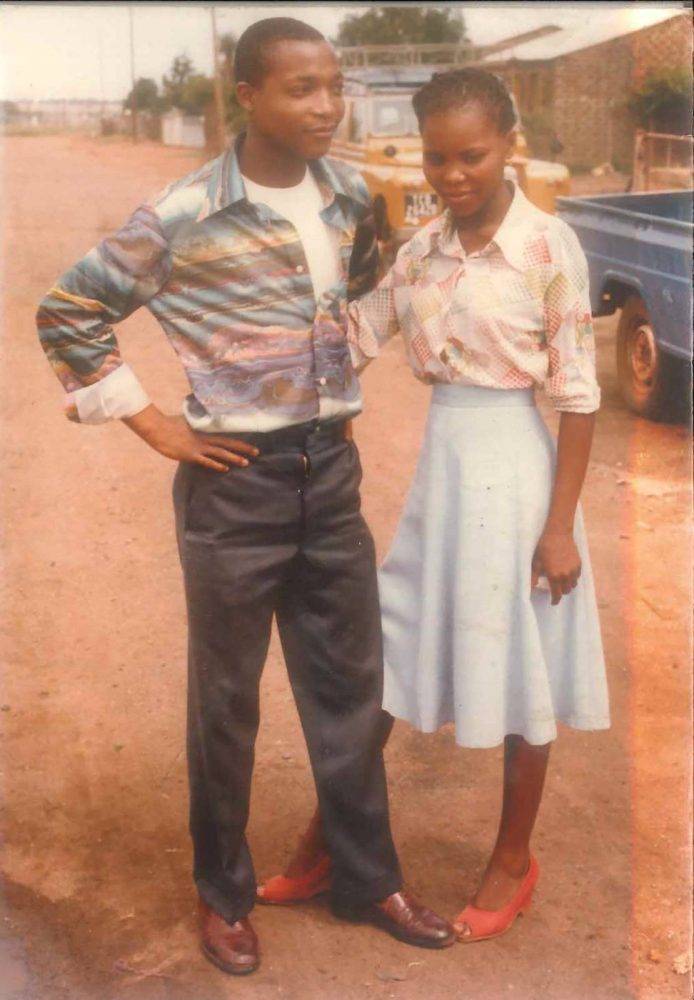
Growing up, my grandfather’s Land Rover Series 3 was the stuff of family legend. It was a 1978 model, though I never got to see it in its full glory. Instead, I grew up encountering it only through the grainy photos that would occasionally surface during visits to my aunt’s house.
Those images would show a corner of the vehicle, sometimes framed against the backdrop of sunlit savanna or dusty roads. In one picture are my aunt and uncle — and you can see the mustard Land Rover in the background, which is how I know it actually existed.
My grandfather, a proud descendant of Mozambique, had driven that Land Rover across Africa, including frequent trips to KwaZulu-Natal — my grandmother’s homeland.
The Land Rover seemed to be the backbone of our family, an essential part of our heritage. More than a mere car, it was a witness to many of our family’s defining moments and it still lives in our stories today.
What I would give to have seen that Land Rover in its prime, to have sat in its seat as it hummed its way through Africa’s terrain. My memory of it was a mere echo from the past; a family treasure I can only imagine.
But, recently, an unexpected opportunity allowed me to experience a modern version of that Land Rover — something that, in a strange way, connected me to those memories.
A week ago, I found myself behind the wheel of a Land Rover Defender, not the 1978 Series 3 my grandfather once drove, but a new model that has evolved to be more powerful, luxurious and advanced.
My journey took me from Johannesburg to Babohi at Qwabi Private Game Reserve, in the Waterberg region of Limpopo, one of the most picturesque and ecologically diverse parts of South Africa.
The drive took about three hours, experiencing all kinds of terrain in a car that can handle tar as well as it can off-road terrain.
But what made the trip even more special was the fact that South African explorer and author Kingsley Holgate, a man whose name is synonymous with African adventure, was part of the convoy.
For many, Holgate is a living legend. The man is an institution when it comes to exploring the farthest corners of the African continent. A seasoned adventurer, humanitarian and the founder of the Kingsley Holgate Foundation, he has crossed borders and landscapes that most of us can only dream of.
His expeditions have taken him to some of the most remote places on the continent, with his Land Rover serving as a trusted companion through the roughest terrains.
Holgate’s name is almost as synonymous with the Land Rover Defender as it is with adventure itself.
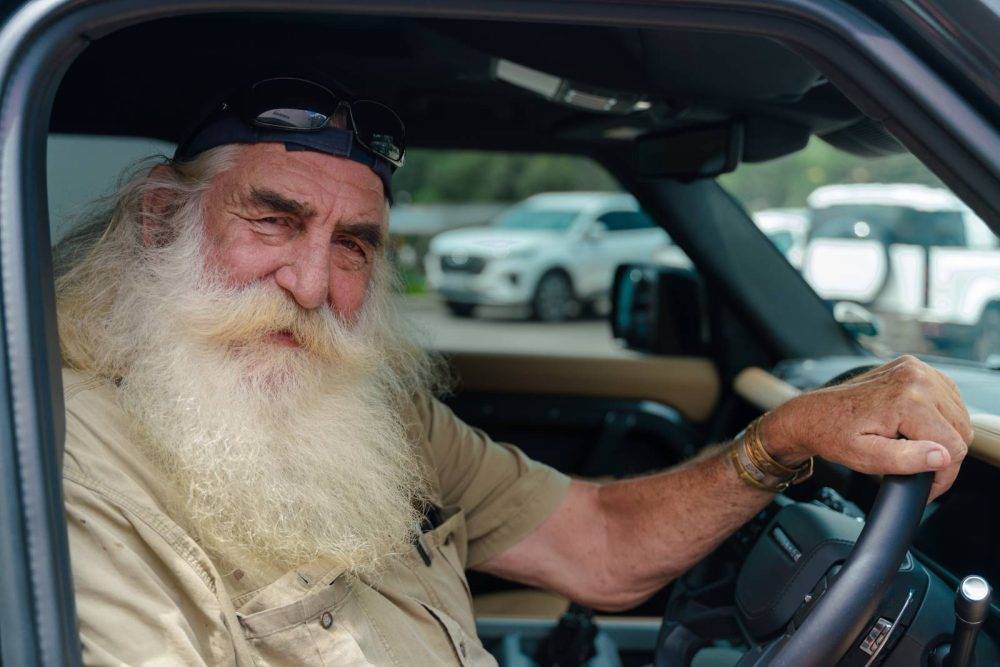
As I drove along the undulating roads of Limpopo, flanked by expansive bush, I couldn’t help but feel a deep sense of connection to my family’s legacy.
The Defender I was driving wasn’t my grandfather’s vehicle, but the spirit of that original Land Rover was still alive — alive in every turn of the wheel, in the thrum of the engine, in the dust that it kicked up behind us.
As I looked around at the convoy, including Holgate, I understood more clearly the deep cultural and personal connection so many of us share with these vehicles.
Holgate has his own rich history with the Land Rover. His work and passion have taken him to some of the most far-flung regions, all while driving these rugged machines across kilometres of untamed landscape.
Over the years, the Defender has become more than just a mode of transport for him — it’s a companion, a partner in exploration.
I had the chance to speak to him during the trip and his stories about traversing deserts, mountains and jungles were as captivating as the views around us. It was humbling to hear about his many adventures and the people he’s met along the way.
Each story was an ode to Africa’s indomitable spirit.
His son Ross Kingsley shared a story about how they had once filled the water tanks of a Land Rover on an expedition with rum, which they enjoyed all through Africa.
Beyond the adventure, Holgate’s work has a humanitarian side. His foundation is dedicated to improving the lives of the continent’s most vulnerable populations and his work with Land Rover is a testament to the company’s reputation as a vehicle that not only survives but thrives in Africa’s harshest environments.
It’s a story of how a machine, once just a utilitarian tool for travel, has come to represent something more — community, resilience and, above all, a connection to the land.
That journey to the Waterberg was more than just an opportunity to experience a modern-day Land Rover Defender. It was a way for me to piece together the experiences that my family had many years ago.
I could feel the presence of the 1978 Series 3 in the Land Rover I was driving, and I could feel the legacy of that vehicle, and of those who had driven it, coursing through me. It was a reminder that the vehicles we drive are sometimes not mere machines — they are vessels of memory, history and of the stories we carry with us.
For Holgate, the Defender has been a part of his personal odyssey, a symbol of both adventure and purpose. As we convoyed through the African bush, I felt a deep sense of gratitude — not only for the vehicle beneath me but for the heritage that has allowed these journeys to continue, generation after generation.
In a way, my grandfather’s Land Rover is still with us today, a witness to our family’s ongoing adventures.
The Land Rover Defender is a symbol of Africa’s resilience and the people who live it every day, people like Holgate who have made it their life’s mission to explore and protect the continent. And for me, it is a symbol of family, of lost memories and of the unbroken thread that ties us all together through time.
Joslin Smith: State’s star witness breaks down as judge questions inconsistencies:
Lourentia Lombaard, the woman who was initially an accused in the kidnapping and human trafficking case of young Joslin Smith, burst into tears and had to be helped from the stand while testifying at the Western Cape high court on Wednesday.
Lombaard, a frequent drug user who was “smoking tik” with the accused on the day before, and of, Joslin’s appearance, turned state witness last year.
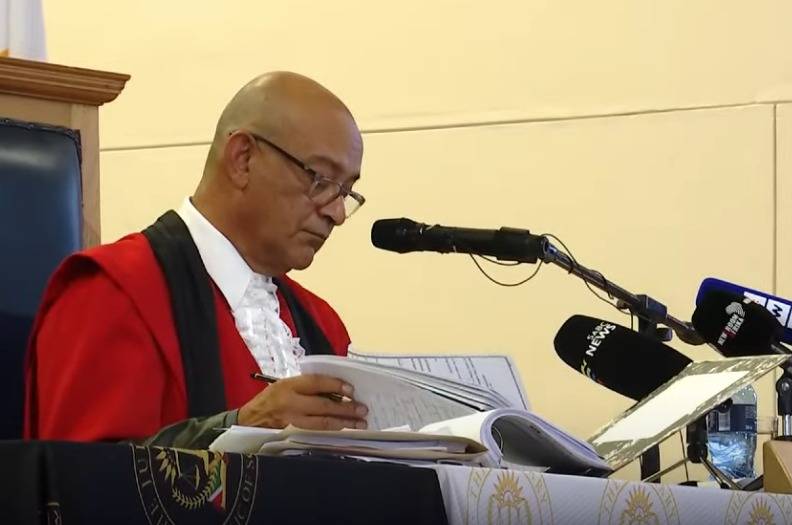
The dramatic scene played out as Judge Nathan Erasmus — keeping the measured tone he has used throughout proceedings — asked her about repeated inconsistencies in her statements relating to Sunday 18 February 2024, the day before the then six-year-old Joslin went missing.
Prior to bursting into tears, the judge had been told by the interpreter — Lombaard has been testifying in Afrikaans — that the 32-year-old was “shaking”.
The happenings on the Sunday before Joslin went missing on Monday 19 February 2024 are critical to the case, given it is on this day that money allegedly changed hands between the child’s mother, Kelly Smith, and the woman who allegedly bought Joslin for R20 000.
Returning after a short break, called so that Lombaard could compose herself, Erasmus said she was being treated by paramedics and court would be adjourned.
Proceedings would continue on Thursday, he said, and if Lombaard was unavailable, another witness would be called.
“It’s one of those things that happen in a criminal trial and we just have to work around it.”
Advocate Fanie Harmse, acting for accused one Jacquen “Boeta” Appollis — the partner of Kelly Smith, Joslin’s mother — was cross-examining Lombaard about the happenings on that Sunday before Erasmus took over to clarify matters.
The question was about whether Lombaard’s children had been with her when she went to Smith’s shack and if they were with her when she left the shack. She has given various answers in her evidence in chief and on the stand.
“My lord, please excuse me, it was my error,” said Lombaard.
“I just want to get an understanding of the answer,” said the judge. “Are you saying it was your mistake this morning, by saying that the kids were with you?”
“That’s correct, my lord.”
“Does that mean that the children were not with you in the morning?” asked Erasmus.
“That’s correct, my lord.”
“That is then not the first time that you made that mistake,” said Erasmus, paging through his notebook. “Because in your evidence in chief, when the prosecutor led you, last week, you also said the kids were with you in the morning.
“In fact,” continued Erasmus, “it was not only on those occasions that you told us that. You told us on Friday afternoon that you went around to Kelly’s and took the children with you. Can you remember that?”
“That’s correct, my lord.”
“That was when the prosecutor got very tired [because] you were jumping around on different things in your evidence. You were jumping to when you were arrested much later, and I understand everyone was tired, so I adjourned the court.
“On Monday, when we resumed, we went back to the morning of 18 February. Then you repeated that the children were with you in the morning,” said Erasmus.
“Then, earlier today, Mr Harmse asked you about that [twice]. Can you recall that?”
“That’s correct, my lord.”
“And we have spent almost three quarters of an hour on the same point. And now, suddenly, you are telling me you made a mistake. But you have made the mistake at least four times and it took 44 minutes to get the concession out [of you].”
“That’s correct, my lord.”
“Do you have any explanation for this?” asked Erasmus.
“My lord, I don’t know how to explain this, but I am sorry for that and …”
At this stage the interpreter broke off, telling the judge: “My lord, I see the witness is shaking …”
Erasmus announced a 15-minute break and Lombaard, sobbing, was helped from the stand.
Earlier in proceedings, he had cautioned Lombaard to listen to the questions during Harmse’s cross-examination, as her answers would determine her credibility as a witness.
According to Lombaard’s previous testimony, she knew Smith was going to sell the child to a sangoma for R20 000 and had accepted R1 000 in hush money.
On Monday, she told the court that the fair-skinned, blue-green-eyed Joslin was wanted for her “eyes and skin”.
Lombaard has changed her story on several occasions, when talking to police formally or informally, and to community members.
She has admitted to lying when she was first questioned about Joslin’s disappearance on the day after the child went missing. She also admitted to lying in her confession statement.
She told the court that the statement she made when she turned state witness, was “the whole, whole truth. There is nothing I am hiding.”
The state alleges in its indictment that Smith “communicated during August 2023 her plan to have her children be taken away or sold”.
“The plan was for this to happen in January or February 2024.”
Last week, an evangelist and part-time handyman based in Saldanha Bay testified that Smith had told him in 2023 that she was going to sell the children for R20 000 “but, if [the buyers] didn’t have the full amount, she would settle for R5 000”.
Appollis and Stefano van Rhyn, who is accused number two, as well as Smith, pleaded not guilty to charges of kidnapping and human trafficking when the trial started three weeks ago.
Submit and get free exposure here: Showcase Your Business | Advertise Your Special Offers.