
DA FedCo meeting dominated by talk of Malema:

Democratic Alliance leader John Steenhuisen believes that next year’s elections will be waged between the DA and Economic Freedom Fighters (EFF).
The admission was contained in minutes of last week’s federal council meeting signed by federal council chair Helen Zille. The minutes were distributed to DA structures.
The DA has long declared the EFF as its number one enemy in the build up to the 2024 general elections.
To ensure that the EFF does not govern after next year’s elections, the DA proposed a pre-election coalition first mooted by Steenhuisen after his re-election in April, called the moonshot pact. Party leaders have been meeting weekly for several months in an attempt to iron out initial differences in approach and to work out a general framework within which to operate.
Speaking to a recent federal council on 31 July, Steenhuisen said the EFF’s 10th birthday rally underscored that the party was public enemy number one.
Steenhuisen said that should the EFF make it to the Union Buildings, it would be disastrous, adding that investment would dry up overnight and emigration would soar.
“Julius Malema had also stated that he would put Cyril Ramaphosa in jail. This shows his totalitarian tendencies as he has no regard for the rule of law and due process, which means he would be prepared to incarcerate all his political opponents,” the document read.
Steenhuisen also called into question recent statements made by Freedom Front Plus Leader Pieter Groenewald that South Africa was not ready for a white president.
Groenewald has endorsed Inkatha Freedom Party president Velenkosini Hlabisa to be the face of the moonshot pact coalition. In the Sunday Times interview, the FF+ leader and a key ally of the DA in its coalition arrangement across the country, said that it would be difficult to convince traditional ANC voters to ditch the governing party, with all its flaws, should the opposition choose a white leader as its presidential candidate.
“This type of thinking is the core problem in South Africa. The DA must lead the move away from analysis rooted in the immutability of racial categories and build a South Africa in which people come together on the basis of shared values,” Steenhuisen said.
ActionSA’s Eastern Cape chairperson, Athol Trollip, had previously told the Mail & Guardian that Steenhuisen should not automatically be first in line for the post of president should the coalition emerge victorious in the 2024 elections.
Trollip said that if the coalition is to work, all parties must be prepared to make compromises.
Steenhuisen told party leaders that there was an internal fight in the ANC between
Ramaphosa and his deputy, Paul Mashatile.
According to the minutes: “He said that while they fight, we must set the agenda and show the country the way out of this mess we’re in. No matter what the analysts and our opponents are saying, there is no change in South Africa without the DA at the centre of it. We are the catalysts of change, and we must act as if we understand the enormous responsibility of this.”
The party is preparing to select its candidates for the general elections. Steenhuisen said that its energy must be turned outward to focus on winning votes. He added that it would fall on the party’s leadership to show commitment and leadership in becoming the anchor tenant in a new majority coalition.
“There will be no fallback position in 2029 if the EFF is allowed to take charge. We must bear in mind that 2024 might even be the last election in South Africa if the ANC/EFF manages to seize the institutions of the state. The megalomania and instinct for authoritarianism could override constitutionalism, and we should be mindful of how much is at stake in the 2024 election. We have a path to victory, and it is going to come down to us, in our constituencies, in our branches, and amongst activists that will be the lever of change to cause the spring of change in South Africa. It is not a responsibility that we can shrug off. Nothing worth fighting for comes easy,” he said.
Candidate selection
The party has concluded the screening phase in its candidate selection process. Potential candidates will now go through assessments. Study material for potential candidates undergoing the party’s assessment process was released on 1 August.
The party will then test candidates on the DA constitution and policy from 18 August.
The federal council adopted a scoring matrix giving quantified targets for performance during the election campaign to all non-incumbent applicants, it said.
The matrix will be used as the measure to assess whether candidates have met their obligations to the party.
“In addition, federal council considered how double parkers would be managed to assess their performance. It was agreed that where candidates have applied to two provinces, the chairpersons of the provinces involved will meet to determine the division of labour the candidate is expected to undertake between the two provinces. This agreement will then form the basis to evaluate the candidate’s contribution in each province to which they have applied,” according to the minutes.
The role of Eskom in South African history:

An edited extract from ‘Eskom: Power, Politics and the (Post) Apartheid State’, by Faeeza Ballim
Chapter 2 – The Taming of the Waterberg
Iscor’s arrival in the Waterberg coincided with a period of introspection within the National Party (NP). A factional battle that had long been brewing within the NP boiled over in the aftermath of the Soweto uprising of 1976 as the apartheid government adopted what Deborah Posel has termed a new “language of legitimation”.
The verligtes embraced commercial imperatives, even if this meant relaxing racial segregation, much to the chagrin of their verkrampte counterparts, who derided the embrace of individual enrichment and saw it as a betrayal of the ideal of a classless Afrikaner unity.
The farmers of the Northern Transvaal, of which the Waterberg was a part, were an important electoral constituency, and the NP held campaign rallies across the region in an attempt to stem party defections.
In one such rally, held in Ellisras in November 1978, Prime Minister PW Botha appealed for party unity in the face of mounting claims from his own verligte camp that a split might be an essential component of the party’s “purification” process, and he defended the need for policy changes.
The rift eventually grew serious enough to cause a breakaway led by Andries Treurnicht, who had served as the NP’s parliamentary representative for the Waterberg since 1971. Treurnicht formed the Conservative Party in 1982, and the party opposed the concessions the NP had begun to make to big capital as well as its apparent relaxation of racial segregation. As apartheid changed its form in the 1980s, the Group Areas Act remained as the last pillar of grand apartheid before it was finally repealed in 1988.
In Ellisras, despite its apparent verkrampte hue, the Group Areas Board had not implemented racial segregation when Iscor first arrived. Africans continued to live on white-owned farms […] Local government officials believed the forced removals of Africans […] would cause a labour shortage and so harm the existing economic fabric.
Within the government’s conception of regional development, the homelands served as pools of African labour. A 1965 memorandum written by an […] official about the plan to develop the Ellisras region stated it was government policy to encourage autonomous regional development in line with the then-normative pattern in “Western democracies”.
In this pretension of minimal government control, autonomous regional development was a systemic effort to ensure the “optimum development” of the region’s natural resources, including labour. The people and things […] in the region would be reduced to units within their appropriate categories, and the interaction of these “resources” would ensure development.
Local gents at the local level were to make their views known through representative organisations, and the government weighed in through various interest-bearing ministries. Since Africans lacked any rights of citizenship in the white towns that contained the infrastructural bearers of modernity, they fit into the calculus of the regional planners only in their role as labourers to be shepherded to the homelands, where they were officially resident. Forced removals can be seen as an important part of the praxis of authoritarian high modernism and they fit into the apartheid government’s systemic vision of regional development.
Soon after Iscor arrived in Ellisras, African families living in the vicinity […] were forcibly removed to an African township in […] Lebowa. But Iscor, armed with its technological expertise, did not initiate the removals. Rather, Iscor’s arrival heralded population growth in Ellisras and the government was forced to turn a regulatory eye to the town to ensure its orderly development — in line with the “modern” city in the apartheid imaginary.
Apart from containing the appropriate infrastructure, the modern city was one that was racially segregated. This, in turn, depended on an underlying economic prosperity so that farms and businesses could survive despite forced removals, which, after all, moved African workers further away from their places of employment.
In Ellisras, forced removals were the product of negotiation and compromise between the Group Areas Board, local and provincial authorities, white residents of Ellisras, and Iscor.
While Iscor provided the infrastructural tools for the creation of Ellisras as a town worthy of government regulation, it was chiefly concerned with the operations of its coal mine, and there is little to suggest it was deeply invested in adhering to the dictates of the Group Areas Board. In the end, Iscor’s activities enabled the extension of governmental power from the capital to the border region of Ellisras in a mediated and complex manner.
Mortuary backlogs result in ‘horror’ viewings:
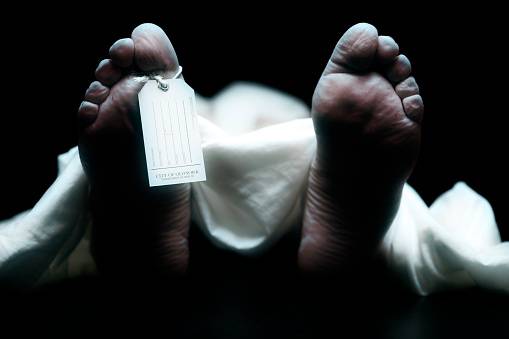
Families have had to identify their loved ones in a state of decomposition because of a backlog in post-mortems caused by an apparent shortage of pathologists at state mortuaries.
Lakewood Funeral Services owner Kevin Bougaard, who assisted two families with burials recently, described the experiences they had to endure to identify their family members.
“The one case was a 40-year-old woman who died of unnatural causes. When the family did the viewing, she was already decomposed and the brother-in-law could not identify her. The only way he could identify her was by looking at her hands, because he could recognise her nails,” Bougaard said.
He said this was as a result of backlogs in the release of bodies from the state-controlled Hillbrow mortuary because of delays in performing post-mortems.
“In the same week, there was another case where a 37-year-old man had been shot, so he was murdered, and we had to go to the mortuary with the family to do the identification of the loved one,” he said.
Bougard said he arrived at the mortuary on Friday 21 July to fetch the body of the man who had died on 16 July, but he was told that it was not ready for collection. He said bodies were usually ready for collection two to three days after the day of death.
“When we inquired, the mortuary said there is a backlog but they would work the weekend to do the autopsy to get the body released. We were supposed to have his funeral on Saturday, but we had to postpone it,” he said.
“On Monday, when we went to the mortuary, his name was on the list to be the first for the autopsy [that day]. We waited about 30 minutes or so and one of the staff then said ‘there are no doctors’; no one had pitched for work, they are all off sick,” he said.
“On Tuesday we went into the mortuary again and still no doctors had pitched up to work. and that’s when we started reaching out to the media, we were desperate. They never mentioned the word ‘strike’ but the conditions they work under are not good. We eventually got the body on Wednesday and moved the funeral to Sunday. The body was not in a good condition,” he said.
According to Bourgard, pathologists at Hillbrow mortuary do on average 4 000 autopsies a year, but apparently only five pathologists are employed at the facility.
A source who works in the funeral parlour industry, who asked not to be identified because he is not the business owner, said “the situation” at the mortuary was “not up to standard”.
“The place has a stench that is unhealthy to the human body. We go on a Thursday to collect a body and they say come back on Friday, and then when we go back we are told to ‘go, come back next week’, because they are short staffed. The system is not working because they are doing favours for some people [who jump the post-mortem queue],” said the source.
He claimed that pathologists usually left the mortuary by noon every day, and just one would stay on duty to deal with emergencies.
The Democratic Alliance spokesperson for health, Jack Bloom, said he had alerted Gauteng’s health and wellness MEC, Nomantu Nkomo-Ralehoko, to the “unacceptable situation” where bodies were not released for burial by the Hillbrow mortuary because of delayed post-mortems.
“Families are anguished as the bodies of their loved ones are not released. This issue needs to be resolved urgently. All cases of unnatural death are supposed to be sent to the state mortuaries for a post-mortem, which should be done within two days. But the backlog at Hillbrow mortuary has grown to about 100 bodies, and families are waiting for more than a week before the body is released,” Bloom said.
He said funeral parlours had also complained that bodies were sometimes released in a decomposed state.
“There is a general problem of poor management and staff shortages at the nine mortuaries run by the Gauteng health department, but the Hillbrow mortuary seems to be worst affected,” he said.
Funeral Industry Reform Association chairperson Johan Roussow, who has been lobbying the government to amend regulations related to the funeral sector and mortuaries, said the problem of backlogs was countrywide in cities and towns.
“It is all over the country, because, in the first instance, the government doesn’t have the capacity for sufficient storage space in all of the provinces,” he said.
He said a large part of the problem was pauper burials, where poor families did not claim bodies because they could not afford a funeral.
Moonlighting pathologists
Roussow alleged that there were also pathologists who worked full-time for the state who were moonlighting, doing post-mortems for clients in the private sector for fees of R4 000 to R7000 per autopsy.
He said doctors who did not know the person who died tended not to specify the cause of death and instead wrote “natural causes”.
When families want a cremation, the law requires that a post-mortem be conducted. He said pathologists could do about four or five autopsies a day and earn up to R35 000 in this market.
“It’s all about money. The funeral parlour has a doctor in his network and says ‘please sign the death certificate’, so whether doctor says natural causes and does not stipulate the cause of death, they don’t care because it enables them to register the death, but when they find out the customer wants a cremation then then need the exact cause of death,” Roussow said.
He believes there legal reform is required to clean up the industry, which is also beset by fly-by-night funeral parlours that lie in wait “like tow truck drivers” outside mortuaries to prey on traumatised families, and then charge “exorbitant fees” to release the bodies to their undertaker of choice for the funeral.
“There is no national law incorporating everything, there is no regulator in place, no ombudsman, and we unfortunately have to say there is a lack of management and skills even in the government mortuaries,” he said.
Avbob’s general manager for funerals, Pieter van der Westhuizen, said his funeral directors had said there was a “serious problem” at the Hillbrow mortuary, which was struggling with backlogs, while Cape Town mortuaries took four to five days for the release of bodies.
He said no problems had been reported in Durban at this stage.
Van der Westhuisen said he was not sure of the cause of delays, but he was aware that in many cases private pathologists were contracted to the state to do post-mortems at a fee of R3 500 to R5 000.
The Gauteng health department announced on 24 July that it has established a provincial task team to address the backlog at mortuaries.
Departmental spokesperson Motalatale Modiba said it had also introduced a digital fingerprint system that will help ensure people can be identified and that unknown individuals can be referred for paupers’ burials.
“The issue of insufficient pathology services has got to do with the shortage of specialists in this area across the country. As Gauteng we recently opened a training room which will assist with training of more specialists in this area,” he said.
Speaking at a media briefing last week, Nkomo-Ralehoko said the team would ensure bodies were examined and released without delays.
“At this particular Hillbrow mortuary alone, this move has resulted in 139 bodies being examined between 24 and 31 July 2023. Out of the 139 bodies examined, 96 of them have been claimed or collected by their families while 43 are still awaiting collection,” she said.
“The task team is providing this support on a 24-hour basis and seven days for the next 30 days while we finalise other processes,” Nkomo-Ralehoko said.
Modiba added that full-time pathologists may only conduct private work with special permission, but some worked for the state on a part-time basis.
Health department spokesperson Foster Mohale said ageing infrastructure was affecting mortuary services, especially where storage facilities are still at police stations.
He said the department was facing problems with unclaimed bodies and also in cases where they could not be disposed of because of ongoing police investigations.
“The Department is working with SAPS [South African Police Service] and Cogta [department of cooperative governance and traditional affairs] to resolve the issue of unclaimed bodies,” Mohale said.
Western Cape department of health spokesperson Megan Davids said regulations pertaining to the Rendering of a Forensic Pathology Service (FPS) promulgated under the National Health Act, state that an unidentified person should be buried within 30 days for health and safety reasons.
“But we have opted to follow every available process to try identify the person and to have a DNA profile on record for future inquiries, which greatly exceeds the 30 days.”
“The Western Cape government has invested extensively in increasing storage capacity and infrastructure and thus we are able to safely manage our cases with no storage concerns. What is of concern, however, is the minimal inquiries received at our facilities by families looking for their loved ones, and the amount of deceased that are not registered on our National Population Register,” she said.Davids said she was not aware of any pathologists moonlighting in the Western Cape.
Submit and get free exposure here: Showcase Your Business | Advertise Your Special Offers.
