
DA warns delegates to disregard message criticising Steenhuisen:
A warning to delegates at the DA’s electoral conference was sent out late on Saturday night by the party’s presiding officers following the circulation of an anonymous message disparaging outgoing party leader John Steenhuisen.
Presiding officers Greg Krumbock, Bridget Masango and Mimmy Godwe told delegates that appropriate action would be taken against anyone defaming the party leader.
“It has come to the attention of the presiding officer that Mr John Steenhuisen was attacked and defamed in a WhatsApp that has been sent to delegates anonymously on 1 April. Delegates are to disregard it as misleading and negative campaigning,” the warning message said.
The anonymous WhatsApp will be referred by the presiding officers to the relevant structures for appropriate action.
The circulated message contained a DA logo.
The message said that under Steenhuisen, the party lost three million voters and dropped five points for a 21.66% result in the polls from 2019 to 2021.
“Our own numbers show that we are stuck at 21%,” the message said.
Comparing him to former ANC president Jacob Zuma, the WhatsApp said Steenhuisen had predicted that the DA was 10 points behind the ANC during a debate with his opponent Mpho Phalatse on Friday, while at the conference he had pointed to a possible 12% gap between the two parties.
“He said 12% but probably meant 12 points in a bit of a Zuma numbers moment. This 10 or 12 point difference is a delusion. Can the party be led by one so out of touch with political reality? By the DA’s own numbers on 6 March, the ANC held at 50% and the DA at 21% … and the leader tells delegates that the gap is 10 points or 12, and closing. Like Cristo Wiese says, if you can lie to your wife, you can lie to me.”
The message continued that the DA’s numbers suggested that the party had 5% support among black people, adding that this would not get them out of the low 20’s in the national election next year.
“Without a multidimensional dynamic change to be ready for the dynamical change of the post ANC era, there will be no change at all. Our early 20’s numbers will remain early 20’s numbers. We need 30’s and beyond. By the numbers, John can’t get us there. We need a DA leader who can deliver votes.”
Former national whip Steenhuisen was elected interim DA leader in 2019 and official party leader a year later. He is considered a shoo-in for re-election.
Krumbock confirmed the message was sent to delegates, and said it had not been established who authored it.
“There was an anonymous WhatsApp sent to a number of delegates and that is contrary to the rules of our campaigning where every publication must carry the name of the person issuing it. There was no way to trace who sent it, we don’t even know if it came from people in the DA, it could be anyone doing this. The point is that we have an obligation when we receive anonymous messages like this which are negative, to deal with it, which is what we have done,” he told Mail & Guardian.
He added that the information contained in the message to delegates was “80% untrue”.
On Saturday, tensions were high between delegates when an amendment to add a deputy federal leader failed. Outgoing federal chairperson Ivan Meyer had to call for discipline when delegates refused to accept the result.
The vote had to be taken twice as only 29 votes stood between those for and against a deputy leader. This would have meant that Mpho Phalatse or Steenhuisen would deputise the other should one lose the election.
Two disgruntled delegates who spoke to M&G said that they would still pursue the amendment in the next congress.
The inclusion of a deputy federal leader was also a sticking point at the 2020 election. Former DA heavyweight Mbali Ntuli, who stood against Steenhuisen at that time, made the proposal. Steenhuisen won the 2020 race with 79% of votes cast.
The new DA leader is expected to be announced on Sunday afternoon.
Bob Marley: The Prophet’s feel-good theology:
Play I some music: dis a reggae music …
Roots rock reggae: dis a reggae music …
Hey Mr Music, sure sounds good to me!
I can’t refuse it: what to be got to be!
What is Bob Marley’s 1976 song Roots, Rock, Reggae saying? On the face of it, not much. He wants “Mr Music” — presumably a DJ — to play some reggae. And he boasts, playfully, that his songs are “bubbling” on the charts “like a mighty dread”.
It was Marley’s only single to break into the American Top 100 during his lifetime.
But, as so often with this master songsmith, seemingly trivial words carry a weighty sub-text. Music is an irresistible, quasi-religious imperative (“I can’t refuse it”), almost a destiny (“What to be got to be”).
All his songs, no matter how worldly on the surface, are devotional. Reggae is the music of freedom and togetherness: “Feel like dancing, dance ‘cause we are free/ Feel like dancing, come dance with me!”
Even the composition of Roots, Rock, Reggae, reflects the value of mutuality. Reggae songs were often the work of many hands and, like Marley’s signature track, No Woman No Cry, it seems to have been a collaboration with Jamaican songwriter Vincent Ford.
Music and its divine potency are also the theme of Trench Town Rock, which conjures the West Kingston slum of Marley’s childhood, scarred by the “trench”, an open sewer. It was here, among Jamaica’s underclass, that reggae was born.
Originally “rege-rege”, Jamaican patwa (patois) for “ragged clothes”, it soothes remembered misery —“when it hits you, you feel no pain” — but also arouses pity for the many who are still “living small”. “Don’t turn your back”, he urges the “some” who are living big, “… never let the children cry.”
Music, dance, sex and ganja, the Rastafarian sacred herb, are seen as sacraments — varieties of sensory transcendence in which the sweet chariot swings low.
Through its elaborate slowness, “skanking” — first danced to reggae’s parent, ska — takes on a meditative quality: “Take it easy (easy skankin’)/ Lord I take it easy! (skankin’ it slow).”
Even Jamaica’s benevolent climate is seen as divine grace. Praise Jah for the sun’s sweet rays, Marley urges, followed by the lyrical effusion: “When the morning gathers the rainbow/ Want you to know I’m a rainbow too.”
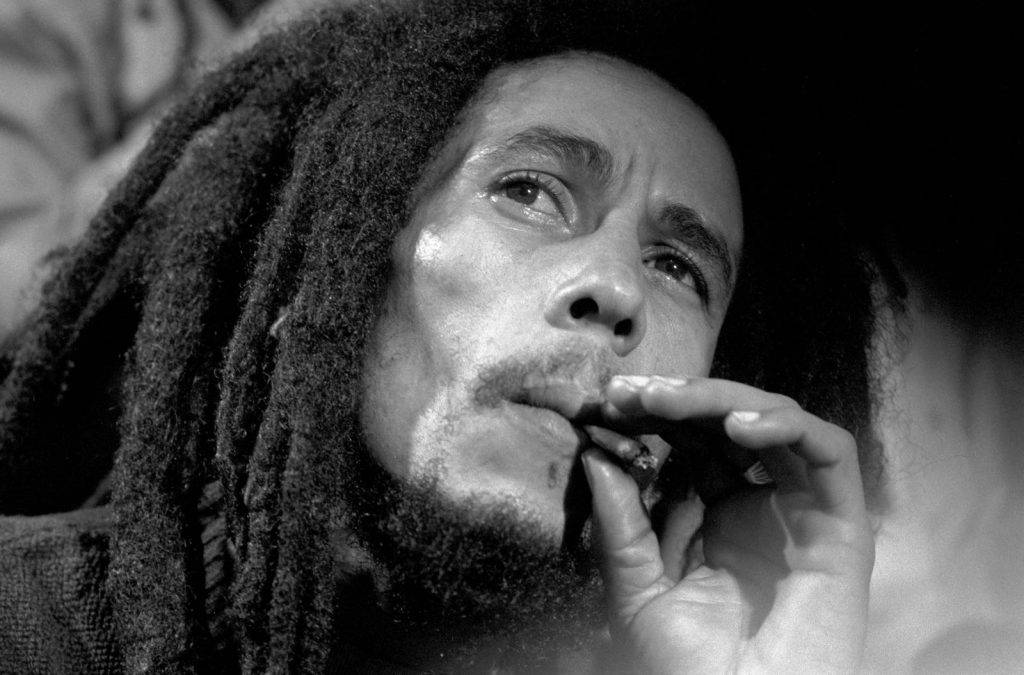
Christians are so accustomed to the idea of faith as woe and self-flagellation — the hair shirt, the solitary cell, Christ’s “bloody sweat and agony” — that Marley’s idea of observance through sensory delight seems almost blasphemous.
It is a theme, a theological position, to which he constantly returns: “Live it up (x4) … give Jah all the thanks and praises” (Crisis); “We’re jammin’ in the name of the Lord” (Jamming).
Although he draws heavily on the language and prophetic tropes of the Christian Bible, he is hostile to the mainstream churches and what playwright George Bernard Shaw called “Crosstianity”: “Feel like bombin’ a church/ Now … that you know the preacher is lyin” (Talking Blues).
Nowhere in his songs is the crucifixion mentioned, and he is utterly removed from the morbid sense of sin and body horror of St Paul, St Augustine and their life-denying heirs.
There is no hell in his songs, indeed no Last Judgement or afterlife in the Christian sense. Life this side of the grave is what interests Marley; heaven, to which the entire black diaspora is invited, is the African millennium.
Nor does he believe in the foul-tempered, gouty old white man who passes for God in the Western imagination, William Blake’s “Noboddady [nobody’s daddy] aloft/ [who] farted and belched and coughed.”
Sin is “Babylon”, which for early Rastafarians meant Jamaica’s oppressive colonial government and police, but which Marley, Peter Tosh and others of their generation broadened to encompass the entire neo-imperial West, including the United States.
“Rasta don’t work for no CIA,” Marley scolds in Rat Race. Indeed, the whole song can be seen as a complaint about the US, its violence, bullying relations with the poor South and “rude” competitive values.
Politics and religion were intertwined from the start of Rastafarianism in the 1930s. Raised as an Anglican, its founder, Leonard Howell, relocated the millennium to Ethiopia and its newly crowned emperor, Haile Selassie (“Might of the Trinity”, formerly Ras Tafari Makonnen), whom he identified as the “Black Messiah”.
Howell was deported from the US, jailed in Jamaica for subversion and locked in an asylum after baiting the authorities, established church and planter elite with his outspoken attacks on colonial rule and white supremacy.
Police repeatedly raided his Rastafarian settlement, Pinnacle — in part because it used and traded ganja — finally shutting it down in 1958.
There is a direct line of succession from Howell to the anti-racism, anti-colonialism and Pan Africanism of Marley, Tosh, Black Uhuru and Burning Spear.
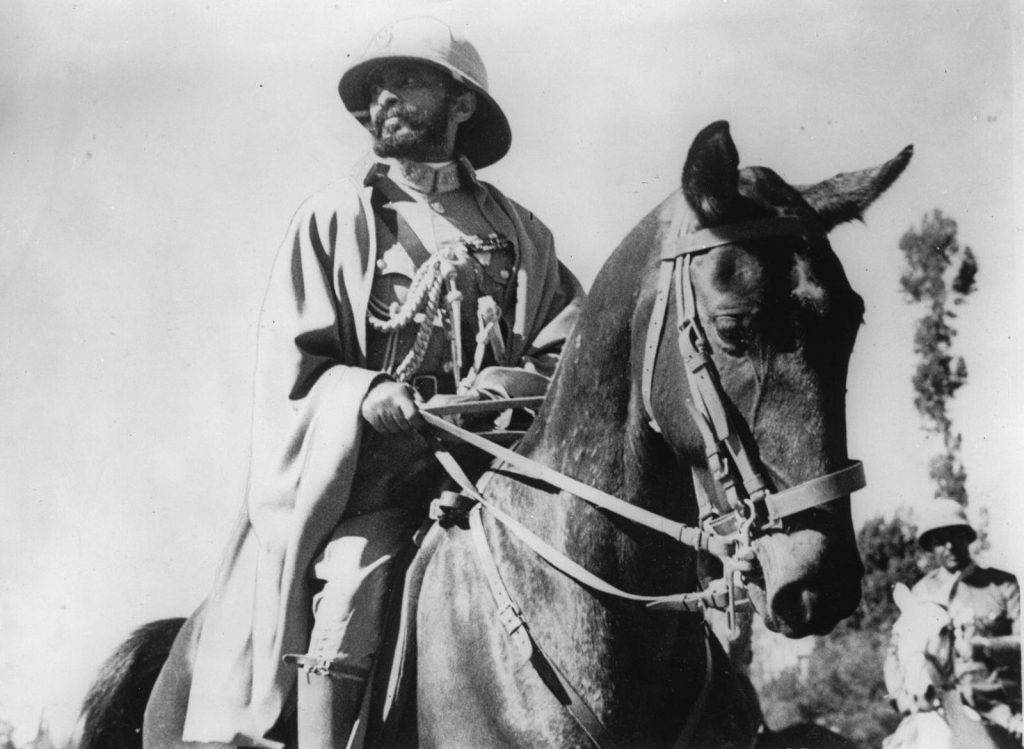
Belief in the divinity of Haile Selassie was and remains a core tenet of Rastafarianism, and there can be no doubt that Marley embraced it. (During Selassie’s visit to Jamaica in 1966 Marley’s wife, Rita, claimed to have seen the scars of the nails on his palms.)
Nine years later the “Lion of Judah” was dead, probably strangled on the orders of Ethiopia’s murderous military junta.
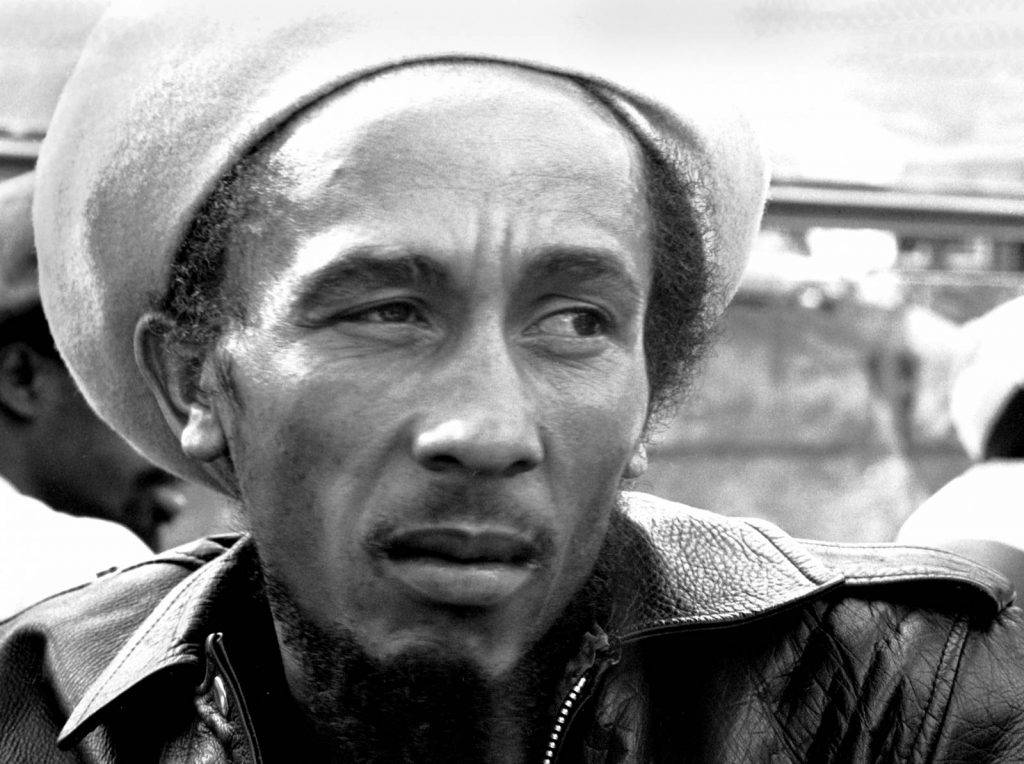
But an article of faith can be factually wrong while embodying spiritual truth. Marley visited Shashemene, the settlement for diaspora Africans built on Ethiopian land donated by the emperor — but significantly, chose not to live there.
His stirring anthem Exodus is at one level about the return of Jah’s flock to their ancestral homeland, from which they were exiled by slavery. But at another, deeper level it is about a spiritual journey to “our Father land” from the corruption, greed and self-serving of Babylon.
“Are you satisfied with the life you’re living?” Marley asks. “We know where we’re going, we know where we’re from.”
Repeatedly, he calls for honest self-scrutiny and nakedness before Jah (I ’n I) as the path to the authentic life: “Open up your eyes and look within” (Exodus); “There ain’t no hiding place from the Father of Creation” (One Love); “Ya runnin’ and ya runnin’/ but ya can’t run from yourself” (Running Away).
Of Marley’s four sacraments, sex — regulated by every society and organised religion, usually to the detriment of women — is the most complicated.
African American theologian Noel Erskine points out that Rastafarian women, subject to the “King-man” or “God-man”, are generally confined to rearing his children and keeping his household.
In his book From Garvey to Marley, Erskine shows how Rastafarianism fuses deep-rooted patriarchal attitudes in Jamaica with the Hebrew Bible’s fixation on female modesty and ritual cleanliness. In line with the Levitical code, menstruating women are considered unclean and may not join in worship or prepare food.
I-Drens (male Rastas) tend to view them as the corrupting descendants of the temptress Eve. Because their hair is “their beauty and their shame” they must cover their heads, while men flaunt their dreadlocks in compliance with Rasta Ital livity (natural living).
At Shashemene this is taken to extremes: women going to market are reportedly timed to guard against infidelity and punished if they return late.
Marley had 12 children with seven mothers, but in matters of sex he was no conventional Rastafarian.
Indeed, he is virtually unique in popular music as a self-styled prophet, Jah’s emissary, who composed some of the world’s most soulful love songs. There is none of the misogyny and strutting machismo that perverts gangsta rap and Jamaican dancehall.
“Don’t shed no tears,” he consoles in No Woman, No Cry. His most romantic album, Kaya, sings of mutual tenderness and protection: “We’ll be together with a roof right over our heads/ We’ll share the shelter of my single bed.” (Is This Love?)
Sung from a woman’s perspective, Precious World is a non-Rastafarian plea for female self-determination. “If you let me be myself/ I’ll be yours forever/ Don’t take from me / What’s mine.”
Waiting in Vain, supposedly about former Miss Jamaica Cindy Breakspeare, mother of Damian Marley, goes further, showing the singer’s suffering self-abasement before the loved one: “It’s been three years since I’m knockin’ on your door/ and I still can knock some more,” he gently pleads.
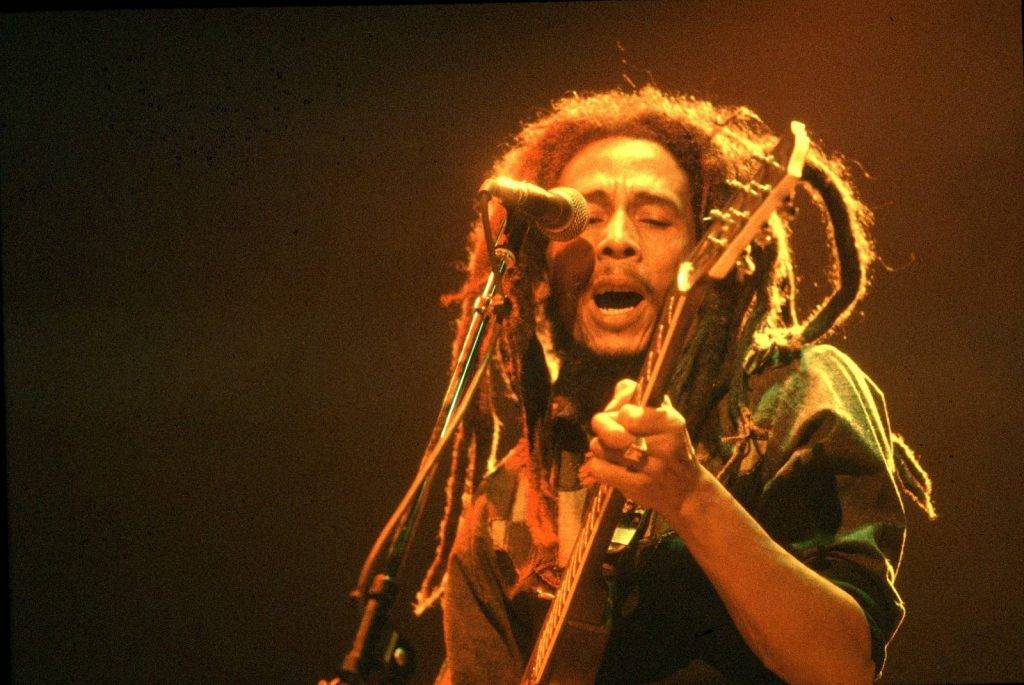
What distinguishes Marley from the mere entertainers is the radiant humanity that shines through all his songs.
By temperament he was a lover of freedom, but Rasta culture — flowing from a small decentralised movement with no hierarchy, liturgy or official dogma — strengthened his sense of being a barefoot prophet, divinely mandated to speak his mind. “There ain’t no rules, ain’t no vow, but we can do it anyhow” (Jamming)
Reggae was the music of the ragamuffins and wanga-guts of downtown Kingston, and Marley spoke for them.
But he also spoke for a vast world community that hungers after bread, peace and justice, and an end to the age-old dominion of the “downpresser man”.
DA is preparing for unrest should ANC lose power in 2024:
In preparation for the possible dip of the ANC majority in next year’s national elections, the official opposition Democratic Alliance is looking at co-opting the international community to ensure a peaceful state transition.
As part of its resolutions, which will be discussed at this weekend’s elective congress, the DA’s federal executive chairperson, Ivan Meyer, has proposed that the DA lead a process to develop a declaration for a peaceful transition post 2024.
The resolution states that the new leader of the party engages with political parties represented in the national assembly on its declaration.
This will include engagements with the international community through foreign diplomats and heads of states for their support in facilitating the peaceful transition.
“The behaviour of public representatives of the governing party does not inspire confidence when they are losing power at various metros across South Africa. Chaos, disruption and the undermining of the democratic outcomes are part of the DNA of the governing party in South Africa. South Africans are, at large, freedom-loving people and want a safe environment to live and work in,” the resolution states.
DA MP Leon Schreiber told Mail & Guardian on Saturday that the DA would not wait for something to go wrong before acting, adding that the party would rather identify any risks beforehand.
He said that South Africa was about to experience traumatic political change in the 2024 elections.
“We have had almost 30 years of one-party rule under the ANC, but we must never forget that even preceding democracy there was one-party rule for 40 years. We are looking at 70 years of entrenched culture — or the idea of South African politics that there is one dominant party in charge.
“The change of government we had in 1994 was a change in regime but it wasn’t a classic election loss in the sense of constitutional democracies around that world. It means that this would be — should the ANC fall below 50% and be removed from government — the very first time a government in the history of this country has been removed from the ballot box democratically in an election where everyone has voted. It has never happened before.”
Schrieber added that the DA also took into consideration the July unrest in 2021 and the occasional outbreaks of violence seen at political settings in the country.
He said that the resolution was something a responsible opposition should take seriously, and was not intended to “cause alarm or sow fear”.
He said the party was looking to have a consensus by society to guard against any kind of disruptions or a repeat of looting to ensure a free and fair election.
He cited Brazil as an example of violence and unrest following democratic elections, and the 6 January 2021 capitol riots in the US as an example of violence in a more “advanced democracy”.
“You could ask yourself if it happened there, why can’t it happen in a country with less experience in democracy.”
Schreiber also warned that all it took for an “insurrection” was one or two senior politicians to refute the outcomes of the elections.
“I don’t think there should be any reason for South Africans to think we are immune to this risk, so rather be safe than sorry.”
He emphasised that state security would need to assess any risk to the elections. The DA would also appeal to South Africa’s international partners — including Russia — to engage the ANC-led government on a peaceful transfer.
“I think we must question and ask if the state security agency is preparing for this. We know the scale of corruption and state capture that has paralysed that institution … we have seen what happens [when] the international community is caught unaware,” he said.
“In Zimbabwe, the election was something the international community was not prepared for. We have seen the way the ANC picks sides in Russia’s invasion of Ukraine. The Russian ‘democracy’ isn’t exactly a role model of peaceful transition and election integrity, so that only increases the urgency of this resolution.
“We are asking not only South African partners but countries like Russia [if they] will raise their voice if there is any kind of undermining democratic change of government in South Africa,” he said.
Submit and get free exposure here: Showcase Your Business | Advertise Your Special Offers.
