DA’s Francois Rodgers advocates for strict compliance, clean audits in KZN treasury budget vote:
KwaZulu-Natal’s new finance MEC, Francois Rodgers, said on Wednesday that striving for clean audits and fulfilling service delivery commitments were “non-negotiable” for all municipalities, departments and public entities in the province, despite budget constraints.
“We must state that this government will implement a strict zero-tolerance approach to non-compliance to treasury regulations and prescripts. We want to ensure accountability,” Rodgers added.
He was speaking at the KwaZulu-Natal legislature in Pietermaritzburg while tabling the R680.901 million provincial treasury budget vote for 2024-25.
As a result of fiscal consolidation, R27.88 million had been cut from the budget, he said, a fate that other departments had also suffered.
That cut is expected to significantly impede provincial treasury’s ability to hire more accountants and auditors to assist departments, municipalities and state-owned entities to achieve clean audits and ensure financial governance. Rodgers said it was imperative that coats were cut according to the fiscal cloth, and that service delivery and clean governance remained a priority.
He was appointed to the portfolio on 18 June, following a power sharing agreement reached with the Inkatha Freedom Party (IFP) and others after the ANC lost its provincial majority in the May elections.
Known as a stickler for running a tight financial ship, within his first week, Rodgers closed the treasury’s secondary office in Durban, saying it would save the the department about R1.1 million annually.
The provincial treasury is often lauded as a beacon of good governance among other KwaZulu-Natal government departments, none of which have escaped scrutiny for various corruption scandals. This year marked the 16th consecutive clean audit for the department, said Rodgers.
He also said there would be a cut of 25% on nice-to-haves, including subsistence and travel (S&T). In the last financial year, a billion rand had been spent on S&T, he said.
He highlighted the severe fiscal constraints his department and others would be working under, saying that innovation was needed to keep the administration “financially afloat, cash positive, transformative — both economically and socially, and deepen good financial governance in all departments, municipalities and public entities”.
The provincial treasury is known as an historic under spender — one of the key reasons being the high level of vacancies in the department — but Rodgers said that preliminary year-end results indicated “that we have spent 98% of our budget at the end of the 2023-24 year and achieved 89% of all targets set, whilst a further 15 targets were overachieved due to the increase in demand for services”.
Although a commitment had been made to fill 146 posts in the department by 31 May this year, only 89 had been finalised, said Rodgers, the result of a lack of suitable candidates, posts being filled by internal candidates and other vacancies thus occurring, or resignations, with those who resigned moving to other departments.
While tabling the R784.153 million budget for the office of the premier on Tuesday, Premier Thami Ntuli said his office would roll out a new forensic case management system to help keep track of all forensic investigations across the provincial government. The system would make it easier to record, organise and monitor the investigations, he said.
The slow pace of forensic investigations by the premier’s office under previous ANC administrations, ostensibly for the protection of ANC leaders in government, had long been a bone of contention for both the DA and IFP.
At one point, in 2023, the office of the premier’s forensic investigations unit had on its books 73 unresolved cases, according to a report presented to the province’s standing committee on public accounts.
Ntuli also allocated R77.507 million to the Zulu royal household, slightly less than the R79 million allocated in 2023. The 2023 allocation was a hike of R12 million from the previous year.
Talkin’ bout a revolution: The cases of Bangladesh, Kenya and Nigeria:
In the early 1960s and 1970s, the generation of young people in the United States almost brought the country to the brink of revolution. Among them are people who cannot be ignored such as Stokely Carmichael, who marched with Dr Martin Luther King Jr. He made popular the phrase “Black Power” while a student activist for civil rights as he rose up the ranks of the Student Nonviolent Coordinating Committee (SNCC) at a pivotal time in US history.
In the South, the SNCC organised sit-ins at the counters of segregated restaurants, sponsored freedom ride on interstate buses to segregated states, registered black people to vote and supported country-wide protests against the Vietnam War by effectively breaking the draft with the slogan “Hell no, we won’t go.” We can also argue that the SNCC inspired many other movements and organisations that either joined the civil rights movement or followed after, such as the women’s movement and the Vietnam Veterans Against the War.
Carmicheal married the beautiful South African singer, Miriam Makeba, and moved to West Africa. He became known as Dr Kwame Ture and championed Pan-Africanism. In many of his discourses, Ture advocated for revolution, just like many of his contemporaries — arguing that the role of students in any revolution is simply to spark the revolution, while the peasants and masses carry it to the end. This observation makes sense in the historical context but falls flat on its face if we look at the struggles of today. Simply put, times have changed, and dynamics are no longer the same.
Tracy Chapman, who gave us the song “Talkin’ Bout a Revolution in the early 1980s, says: “Don’t you know talkin’ about a revolution? Sounds like a whisper.” But nothing is a whisper given the advent of social media. Modern revolutions have all been entwined or associated with X, TikTok, Facebook and other platforms. Good examples include the Arab Spring and Brexit.
Bangladesh student protests
The news of revolution coming out of Bangladesh, after weeks of student protests and with more than 300 people dead, according to Al Jazeera, should be a lesson in safe logic. The uncompromising student-led protests forced the prime minister to flee to India. It’s a victory for the protestors and came at a huge cost of human life. But, as Malcom X said, “Revolutions are bloody.” The ousted prime minister, Sheikh Hasina Wazed, is a daughter of Sheikh Mujibur Rahman, the first president of Bangladesh and considered the father of the nation. He was assassinated in 1975 by the military junta that took power through a coup d’etat. Sheikh Hasina was out of the country at the time. She was the only member of the family that survived. Sheikh Hasina returned to Bangladesh and was prime minister from 1996 to July 2001 and again from January 2009 to August 2024.
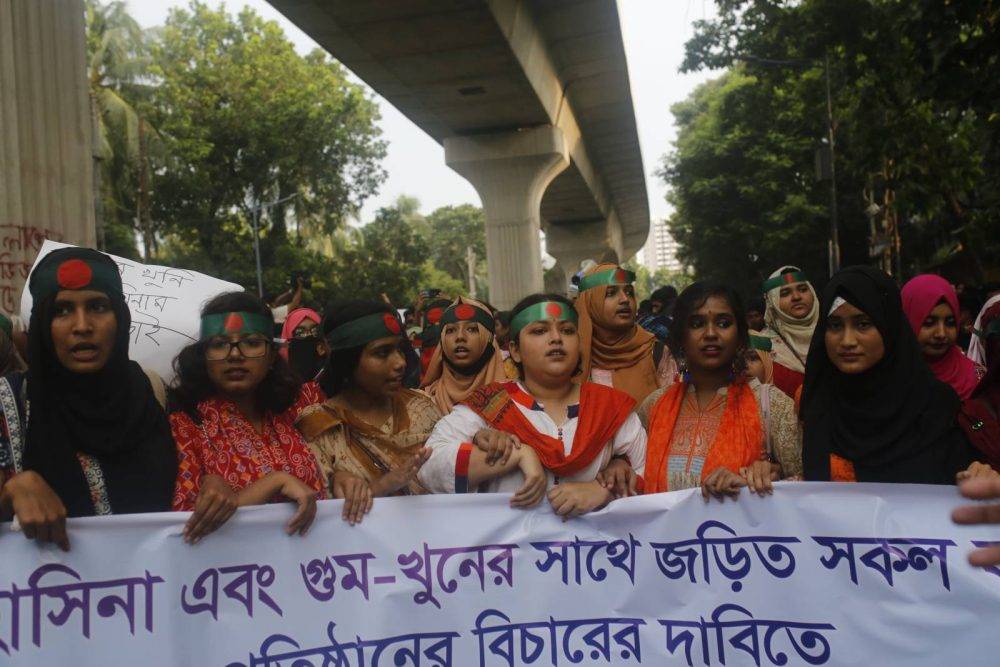
It is unthinkable that the experienced and skillful politician failed to correctly read the mood in the country. Had she done so much earlier, she could have found ways to manage the situation. Like many of the ruling elite in other countries, Sheikh Hasina underestimated the voice of the downtrodden. They overlook the real issues people are faced with; they close their ears to the whisperings of those who mean well for the people. Instead, the upper class assumes that the masses are stupid. In such situations there is a tendency to try to pacify the angry mob by handpicking a few bourgeois fellows to speak for the aggrieved. This is a clear miscalculation, because the bourgeois class do not really have the interest of the masses at heart. Hence, they fall short to articulate the thoughts and feelings of the agitators of change.
Another failed strategy by those in power in dealing with protestors is unleashing the police or even the army to crackdown on dissent. This has never worked anywhere, especially in our modern era. Thus, if politicians were good students of history, they would never consider such an option. The dilemma of strategically using law enforcement for crowd management and maintaining law and order, as opposed to cracking down on opposition or protestors with brutal force, is real. A smart leader navigates this thin line with skill and tact.
Instead, Sheikh Hasina will be remembered for having the blood of young people on her hands. A testament of these young people’s victory is that an interim prime minister of their choice has been installed, a man who was critical of the previous regime. Muhammad Yunus is a Nobel peace laureate and a respected figure. Students refused to hand over power to the military, choosing a civilian interim government. This is a unique state of affairs and demonstrates that contrary to the belief that the role of students is to “spark” a revolution. Instead they not only sparked the revolution, but owned the revolution and saw it right up to the end of the road.
Kenyan tax protests
Another case study of protestors and a possible revolution is the predicament of Kenya today. Reports from the Human Rights Commission in the country indicate that since the beginning of protests in June 2024, about 50 people have been killed. The government of Kenya, led by President William Ruto, introduced a finance bill that would raise taxes. Slowly, this bill became a topical issue at dinner tables in people’s homes, in workplaces, in schools and then the unforgiving streets of social media. It was evident that Ruto had one problem — the protestors did not have a top-down hierarchy to guide their operations or stage protests. It was spontaneous, unplanned and went all over the place. This made it difficult for the government to call for negotiations or meetings to resolve grievances.
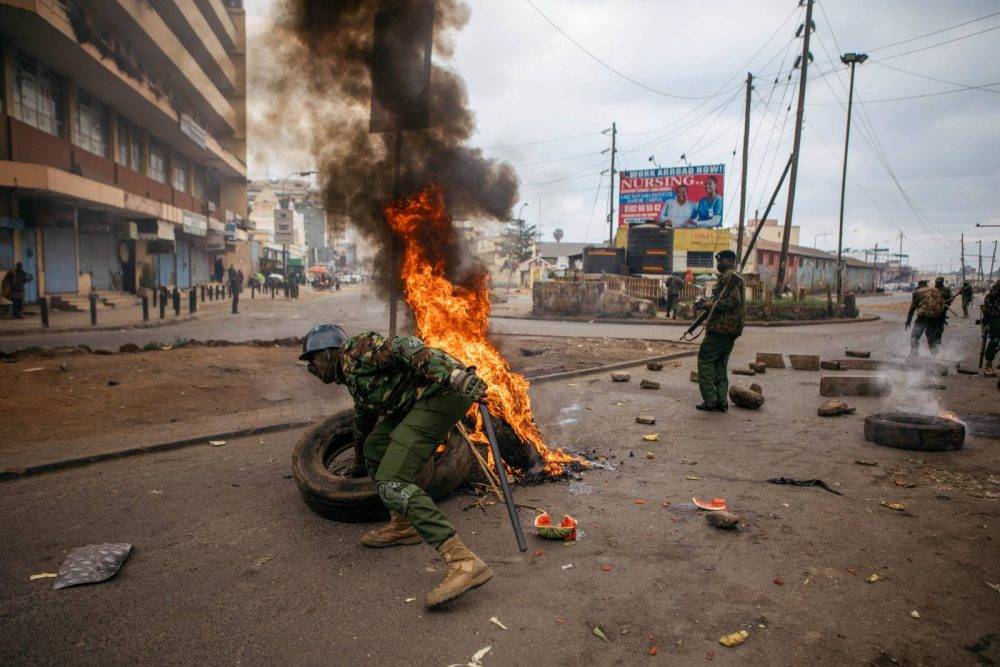
The students took centre stage with the influence of social media. Their demands were clear and uncompromising. Before long, the government had no option but to withdraw the controversial bill and give in to the demands of the masses on the streets of Nairobi. The president went a step further and fired all his cabinet ministers with the exception of his deputy, and one other strategic cabinet position. This was unprecedented, and to a larger extent a victory for the protestors of this generation. Unfortunately, this was not to be satisfactory for the protestors, who have gone back to the streets with a new set of demands — including that Ruto resign with immediate effect.
But, unlike the protest against the finance bill, it remains questionable as to whether these resurfaced protestors on the streets of Nairobi can or will achieve their desirable results. The drive and the momentum of these protestors seems different from the initial group of young people who fought their government over the discredited 2024 finance bill. Nonetheless, only time will tell because, as in any revolution the struggle tends to take different forms as dynamics change. Kenya may as well teach us unprecedented lessons when all is said and done.
Is Nigeria the next protest frontier?
The bug of protests by young people has spread to Nigeria. Deaths have been reported, with Amnesty International saying 22 people had died and the police giving a figure of seven from accidents.
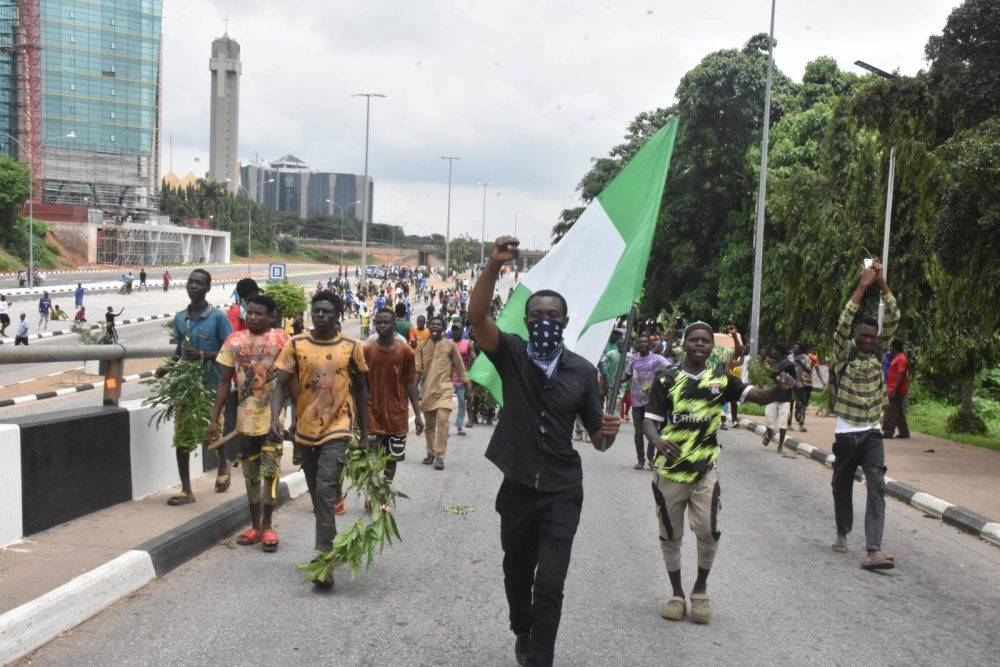
After the police crackdown and President Bola Tinubu calling for a pause in demonstrations, the protests have for now diminished. But the government is worried about these protests against the soaring cost of living. To squash these protests, the following questions have to be answered: will the young people do to Nigeria what we have seen in Bangladesh and Kenya? Can the demands of the protestors be met by the Nigerian government without commotion? Are these protests in Nigeria spontaneous and unplanned? Do they have any form of hierarchy, with a top-down leadership? Is it the young people who are protesting or are there other competing interests?
The state still withholding justice for victims of the Marikana massacre:
Thobile Mpumza was one of the last people to be executed at “scene 2” at Marikana on 16 August 2012. He was shot 13 times from the front and back, suggesting that he was shot at by more than one police officer. A visual recording of his death shows police officers gathered around his body, gloating about his murder and swearing at him as he lay dead.
According to evidence cited in the families’ heads of argument submitted to the Farlam Commission of Inquiry, the police later moved his body, preventing the exact site of his death from being analysed. Mpumza was only 26 years old when he died. No one has been held accountable for his death, or the way in which the circumstances of his death had been misconstrued.
Twelve years later, the Mpumza family’s struggle with the state’s lack of accountability magnifies the lack of justice for the victims of Marikana. Mpumza was known to his family as a quiet, caring and supportive brother and uncle. After the death of his parents, he became the breadwinner of his family. His work at Lonmin mine enabled him to provide for his four siblings and nieces and nephews.
The state has also refused to compensate the Mpumza family for loss of support despite having settled claims for 34 of the 36 families represented by the Socio-Economic Rights Institute of South Africa (Seri). The state argues that Mpumza did not have a legal obligation to support his siblings and their children, even though he did so in practice.
The state has further not made any progress on four other claims that were submitted on behalf of the family in August 2015 by Seri. These claims include a request for an apology from the state, compensation for medical expenses for the family, as well as general and constitutional damages.
In total, the state has settled claims to the value of about R331 million paid to almost 300 miners who were injured and arrested in the aftermath of the massacre, as well as 35 families, which includes a family that was represented by the Wits Law Clinic.
READ MORE:
A year ago, solicitor general Fhedzisani Pandelani, who oversees litigation on behalf of the state, remarked at a press conference: “I think we [ the state] have done enough. The question that needs to be asked is, ‘how long is a piece of string?’ … These matters have been with us for 11 years and at some point in time we really, really need closure … Just imagine government, from taxpayers money, something that is audited, paying R331 million. Eleven years down the line people still flock back, the same claimants saying, ‘No. By the way, it’s not enough.’ It is not legally permissible.”
He also referred to the families as “a bus-load of people” claiming to be related to the deceased miners, suggesting that the families have been opportunistic and dishonest in their pursuit of general and constitutional damages. Factually, the families represented by Seri constitute about 315 individual claimants, some of whom have since died, with families that ranged from two to about 20 members.
According to recent data on household composition, at least 43% of families in rural South Africa, where most of the miners were from, are households in which extended family members live together and that about 20% comprise six or more members. Rural households are also more likely to be skip-generation (grandparents living with grandchildren) and triple generational households than households in urban areas.
Many South African households depart from the Eurocentric notions of the nuclear family because they have been shaped, in part, by our history and the structure of sectors in our economy. For example, the mining industry has depended on cheap migrant labour entrenched in the colonial and apartheid eras. This ruptured black families while generating profits for a privileged white minority. Data on household income underscores this reality, especially in regions such as the Eastern Cape, home to a significant portion of the Marikana victims. Here, remittances constitute about 18% of household earnings, coupled with social grants that contribute 65%. South Africa’s high unemployment and deepening poverty explain the dependence of extended family members on the breadwinners.
The families’ claims can, in financial terms, be juxtaposed with the estimated millions of rands that the state has dedicated to legal costs to avoid civil and criminal accountability. The state’s refusal to compensate the Mpumza family for any portion of their claim, or tender a public apology to the families of the miners, has instead denied them closure, and they continue to struggle to repair their families and to make ends meet.
The state has failed, after all these years, to fully appreciate the glaring reasons families of the massacred would seek damages, or even an apology. This could be related to how the state views the events of that day — not as a massacre, but as a “tragedy” or an “unfortunate incident”, which is how the state refers to it.
With the12th anniversary of the massacre, we urge the state to do all that it can to bring closure to the families. The state needs to apologise to the families of victims of the massacre and must take steps to expedite finalising reparations. The justice department should prioritise channelling the necessary resources to the National Prosecuting Authority and the courts to expedite the prosecution and trial of criminal cases to bring truth, justice and closure for the victims and the country. We cannot allow the state to act with impunity and escape accountability or its duty to deliver justice to victims of Marikana. We have a responsibility, as a country to keep the memory of Marikana alive for it to never happen again.
Thato Masiangoako is a researcher and Justin Winchester is a litigation intern at the Socio-Economic Rights Institute of South Africa.
Submit and get free exposure here: Showcase Your Business | Advertise Your Special Offers.