
Democracies must adapt in the age of disinformation:
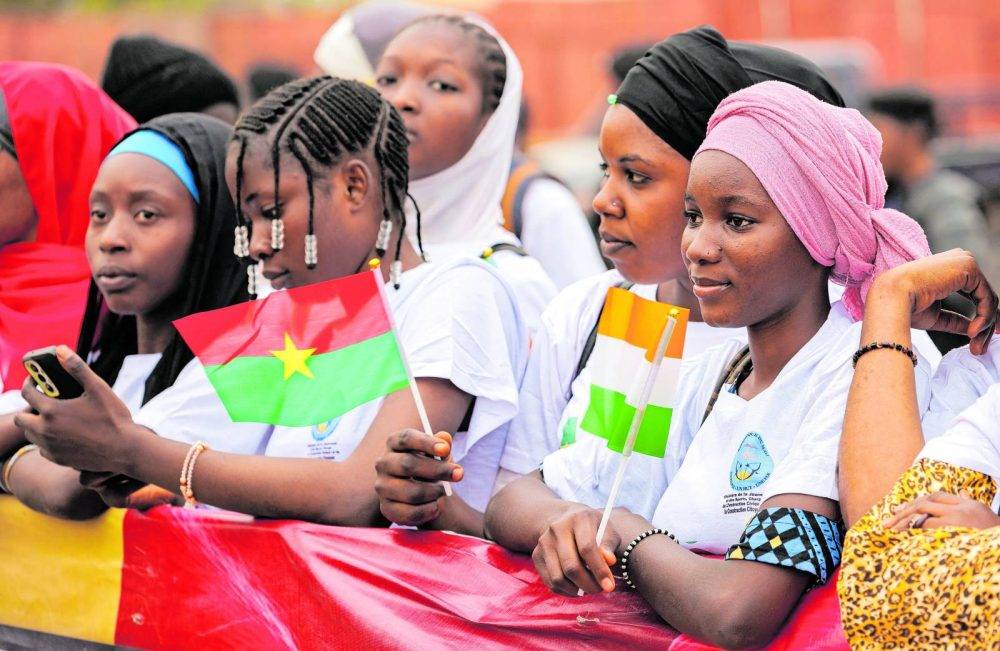
On 16 August, the Alliance of Sahel States, formed by Mali, Burkina Faso and Niger — all led by military juntas that withdrew from the Economic Community of West African States — celebrated its first anniversary. In recent years, military takeovers have increased in West Africa, erasing years of democratic progress.
These coups are rationalised as responses to insecurity and corruption, but they are increasingly primed by disinformation campaigns that secretly stoke false narratives to soften the ground for democratic backsliding. Foreign actors orchestrate nearly 60% of these campaigns and have an expanding arsenal of algorithmic tactics to distort information to their advantage.
Through social media manipulation and other foreign information manipulation and interference (FIMI) techniques, these campaigns inflame political discourse and frame democracy as a failed Western-imposed system while positioning authoritarianism as a more effective alternative.
Last month, a group of experts and stakeholders convened in Lagos, Nigeria, to take stock of this problem and strategise collaborative responses. Good Governance Africa participated on the back of a recent edition of its quarterly publication, Africa in Fact, which tackled artificial intelligence and the rise of disinformation.
The gathering of about 30 counter-disinformation researchers and civil society practitioners examined how FIMI contributes to democratic erosion in Africa and embraced a collective defence framework. Experts highlighted how disinformation campaigns — frequently originating from Russia and pro-Russian operatives (40% of known campaigns in Africa) — have intensified the spate of military coups, especially in the Sahel, and outlined how democracies must update and invigorate their information spaces for this new reality.
While democratic dividends and support in Africa outweigh autocratic ones, democracies must deliver tangible progress, including in the information space, to improve people’s lives and counter false narratives.
The Sahel region is a telling case of how disinformation can destabilise fragile democracies. In recent years, Islamist insurgencies, economic hardships and weak institutions have opened the door to a feeling of disaffection with democratic governments among some segments of society. Disinformation campaigns have taken advantage of these vulnerabilities, portraying democracy as inept, foreign and unable to address the region’s problems.
They also position the West as the source of these problems, exploiting resentment of French policies across much of francophone West Africa. Russia, for instance, has been linked to media outlets and social media accounts that clandestinely broadcast narratives of Western hypocrisy and exploitation. Russia’s tactics have also included amplifying terrorist propaganda against Sahel governments before the region’s military coups.
The campaigns, in turn, offer authoritarianism as a pragmatic and even necessary response to Africa’s complex problems. They have also grown to include claims of a “new world order,” where multipolarity, noninterference and the rejection of democratic governance models are promised to change the fortunes of African countries.
These messages resonate in some quarters of West Africa where citizens feel let down by their governments, powerless in the international system and disillusioned by the slow pace of democratic reforms. When democracy is perceived as a source of instability, the path to authoritarianism can seem less perilous, even desirable.
This message plays directly into the hands of authoritarian sympathisers, creating fertile ground for coups and delayed transitions back to civilian rule. Military juntas, once in power, often justify their takeovers by promising to restore order and independence from foreign influence, but their track records often suggest otherwise.
A recent investigative report shows that support for the Sahel juntas is dwindling because of their failure to deliver on promises, as well as the harsh tactics employed by Russian mercenaries against the civilian population.
Afrobarometer reports that Africans’ satisfaction with democracy has dropped from 50% in 2011 to 39% in 2023. Similarly, over the past decade, support for democracy has fallen by seven percentage points (although still the most popular system of governance), while opposition to military rule has weakened by 11 points.
These trends reflect a search for change and a resurrection of military rule’s reputation, driven partly by its promotion by disinformation networks.
Despite the problems of real-world democracies, the past three decades have shown that African democracies deliver better governance (particularly in government effectiveness, security and corruption control) than autocracies, which allows citizens in these systems to derive greater benefits from the state.
Democracies, though imperfect, provide a system where citizens have a voice in their governance, leaders are accountable and human rights are protected. Democratic governments, especially those that are inclusive and transparent, are better equipped to manage resources and deliver economic growth, services and security.
Moreover, democracies offer fundamental freedoms and rights that disappear under authoritarian regimes. Democratic principles such as liberty, equality and justice are essential to human dignity and are being eroded in Africa’s coup-hit countries. Although authoritarian regimes may offer short-term excitement through fast-paced decrees and displays of might, they do so at the cost of personal freedoms, political pluralism and human rights.
Over time, such systems breed discontent as citizens become increasingly aware of the limited effectiveness of authoritarian systems and the harsh rule they impose on the civilian population. By contrast, democracies allow for a more peaceful transfer of power governed by the rule of law and offer citizens a voice in decision-making.
To counter the growing appeal of authoritarian narratives, Africa and other democracies must reassert these core principles and re-equip their information sectors to reflect and enable these principles. But beyond rhetoric, democratic governments must deliver tangible results for their citizens.
Good governance, economic opportunity, social inclusion and accessible and accurate information are key to making the case for democracy. When citizens see their lives improve under democratic rule, the appeal of authoritarian alternatives diminishes.
The very nature of democratic governance depends on the ability of citizens to make informed decisions based on factual information. Put simply, information is the air democracies breathe.
One reason we trust democracy as a system of governance is the idea that it can deliver better decisions and outcomes than autocracy because the “wisdom of the crowd” outperforms any one individual. But these advantages quickly become vulnerabilities when “the crowd” is disinformed and displaced by inauthentic voices. Even advanced democracies grapple with countering disinformation without infringing on freedoms of speech and thought.
In Africa and elsewhere, strengthening democratic institutions must go hand in hand with securing the information space and orienting it toward constructive democratic exchanges. One way is through the fence framework, a ground-up strategy that involves creating protective barriers against disinformation and manipulation.
This framework involves three key steps: collecting robust data on disinformation (posts), building networks and collaboration across sectors (slats) and informing the public with targeted, trusted communication (signs). Examples from countries such as Taiwan and Sudan (before the current civil war) show that local actors, supported by shared knowledge and resources, are best placed to lead such efforts.
Beyond this, governments, civil society, the private sector and other stakeholders must work together to promote media literacy, regulate digital platforms and develop mechanisms to counter disinformation, acting as defenders of these shared spaces so that they are secure from interference.
Ultimately, democracy remains Africa’s best hope for good governance and the truth-based information spaces that bind its social contract. The moral, developmental and security advantages of democracy are clear. But they must be communicated effectively, especially in the face of well-funded and well-organised disinformation campaigns.
More importantly, the strongest argument for democracy comes when democratic governments deliver real, tangible benefits — such as supporting the development of healthy and robust information spaces — that improve and enrich the lives of their citizens.
Nnaemeka Ohamadike is a senior data analyst at Good Governance Africa. Mark Duerksen is a research associate at the Africa Center for Strategic Studies.
African businesses favour intra-continental trade over global markets:
African businesses increasingly prefer to trade across the continent’s borders over out-of-the-continent markets like Asia, the US, and Europe, due to the rising quality of made-in-Africa goods, lower market prices, and accessibility.
The latest Standard Bank Africa Trade Barometer, which tracks 10 African countries among the 54 signatory nations of the African Continental Free Trade Area Agreement (AfCFTA) shows 37% of the businesses prefer partners based in African markets compared to Asia(24%), Europe(16%) and North America(3%).
Businesses from Namibia (75%), Tanzania (48%) and Angola (43%) showed the highest affinity for cross-border trade compared to firms from some of the continent’s biggest economies- Nigeria (34%) and Kenya (34%) with a huge preference for Asian markets like China.
“Businesses surveyed report that trading within Africa is easier than trading with the rest of the world. This observation underlines their preferences in trading partners, revealing a significant lean towards engaging in commerce with African markets,” said authors of the Barometer.
Quality of goods (72%) was the most significant consideration for businesses looking to trade with partners in Africa, followed by market prices (51%) and market accessibility (38%).
Rising intra-African trade sentiment among surveyed businesses is centred on good trading relationships and affordable transportation that have significantly increased from 5% and 2%, respectively, in May 2023 to 15% for both in August 2024.
“This result contrasts the perceptions of surveyed business on world trade, with trading relationships taking strain due to the high transport cost,” said the survey.
Ongoing implementation of the AfCFTA has been the most significant contributor to easing trade barriers across country borders, propelled by the Guided Trade Initiative (GTI) that started with eight countries in 2022, trading in select goods to catalyse trade through preferential tariff arrangements.
Up to 30 more African countries are expected to be covered by the GTI by the close of 2024, as well as an increase in the scope of products to be traded, including biopesticides, packaged moringa, tea, coffee, and meat products.
Other initiatives under the AfCFTA are also emerging, opening up the regional borders to small businesses.
In the first week of November, Kenyan Micro, Small and Medium Enterprises (MSMEs) shipped their first exports of assorted products to South Sudan, Zambia and DRC under the AfCFTA Framework in an initiative dubbed TradeConnect.
Over the next 12 months, the TradeConnect initiative aims to mobilise and transport 1000 containers of diverse goods worth US $ 1.2 million across the continent.
The Kenyan government hopes the TradeConnect initiative will improve Kenya’s exports by 10 per cent annually and cut the logistics nightmare for exporters by 30 per cent.
A growing intra-African trade infrastructure development connecting African regions, for instance, the Standard Gauge Railway (SGR), which connects the port city of Mombasa to the capital, Nairobi, and planned extension to Uganda, is also seen easing the cost of goods and faster lead times across borders.
Once fully operational, the SGR will cover approximately 3,800 kilometres (2,400 miles) and link Kenya to Uganda, South Sudan, the Democratic Republic of the Congo, Rwanda, Burundi, and Ethiopia.
The sentiments positively impacted intra-African trade as a percentage of total African trade, with the Barometer showing it rose slightly from 13.6% in 2022 to 14.9% in 2023.
Albeit at a slightly larger scale, the majority of surveyed African businesses cited good quality products (84%), fast response times (82%), and the low cost of importing (79%) as the most important elements in doing business with China.
The nature of African business’s involvement in trade with China is centred on importing final goods and services (56%), importing raw materials (39%), and buying final goods and services from Chinese wholesalers operating in Africa (16%).
A mere 3% of surveyed businesses favour trading with US-based companies, which is most common in Kenya, where 8% of surveyed enterprises desire to deal with American firms.
The low favorability rating across the ten markets, the Barometer said, is driven by businesses reporting high shipping costs (50%), high tariffs and taxes (37%), currency fluctuations (28%), and longer lead times (27%).
“This aligns with macro-level trade data, albeit to a lesser extent, with imports and exports between the two regions(US-Kenya) declining by 7.3% and 6.2%, respectively, between 2022 and 2023,” the survey reports.
— bird story agency
How nutrition, mental health and food choices fuel South Africa’s obesity crisis:
Food is a language we all understand.
Along with touch, it is the way we are invited into our physical bodies moments after we are born.
We are designed to seek nourishment in its many forms — for pleasure, fortitude and growth and development. It’s fascinating that this primal, simple fact of life has evolved with modernity to be the root of much of our well-being undoing.
And while our waistlines are so much wider, our nutrient deficiencies are equally a heavier burden of disease.
In the most recent investigation into food intake and nutrition of South Africans, the Human Sciences Research Council looked at 100 variables affecting a cohort of 34?000 people.
It found that 69% of obese adults lived in resource-constrained households where food choices were devoid of nutrients. 30% of women of reproductive age are iron deficient.
More than half of the global population is vitamin D deficient. More than two thirds of women are either obese or overweight. KwaZulu-Natal had the highest incidence of obesity, at 39.4%.
At the same time, 4% of women will be diagnosed as anorexic in their lifetimes, and a much larger percentage will fall on a spectrum of disordered eating habits and body dysmorphia.
Too much of anything is never a good thing. Your fat cells are metabolically active, and while we all need some subcutaneous fat for warmth and scarcer days, and a cushion to break a fall, an excess of adipose tissue contributes to an inflammatory soup coursing through your veins and affecting your every organ.
Nervous system regulation is a central concept in popular wellness culture today. Everyone is contemplating their vagus nerve.
We are all familiar with the accelerators and decelerators of the nervous system. What the body winds up, it also winds down and somewhere on that fulcrum is a harmonious balance that keeps your heart beating and your psyche mostly serene.
This, of course, is in ideal circumstances or in a mind where psychic maturity and perspective reign. The mental health crisis, with more than a third of South Africans having been diagnosed with a common mental health diagnosis in their lifetime, suggests that the serenity of this balance is becoming more elusive.
There are many pieces that contribute to this great undoing, but a collective response to physical and psychological dis-ease is reaching for crisps and a chocolate.
With fast and junk food being the cheapest and easiest to get, self-soothing with refined carbohydrates is even easier than self-soothing with alcohol.
I feel like a broken record perseverating about the food and advertising industry and how they feed into this burden of disease.
How often do you see a billboard of a muscular, vibrant human body enjoying a bowl of organic spinach or munching on a carrot? No, the images idealise alcohol, burgers, chips, sugary drinks and vapes. They are even beginning to glamourise bodies that carry unhealthy extra adipose tissue.
Cultural norms should not be shifting towards diabetic bodies with hypertension and heart disease. I know this is sensitive ground. There are so many factors that contribute to body shape, but if we rewind just 50 years and compare, we really are shape-shifting — and not in a healthy way.
It’s no accident that the other big arms of the capitalist beast feeding this problem include Big Pharma, who are there with a side order of antidepressants and a needle full of appetite suppression. A salve for the ills spread by our food system.
One of the challenges we face when treating psychiatric disease is the metabolic adverse effects associated with most of the drugs in this armoury.
For a patient whose mood symptoms might be linked to their body image or an underlying inflammatory problem, adding an antipsychotic or an antidepressant will often result in weight gain.
And what about endocrine disruptors? These molecules can mimic our endogenous hormones and stimulate or block the receptors that they act on. According to the Endocrine Society, there are nearly 85?000 human-made chemicals in the world, and 1?000 or more of these could be endocrine disruptors.
This discovery began when studying an adverse effect of the drug diethylstilbestrol, which was administered to pregnant women to prevent miscarriage. The girl children of these women suffered from a rare form of vaginal cancer.
Many links and associations have been drawn between conditions such as attention deficit hyperactivity disorder, cancer and certain chemicals that we are all exposed to through skin, diet, air and water.
What makes these associations so difficult to prove is the multifaceted influences that conspire to make a disease profile express itself.
Another contributor may be the steroid hormones we are exposed to through our water systems. Studies observing the feminisation of aquatic life have raised concerns about the levels of sex hormones excreted through sewerage. More and more data is being gathered to expose a new kind of pollution that many of us don’t think about.
Designing hyperpalatable foods is a career choice that didn’t exist before the pandemic of adult and child obesity. Perfect combinations of unnaturally occurring fat, salt, sugar, crunch and carbs are messing with our satiety signals and tricking our brains into needing more.
The jury is out on whether we can compare drug addiction to food addiction.
In rodent experiments, healthy and cocaine-addicted rodents will choose a sugary drink over a cocaine dose.
Our brain’s reward system is designed to seek out calories to fortify us against leaner times. Hyperpalatable food not only cultivates unhealthy bodies, but also reduces cognitive function, memory and learning — most notably in the developing brain.
According to the World Health Organisation, the worldwide prevalence of obesity more than doubled from 1990 to 2022. Other than our environment, what could have precipitated this escalation? Twin, family and adoption studies have estimated the heritability of obesity to be 40% to 70%. But it probably accounts for less than 5% of the increase in the current burden of disease.
We also know that less than 5% of other chronic diseases are heritable, so it feels too convenient to blame obesity on evolution alone.
We know that our genes load the gun, but our environments and choices pull the trigger. We can switch off obesogenic genes by choosing lifestyles that support healthy bodies.
When we use our bodies in the way that they were designed to be used (moving, exerting, dancing, leaping); when we seek nutrition for the amino acids and fatty acids that our bodies need for fundamental health, then we switch these obesogenic genes off and we stave off diseases such as hypertension, diabetes, depression and cardiovascular disease.
Once a body has been obese for a prolonged period of time, it becomes almost insurmountable to lose the accumulated weight. The body holds on to fat. In the face of a reduced caloric diet, an obese body will increase its desire for extra calories and slow its metabolic rate.
The uphill battle against weight loss for a very overweight body is real and measurable. The discomfort of carrying extra weight on your joints is real and measurable. The effect of obesity on a patient’s quality of life is overbearing and mammoth.
We have a responsibility to our children and our species to halt the engines that feed this insatiable beast. Say no to Coca-Cola and fruit juice. Say no to deep-fried chicken and processed meat. Say no to microwave dinners in front of a television.
Say yes to the Earth’s bounty and wisdom. What you feed your body designs your brain. We can’t afford any further dumbing down.
Dr Skye Scott is a family GP and co-owner of Health with Heart.
Submit and get free exposure here: Showcase Your Business | Advertise Your Special Offers.
