Dialogue for democracy: We need to deliver the Bill of Rights:
South Africa stands at a pivotal moment. The proposed national dialogue initiative is not just a platform for discussion, it’s a vital step towards making our collective aspirations a reality. This is our chance to ensure that the principles of the Bill of Rights are not mere words on paper but are lived experiences for every South African.
The Bill of Rights is the heartbeat of our democracy, enshrining the freedoms and protections that define our nation. It guarantees equality, dignity and freedom for all South Africans, promising a society where everyone has the opportunity to thrive. Yet, despite this powerful document, the reality for many falls far short of these ideals. We see glaring economic disparities, pervasive social injustices and a crisis of confidence in our democratic institutions.
Our nation’s journey has been marked by both triumphs and trials. Although we have made strides in establishing a democratic society, deep-seated issues of inequality and division persist. The national dialogue must address these systemic problems. It must tackle the glaring economic disparities that undermine our Bill of Rights’ guarantees of dignity and equality. We need actionable solutions for unemployment and poverty, ensuring that every South African has the opportunity to succeed.
Moreover, social cohesion must be a cornerstone of this dialogue. Our society is fractured by racial tensions and ongoing social ills. High crime rates, gender-based violence and other societal problems reveal a brokenness that needs healing. The national dialogue should foster unity, reconciliation and a renewed commitment to justice and equality. It should create pathways for addressing these issues through inclusive and innovative strategies.
The crisis of confidence in our democratic institutions cannot be ignored. Many South Africans feel disillusioned, seeing their trust eroded by corruption, inefficiency and unmet promises. This disillusionment is evident in low voter turnout and widespread protests, which signal a profound disconnect between the ideals of our Constitution and the realities faced by our people. The national dialogue must work to bridge this gap, restoring faith in our democratic processes.
We need to strengthen our democratic institutions. Success in the national dialogue will be reflected in reforms that enhance transparency, accountability and responsiveness within our governance structures. The Bill of Rights should be the bedrock of these reforms, ensuring that our institutions uphold the principles of justice and equality for all.
Dialogue alone is not enough. We need concrete actions that flow from our discussions. This means enacting legislative and policy changes that reflect the outcomes of the dialogue. It involves improving electoral processes, addressing economic inequalities and promoting social justice. It also means enhancing public participation and ensuring that the voices of South Africans are heard and respected.
Success will be measured by the tangible improvements in our society. We must look for advancements in human development indicators such as reduced poverty rates, increased employment, better access to education and healthcare and strengthened social cohesion. We need to monitor the performance of our democratic institutions, evaluating their independence, effectiveness and integrity.
There are schools to be built, communities to be uplifted and justice to be delivered. We face problems that are not merely administrative but deeply personal for millions of South Africans. The road ahead is difficult, but it is paved with opportunities for meaningful change. We need to harness the collective energy and wisdom of all sectors of society — foundations, government entities and citizens — to drive this transformation.
We are entering a new era of collaboration, dedicated to ensuring that the national dialogue leads to substantial, positive changes. Our mission is to make the ideals of the Bill of Rights a lived reality for every South African.
By addressing the root causes of our problems and committing ourselves to constitutional principles, we can ensure that the national dialogue brings about lasting, positive change. The time for action is now. Let us seize this moment to shape a brighter future for all South Africans.
Christo van der Rheede, the executive director of the FW de Klerk Foundation, and Ismail Joosub, the manager of constitutional advancement, write on behalf of the foundation.
McDonald’s South Africa collaborates with CATHSSETA to develop workforce:
Continuous skills development is crucial to enable the youth to adapt to changing job markets and technological advancements
McDonald’s South Africa (MSA) is collaborating with the Culture, Arts, Tourism, Hospitality, and Sport Sector Education and Training Authority (CATHSSETA) to train 1 400 unemployed youths through a Hospitality Learnership Programme. This initiative aligns with CATHSSETA’s recently adopted High Impact Programme, which aims to empower unemployed individuals with skills that could lead to employment within McDonald’s and the broader hospitality sector. This initiative comes at a critical time, as continuous skills development is essential in countries with high youth unemployment rates.
CATHSSETA is one of the 21 Sector Education and Training Authorities (SETAs) established under the Skills Development Act (No. 97 of 1998) as amended. It was first established in 2001 as the Tourism and Hospitality Education and Training Authority (THETA), then re-established as CATHSSETA in 2012 to better reflect its broader mandate. Its mission is to facilitate skills development within its sub-sectors through grants for learning programs and the monitoring of education and training, as outlined in the National Skills Development Plan (NSDP), 2030.
CATHSSETA operates in the following sub-sectors:
• Arts, Culture, and Heritage
• Conservation
• Gaming and Lotteries
• Hospitality
• Sport, Recreation, and Fitness
• Tourism and Travel Services
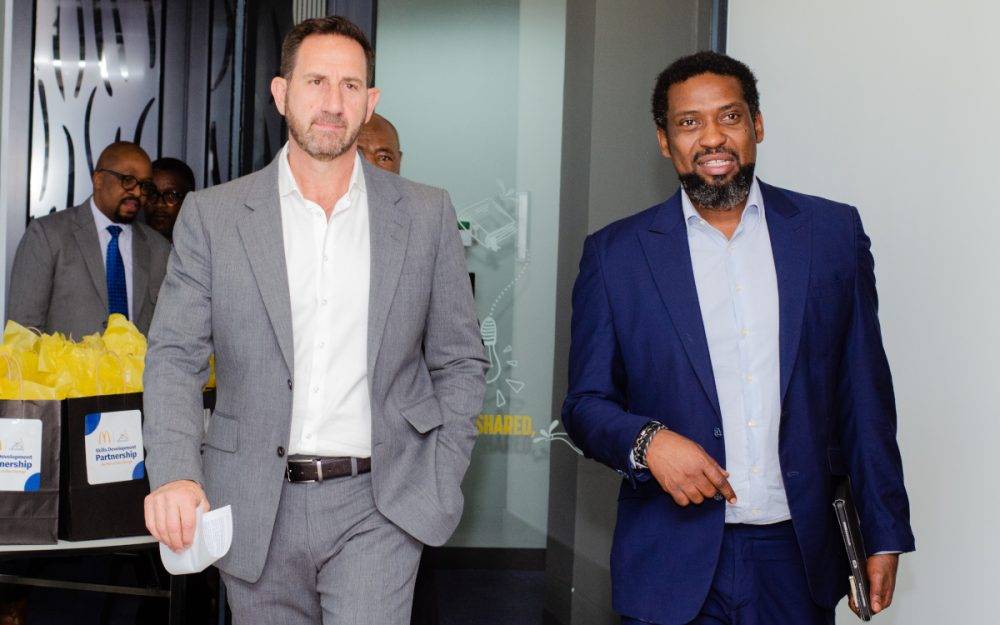
Marks Thibela, Chief Executive Officer at CATHSSETA, says: “Our role and mandate, as set out in section 10 of the Skills Development Act, 1998, include developing and implementing a sector skills plan, which describes the trends in each sub-sector as well as the skills that are in demand. Additionally, this plan identifies priorities for skills development. We support and administer learning programs, facilitate the implementation of the National Qualifications Framework (NQF), and conduct quality assurance on learning in line with Quality Council for Trades and Occupations (QCTO) requirements.
“We also undertake quality assurance and disburse mandatory and discretionary grants using the collected levies to the qualifying stakeholders to implement skills development initiatives. Employers pay 1% of their payroll to the South African Revenue Service (SARS) monthly, of which CATHSSETA receives 80% for administration costs and grants, while the remaining 20% is paid to the National Skills Fund.”
Continuous skills development is crucial in addressing unemployment, as it equips individuals, especially the youth, with the knowledge and competencies needed to adapt to changing job markets and technological advancements. By enhancing their skills, workers and job seekers can improve their employability, thereby reducing the unemployment rate and contributing to the overall economic growth of the country.
McDonald’s role in this partnership includes:
• Recruitment: Driving mass awareness about the learnership to attract high-quality
candidates and sharing the positive narrative of the partnership.
• Engagement: Educating the public on participating in this initiative and providing regular stakeholder updates.
“Hospitality does not feature prominently in the top 10 learnerships that people talk about. The unemployment numbers among the youth are staggering, and as a responsible corporate citizen, we identified the need to bring CATHSSETA into the youth employment conversation. It was a meeting of minds, as their priority is skills development. Furthermore, we have partnered with Job Jack to ensure a seamless recruitment process, as they understand the technological preferences of Gen Z,” says Greg Solomon, Chief Executive Officer at McDonald’s South Africa.
McDonald’s is prepared to train more than the 1 400-youth promised to CATHSSETA. The overwhelming response to the programme highlights the urgent need for job creation in South Africa, as demonstrated by the 9 000 applicants, many of whom are graduates.
“The programme required that we partner with a reputable training partner, and for this reason, we collaborated with Training Force, which focuses on delivering industry- and job-specific skills assessments and training interventions to businesses,” continues Solomon.
The CATHSSETA & McDonald’s SA program offers blended training, combining classroom and on-the job training and assessment, with courses such as Occupational Health, Safety and Security, Business Communication, and Business Finance. From its recruitment efforts, McDonald’s has already enrolled 1 200 candidates in the learning program. This partnership is successful due to McDonald’s compliance with government legislation, particularly those related to skills development.
“To illustrate our commitment to skills development, McDonald’s established Hamburger University at our head office to offer our employees the best training available. Hamburger University is a global training centre dedicated to developing individuals’ skills and knowledge in restaurant operation procedures, focusing on quality, service, cleanliness and value. This empowers our teams to perform their tasks optimally and uphold our high standards,” says Solomon.
“This is one of the important interventions needed in South Africa. While the education system can do a lot, I believe the private sector also needs to play a significant role, which is why this initiative is crucial. It is not just about hosting learners who are graduates, it is about providing them with the experience that is essential for gaining employment — one of the biggest challenges facing our youth,” said Deputy Minister of Higher Education, Buti Manamela.
Manamela concluded by saying: “I challenge everyone, including the hospitality sector and other SETAs to contribute to helping the government create employment and provide young South Africans with access to skills that can lead to potential entrepreneurial opportunities. Skills development and training should not be the sole responsibility of the government. We must, and have been, working closely with the private sector to ensure that young people are equipped with the skills needed for sustainable employment.”
By investing in continuous skills development, McDonald’s and CATHSSETA are making a significant contribution to reducing youth unemployment and fostering a skilled workforce that can meet the demands of a dynamic economy.
Problem gambling tears at the fabric of South African society:
Excessive and irresponsible gambling affect all sectors of society, from those in the upper income brackets that have access to television channels broadcasting global sporting events such as the Olympics to those least able to afford to gamble — those with limited to no disposable income that may take a flutter on an illegal game of fahfi, horse racing or their weekly wages on the slot machine at their local shebeen.
As we enjoy the excitement of international sports and local football, we must confront how problem gambling affects individuals and, ultimately, their families.
South Africa, despite its progressive Constitution, remains one of the most unequal societies in the world. This inequality exacerbates the allure of gambling for those who can least afford it, transforming what might begin as a recreational pastime into a desperate attempt to escape financial woes.
Research has shown that South Africans have a high propensity to gamble, with the National Responsible Gambling Programme reporting an increase in the number of people who are employed seeking treatment.
For many, gambling is falsely seen as an additional income stream, highlighting the fragile state of our society’s fabric. This addiction disrupts the brain’s reward systems, leading to dependency. The young and susceptible are particularly at risk, lured by the excitement and accessibility of gambling, which can lead to devastating personal and behavioural changes.
Addressing the issue of problem gambling requires a multifaceted approach. It’s essential to provide comprehensive support for affected individuals and families through counselling and intervention services. These services should involve psychologists, social workers, and financial advisers to address the various aspects of gambling addiction. Community engagement and educational programmes are also vital in raising awareness and equipping people with the knowledge to make informed decisions about gambling.
There must also be a concerted effort to uncover skills and opportunities that could provide alternative sources of income, reducing the dependency on gambling as a financial solution.
Creating safe spaces for healthy, purposeful activities, particularly for the youth, can also play a significant role in preventing gambling.
But the gambling sector is a significant economic driver in South Africa, generating revenue and employment opportunities. In the fiscal year 2022-23, the industry’s Gross Gambling Revenue (GGR) totalled R47.2 billion, a 37% increase from the previous year’s R23.2 billion.
Taxes and levies generated by the industry amounted to R4 billion. This revenue supports public services and infrastructure, illustrating how legal gambling can benefit society. Moreover, the industry creates thousands of jobs. Legal gambling operators in South Africa also contribute funding curbed at 0.1% of the industry’s GGR (money staked less money paid out in winnings) to the South African Responsible Gambling model that is globally recognised for its proactive, pioneering approach, ensuring that gambling remains safe and controlled.
But the balance between leveraging the economic benefits of gambling and safeguarding those at risk is essential.
As Nelson Mandela advocated for the importance of family in society’s progress, we must ensure that our pursuit of economic growth does not come at the expense of communities’ cohesion and well-being.
Author Profile
Sibongile Simelane-Quntana is the executive director of the South African Responsible Gambling Foundation.
Submit and get free exposure here: Showcase Your Business | Advertise Your Special Offers.