Diary: Inner Sanctum at Everard Read, HandmadeAfrica market, Inclusive Dance Festival 2024:
Show takes a look inside the heads of artists
Step into the minds of 50 of South Africa’s most intriguing contemporary artists at Inner Sanctum, a new exhibition at Everard Read Johannesburg.
This show delves into the intimate spaces where artists create, each piece offering a portal into their diverse ways of working.
From chaotic studios to serene, organised spaces, the exhibition reveals the inspirations, tools and personal touches that define each artist’s inner sanctum. Divided into five themes — Objects of Reflection, Looking Inside, Echoes of Self, Creative Sanctuaries and Through the Artist’s Eyes — visitors can navigate through still life, emotional journeys, self-portraits and scenes from artists’ workspaces.
As Molle explains, artists were invited to interpret the theme freely, capturing anything from a coffee cup’s warmth to the frustrations of creativity.
Inner Sanctum will be on until 20 December.
Shop and feast at the HandmadeAfrica market
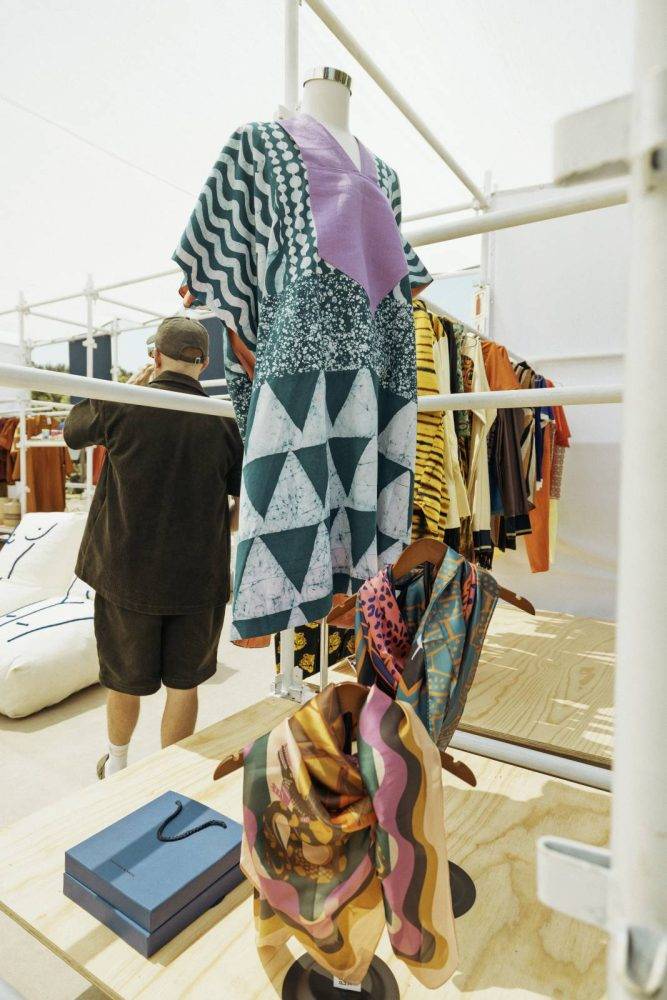
HandmadeAfrica will make its way to Oxford Parks Precinct in Rosebank, Johannesburg, on Friday 28 and Saturday 30 November. It is a festive celebration of African creativity and cuisine.
Following a successful debut at Nirox Sculpture Park, this market will feature over 50 of Africa’s top designers, offering exclusive, handmade collectables from across the continent, including Cape Town, Accra, Nairobi and Dakar.
It will include one-of-a-kind fashion, home decor and artisanal goods, as well as creative street food from some of South Africa’s top fine-dining spots.
With live DJs, choir performances and a free comedy show, plus hands-on workshops such as cocktail demos and gift-wrapping, this market has something for everyone.
The Body Moves International Inclusive Dance Festival 2024
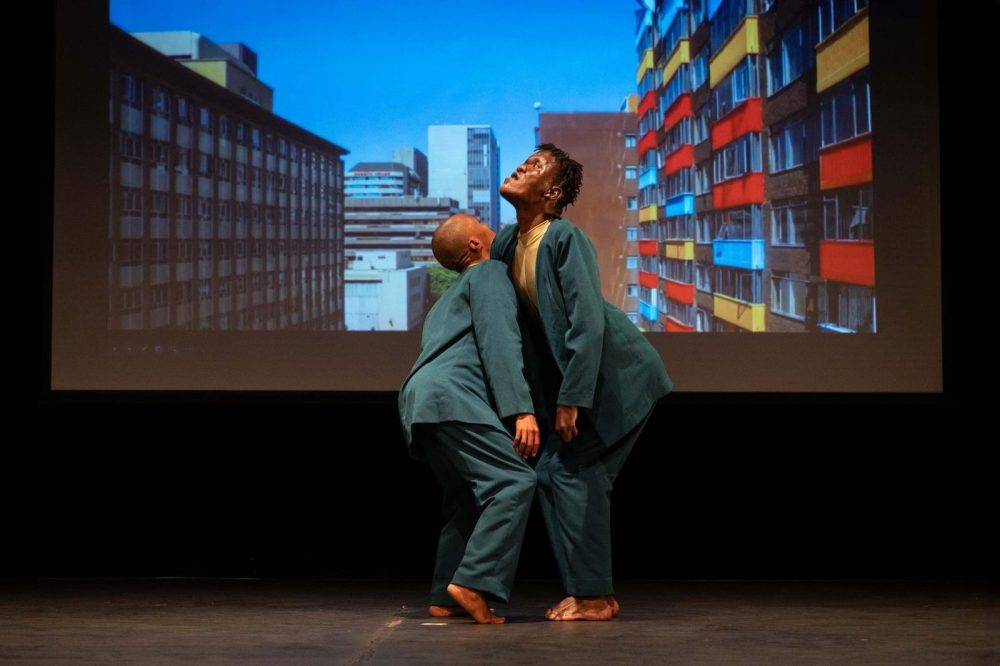
The Sibikwa Arts Centre is presenting the Body Moves International Inclusive Dance Festival, a showcase of inclusive dance running across Gauteng and the Western Cape this month. This year’s festival highlights a groundbreaking UK-South Africa collaboration featuring Mark Smith Productions and Very Easy Productions, in partnership with the Market Theatre and the Unmute Dance Company.
Renowned UK deaf dancer and choreographer Mark Smith leads a two-week residency, crafting Synergy 2.0 with an inclusive South African dance ensemble. This new piece examining the impact of climate change on deaf and disabled communities debuts alongside Synergy, exploring similar themes.
Another festival highlight is Bells & Sirens 2, choreographed by Thapelo Kotlolo, a thrilling take on queer club culture and freedom of identity. Performances are at the Sibikwa Arts Centre (21-22 Nov), the Market Theatre (24 Nov), and the Unmute ArtsAbility Festival in Cape Town (26 Nov–7 Dec). — Lesego Chepape
Joburg: A beloved, magnificent cesspit:
Before we proceed with discussing Nickolaus Bauer’s insightful and interesting new book Great Johannesburg, there is something I must unequivocally declare before church and state: I fucking love Johannesburg!
Well, that’s not entirely true — I have a love-hate relationship with Joburg.
Well, that’s not quite true, either … Let’s peg it at 80/20. Okay, unequivocally re-declared: I have a four-parts-love, one-part-hate relationship with Joburg.
Like many South Africans who grew up in towns and smaller cities in more rural provinces — a shout-out to Matlosana-Klerksdorp, the unofficial Centre of the Universe — I came to Johannesburg to seek a brighter future.
I moved here in 1998 to attend university and never left. Economically, culturally and socially, there was simply so much more at my fingertips than back home. And it was the closest and most accessible of our beloved country’s major cities.
Also, moving to Durban meant I’d have to burn all my shoes and moving to Cape Town meant I’d have to pretend I live in another country, so Joburg was the more attractive option.
But I digress.
Johannesburg is, without doubt, simultaneously one of the most wonderful and most painful places in the world to call home.
As I have often said to entertain friends and family who don’t live here, being in love with Johannesburg is like being in love with hard drugs — you know it will probably kill you, but you don’t care.
On one hand, it is a city rich with cultural history, and at one point was the beating heart of the entire global gold-mining industry.
It is one of the world’s greenest cities and is a melting pot of different races and creeds.
The cost of living is, compared to other major international cities, remarkably low, with property prices notably cheaper.
Foreign visitors to the city remark on its resemblance to London or New York, both in terms of its general physical appearance and in terms of “vibe”.
But, unlike those cities, the weather is marvellous, and the people are friendly.
To quote a former colleague of mine, now a resident of Scotland: “It’s nice to sit down in a restaurant and be greeted by a waitress who actually cares if you’re alive or dead.”
Joburg is like the smiley little brother of these other cities.
Then there is the on-the-other-hand. Well, we all know the downsides to living here. Crime. Overcrowding and homelessness. Infrastructural issues. Xenophobia and violence. Water, air, soil and noise pollution. Traffic and more violence. People who brag about living in Sandton. People who brag about not living in Sandton. The list goes on and on.
Joburg is like the smiley little brother who also steals out of your wallet when you’re not in the room.
To quote the same former colleague in Scotland: “I would retire here in a heartbeat — if it weren’t for the crime.”
Back to the other hand — we have a magnificent city, a shining beacon showing us what the entire continent is capable of.
Changing hands again, it is, unfortunately, something of a cesspit.
Johannesburg, the world’s only magnificent cesspit.
And nowhere is this better illustrated than in Nickolaus Bauer’s new book Great Johannesburg.
Bauer is without doubt a proud resident of the city. He is enamoured not only of its fascinating history but its current and future well-being.
Apart from the fact that Bauer once was a writer on this very newspaper, he has several more items on his Joburg-related CV. As a former deputy director for the city’s environment and infrastructure services department and current inner-city activist, Bauer is well aware not only of the incomparable merits of Johannesburg’s one-of-a-kind resume, but of the unique and potentially crippling challenges that the city faces.
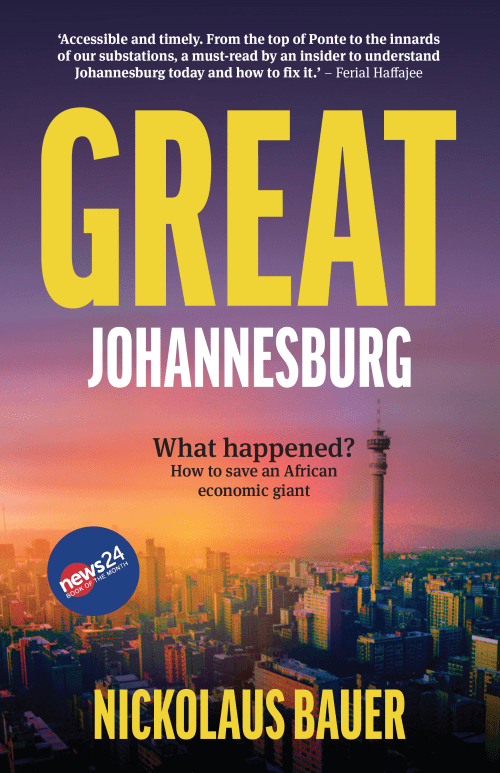
Bauer begins the book with its colourful and interesting history, how it was a boom town that exploded out of farmland in 1886 upon the discovery of gold. And how, like all cities founded on the promise of a quick buck, it soon attracted the best and worst that society has to offer.
However, Joburg’s story strays from the more run-of-the-mill ones due to South Africa’s interesting and troubled past. Tension between indigenous people, as well as colonial forces from more than one European country, led to a terse, multi-directional squabble over money which, if we’re perfectly honest, still exists to this day.
In fact, Bauer does well to illustrate that many of the challenges Johannesburg faces, which we view as “modern” problems, have been around since the city’s troubled conception.
Johannesburg has always been, to steal a quote from Star Wars, “a wretched hive of scum and villainy”.
And yet, despite these challenges, the city has endured, a testament not only to humankind’s love for that shiny yellow metal we dig out of the ground, but to the tenacity, adaptability and strength of spirit of the residents of the City of Gold.
Bauer divides his book into 11 sections, each comprising multiple chapters. The first section deals with the city’s founding and history and the last deals with his belief that it is standing on a precipice and how it can be guided back to glory.
The intervening nine sections talk about the various trials and tribulations that Johannesburg wrestles with and has, in many cases, always wrestled with. These include crime, political instability, the legacy of apartheid and more.
What I like about the book is the structure Bauer adheres to within the sections, which mirrors the larger structure. He introduces a problem statement, gives us the historical context of it, gives us the current situation surrounding it, and then outlines how it can be rectified.
This book, while biographical of what we all know to be a troubled city, is, ultimately, a hopeful book.
Bauer loves his city; he openly shouts it from rooftops. In fact, in the About the Author section he states that he wrote it to get residents of Joburg to stop complaining and save his beloved home.
He’s done an admirable job of showing us its scabrous underbelly while simultaneously reminding us of how wonderful it is capable of being.
It’s a highly recommended read for anyone who shares a fascination with this city.
Great Johannesburg is published by Tafelberg.
EFF factionalism ‘not a factor’ for December conference:
The factions within the Economic Freedom Fighters (EFF) dubbed the “socialites” and “ground forces” will not matter when the party gathers for its third elective conference next month, as leader Julius Malema’s slate is expected to be delivered unopposed.
This is according to senior party officials who say calls for Mbuyiseni Ndlozi and Veronica Mente to be part of this year’s election are futile because of their perceived proximity to former deputy president Floyd Shivambu, who left the EFF for the uMkhonto weSizwe party in August.
The EFF has been grappling with the repercussions of the defection of Shivambu and other senior leaders, including Dali Mpofu and Busisiwe Mkhwebane, to Jacob Zuma’s party.
The Red Berets expect to see many more members jump ship before they elect Malema’s chosen lieutenants to head the party next month.
“We are hoping these members are not waiting for us to have our conference first before leaving, because this will cause a serious rift in the party during a time when we need to focus on local government elections.
“We really cannot wait for those who are in between to choose a side, so we can rebuild with real members,” said a senior leader who declined to be named.
The EFF will meet from 12 to 15 December in Johannesburg for its national assembly at which it is expected to elect Malema as president and former secretary general Godrich Gardee as deputy president to replace Shivambu.
Secretary general Marshall Dlamini is expected to retain his position while Western Cape MP Nontando Nolutshungu will probably replace Mente as chairperson.
Nolutshungu, who joined the EFF in 2013, has reportedly been assigned leadership roles in her province to help her connect with the party’s constituency.
This move is aimed at preventing a backlash from members over her lack of visibility, a concern that arose in 2019 when Omphile Maotwe was elected treasurer and faced criticism for being relatively unknown among party members.
Maotwe — who is said to be behind a campaign that will see Mente and deputy secretary general Poppy Mailola removed from their positions — will retain her role as treasurer. Party spokesperson Leigh-Ann Mathys is expected to make a comeback as the deputy secretary general.
Malema’s slate, which has been endorsed by provincial leaders, will supersede the wishes of the branches who have “democratically” chosen Ndlozi as the only suitable candidate to fill Shivambu’s shoes as the “brain of the party”.
The branches also want Mente to continue in her role, due in part to the important role she has played in parliament.
Provincial leaders confirmed to the Mail & Guardian that while Gardee would take the position of deputy, Malema would strip him of deployment powers — a factor that has reportedly strained relationships between the commander-in-chief and party members who were initially deployed by Shivambu, including Ndlozi and Mente.
As a result, Ndlozi has allegedly rejected the call to stand for any position within the top six, due to what his supporters call “harassment” by Malema’s followers on social media.
Ndlozi’s supporters argued that his position had been undermined by Shivambu’s continued endorsement and publicly referring to him as a “brother”.
“We’ve tried and failed to persuade him to challenge Gardee for the position. He’s simply lost interest in the race. It’s unfortunate because, with the numbers he has, he could even take on the CIC [commander-in-chief] and win,” said a Gauteng branch leader
The sources alleged Shivambu intended to erode EFF members’ trust in Ndlozi and cause a rift between Ndlozi and Malema.
“Shivambu wants to drive a wedge between Malema and Ndlozi, which could benefit factions both within and outside the EFF,” according to another leader.
Insiders suggest that while Ndlozi’s loyalty to the EFF remains strong, his connection to Shivambu has left him vulnerable to criticism from various factions within the party.
“Malema and his core have been threatening him, so to show his loyalty to EFF, he had to decline nomination. This also means that he is not a traitor or an infiltrator,” they said.
Mente’s supporters have also expressed disappointment as she was seen as a good candidate to lead the women’s wing.
Mente did not respond to questions from the M&G and Shivambu had not responded to requests for comment by the time of publication.
Submit and get free exposure here: Showcase Your Business | Advertise Your Special Offers.