Dricus du Plessis: From SA to the UFC:

On the 19th of October, the Mail & Guardian visited the CIT Performance Institute and spoke to UFC star Dricus du Plessis ahead of UFC294. WATCH THE FULL INTERVIEW HERE:
In July 2021, on the Conor McGregor vs Dustin Poirier Ultimate Fighting Championship (UFC) card, a South African fighter debuted on pay-per-view with a vicious knockout win over Trevin Giles.
He then took the mic and said to UFC commentator Joe Rogan, “Dricus du Plessis. Remember the name. It will be a household name in the top 10 very soon.”
Since then, Du Plessis has made a phenomenal rise to the top of the middleweight division by winning four fights and pillaging any competition the company has put in front of him. He was rewarded with the number one middleweight ranking in July after he beat former champion Robert Whittaker.
Where the magic happens
The Mail & Guardian visited the CIT Performance Institute — the place where Du Plessis trains — and, from 8:30am, there were fighters on the training mats embodying the cliché “blood, sweat and tears”.
But, when Du Plessis walked into the gym at 10am, the energy in the place shifted into a new gear. The fighters followed his lead as he took to the mat for a light warm-up and then began a striking session.
Du Plessis, who is now the team captain at CIT, said it’s not easy to train every day, but it’s something he demands from his teammates and he tries to lead by example.
“We always try to keep a certain level of culture in this gym. We try to keep the excitement,” Du Plessis said.
“I expect the best from all of my teammates and they expect the same from me. I believe that in order to bring the best out of them, I need to be an example. At the end of the day, we do fight for this team and we do fight for each other.”
As advertised on TV, Du Plessis provided a striking clinic, showing how his years in the UFC have helped him become a much more calculated striker. But that’s not to discredit the work that has been done by the CIT to help the fighter reach this level.
Du Plessis is proud of this gym and is glad that it is finally getting recognition on the global stage in mixed martial arts.
‘Inspiration’
Du Plessis has now become the inspiration for young fighters. He is the first South African mixed martial artist to make it big in the UFC.
Jiu-jitsu coach Wayne Harrison said there are two youngsters at the gym who have dropped out of school to focus on careers in mixed martial arts. They have seen the fruits of the hard work Du Plessis and Cameron Saaiman — another UFC fighter from South Africa — have enjoyed and thus dedicated their lives to the sport.
When Du Plessis was coming up, there were no South African fighters gunning for gold in the UFC. But he still found his inspiration in local fighters.
“There were so many guys [that inspired me]. I wouldn’t say there was one specific person that made me fall in love with the sport as a little boy. But once I started getting into it at 14 or 15, guys like my former teammate Leon Mynhardt and Michiel Opperman, who were both EFC champions, inspired me.”
He also attributes a large part of his success to his coach, Morné Visser, who also coached Mynhardt and Opperman.
Du Plessis eventually shared the mat with both athletes, who he considers mentors.
Signed to the UFC
You would have only know about Du Plessis, or “Stillknocks” as he is known when he fights, if you followed the South African promotion Extreme Fighting Championship (EFC) or the Polish promotion Konfrontacja Sztuk Walki (KSW).
Du Plessis was a two-division champion in South Africa and the Welterweight champion in KSW.
But it all changed in 2018 when he got a call to go to the United States to help UFC fighters prepare for their fights. At this point, he was still trying to climb the ladder in the mixed martial arts world and reach the pinnacle, which is the UFC.
Du Plessis enjoyed that experience, because it helped him understand that being the best fighter in the world was no longer a dream he was chasing.
“You see these guys fight on TV, they look huge and then you realise that they’re not bigger than me and they are not that much better. Yes, there are certain areas where they are better than me and things I need to work on, but then again there are certain areas where I’m better.
“I started gaining that self-belief. That experience was a massive learning curve for me. I stayed there for a month or six weeks and my confidence just grew. I would say about two years after my first visit to the US, I got signed to the UFC.”
But Du Plessis still had to wait for the call to get a fight and it could not have come at a worse time.
During the Covid hard lockdown in 2020, he got a call to fight on 10 days notice. Fighters usually have a six to eight-week training camp to prepare for a fight. But it was not an opportunity that he could let slip by.
“I was not in great shape, because it was Covid. We were in a hard lockdown, but I was still training. We took equipment to my house and trained there,” Du Plessis said.
Du Plessis won the fight by knockout in the first round and added, “it was not an ideal situation, but you can’t say no to an opportunity like that and today, I’m the number one ranked middleweight in the world”.
Favourite fight since joining the UFC
Du Plessis has made light work of many opponents in the UFC. From ranked opponents like Derek Brunson to former champion Robert Whittaker, he has rarely let his fights go the distance.
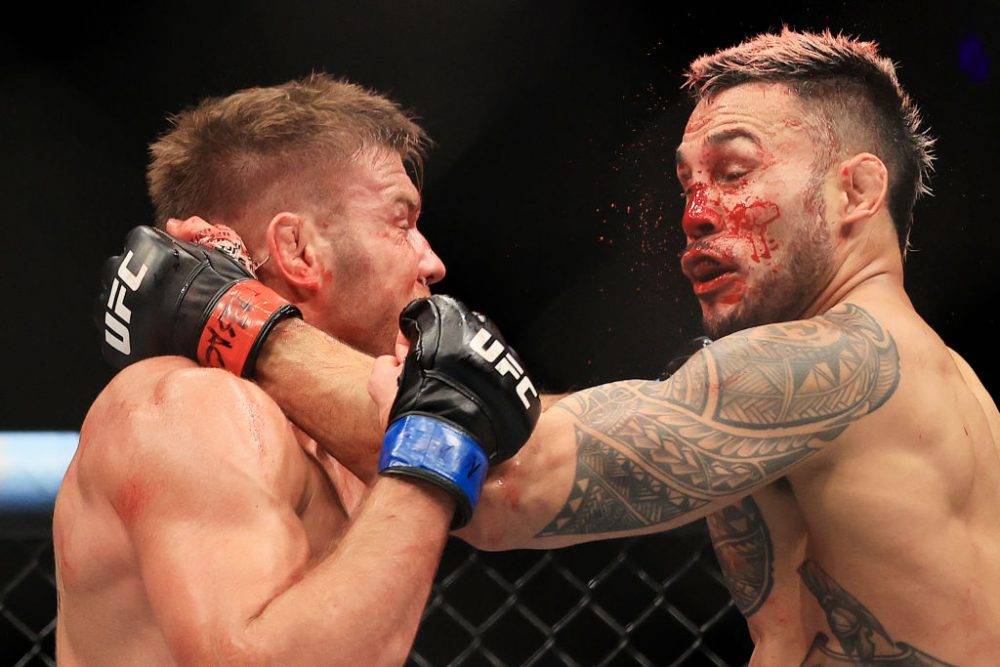
But the one fight that did need the judges to make a decision was the fight that gained a lot of attention thanks to the sheer brutality of it.
It was his third fight in the UFC, and his opponent was American fighter Brad Tavares. The fight went the full three rounds and although Stillknocks edged out a decision, the UFC commentary team applauded the fight calling it a war.
Du Plessis recalls losing the first of three rounds in this fight. He said that after winning the second round, the final round came down to a test of will. He said that till now, this is his favourite fight that he has seen “as a fan”.
“Brad Tavares was one of the toughest people I fought. In terms of being tired and in terms of taking damage, I wouldn’t call it my toughest fight. I hit that guy and the next day, my hands were swollen. I normally hit guys with 16 ounce gloves with half the power that I hit that guy with and they go down, but he just wouldn’t go down. It was an incredible experience.
“It was definitely one of those fights where I had to go and work for it. I would die in there, but I wouldn’t lose that fight.”
Du Plessis said he would not like to get into too many of those kinds of fights because it’s not good for a fighter’s longevity, but every now and again it’s what he lives for.
This fight gave Du Plessis a platform to flourish. Finishing an opponent in mixed martial arts is the most decisive way to close a fight, but it always leaves room for critics to question whether a fighter has it in themselves to grind out a decision against tougher opponents.
Frustrations and future goals
After a six-fight winning streak in the UFC for Stillknocks, UFC president Dana White announced a fight between Du Plessis and Robert Whittaker earlier this year. It was classed as a number one contender fight and the winner would fight for the middleweight title against then champion Israel Adesanya.
What made it more interesting is that when Du Plessis finished Whittaker in convincing fashion, Adesanya stepped into the Octagon and got into a heated confrontation with the South African.
It seemed as if it was all in place for Du Plessis to contend for his first world title in the UFC, but rumours of an injured foot meant he could not make the turnaround to fight Adesanya in September.
Adesanya ended up losing the title to Sean Strickland — Du Plessis’ replacement.
This did not sit well with White, who then ousted Du Plessis from the title picture. To add insult to injury, the UFC president then promised a title fight to the winner of the fight between Kamaru Usman and Khamzat Chimaev, both of whom are originally from the welterweight division.
Du Plessis admitted that the situation frustrated him for the first two weeks because he believes he has been a great company man and done everything the UFC has asked of him.
“It was the first time in the UFC’s history where a guy not only wins but destroys the number one contender [Whittaker] who’s been undoubtedly the number one contender for over a decade. But then you don’t get a title shot,“ he said.
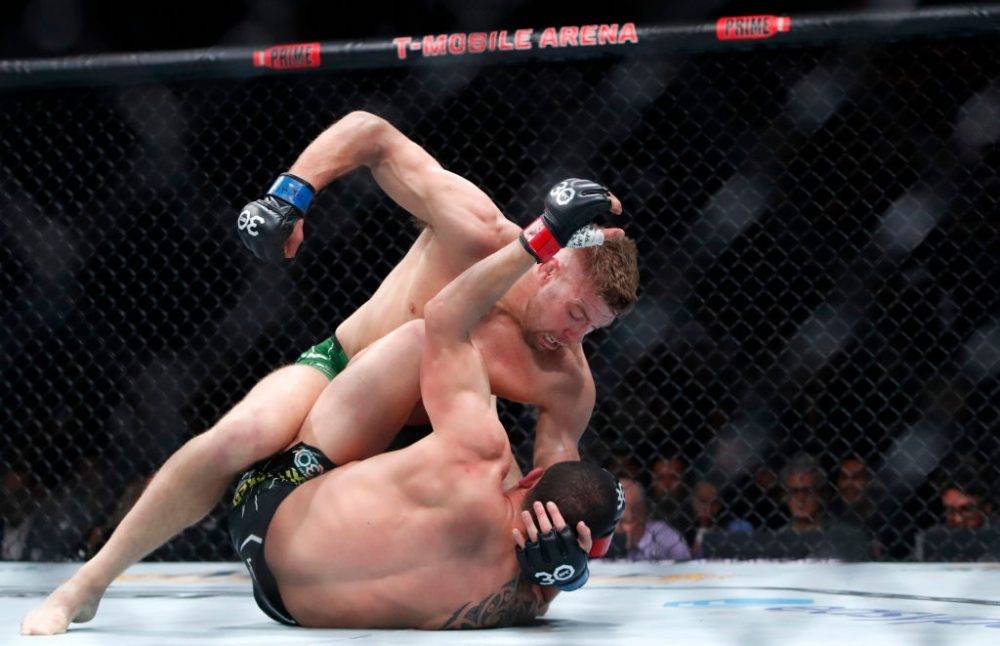
“I’m not a matchmaker, I’m a fighter and if they want to give two welterweights a shot at the middleweight title, I believe they are only discrediting that title.”
But Du Plessis is over that and now just wants another opponent. Despite the growing beef he has with former champion Adesanya, he believes that even if that’s not his next fight, he wants a fight that will get him closer to the title again.
“I’m not going to sit around and wait for six months or a year. I’m not taking a break from the sport. I need to get that belt. I have goals, dreams and a legacy to build. I’m definitely not going to fight in 2023 again because the cards are full. So maybe February or March next year.
“I really was hoping to be champion by the end of this year, but situations change and there’s nothing I can do about that. I can only focus on being the best fighter in the world.”
Du Plessis wants to finish 2024 as the middleweight champion and then dominate the division. His intention is to then move up to light heavyweight and try to become a two division world champion — a feat only achieved by four fighters in the UFC’s history.
The post Dricus du Plessis: From SA to the UFC appeared first on The Mail & Guardian.
The good and bad of engine downsizing:

In the ever-evolving automotive industry, trends come and go. But some endure and evolve into industry standards.
For example, the fourth generation of the Honda Inspire was the first to introduce lane-keeping assistance in 2003, marking the beginning of a safety revolution. Since then, most manufacturers have adopted the technology, and developed their version of it, with different features and capabilities.
However, not all automotive trends are as successful as that.
You may recall that in 2012, Fiat introduced an espresso-maker in its 500L. It was a complete flop as most people preferred other ways of getting their caffeine fix.
This brings us to the issue at hand — the engine downsizing trend, which has been a serious topic in most boardrooms as tighter emission regulations, as well as improved efficiency considerations, become more prevalent.
But what does it entail?
As the name suggests, engine downsizing involves using smaller engines, derived from larger engines, with the same or higher power output, to improve efficiency, reduce emissions and comply with tighter environmental regulations.
Several features, including electrification, supercharging and turbocharging can be used to enable this technology.
Mercedes-Benz, BMW, Ford, Audi, Porsche, Renault and Volkswagen, to name a few, have been doing it in recent years. For some, it has worked and for some, it hasn’t.
Like most inventions in the motoring industry, engine downsizing has its advantages and disadvantages. We take a look at some of the pros and cons.
Advantages of downsizing
The main reason for engine downsizing is to meet tighter emission restrictions. Smaller engines, with the same or more power output as the larger, burn less fuel and produce less CO2.
For example, Mercedes-AMG is the latest marque to downsize an engine, taking that of the C63 from the brutal 4.0-litre Bi-Turbo V8 to the mild-hybrid 2.0-litre M139 four-cylinder turbo-petrol unit.
It has been used in other vehicles in its range too.
This was done to comply with the stricter emissions regulations, to improve fuel economy, as well as to optimise the driving dynamics and handling of the C63 due to its lighter weight.
But besides all this law-abidingness, engine downsizing can also bring down costs and boost reliability. How, you wonder?
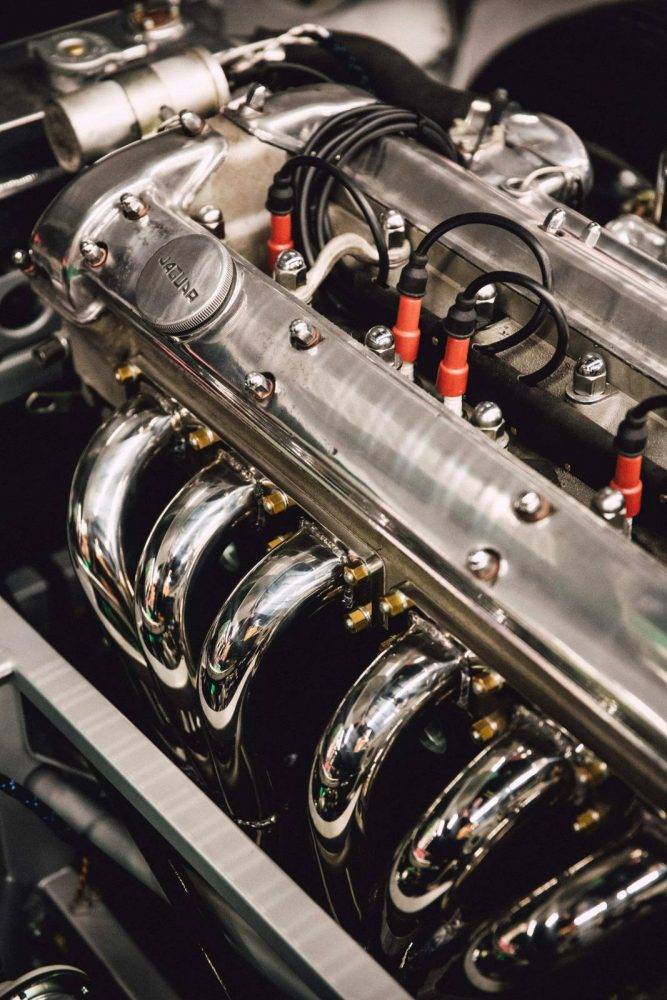
Well, a smaller engine normally has fewer parts and components, which reduces manufacturing and maintenance expenses.
Another important factor is weight reduction. Compact engines are lighter, which significantly lowers the overall weight of the car, and as you’ve guessed, this translates to better handling, agility and performance.
Smaller engines are also well suited for hybrid and electric adaptability. Because of their size, hybrid and electric components can be installed in a more convenient location. This is a crucial consideration for integrating them seamlessly into the vehicle’s design.
Among the manufacturers that have successfully followed the downsizing trend is BMW.
The German marque did it with its twin-power turbocharged engines, used across its range, including the 3 and 5 Series models, and has been praised for delivering strong performance and superb efficiency.
Volkswagen has also done it with its TSI engines, which offer improved fuel consumption and reduced emissions, without sacrificing performance.
Even today, in 2023, it continues to surprise us how manufacturers can extract so much power from a small engine.
Downsizing disadvantages
Despite the advantages of downsizing manufacturers cannot escape the reality that it’s not a simple solution but a trade-off that requires high levels of engineering and optimisation.
Among the disadvantages are less reliability and longevity.
Downsizing can lead to decreased durability and reliability over time due to increased stress on the smaller engine.
In addition, downsized engines tend to perform worse in real-world driving emission tests than their larger counterparts.
There are also sacrifices to be made when it comes to driving pleasure and comfort.
Those with good memories may recall when Mercedes-Benz wanted to discontinue its naturally aspirated V8 engines in favour of the turbocharged V6.
That move never materialised due to the engines failing to deliver on their emission promises — and they were not as enjoyable for drivers as the mighty V8s.
Porsche went the same route with its 718 Boxster and Cayman in 2016. It traded the previous model’s naturally aspirated 2.7-litre and 3.4-litre flat-six engines for smaller 2.0-litre and 2.5-litre flat-four engines which had more oomph and torque, but also more lag.
The engines lacked the character to suit the sporty nature of the cars while also sounding muted and lacking the emotional appeal of the old ones.
Mercedes-AMG has been dominating the news since it announced that its C63 and C43, among others under the AMG banner, will be ditching the 4.0-litre V8 and 3.0?litre V6 engines for a much smaller, electrified, M139 2.0-litre turbocharged petrol unit.
Sometimes less is more but, in this case, I’m sure many will agree that the setup isn’t best suited for this application, and as far as we know, enthusiasts aren’t having any of it.
The C43, for instance, isn’t what it used to be, despite having more power than before. It is less charismatic and it’s heavy at 1?840kg versus its forebear’s 1?690kg. As you know, a car’s weight is one of its greatest enemies.
Will downsizing work? Well, there is no definitive answer to that since there are many factors to look at, including customer preferences.
The automotive field is massive and diverse and not all manufacturers have found their way around this intricate trend.
Not all of them have been able to successfully reassess the technology to achieve the optimal balance between efficiency, power, reliability, and comfort.
On the other hand, some have found their rhythm, and they are reaping the rewards of improved efficiency and reduced emissions while offering customers unmatched levels of driver engagement.
The opportunities for electrification increase as the downsizing trend continues.
The post The good and bad of engine downsizing appeared first on The Mail & Guardian.
‘Time is of the essence’ as African leaders seek Agoa refinements:

African leaders are asking for refinements to the African Growth and Opportunity Act (Agoa), rather than a full review, according to trade and industry minister Ebrahim Patel.
Patel was giving his closing remarks during the final stretch of the 20th Agoa forum. “We were clear that we did not want a major rewrite of Agoa. We’re not looking for Agoa to be scrapped and a complete rewrite,” the minister said.
“We’re looking for refinements. And the reason for that is, every African minister who spoke emphasised that time is of the essence. Investors have pressed the pause button. Procurers are beginning to press pause buttons. And an early decision will unpause those buttons.”
Though discussions about the future of Agoa — the trade programme which gives eligible sub-Saharan African preferential access to US markets — got underway in Johannesburg this week, the final decision on its renewal will be made in Washington, by the US congress.
Agoa is set to expire in September 2025, however its African beneficiaries are asking that it be renewed during the early part of 2024, according to Patel.
Patel acknowledged that an early extension may result in certain trade-offs “between quicker and better”.
But he suggested that the solution to this dilemma would be a two-stage process. Under this proposed arrangement, the first leg would be focused on Agoa’s speedy reauthorisation, perhaps with a modest package of refinements.
The second stage would focus on making deeper improvements, which was found wanting in a US International Trade Commission report published earlier this year.
According to the report, between 2001 and 2021, US imports under Agoa were relatively small, mostly from a few countries and were concentrated in a handful of sectors, including energy, apparel and transportation equipment.
In 2021, five of the 39 Agoa beneficiaries — South Africa, Kenya, Lesotho, Madagascar and Ethiopia — accounted for about 82% of imports, excluding crude, which has historically dominated trade under the programme.
During her closing remarks, US trade representative Katherine Tai underlined America’s commitment to Africa’s economy and development through Agoa, but noted that the programme has the potential “to do so much more”.
The post ‘Time is of the essence’ as African leaders seek Agoa refinements appeared first on The Mail & Guardian.
Submit and get free exposure here: Showcase Your Business | Advertise Your Special Offers.