
Driven to protest for Palestine:

There is a settled rhythm to the afternoons outside Herzlia High School, the independent Jewish day school in Vredehoek, Cape Town. It involves an agitation of parental cars and school-appointed marshals watching over a hubbub of uniformed students.
But since the start of the Israel-Gaza war in October there have been complications, notably heavily armed private security. And, occasionally threading its way through the militarised suburban melee, there is a minibus taxi with “Free Palestine” and “From the River to the Sea” displayed on its bodywork.
This taxi, which plies a route across the City Bowl into the CBD, is hard to miss. In the manner of cabinet ministers, it is wrapped in a black-and-white fishnet pattern keffiyeh of the design popularised by Palestinian leader Yasser Arafat. It also prominently features watermelon slices, a symbol of Palestinian solidarity.
The vehicle is one of three taxis owned by the Baker Group that declare camaraderie with Palestinians at a time of escalating grief. Each features a unique design.
One lists the names of 16?000 Gazans killed since the start of the conflict. Another features a pre-1948 landscape painting of Jerusalem overlaid with portraits of Palestinian journalists (such as twins Muna and Mohammed El-Kurd) and intellectuals (notably Edward Said).
The designs are by Cape Town artist Thania Petersen.
On 25 November, when Petersen launched this mobile intervention at the Castle of Good Hope as part of the Infecting the City public arts festival, she told filmmaker Dylan Valley: “I love the taxis, because the taxi system is the largest black-owned, black-run system in South Africa that isn’t reliant on white or Zionist money and support. What they symbolise is liberation.”
Taxis inject “misbehaviour” into the settled routine of urban life, added Petersen, with a mischievous laugh. “We need to misbehave sometimes. Now, more than ever, we can see the people who make the rules are not the right people.”
Curious to learn more about Petersen’s, motives, both as an artist and activist, I scheduled an interview.
Petersen recently moved into a new home in Plumstead. The skateboarders’ half-pipe in the substantial garden hints at a favoured pursuit of her three adolescent sons. Her grief and rage at what is happening in Gaza is partly informed by their presence.
“I look at my children and I think, ‘There are kids in Gaza who are the same age,’” says Petersen. “How are they living?” She describes being “overwhelmed with sadness”. Rather than wallow in her grief, she decided to revive a good idea from a previous edition of Infecting the City.
In 2021, she wrapped a taxi owned by Ziyaad and Fatimah Dyason with a collage of motifs from her photos, films, tapestries and installations. The design featured Table Mountain, ghoema players, minstrels and the dental modification known as a “passion gap”. It also included a self-portrait from Petersen’s career-announcing photo series I am Royal.
For this series, started in 2014, Petersen wore elaborate garments and headdresses linked to her Indian Ocean Sufi heritage and posed in various resonant Cape sites, notably District Six and the Bo-Kaap.
I am Royal asserted cultural identity and manifested pageantry as the twin pillars of her Cape-influenced art.
Petersen has since refined this recipe to include key ingredients of colour, humour and consumerist maximalism.
She says her boys prompted her to make the series. They had just started school and she felt their heritage and culture was unrepresented. “There was nothing of us.
I am Royal was a gift for my kids, so that they could know who they are in this space.”
Petersen worked with her husband, a skater turned photographer, on making the portraits.
At the time she still ran the Cardamom Monkey, a bookshop and bric-a-brac store in Observatory. She showed artist Justin Davy her unpublished photos when he visited. Davy, who worked for dealer Elana Brundyn, asked if could show the work at the 2015 Cape Town Art Fair.
I am Royal was an instant hit. The South African National Gallery acquired an edition. Major institutions in Holland and the US followed suit.
“I was over the moon. I was so happy about that because now it is for everyone’s children.”
Petersen was born in 1980 in Cape Town. When she was four years old, her activist father fled the country.
“My aunt and uncle took me with on their honeymoon and, when we returned, Daddy wasn’t there anymore,” says Petersen, who grew up in Athlone.
In 1989, she joined her father in London. Petersen completed her high schooling in rural Cornwall. Interested in photography and its ability to describe the malleable self, in 2001 she enrolled at Central Saint Martin College of Art, London.
Much like Berni Searle, a Cape Town artist whom Petersen has come to greatly admire, she initially focused on sculpture.
After a chance encounter with Zimbabwean artist George Mubayi she dropped out of college to practise stone sculpture in Chitungwiza for a year. More adventures followed, including a ceramics apprenticeship in South Korea.
When she returned to London, Petersen found work with the Notting Hill Carnival, an Afro-Caribbean street festival. She made props. The gig, which lasted seven years, was hugely impactful. Less so visually, says Petersen, than psychologically.
“I was the only one who was not seen as African, yet I was the only African within the group. It gave me an amazing understanding of who we are in Africa as a ‘Cape Malay’ community.”
Petersen doesn’t like the term “Cape Malay”. An observant Muslim, she is also ambiguous about the term “Cape Muslim” favoured by cultural historians such as Gabeba Baderoon. She prefers “Cape creole” as it doesn’t limit identity to a religion.
“It is difficult,” she concedes. “I mean, I don’t know what to call myself, to be honest.”
Petersen’s heritage is complex but also decisively linked to the Indian Ocean. She prefers to accentuate her mother’s highborn ancestry than dwell on her father’s family history, which includes enslaved people.
“My mother is eighth-generation direct descendent of Tuan Guru,” she says in reference to the Indonesian-born Imam Abdullah Ibn Qadhu Abdus Salaam, who introduced Islam to South Africa.
“I know I have to acknowledge victimhood but I also want to complicate our stories. I don’t always want to be seen as descendants of enslaved people. Of course, it is part of who we are.”
Petersen’s art and activism are twinned by their assertion of a creole identity that for too long was appropriated by others. “I can’t count the number of times people tell me I look like a Tretchikoff painting and ask to take my photo,” she says.
I ask Petersen what she thinks of Irma Stern, the aristocratic secular Jew who dedicated a substantial part of her career to painting Muslims across Africa.
“Oh god, she’s terrible,” Petersen responds. “She’s part of the problem.”
Petersen rejects the implied passivity of Stern’s portraits, which she says render people as “ornaments in a landscape”.
Much of the foregoing is narrated in Petersen’s impish way, where anger and attack are modulated by humour and gentle retreat.
Her tone changes when I ask her about Gaza. She speaks deliberately and without revision.
“I stand against apartheid. I stand against colonialism. I stand against the occupation of any land. I believe that Palestine should be free of Israel. I believe there should be a ceasefire and that indigenous people should be allowed to live on their land.”
I ask if she favours a one- or two-state solution. Petersen sighs. I read it as wounded exhaustion. She hasn’t thought about it. “I don’t know what the answer is after such incredible violence and such a loss of trust.”
There is a strand of activist thinking that says criticism should also be propositional. Sometimes, though, a situation can be overwhelming, beyond magical thinking. All one can do is speak out, demand, criticise.
What, I ask Petersen, makes her want to add her voice to the protests around Israel’s actions in Gaza and her longer-standing position of a free Palestine?
“I don’t know how to keep quiet,” she says. “I wish I knew how to because my anxiety is killing me.”
Petersen refuses the description “activist”. “Everyone is saying this. I think I am just more visible because I am an artist.”
Famous or not, she says she would protest, regardless. It is part of her family DNA. It is her nature to be tjatjarag.
“I am going to say what I want to say. Hopefully, I say the right thing. Sometimes I pray inside and ask my tongue not to betray my heart.”
The post Driven to protest for Palestine appeared first on The Mail & Guardian.

Spotify announced earlier this month it will no longer pay anything to the artists making around 60% of the music currently on its platform — those drawing fewer than 1?000 streams a year.
Their original creativity may be what brings you to Spotify but every cent you pay for their streams will instead go to the big, and already rich, names at the top of the platform’s playlists. The company itself is valued at about $ 30 billion.
The injustice of this is obvious. But it’s also likely to have a chilling effect on creativity — if you want to earn from Spotify, you’ll need to sound like somebody who’s already successful, for example Taylor Swift, who earned $ 100 million in royalties from the streaming platform this year.
Meanwhile, in the backrooms, platform AI is busy cloning music that sounds like the big names, pointing to a future dominated by echo-chamber releases involving no remunerated human musicians at all and Spotify CEO Daniel Ek getting even richer. He’s worth about $ 2.8 billion, according to Forbes Magazine.
Around the world, musicians are finding their own ways to escape these oppressive structures. In South Africa, they’re increasingly working with nearby independent studios to self-release their work.
The resultant creative flowering is wonderful but, in a world where such enterprises have limited publicity budgets, media rarely review albums, and music scenes can be intensely local, it becomes much harder for collectors to keep up.
Especially if the collectors are in Joburg and the music’s coming out of Cape Town and Durban.
So, instead of the usual year-end replay of albums already discussed, it might be more useful to catch up on a few worthwhile contributions (these three from Cape Town) that have slipped under the 2023 reviewing radar.
The first is pianist and arranger Nobuhle Ashanti’s debut as leader, Bait for Steps Forward, which scored a win at the Mzantsi Jazz Awards back in September.
Bait for Steps Forward has the sound of young Cape Town — it draws inspiration freely from multiple genres, mixes electronics and instrumentalism, and offers self-aware lyrics dealing with relationships, identity and history.
In Ashanti’s hands, all that rests on a solid bedrock of jazz improvisation, her own fluid keyboard skills, plus three poets, five vocalists and seven empathetic instrumentalists including trumpeter Shaw Komori and what’s rapidly becoming one of the Mother City’s rhythm sections of choice, bassist Sean Sanby and drummer Kurt Bouwers.
As well as being a distinctive player, Ashanti’s range as a composer stretches wide across these dozen tracks. There’s a wry not-love song Ends in Ache, beautifully interpreted by singer Amy Campbell; a contemplative, three-number Prayer Suite; a genuinely moving ballad tribute to Dear Mom (saxophonist and teacher Ronel Nagfaal) and a club-natural piece of soulful R&B in As Is.
Ashanti’s character as an arranger speaks through layered sonic metaphors and unexpected juxtapositions.
In Prayer for the Innocent, she dovetails found news clips and edgy harmonics to spotlight current discontents and the shameful treatment of fellow African migrants.
In the standout Ancestors, poetry in Afrikaans, Xhosa and English flows in and out of the music to weave a sonic tapestry of Cape history, with a perfectly judged bass solo from Sanby.
In all of this, Bait for Steps Forward is a significant album. It sends a clear message about how and where distinctive jazz idioms of the Cape — rolling piano, a fondness for song and music you can dance to, and a cosmopolitan African, Asian and seaport inheritance — are moving via the city’s young jazz voices today.
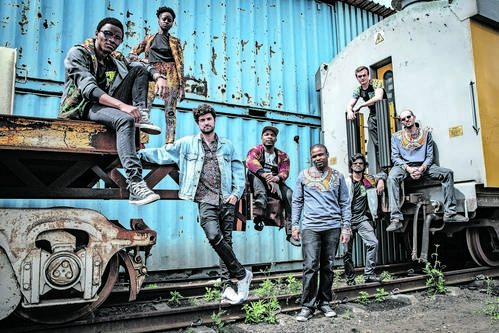
Eight-piece collective The Unity Band, helmed by drummer Lumanyano “Unity” Mzi, share that cosmopolitanism of outlook. Their compass points unwaveringly south, including to Latin America.
They share percussionist Lilavan Gangen with pianist Ashanti’s tribe, illustrating the close-knit nature of the city’s scene.
Studio outing Breaking Bread is their third album, and appeared in March, following 2019’s Fabric, and 2021’s Unity.
This might not be an outfit with the highest national profile but it is (if you check their online presence) one that works consistently — and deserves to.
Listened to in sequence, the three albums demonstrate a substantial warehouse of thoughtfully composed music. Each track is distinctive, memorably catchy and tailored so The Unity Band could put together a programme for any venue, occasion or mood. Solid professional thinking shapes a repertoire like that.
Solid is a description that keeps recurring. A stack of good tunes is worth nothing without tight playing and a collective voice conveying that the band enjoys the music as much as the audience.
The Unity Band’s playing is disciplined and empathetic — on the call-and-response of the intricate, rhythmic Chukudu, the choruses click together with joyous precision.
When solos happen, you hear inspired musicianship that’s far more than just reliable. Vocalist Thandeka Dladla (who made her own debut with Umnikelo in October) marries an appealing voice to perfect diction; whatever language she employs, the messages of the lyrics are clear.
Trumpeter Marco Maritz comes from that Miles place where edge is expressed with style and subtlety. Bassist Steven de Souza (another rhythm man of choice for players visiting Cape Town) displays the ability to both underpin a number with driving groove and step out front to carry a melody; both come together on his hip Marcus Miller tribute Millerized.
You could say similar about every one of the eight players. If Steps for Bait Forward shows where the youngsters are carrying the music, Breaking Bread shows that the Mother City’s reputation for birthing consummately professional bands that always deliver, and do it with pizazz and skill, remains untarnished.
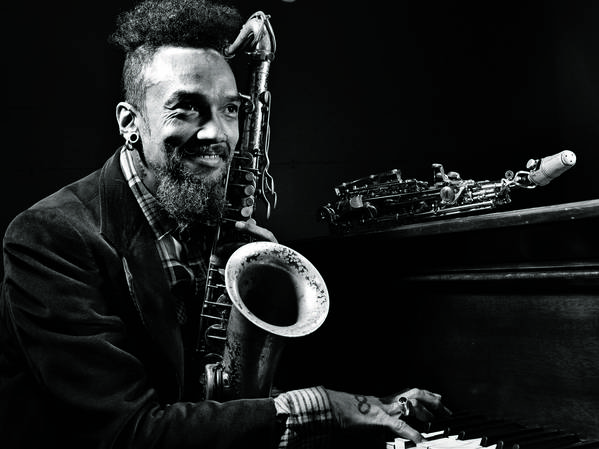
After all that close-knit group connectivity, the multi-instrumentalist Mark Fransman’s August release, Solo: Mark Fransman Pays Homage represents a collective in one musician. That’s not simply because Fransman plays all the instruments, but because the 10 album tracks represent the collective legacy of South African jazz.
They were inspired by musicians (and others) who, in many cases, shaped today’s sound: guitarists Errol Dyers and Allen Kwela; pianist and bandleader Chris McGregor; Robbie Jansen’s Sons of Table Mountain; reedman Mike Makhalemele and more.
The tracks, though, are no mere pastiches of earlier sounds. Rather, they represent how Fransman heard and experienced those players, many of whom he knew and worked with, and on that basis, what new music he is inspired to create.
To Homage the Sons, for example, he foregrounds the modes of Islamic music; for Kwela, a jaunty melody full of unexpected twists and shot through with a thread of sadness.
McGregor’s Journey gives us McGregor the composer, sewing ensemble arrangements from the raw cloth of repeated motifs simultaneously straightforward and intricate. Makhalemele sounds out like a rich-voiced songbird over a sunrise chorus.
The closing track is for those — musicians and others — who were Heroes of Struggle. It’s an elegy — heart-breaking in its poignancy and ending on an open question. They are no longer with us; what would they make of where we are?
Fransman well understands the idiomatic demands of each of his instruments. Though the album is shaped by a single vision, Solo isn’t an act of ventriloquism; each instrument asserts its own voice; each is treated with respect as well as skill.
The skill shouldn’t need mentioning. Fransman has longer experience than the young artists on the two albums above, with more recording credits to his name than I can count.
But even in that context, Solo is a tour de force, not only of musicianship but of memory reshaped by powerfully human imagination.
No AI could make music like this.
The post The ones that got away… appeared first on The Mail & Guardian.
ANC’s 30th anniversary: Learning from National Party’s lessons:

Thirty years into its rule, the NP faced the reality of its demise. The ANC faces a similar reality
The post ANC’s 30th anniversary: Learning from National Party’s lessons appeared first on The Mail & Guardian.
Submit and get free exposure here: Showcase Your Business | Advertise Your Special Offers.
