
Echoes of Khojaly: Commemorating the 32nd anniversary of a tragedy:

The Republic of Azerbaijan reaffirms its commitment to seeking justice and ensuring that such atrocities never occur again
Annually on 26 February, the people of Azerbaijan solemnly commemorate a day that has etched itself into the collective memory of the nation — the anniversary of the Khojaly genocide.
This year marks the 32nd year since the nightmarish events of February 1992 unfolded in the small town of Khojaly, located in the Karabakh region of Azerbaijan. It was on this dark day that Armenian armed forces perpetrated a brutal massacre against the Azerbaijani inhabitants of Khojaly.
The Khojaly genocide stands as one of the 20th century’s most horrendous human tragedies, comparable in its sheer brutality to the massacres of Srebrenica, Khatyn and My Lai.
Before the conflict, more than 7 000 people resided in Khojaly — a town that became the scene of unspeakable violence and the epicentre of Armenia’s decades-long aggression against Azerbaijan. The siege and subsequent attack on Khojaly were part of a calculated occupation policy, which saw the systematic killing and forced expulsion of Azerbaijanis not only from Khojaly but from several other settlements as well.
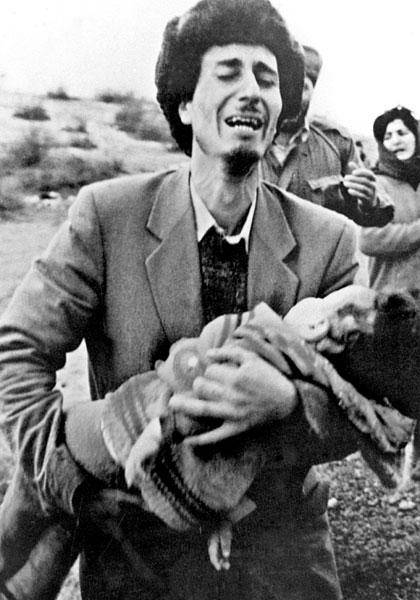
Within the framework of Armenia’s occupation policy, Azerbaijanis were subjected to particularly brutal killings and massacres in the lead-up to the Khojaly genocide. These atrocities took place in various settlements including Baganis Ayrim, Garadagli, Meshali, Karkijahan, Malibeyli, and Garadaghli, highlighting a pattern of violence and aggression.
From October 1991, the town of Khojaly was surrounded by Armenia’s armed forces. Some months later, over the night of 25-26 February 1992, following massive artillery bombardment, Armenia’s armed forces with the help of the former USSR’s 366th Motorized Rifle Regiment, mostly comprising Armenians, occupied the Azerbaijani town of Khojaly in the Karabakh region of Azerbaijan and committed a mass annihilation of Azerbaijanis living in that town.
At least 613 people, including 63 children, 106 women and 70 elderly citizens, were brutally murdered. 1 275 were captured, taken hostage and tortured, and 487 were injured. The fate of 150 of those captured, including 68 women and 26 children, remains unknown. The actions of the Armenian armed forces tore families apart — eight families were completely wiped out — 130 children lost one parent and 25 children lost both parents.
The Khojaly genocide was a manifestation of the longstanding policy of ethnic animosity, racial prejudice, and aggression that Armenia has directed against Azerbaijan at a governmental level over an extended period.
The Khojaly genocide and other crimes committed by Armenia during its aggression against the Republic of Azerbaijan, including war crimes and crimes against humanity, represent grave breaches of international laws on human rights and humanitarian standards. Such breaches encompass violations of the Convention on the Prevention and Punishment of the Crime of Genocide; the Convention against Torture and Other Cruel, Inhuman or Degrading Treatment or Punishment; the International Convention on the Elimination of All Forms of Racial Discrimination and others.
The international community has not remained silent on this tragedy: 18 countries and 24 states of the USA, along with organisations such as the Organization of Islamic Cooperation and the Organization of Turkic States, have passed resolutions condemning the Khojaly massacre as a crime against humanity and an act of genocide.
In its judgement of 22 April 2010, the European Court of Human Rights arrived at an important conclusion regarding the crimes committed in Khojaly, denouncing the behaviour of those who carryied out the atrocities as “acts of particular gravity which may amount to war crimes or crimes against humanity”.
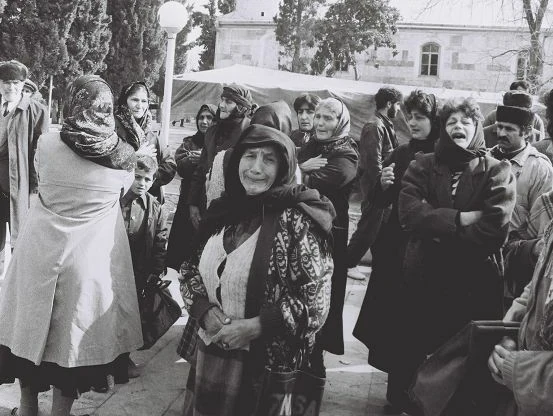
International law mandates that states are obligated to conduct investigations into atrocities like the ones carried out by Armenian forces in Khojaly and to bring those responsible to justice. Yet, despite the clear evidence and international condemnation, the perpetrators of the Khojaly genocide have not been held accountable by Armenia.
Throughout the military operations from 27 September to 10 November 2020, the Armenian forces persistently engaged in the intentional targeting of Azerbaijani civilians. In a strategy mirroring the terror tactics previously employed in 1992, Armenian military actions were directed at civilian areas and infrastructure within Azerbaijani cities including Ganja, Barda, and Terter, which are located at a considerable distance from the war zone. Utilising multiple launch rocket systems and cluster munitions during this period, Armenian forces once more illegitimately aimed at and caused the deaths of innocent Azerbaijani civilians.
After the local counter-terrorism measures undertaken by the armed forces of Azerbaijan on 19-20 September 2023 to prevent further military provocations and terror acts of the illegal Armenian armed forces within its sovereign territory, Azerbaijan ensured full disarmament and withdrawal of all illegal armed formations and disbandment of the puppet regime in the Karabakh region of Azerbaijan. Subsequently, the arrest and detention of criminals responsible for acts of war and genocide against the Azerbaijani people have marked a significant step towards achieving justice and ending impunity for crimes committed during the conflict.
As the people of Azerbaijan remember the victims of the Khojaly tragedy, the Republic of Azerbaijan reaffirms its commitment to seeking justice and ensuring that such atrocities never occur again. The memory of those lost in Khojaly is enshrined in Azerbaijan’s national consciousness as the solemn reminder of the cost of conflict and the enduring strength of the Azerbaijani spirit.
The practical, religion-agnostic world of Shari’ah financial services:

A differentiated segment of financial solutions available to all consumers
Shari’ah- or Islamic-compliant banking and investments represents a form of financial services that complies with Shari’ah religious law and its practical application in Islamic economics. Shari’ah forms part of the Islamic tradition and is derived from the religious precepts of Islam. It is based on the sacred scriptures of Islam, particularly the Quran and the Hadith.
Not all financial institutions in South Africa offer Shari’ah finance solutions, but Standard Bank, Absa, FNB, HBZ and Nedbank are some that offer Shari’ah-based products and services — and these products and services are available to people of any faith.
There are ways that Shari’ah financial products differ, such as Shari’ah-compliant savings accounts that provide the same day-to-day banking services as mainstream accounts, but don’t give the client a return on their money; nor do Shari’ah financial services providers offer overdraft facilities, as the principle of paying or charging interest (riba) is against Islamic law. Instead, there is profit and loss sharing and other methods to promote financial justice according to Shari’ah.
One company specialising in Shari’ah-compliant investing is Sentio Capital Management (Sentio), which offers investors a range of Shari’ah-compliant funds across the risk spectrum. Sentio has, since its inception in 2007, deployed a hybrid-intelligent approach that combines human expertise and experience with cutting-edge technology.
“Unlike other players in the industry that are just beginning to adopt artificial intelligence and machine learning into their investment process, Sentio has been utilising these technologies since 2007,” says Sentio’s head of Shari’ah, Imtiaz Suliman. “As a result, our investment team is equipped to make high-conviction investment decisions that deliver superior risk-adjusted returns for our clients over the long term.”
He adds: “As a person who follows the Muslim faith, my values, actions, and beliefs are shaped by it. In my current role, I make sure that investments are made in accordance with the principles of Shari’ah investing. This means avoiding industries that are considered socially harmful such as alcohol, tobacco, gambling, pornography, military equipment and interest-based finance.
“We appreciate that we have a great financial policy in South Africa — one of the best in the world in terms of financial governance, and the financial sector operates in a sound environment. Shari’ah adds a dual layer of governance, which gives it a good risk posture.”
“Any potential investor needs to consider their ethical screening criteria. With Shari’ah-compliant investing, adhering to Islamic principles is required, which usually aligns with ethical investing goals. By applying screening criteria based on the Shari’ah principles, investors can ensure their investments avoid prohibited sectors while focusing on industries deemed ethical and promoting social responsibility — and investors can achieve their investment goals without compromising their beliefs.”
Innovation through technology
Ameen Hassen, Standard Bank’s Head of Shari’ah, when asked whether he sees Islamic finance adapting or changing into the future as consumers evolve, replies: “I don’t believe Shari’ah principles are going to change, and I don’t see any future leniency in the strict borders that are clearly defined and have been in place for multiple decades and are grounded in Islamic faith.
“What I do see, as Shari’ah becomes more mainstream in terms of more finance houses offering products, is a lot more innovation coming through as competing Shari’ah financial providers differentiate themselves through the application of technology.”
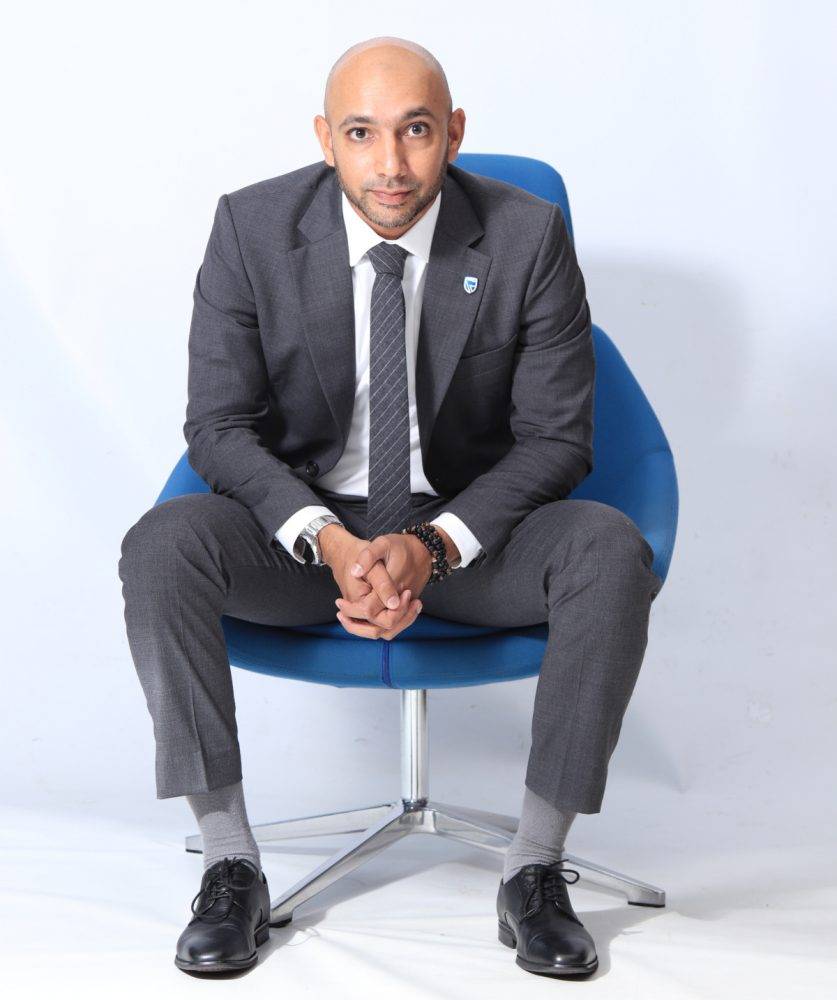
Hassen says he sees Shari’ah’s popularity growing, especially when considering what is happening at the global macro socio-political level, which affects patterns.
“Although Western Europe and particularly the US are traditional drivers of global economies, we are seeing trends shifting towards the east. Just considering BRICS members, these are now large economies. Almost 50% of the eastern side of the globe is Muslim and countries such as Turkey, Pakistan, Afghanistan, Indonesia and other countries in the Middle East and Africa have strong or predominant Muslim communities.
“As we see these economies grow and as people become increasingly familiar with Shari’ah, we will see interest in it continuing to filter down into retail. In South Africa, I see between three to five years of accelerated growth and then I believe it will stabilise organically.”
While the principles of Shari’ah might not suit everyone, there is no denying the steady rise in the uptake of Islamic financial products and services, and new finance house entrants are adding this option to their financial portfolios.
As mentioned, these products are not exclusive to those of the Muslim faith, and according to Suliman, a subset of environmental and social governance (ESG) has also contributed to more non-Muslims investing through Shari’ah products. Anyone wishing to invest responsibly and ethically may open a savings or asset investment account.
“In South Africa, only around two percent of the population are Muslims. Although our data is rather rudimentary and noisy, as we have filters in place for privacy purposes — such as not asking what religious persuasion a person is — we guesstimate that around 35% to 40% of our client base is non-Muslim here,” says Hassen.
“There is no discrimination in terms of clients. We accept people of all races, religions and creeds. All they need to open an account is a valid identity document.
“While discrimination is a sad fact of life, it is very interesting that there is little to no discrimination based on religion in South Africa. We actually take for granted a lot of the time that South Africans are a population of deeply religious people. We also don’t tend to see that there is actually some cross-over in beliefs, such as the Jewish and Muslim population having similar convictions based around the Old Testament, including some of the basic prohibitions.”
Regulation and governance
The question that is always at the top of consumer minds is the protection of investments and how Shari’ah differs from mainstream banking in terms of the very strict regulations in place to protect the consumer — which some may perceive as a distinct advantage of Islamic banking.
Institutions must be Shari’ah compliant, and while all financial institutions must be Financial Services Authority authorised, Shari’ah compliance goes a step further. Finance houses that are Shari’ah compliant also have an independent Shari’ah Supervisory Board consisting of scholars with expertise and experience in Islamic banking and finance, as well as an internal Shari’ah Advisory Department and an internal Shari’ah Audit Department.
These bodies are in place to ensure a finance house’s full compliance with Shari’ah in its day-to-day business activities. On an ongoing basis, institutions’ financial products are developed, reviewed and audited under the guidance of the Shari’ah Supervisory Board.
“Insofar as consumers have the comfort of using FSA registered and accredited institutions, they do also have the added comfort of the additional Shari’ah Supervisory Board and its own internal units with expert teams,” says Hassen. “In effect, it’s a dual layer of governance that enhances the Shari’ah risk posture.
“Sadly, in every industry, there are rogues and pockets of rotten apples who operate out of a regulated environment. We urge consumers to do their homework and ensure their investments are handled by proper scholars of repute.”
Asked what advice he would give to investors who feel drawn to more ethical types of investments but are worried about the potential impact on returns, Suliman says it is important to focus on long-term performance.
“While it’s true that some ethical investments may have slightly lower returns in the short term, focusing on long-term performance is crucial,” he stresses. “Ethical investing often involves companies with sustainable business practices, which can contribute to stable returns over time.
Diversification
“Diversifying your portfolio across various ethical investment opportunities can also help mitigate risk while potentially enhancing returns. Shari’ah-compliant investment options span multiple sectors and geographies, providing ample opportunities for diversification.
“Conducting thorough research and due diligence on potential investments is always very important. Look for companies with strong financial fundamentals, ethical business practices, and a commitment to sustainability. Evaluating these factors can help identify investments with the potential for ethical impact and financial returns.”
Suliman advocates consulting with financial advisors, especially if a person is uncertain or new to investing. “Seek guidance from registered financial advisors who are experienced in ethical and Shari’ah-compliant investing. They can provide personalised advice tailored to your investment goals, risk tolerance and ethical preferences.”
Hassen agrees, saying that investors need to get their own financial advice from experts in the Shari’ah context, as they would for any other potential investments.
“Regularly monitor your portfolio’s performance and reassess your investment strategy as needed,” continues Suliman. “Market dynamics and ethical considerations may evolve over time, requiring adjustments to your investment approach.”
Asked about the outlook on the local and global economy, Hassen is optimistic, but says that about one billion people in multiple countries are going to the polls this year, including South Africa, so this is a factor that the investment community is cautious about, due to the changes that could arise.
“I do see the Reserve Bank reducing the interest rate in the medium-term and there are indicators that the rand can appreciate to the USD. Globally, investors will be careful over the next 18 months or so, seeking steady, tempered growth and South Africa will follow suit,” says Hassen.
Adds Suliman: “Geopolitics and political tension is rife, such as that between the US and China and Russia and the Ukraine. These impact certain commodities, but we are seeing indicators that prices on these are normalising. Sound investment strategies should always factor in global geopolitics in the same way that other issues such as unemployment, inflation, market performance and rate hikes impact the global economy.”
High court hands DA a humiliating defeat on cadre deployment:
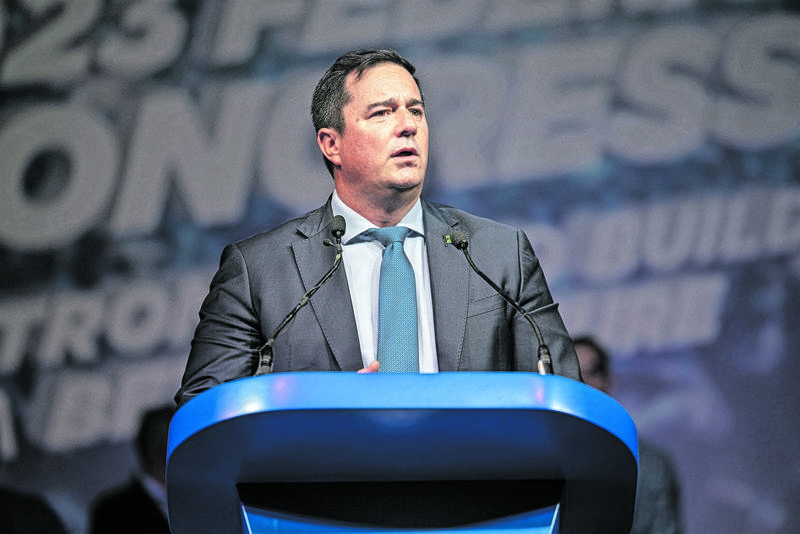
The opposition’s constitutional challenge on the ANC’s cadre deployment was spun out of conjecture and speculation, a full bench found
Submit and get free exposure here: Showcase Your Business | Advertise Your Special Offers.
