
Editorial: Fix our water crisis now:

Cholera is a highly infectious disease that comes from ingesting food or water contaminated with Vibrio cholerae. Symptoms include diarrhoea and vomiting, causing dehydration. Although only one in 10 people present with severe symptoms, people can die from dehydration quickly.
In Tshwane, 23 people have died of cholera. One person has died in the Free State, while Limpopo recorded its first case this week. Health Minister Joe Phaala said the source of the outbreak in Hammanskraal has not been identified and that there is a downward trend in infections and serious illnesses.
The situation made many South Africans take note of the water crisis. We’ve been reporting on this for some time. This week the Mail & Guardian relived our 2015 coverage where we detailed some of the major water issues countrywide.
But now is not a time for “I told you so”. Now is the time for accountability. Our leaders must deal with the consequences of their failures. The lives lost are on their hands.
Hammanskraal has been a time bomb for two decades. Report after report found its water unsafe for consumption. Leaders knew about it but dismissed reports.
When the time came to fix it, inordinate amounts were paid to people who did not adequately do the job. Now we sit with 100 cholera cases and 20-something deaths and no one will be held accountable. No one will explain to the people who lost a loved one how we reached this state.
Our water is in a precarious position. Our wastewater treatment plants are not effective. Cholera can become widespread.
Untreated water is pouring into our supply. The poor suffer the most, as they are the ones forced to use untreated water.
The United Nations Children’s Fund (Unicef) recently said 11 countries in Eastern and Southern Africa are battling cholera. These include Malawi, Mozambique, Somalia, Kenya, Ethiopia, Zambia, South Sudan, Burundi, Tanzania, Zimbabwe and South Africa.
South Africa enjoys claiming exceptionalism, but we’re on the list.
It’s another stain on President Cyril Ramaphosa’s time as leader. Our leaders must take immediate steps to right the wrongs.
Council for Scientific and Industrial Research researcher Basanda Nondlazi wrote, “It is my strong recommendation that we declare the cholera outbreak a national pandemic without delay. [This] would unlock access to additional funding from organisations like Unicef. These funds can then be allocated to the development of intensive river rehabilitation and water resources management aimed at conserving and enhancing our rivers from catchment to coast.”
People need adequate sanitation. And our water needs to be treated properly. It is criminal to continue allowing dirty water back into our rivers.
eThekwini rescue bid finally starts:
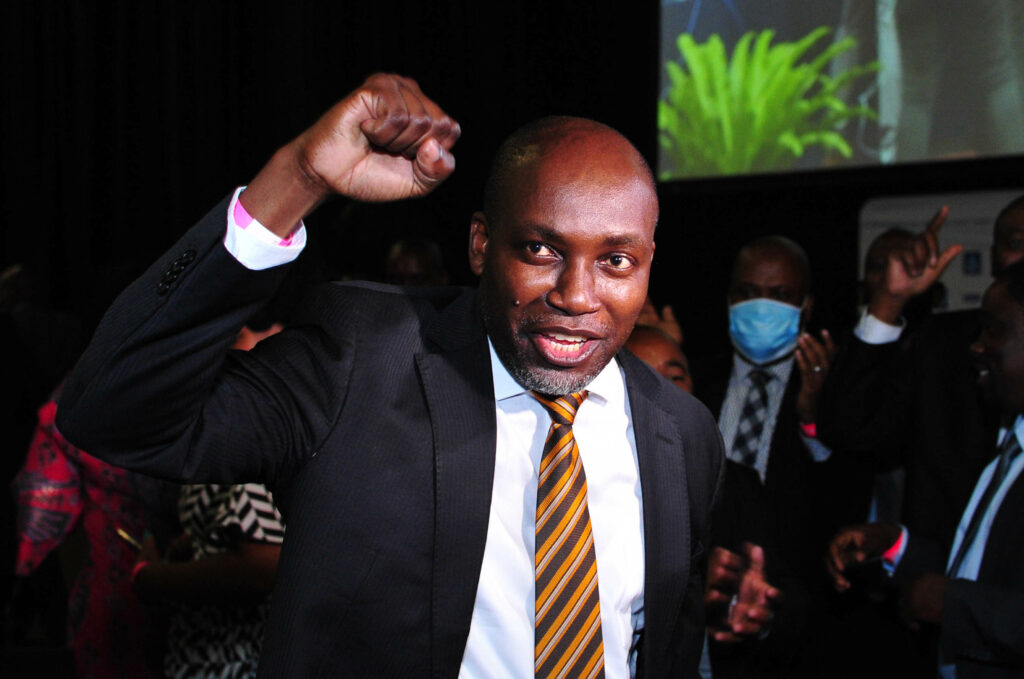
The section 154 intervention into the eThekwini metropolitan council appears to be finally getting underway after nearly a month of uncertainty about the role the team appointed by provincial government will play in stabilising its finances and administration.
The provincial cooperative governance and traditional affairs MEC, Bongi Sithole-Moloi, is scheduled to meet the eThekwini council on Friday to brief them about the intervention.
While the three-person team of former city manager Mike Sutcliffe, former director general in the presidency Cassius Lubisi and Moses Kotane Institute director Thandeka Ellinson are understood to have met, the province, city and the national department of cooperative governance and traditional affairs have been silent about the nature and lifespan of the intervention.
Although the intervention has been made by the provincial department, its officials have referred the Mail & Guardian to Cooperative Governance Minister Thembi Nkadimeng’s office for clarity regarding the terms of reference of the intervention.
The municipality lost a R100?million urban settlements development grant, designated for housing, and a R122?million neighbourhood development grant from the department of human settlements earlier this year.
The loss of the grants, along with infighting over the appointment of municipal manager Musa Mbhele and other key officials, as well as spiralling expenditure in the city’s expanded public works programme, sparked the intervention, which was requested by the ANC leadership in the province.
The section 154 intervention puts in place a support team to assist a floundering municipality, but leaves the council in place and falls short of the section 139 intervention normally used by the cooperative governance department in dysfunctional municipalities.
Opposition parties in the city had called for the department to dissolve the council and place eThekwini under administration, but have accepted the section 154 intervention as a step towards guiding the metro out of an administrative and financial quagmire.
On Thursday, Tsekiso Machike, spokesperson for Nkadimeng, said they were “aware” that the province had invoked section 154 of the Constitution and would brief the city on Friday.
“It is in that meeting that the province will officially inform the metro about the support plan. The minister will wait in anticipation for the province to brief her after this process,” Machike said.
The intervention comes at a time when eThekwini continues to battle with service delivery and with rebuilding infrastructure damaged in the 2021 riots and last year’s floods, and with its finances.
According to the auditor general’s consolidated report on municipalities, released on Wednesday, eThekwini maintained its unqualified with findings status.
The city incurred R4.8?billion in irregular expenditure and a further R48.3?million in fruitless and wasteful expenditure during 2021-22, consistent with its performance over the past three financial years.
The section 154 intervention is in part aimed at identifying blockages in financial oversight and controls, along with problems in human resources consequence management, but its terms of reference are yet to be made public.
They are understood to provide assistance in areas including governance, service delivery, planning and financial management. They would also be tasked with identifying blockages regarding disciplinary processes and to ensure that grants allocated by national and provincial governments were spent.
A source close to the process said the team had already started work, with initial meetings being held towards drafting a diagnostic report regarding the key problems the city faced and how they could be solved.
But they needed to have a “political introduction” to the councillors and officials before the process could get off the ground in earnest to prevent pushback from within the council to their attempts to turn its functioning around.
The terms of reference were expected to be finalised ahead of the intervention team meeting councillors and officials.
Mayor Mxolisi Kaunda made no mention of the intervention in his post budget media briefing on Thursday, while city spokespersons referred the M&G to the provincial cooperative governance department for comment.
Kaunda said that investigations into allegations linked to the city manager and deputies would be presented to council within seven days.
Cooperative governance spokesperson Siboniso Mngadi said there had been “some delays on the issue of eThekwini”.
“This directive came from the national department. Lubisi is not here in KwaZulu-Natal, so some issues can be addressed by the national department,” Mngadi said.
South Africans discover the world via marathons:

June is a big month for South African runners — Global Running Day is around the corner on 7 June and 20 000 athletes will run 87km in the 2023 Comrades Marathon on Saturday, 10 June.
But for South African pharmacist Wandisile Nkwalase, marathon running is a unique mode of international travel. He has run 28 marathons — half of them international marathons in cities such as Paris, Tokyo and Istanbul.
“I started running around 2016 and immediately saw an opportunity to travel the world through running. I ran my first marathon in 2018, which was the Paris Marathon,” says Nkwalase. “Every runner in South Africa wants to run overseas.”
Nkwalase is on his way to being one of 38 South Africans to have completed the “Marathon Majors” — the world’s top six marathons: Tokyo, Boston, New York, Chicago, Berlin and London. Nkwalase says he will have completed the Marathon Majors once he finishes the New York Marathon in November.
The tricky part for South African runners with their hearts set on international races is the expense and lengthy visa application processes. Since the 2020 Covid-19 lockdown, Nkwalase has worked to make running overseas “fashionable, accessible and, most importantly, more affordable for people”, through his travel agency Just Run Tours.
“These marathons are really expensive, so we want to make those marathons more affordable through economies of scale,” says Nkwalase, who books large numbers of runners to reduce costs and help local runners start participating in the Marathon Majors.
“I spoke to travel agents from New York City for my friends and it’s around R58 000 [per person]. We want more South Africans to be able to achieve that goal of running the major [international] marathons,” says Nkwalase.
Beyond running for health reasons, it is also a sport of mental toughness — or even mental cleansing, depending on your reason for running. If you’ve ever wanted to look into the mind of an amateur runner, Haruki Murakami’s book What I Talk About When I Talk About Running lifts the lid on a runner’s motivations whether it’s the pursuit of self-improvement or meditation.
“For me, running is both exercise and a metaphor. Running day after day, piling up the races, bit by bit I raise the bar, and by clearing each level, I elevate myself. At least that’s why I’ve put in the effort day after day: to raise my own level,” writes Murakami.
But for Nkwalase, aside from running for health purposes, he mentions “when you run, you forget all your problems”.
Home run
Although Nkwalase’s Just Run Tours takes groups of running enthusiasts abroad, it is not a running club. They are taking Africa to the world and want more South African runners to achieve a goal of running the major marathons.
“We consider ourselves a travel agency, for now, because we organise everything from registration, and accommodation to visa applications — and provide running kit for everyone,” says Nkwalase.
Just Run Tour’s first marathon was the 2022 Paris Marathon, with only a few runners. But in November, a group of 37 runners travelled with Nkwalase to Turkey for the 2022 Istanbul Marathon.
Demand has shot up after a video of the 50 runners that Just Run Tours took to France for the Paris Marathon in April went viral. The video shows the group of South Africans singing and dancing in their patriotic running kit during their 5km practice run before the marathon.
“It’s just to run 5km together as a group. It doesn’t matter how fast or slow you run, it’s just to show that comradery with the runners. It’s just how we do things — and people then take pictures of us,” explains Nkwalase. “These are people who have met for the first time and it looks like they’ve known each other for a long time.”
What is common in international marathons — and part of what makes them a unique travel experience — is that the routes go past some of the landmarks of that particular city. The Paris Marathon, for example, starts at Arc de Triomphe and, 30km into the race, runners pass the Eiffel Tower.
Running the marathon only constitutes about two to three hours of the whole trip. The rest of the time is about exploring the city, culture and food and understanding how other people in the world live.
Just Run Tours will embark on three more marathons this year and there are already runners who want to sign up.
“We have three marathons in October and November: Amsterdam, Athens and Istanbul marathons. We’re looking at 40 [runners] for Amsterdam, for Athens around 30 and Istanbul about 20 runners. So, in total, close to 90 runners,” explains Nkwalase.
Submit and get free exposure here: Showcase Your Business | Advertise Your Special Offers.
