
EFF headquarters a halfway stop on the road to Nxamalala:
Thursday.
If the events of recent weeks and months are anything to go by, all roads would appear to lead, politically speaking, to Jacob Zuma’s uMkhonto weSizwe (MK) party.
It’s not just the 45% of voters in KwaZulu-Natal who decided to dump the ANC, the Inkatha Freedom Party and the Economic Freedom Fighters (EFF) for the former head of state’s new party on 29 May.
Or the flurry of leaders of zero-seat parties who jumped on the MK bandwagon as soon as they saw a future of collecting a R350 grant monthly unfolding on the leaderboard at the national results centre.
The one-(wo)man-and-a-webcam wonders who sprang up all over Mzansi in the build-up to the elections traded their handful of votes for a green T-shirt in the days that followed — some extremely low-hanging fruit for the MK party as it consolidated its election win.
Since then there’s been a steady movement of former bureaucrats, technocrats, securocrats and jurists — well, one former impeached jurist — into the ranks of the Zuma party and onto its parliamentary benches.
John Hlophe and associates sashayed into parliament when the MK party decided to participate, just in time for payday on the 15th, pre-election lists submitted to the Electoral Commission of South Africa be damned.
EFF deputy president Floyd Shivambu followed a month or two later, sparking an exodus of party members and leaders into MK in various parts of the country where it had lost ground — and legislature seats.
These days, Winnie Madikizela-Mandela House is vibing Montrose, a halfway stop on the road to Nxamalala, as the MK party continues to cannibalise it and other allies in the progressive caucus as part of its consolidation programme ahead of the local government elections in 2026.
Former public protector — and now former EFF MP — Busisiwe Mkhwebane says she is still applying her mind as to her next move after bailing from the Red Berets on Wednesday, the latest of its leaders to do so.
But all indications are that she, too, will make the pilgrimage to Nxamalala before very long, joining the long line of ANC and EFF leaders to do so since Zuma launched the party on 16 December last year.
It shouldn’t be long before Mkhwebane takes the parliamentary oath for the second time in the course of a year — there must be another personal and South African first there — and is back on the opposition benches, this time as an MK party MP.
I’m hoping uBaba deploys Mkhwebane as Hlophe’s stand-in until the impeached judge’s legal dramas as the party’s representative on the Judicial Service Commission (JSC) are resolved.
Not that I have anything against Papa Penny, but the wave of public outrage that Mkhwebane’s appointment to the JSC would generate would be good for a laugh.
Hopefully the idea of throwing the impeached public protector among the JSC pigeons appeals to the old man’s sense of humour as well.
We shall see.
The leaders of the other small parties on the opposition side of the chamber must be increasingly nervous of their newfound friends in green, who are busy numbering their numbers ahead of 2026.
The MK party’s constitution that Shivambu unveiled last week doesn’t talk about elective conferences and gives Zuma more power than God, but it also allows its members to be members of other parties.
It sounds pretty outlandish, as a fair bit of the MK constitution does, but the party went into the elections telling people to vote for them while remaining in the ANC and it almost got Zuma the 50% plus one he needed for his party to govern KwaZulu-Natal alone.
It may not work on the ANC constituency again, or on the voting base of other parties, but Julius Malema and everybody else wanting to retain their seats on the opposition benches — and their identity politically — will be sleeping with one eye open from now to 2026.
The South African Communist Party (SACP) is also talking about deploying all 17 of its votes elsewhere when local government elections come around again because the ANC has given most of its cabinet seats to Helen Zille’s lot.
The SACP has been threatening to divorce the ANC since Blade Nzimande was in the Young Communist League, and finally may have an actual — if somewhat unlikely — alternative for the first time.
Its leaders are now reprising 2007 and talking up an alliance with Zuma’s party in the future over the ANC’s latest failure to consult.
That should go well.
According to the MK party’s constitution, uBaba giveth and uBaba taketh away — undemocratic centralism — so one wishes Solly and the comrades strength in their search for consultation.
Africa’s Girl Child Dialogues – Women in the media webinar:
Exploring career opportunities in the media industry with the experts
The origin stories of a number of renowned women media personalities were shared in an uplifting and empowering webinar hosted by Boston Media House, Good Governance Africa and the Mail & Guardian. Held at BMH’s Sandton Campus, the room full of schoolgirls heard how these influential women got to the positions they hold today in the media industry, along with tips, advice and words of encouragement.
Themes that emerged from the experiences shared by the women in the various media sectors were that constant learning is essential, to allow women who enter into the media to stay abreast of new developments and to be able to pivot and adapt as circumstances in the sector change. Taking advantage of opportunities that present themselves is key to advancing one’s career; having a mentor helps; and maintaining a competitive edge is important for women in the media industry, which is still male dominated.
In Zimbabwe and Ghana GGA’s regional offices held similar events, where the participants learned from an experienced array of women speakers about the media industry. In Nigeria, a conference on gender-based violence was held. Reports from these events follow below.
Mmabatho Mongae, Data Analyst at GGA, opened proceedings by saying the GGA believes in empowering young women, and that the aim of the webinar was to provide a vision of what the media world is about for the young women in attendance.
Introduction
MC Carike Verbooy, Academic Head of Boston Media House, outlined the various fields in the media industry that young women can choose from.
Keynote speaker and radio presenter Precious Maputle said that empowering the youth — particularly young women — is essential for Africa’s future. The cultural and creative industries contribute greatly to all countries’ GDP and the media industry offers many career opportunities. Working in the media offers many benefits, including creative expression, networking, collaboration and global connection, and it encourages lifelong learning. “It’s a fulfilling career, and you can make a significant contribution. Dare to dream!” said Maputle, emphasising that having a positive attitude helps, and so does finding a mentor.
Session 1: Women in media
The panellists were encouraged to talk about their careers and how they got to their present positions.
Shoeshoe Ntsoaki Qhu, CEO, Media Development and Diversity Agency (MDDA), asked the young girls in the audience, how diverse are the social media platforms they listen to? Outlining her own career in which she began as a reporter, she said the media industry opens one to a variety of opportunities and experiences, and she took advantage of those that came her way.
Qhu said we should always be prepared for failure and mistakes, which are part of the journey.
Asafika Mpako, Communications Co-ordinator Southern Africa, Afrobarometer, said she came from a small town, studied at UCT and then went to the US, which changed her life, after which she applied for further scholarships and travelled some more. She did not intend to end up in the media, but her mentor said she had always been a communicator. She encouraged the audience to go beyond fear, as there are no limits, and to always be adaptable and open to constant learning.
Naledi Mphahlele, AFDA graduate, pageantry model and script supervisor, said she is now a filmmaker who often works for more than 12 hours a day, and that she loves her career, even though around 90% of the film crew is typically male. She said that having courage is an essential part of making your voice heard as a woman in the media industry.
Sibusiswe Ndlovu, CEO, Amakhosikazi Media, Southern Africa, joined the webinar online from Zimbabwe. She said she has been in the media sector for more than 20 years. She started her career in acting then worked as a radio broadcaster, after which she produced radio programmes, and studied further to advance her career. She discovered that women were often too silent in media meetings dominated by men, and formed Amakhosikazi Media to create a platform to share the stories of women’s burdens.
A question from the audience directed to Mpako was how she balanced her career and studies with her own life; she said she often studied too hard, and gave herself very little time, so learning to prioritise is very important. “To stay positive and focused requires discipline and routines. It’s also important to surround yourself with a supportive network.”
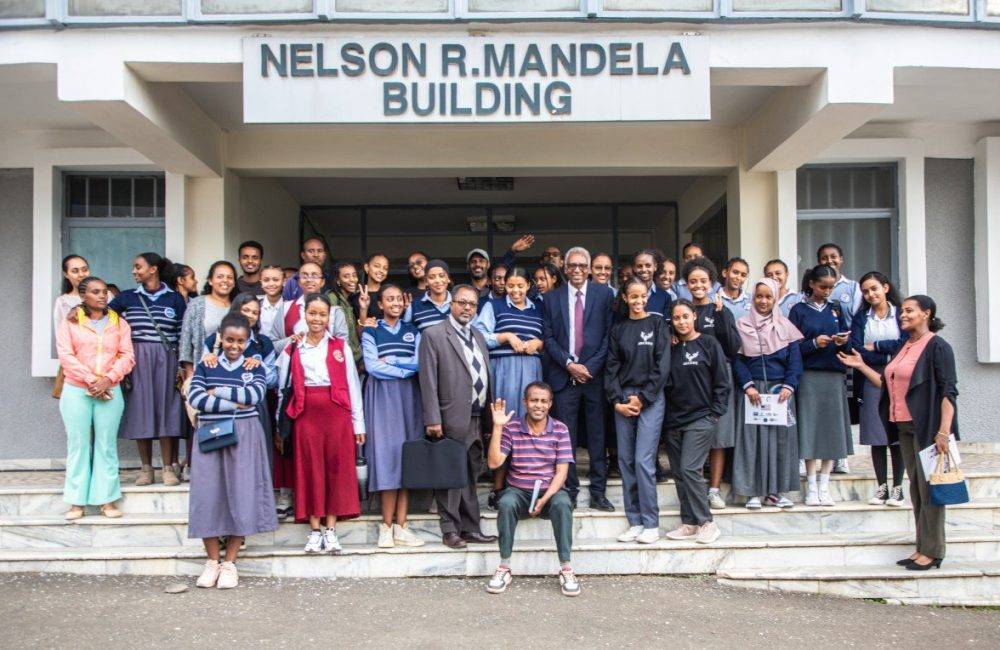
Session 2: Journalism, Radio, Television
Dr Allegro Dinkwanyane, Founder and Group CEO of Orgella Group, said she started Orgella when she was just 21, and she encouraged the younger generation to start early. On the issue of continuous learning, Dinkwanyane said the world is changing so fast today that just having a degree is no longer enough; there are free courses on the internet, so use it to your advantage. She began with a 3am “graveyard” shift on radio while at UJ, walked over to the SABC and started sitting in on sport presenter Carol Tshabalala’s show, where she learned the ropes.
By studying marketing, she realised how to monetise her blog Orgella, which has grown exponentially. “Stick to your dream,” she said, “or you will quickly be sidetracked.” Success in social media is not necessarily defined by numbers, said Dinkwanyane; to make an impact, you need engagement with your audience, and a lot of that comes from having a niche.
Sally Sithole, CNBC Junior Producer, said she always wanted to be a producer on radio and TV, and she has managed to realise her dreams; she encouraged the audience to follow theirs, though it can be a lonely task. Have a competitive edge, she said; get the qualifications you require, and build contacts, as they will be your future work partners. She’s now in her third degree, and will be a doctor one day.
Dineo Mathebula, Content Producer, Urban Brew Studios, is like Sithole a Boston alumni. She comes from humble beginnings, and moved across several sectors in media before she became a producer. She said that we are all born to shine, and that playing small does not help anyone, especially ourselves. She also began with a graveyard shift and was thrown into the deep end at Power FM, and soon her breakfast show began stealing audiences. “Never be scared of making mistakes,” she advised, “because even the bad experiences can be learned from.”
Men still control the boardrooms in the media industry, so as a woman, never allow anyone to silence your voice, said Mathebula.
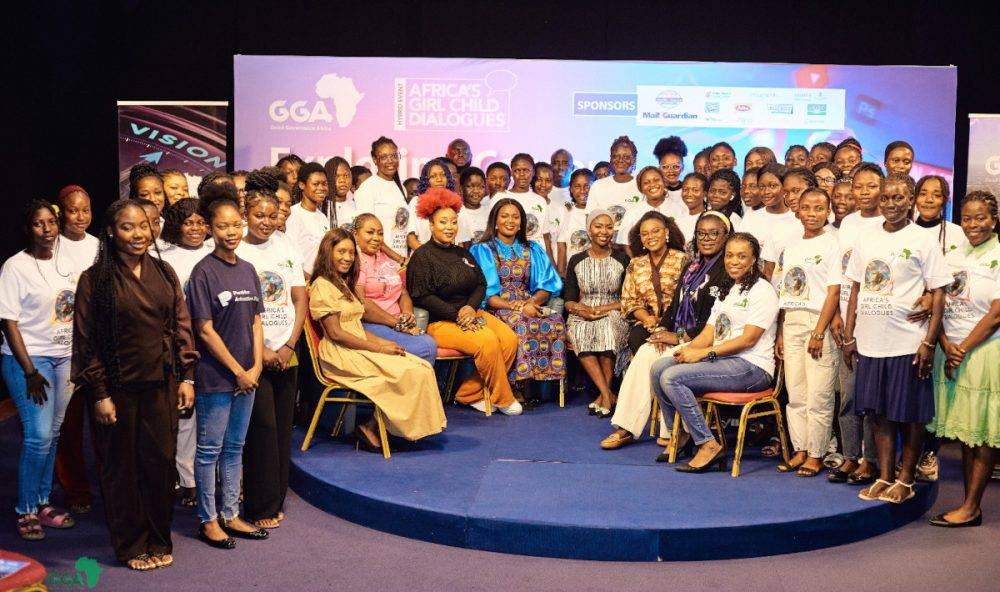
Session 3: Graphic design and animation
In this session, the difference between graphic design and animation was explained by the panellists, who said that one doesn’t have to have taken art at school to enter this part of the media profession. Responding to audience questions, they said you can use AI to create images these days, and it won’t take away your job; it’s just a tool.
Pippa Tshabalala, Senior on-air and Creative Services Manager, The Walt Disney Company Africa, has an MA in animation, and has worked for several media houses. Her advice is to be open to new opportunities, which helped her to pivot and advance in her career. “Always learn new skills: this is essential in the media industry.”
Innocentia Hlatshwayo, Graphic Design Specialist at MultiChoice Group, began her graphic design career in the corporate industry, where she met many uplifting women colleagues. She advised the girls in the audience to always have a mentor to lift you to the next level. “Self-belief is what will pull you forward,” she advised.
Nompumelelo Mdluli, Senior Art Director, Ogilvy South Africa said she started in graphic design after seeing designs on cereal boxes. She’s worked on many brands, including her favourite brand, which is Cadbury. Be open to learning new things, said Mdluli, and take risks that may open you to new possibilities; be a “Sponge Bob” and absorb new things.
Verbooy added that, based on the panellists’ career experiences, that you often end up in a different sector to that which you studied; so, don’t be afraid that your chosen study field is “wrong”. The session ended with members of the audience drawing avatars of themselves.

Session 4: Advertising, marketing and public relations
Lethabo Senyatsi Kgolane, Africa external communications and stakeholder relations lead, Deloitte SA, said she “does everything” in her current role, and that she has worked across a variety of sectors. She’s learned that things change all the time, so being adaptable is key, and learning must happen all the time, including in the workplace, by engaging with her colleagues. She said being black and a woman, you have to do things twice as well, and that if you are assertive, you are seen as “aggressive” or “opinionated”. When you rise, lift others with you.
Kamogelo Phatlhane, Marketing Manager, Cradlestone Mall, was a student at BMH and got into the SABC internship program. She then got into event management and from there got into mall management; now she plans strategy for Cradlestone. “Know your worth and speak up; be a team player and help those who are struggling; if things are not going to plan, formulate one; go the extra mile; and stay on the trajectory of your dream.”
Sibongile Keswa, Marketing Manager, Flight Centre, said she wanted to be a writer, studied at BMH, and spent some time as a news reader, then got into social media and from there into marketing, where she worked her way up to her present position. The issue of some people not being team players can sometimes be dealt with by moving them to a role where they can work more solo, said Keswa.
Session 5: Demonstration and Closing Remarks
Nadia Sigamoney from sponsor Vela Personnel said the organisation is 100% black women owned and provides a tailored HR service for recruitment, placement, assessments, etc. Its program Matla Basadi is focused on women empowerment, which helps young women gain confidence for job seeking tasks like interviews.
A demonstration of how to use reusable Palesa sanitary pads followed, and a poem by Botlhale Boikanyo, award-winning poet, actress and speaker, closed off the proceedings for the day. She said that the overarching narrative of the media is storytelling. “Stories shape who we are and connect us all,” said Boikanyo, “women need to tell stories that reflect their true power.”
Session 6: Tour of Boston Media House
Delegates were taken on a guided tour of BMH and groups were given a chance to record a short podcast.
GGA Regional Centres
Zimbabwe
In Zimbabwe, GGA partnered with Amakhosikazi Media Southern Africa on 11 October 2024 in commemoration of the International Day of the Girl Child. Twenty-six media students were drawn from Lupane State University, Midlands State University, National University of Science and Technology and the Zimbabwe Open University. They joined the South African event virtually.
Teseletso Matjaka, a media student from Lupane State University, said: “What I learnt today is that I should not be worrying about how AI or other technological advances are going to take my job. I learnt that my focus should be on how I relevantly skill and continue to up-skill myself in line with these advances in the field, so that an equally skilled person does not emerge to take my job.”
West Africa Regional Office
Good Governance Africa – West Africa Regional Office (GGA-WARO), hosted an event for young women which was themed “Exploring Career Opportunities in Media and Publications”. This event took place at the Ghana Broadcasting Corporation (GBC), in the Greater Accra
Region of Ghana. A total number of 51 female students from different institutions including that of Delcam Senior High and GH Media School participated in the event. Renowned media personalities and women achievers were invited to share their stories to motivate young girls who are aspiring to go into the media and publication space.
Throughout the three-part event, the speakers underscored the importance of perseverance, passion and resilience in achieving success in media-related careers. Despite facing challenges in male-dominated sectors, they demonstrated how determination and support from role models helped them achieve their goals. The speakers encouraged the participants to be bold in pursuing their career paths, stressing that gender should never be a barrier to success.
GGA Nigeria
GGA Nigeria had over 70 participants gathered at Lekki Centre for the conference and panel section on Gender-Based Violence. The panel discussion which focused on “Girl’s Vision for the Future” was done in collaboration with HeartMinders Initiative, a transformative NGO that has been at the forefront of fighting against GBV, rape and child sexual abuse in Nigeria.
The panellists include Adeola Kingsley-James, Osayuwamen Saleh, and Zuriel Oloke. It was moderated by Tosin Adisa.
Media entrepreneur Saleh advised the participants to create an idea of what they want for themselves and not what society wants for them. “One of the biggest things to help you is strong emotional stability. The things that control you are embedded in you. You must be intentional as a girl and not settle for less. You cannot take your life with levity. Women are visionaries and should dream big.”
Cape honey bees the guardians of South Africa’s food security:
The Cape honey bee is one of the most important but often overlooked contributors to food security in South Africa.
These small yet mighty insects are critical in maintaining the country’s biodiversity and agricultural landscape. Honey bees contribute to food production through pollination.
At a recent briefing, Shelly Fuller, the fruit and wine programme manager at the WWF South Africa, said areas such as Grabouw in the Western Cape, “which produces 80% of the country’s apples and pears”, rely on pollination for domestic consumption and exports.
About half of Grabouw’s produce is exported, while Langkloof accounts for just under 20%.
Understanding the relationship between bee populations and agricultural output is critical, especially in regions where veld provides the necessary forage for bees surrounding farmland.
Fuller said several experts and organisations had gathered data on the availability of food for bees, noting that nature is “the most important business partner at [a] boardroom table, providing insurance and resilience”, she said.
One of the key initiatives Fuller pointed to is WWF’s Farming With Biodiversity report, which demonstrates that sustainable agricultural practices can restore and protect the ecosystems on which farming depends.
This report is part of a broader effort, such as the WWF’s Conservation Champions initiative, which has worked with the wine industry for more than two decades to promote farming practices that protect biodiversity.
Through partnerships such as this, vineyards and fruit farms are shifting toward more environmentally conscious practices, such as reintroducing biodiversity within vineyard landscapes, which helps support honey bees and other pollinators.
“In the past, vineyards were kept neat and sterile, but now we are seeing a trend of bringing life back into the soil”, Fuller noted, explaining how this transformation benefits both the land and the insects that rely on it, especially the Cape honey bee.
Honey bees face numerous threats, including habitat loss, climate change and harmful agricultural practices. Another threat is mono-cropping. A lack of dietary diversity can weaken bee colonies, making them more susceptible to disease and environmental stressors.
The WWF report says that “declining honey bee populations and a shortage of beehives mean poor pollination of crops, which translates into poor harvests, fewer food choices, less food and job security and more threats in the agricultural industry”.
South Africa is slow in addressing these threats but efforts are being made, said Tlou Masehela, the control biodiversity officer at the department of forestry, fisheries and the environment.
“A lot of assessments have not been done, however the the South African National Biodiversity Institute are in the process of adding this data in their next Nation Biodiversity Assessment for 2025, so it will cover some of the threats,” he said.
The incorrect use of pesticides on crops affects the bees, as does climate change, Masehela said.
“We have been worried about climate change issues in the country, which we have not really started looking at whether it is on honey bees or other insect pollinators but we know that from other parts of the world there is some data that shows that they will be affected,” he said.
Bees can fly five to 10 kilometres. “In terms of adapting and moving from one environment to another makes them extra special, Masehela said. “They have been very instrumental in the agricultural sector.”
According to the WWF, bees pollinate more than 50 crops in the country, valued at R10 billion per year. This service ensures the yield of fruits, vegetables, nuts, and oilseeds.
Without honey bees, these crops would experience dramatic reductions in production, leading to severe economic and food insecurity.
Pollination, the process by which plants reproduce, is key to this dynamic. As honey bees visit flowers to collect nectar and pollen, they inadvertently transfer pollen between flowers, allowing fertilisation.
This crucial step in the life cycle of many plants supports the production of fruits, vegetables, and seeds, which are essential for both human consumption and ecosystem stability.
Protecting them requires a concerted effort from farmers, conservationists, policymakers and the public.
Submit and get free exposure here: Showcase Your Business | Advertise Your Special Offers.
