
Elections: Young people must participate in shaping their future:

This year 2024, South Africa celebrates its 30th anniversary as a democracy. Key to this year’s elections is the participation of youth in the country’s economic and socio-political terrain.
Historically, young people have been at the forefront of resistance and acting against injustices in South Africa. One such example was the formation of the ANC Youth League in the early 1940s by the “young lions”, which consisted of Anton Lembede, AP Mda, Nelson Mandela, Oliver Tambo, Walter Sisulu, Robert Sobukwe and others, to fight apartheid. The 1976 Soweto uprisings as well as the 2015 and 2016 #FeesMustFall (#FMF) movement are also evidence of the youth’s ability to carve a pathway for a desired outcome. The current young generation can draw inspiration from these examples.
Amid the socio-economic problems facing youth, which include poverty, and a high unemployment rate, there is a vacuum of youth participation in the country’s affairs. According to the latest statistics from the Electoral Commission of South Africa, the percentage of registered voters aged 18 to 39 accounts for about 43% of the total number of registered voters in all age groups. Although the last voter registration drive, which took place on 3 and 4 February 2024, recorded an increase in the number of young people registering for the first time as voters, additional effort by the youth is still required given that they are the largest demographic of South Africa’s population.
The youth have a voting power that could upend the results of this national election to the benefit of future generations.
Same script, different cast
The governing ANC has fallen short in dismantling apartheid constructs. The high inequality levels coupled with the spatial planning has left black people in the same, if not worse, positions they were in during apartheid. This is reflected in inadequate access to basic infrastructure and services such as housing, water, sanitation, healthcare, education and employment. These should serve as the catalysts for youth activism and voter education. In as much as these conditions affect both young and older South Africans, it is the youth that bears the brunt of unequal access to work opportunities given the stagnant economy.
The youth unemployment rate as per the third quarter of 2023 is 58% (a slight decrease from the second quarter) and the gross tertiary enrolment ratio is less than 30%. The latter can be attributed to several reasons such as unconducive learning environments for learners at schools in informal settlements that don’t have adequate resources and facilities to enable them to excel and compete equally for space at institutions of higher learning.
Although there may be integration in the basic education system nowadays, with some learners who fall under the previously disadvantaged category being able to attend former Model C schools, we cannot be oblivious to the inequality that is still prevalent in this sector. It is in these critical areas that the government has failed in advancing the transformation agenda.
Counteracting harsh realities
Considering all these problems, the question boils down to, “what can we, the youth, do to salvage ourselves from these worsening conditions?” Many argue that young people’s voices are not being heard, hence we witness extreme measures being taken by the youth including violent protests in areas where they live and in the institutions of higher learning, as well as abuse of substances, including drugs.
But young South Africans have the potential and power to shape their future by voting in the upcoming election. The youth can make the adage “2024 is our 1994” to be as effective as the first democratic national elections on 27 April 1994.
Reverend Isaac Wauchope, a South African anti-colonial activists during the late 19th and early 20th century, wrote:
“Your cattle are gone, my countrymen!
Go rescue them! Go rescue them!
Leave the breech-loader alone and turn to the pen.
Take paper and ink, for that is your shield.
Your rights are going! So, pick up your pen.
Load it, load it with ink.
Sit on a chair. And fire with your pen.”
This composition should be adapted for the current period where we find ourselves at a crossroads in deciding the future of our country. With a government that is seemingly in disarray insofar as rescuing its citizens from a myriad of societal problems, South Africans, in particular the youth irrespective of race, class, gender and background, need to rally behind a common cause that will stir their commitment to liberate themselves from any injustice and violations of their rights.
Hlumelo Xaba is at the Africa Policy Conversation’s Southern Africa Chapter, a Pan-African think-tank made up of young people from various academic fields.
Enlit Africa date change announcement:

Cape Town conference on the power and energy industry moves forward
Please be advised that as a result of the official declaration of 29 May 2024 as a public holiday to facilitate South African national elections, Enlit Africa has made the decision to move the Enlit Africa conference to a slightly amended dateline:
??? ????? ?????? ?????: Tuesday 21 to Thursday 23 May 2024, with site visits planned for Friday 24 May.
Enlit Africa is excited to bring the global and African Power & Energy industry together in Cape Town during 21 – 23 May 2024. All event details can be found by clicking here.
Thank you all for your patience, understanding and support during this time, we really appreciate it! We are looking forward to welcoming you, thankfully still in May this year.
#EnlitAfrica2024 #EventDateChange #SouthAfricaElections
Biofuels: A new era of extraction:
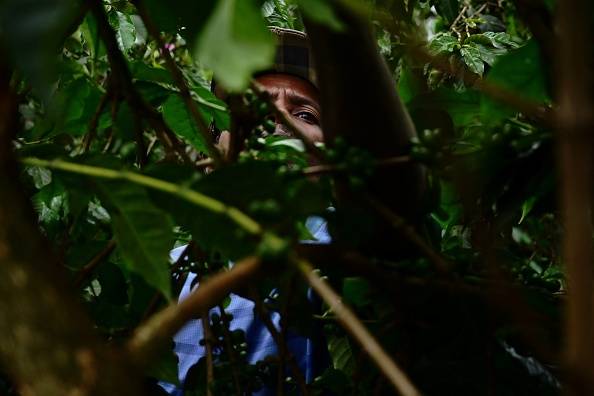
When Benjamin Mbelenzi decided to try castor beans he – to his regret now – encouraged as many as 200 other farmers to follow his lead.
At his mango and citrus farm in Wote town in Makueni County, Mbelenzi walks up to a castor bean tree. Twice his height, its seeds are well above his head and hard to pick. The trees also took a year to go from planting to maturity, as opposed to the six months the farmers were told. And even then, they “did not do well at all,” he says.
Mbelenzi says he harvested two kilograms of seeds, which would have cost more to sell than the $ 0.40 they were worth. Disillusioned, he spent $ 35 to uproot the trees.
Contracts obtained from farmers show that they were offered 25 Kenyan shillings per kilogram of shelled castor beans in 2022, or $ 0.25 at the exchange rate then. That grew to 35 shillings in 2023. Most of the farmers interviewed say these prices are just not economically viable.
Mbelenzi’s struggle and eventual defeat should concern the world well beyond Wote. Transport is responsible for a quarter of all global carbon emissions, driving the climate crisis. Things like planes and boats can’t yet go electric. Those industries are betting on biofuels to power them and go carbon neutral. But the ingredients for biofuels must be grown, often by people like Mbelenzi.
Biofuels are made up of seed, nut, and vegetable oils. They can be grown in arid and semi-arid areas. These become the basis of fuel blends that can emit 60% to 90% less carbon dioxide than fossil fuels, depending on the raw materials used.
Italian energy giant Eni aims to produce a quarter of its biofuel from agricultural sources by 2026, the bulk of which will come from Africa, where it has signed supply agreements with six countries. Work is under way in Kenya, Congo, Côte d’Ivoire, Mozambique, Angola and Rwanda.
The company has begun building a network of agri-hubs across Africa to process vegetable oil from non-edible crops including the three “Cs” – castor, croton, and cotton – as well as used cooking oil from restaurants and hotels.
Eni says that these crops, or feedstocks, are resistant to drought and suitable for planting on degraded soils and so will not compete with food crops: a serious downside of other programmes is that they have seen food crops replaced with biofuel stock.
All this should mean local, small-scale farmers can grow an extra cash crop on land they would otherwise not be using.
A promising theory for change
In July 2021, Eni signed an agreement with Kenyan authorities and research institutions. It wanted to have 25,000 farmers producing 30,000 tonnes of feedstocks each year by 2023. That would increase to 200,000 tonnes by 2026.
The company used social media campaigns as well as traditional structures, such as cooperatives, to recruit farmers. Eni says it got 80,000 farmers with 50,000 hectares of land “engaged” in the project by the end of 2023.
Its next step was to build an oilseed collection and processing plant on public land leased to it in Wote.
Wote is a nook nestled between a series of hills. Even though it is a semi-arid area, the town produces a variety of cereals that are consumed across Kenya and its red soils nurture juicy oranges, and even juicier mangoes. A second agri-hub recently became operational in Kwale County, near Mombasa. Two more are planned.
Through contractors like Servizi Agricoli Forestali Africa (Safa), Eni gives farmers seeds, having tested them in the horticultural town of Naivasha, over two hundred kilometres away from Wote.
On an expansive piece of land, Safa grows different castor bean varieties and then distributes them to contracted farmers in at least 10 counties of Kenya. As an aggregator, Safa also collects the yield.
That yield is added to the yield from other aggregators and sent to the agri- hub in Wote. It’s then processed, sent to Mombasa port, and shipped to Eni’s biorefinery in Sicily for conversion into biofuel.
Eni shipped the first batch of processed oil in October of 2022. In May 2023, Kenya Airways became the first African airline to fly using Eni’s “sustainable aviation fuel”. Ryanair, one of the world’s biggest airlines, also signed a deal to buy from Eni.
Little proof in the pudding
Fruit farmer Mbelenzi’s dispiriting experience with growing castor beans is not the only one. In Nakuru, which Eni lists among its top five counties for castor production, the farmers who are willing to speak are just as disgruntled.
Contracts obtained from farmers show that Safa guaranteed farmers input and technical support, in return for exclusive rights to buy the produce.
One farmer says she was given a quarter of a kilogramme of seeds, half a day of training – with no practical demonstration – and left to farm. Her five castor bean trees netted $ 2 after two years of growing. In that time, two seasons of edible beans brought in $ 495.
Safa says the money farmers get doesn’t include the extra value they get from land preparation, the planting of seeds and other extension services.
Farmers in Makueni County and Kwale County say that the poor variety of seeds, prolonged dry spells and low buying prices are brewing into one big flop.
The poor yield and low prices are especially frustrating because the work can be tedious. Harvested castor beans need to be spread out in the sun for days on end until they pop out of their shells. They are fragile so farmers cannot use force to pop them out like they would with other beans. They are also light, so it takes a lot to fill up a single kilogramme.
The pitch from Eni and its partners is that the biofuel trees can grow alongside other crops, giving farmers extra income. But farmers say the castor bean plants grow tall and block off the sunlight to other plants.
Between 2020 and 2023, Kenya also suffered its worst drought in 40 years, made far worse by the fossil-fuel driven climate crisis. The crops are supposed to be particularly good when it comes to growing in these kinds of conditions – another theory undone by harsh reality.
Benjamin Muendo from the Kitise Rural Development Cooperative, where 1,095 farmers were recruited, says the drought reduced their collective yield with some farmers dropping out of the programme entirely.
The cooperative suggested introducing irrigation as a solution but Safa says water is limited and not of irrigation quality, adding that: “If there are conditions to irrigate land, it should be for food crops.
When asked about yield concerns, Eni says its research station and pilot trials mean it is constantly improving on the seeds and the way crops can be grown. It also says its grievance mechanism, which allows for anonymous complaints, has had “no complaints”.
But on the ground, there are many concerning signs.
Joseph Nzaku, director of the Makueni Fruit Processors Cooperative in Wote says his collective enrolled 80 farmers to the biofuel project but they have faced “many challenges”.
Mary Nduku, who began planting castor beans in 2022, says she was promised pesticides to help her deal with termites, but they were not delivered.
Overall production volumes are difficult to verify as both Eni and Safa have declined to provide figures in response to questions. However, even a partial picture obtained from fieldwork in one of the main producing local counties suggests the initial output has been very low. In Makueni, Kitise cooperative said it only got 10 tonnes from over 1,000 farmers it enrolled in the 2022 season.
That’s less than 10kg per farmer.
Another indicator is that Eni shipped less than a quarter of its initial 30,000 tonne target for 2023, according to customs data analysed by Transport & Environment, a collective of NGOs promoting sustainable transport, which The Continent collaborated with on this investigation. Eni denies this and says that number refers to the “installed capacity” of its biohubs – not the amount of biofuels produced.
Despite these problems, Eni plans to grow the project, both in Kenya and elsewhere. It plans to secure a $ 210 million loan to boost activities in Kenya, including building four more agri-hubs.
In next week’s investigation, The Continent and Transport & Environment look at how the project is also struggling in the Republic of Congo.
This article first appeared in The Continent, the pan-African weekly newspaper produced in partnership with the Mail & Guardian. It’s designed to be read and shared on WhatsApp. Download your free copy here.
Submit and get free exposure here: Showcase Your Business | Advertise Your Special Offers.
