
Environmental groups appeal to minister over Kusile pollution:
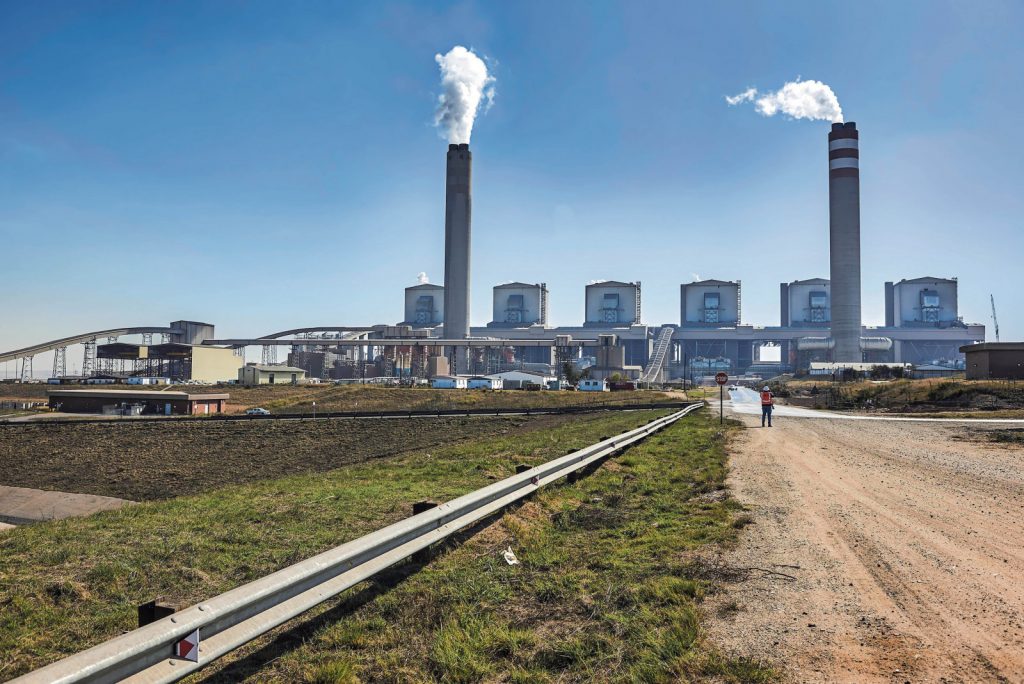
Excess sulphur dioxide emissions will pollute the air, kill humans and damage the economy, they say
– Environmental groups appeal to minister over Kusile pollution | The Mail & Guardian
eThekwini metro police arrest six men linked to parts stolen from municipal vehicles:

eThekwini metro police have arrested six men for allegedly being in possession of car parts stolen from municipal vehicles amid a crime wave of hijackings.
The arrests, which follow the recent recovery of a municipal Volkswagen in uMlazi, after a tip-off that led the metro police’s task team to a bushy area in Tafelkop where the men were found stripping and loading municipal vehicles parts to transport them.
Metro police spokesperson Boysie Zungu said the suspects were handed over to the nearest police station.
eThekwini municipality said in a statement that the city is experiencing “a sharp rise in hijacking incidents involving municipal and contractor vehicles”.
“In the current financial year, it has lost no less than 95 vehicles, with the number rising daily. This has had a negative effect on service delivery, and with employees often left physically and psychologically scarred.”
Known hotspots include Mayville, Folweni, uMlazi, KwaMashu, Inanda, Zwelibomvu, Hammersdale and KwaNdengezi.
eThekwini mayor Mxolisi Kaunda said: “We applaud the metro police for this arrest given the alarming spike in municipal vehicle hijackings, which delays service delivery in communities and places the lives of employees at risk”.
He called on people to work with the city and law enforcement agencies to bring the perpetrators to book and to report any suspicious activity to the nearest police station or to phone 0800235338.
– Environmental groups appeal to minister over Kusile pollution | The Mail & Guardian
Senegal’s President ‘Mr Stony Face’ announces no contest:

Senegal’s President Macky Sall, who announced Monday that he would not seek a controversial third term in office, has a soft-spoken demeanour that observers say belies stubbornness and hidden fire.
He “is genuinely shy but misleadingly gentle”, said Cheikh Yerim Seck, author of a book on life in Senegal under Sall.
The president has ended months of suspense over whether he would seek to stay in power in the West African nation, a bastion of democracy in a troubled region.
His announcement coincided with a call by his rival, Ousmane Sonko, for mass protests against a president he described as corrupt and a would-be dictator.
He was one of five children born in modest circumstances to a caretaker father and a mother who worked as a peanut seller.
Tall and broad-shouldered, Sall has the nickname in the Wolof language of “Niangal”, translatable as “Mr Stony Face”.
It is an appropriate tag for someone whose first love was geology.
After studying as a geological engineer and briefly flirting with Maoism, he rose through the ranks of the national oil company, Petrosen.
There he was spotted by the president at the time, Abdoulaye Wade, who appointed him minister of mining and energy in 2001.
From there, he became interior minister and prime minister and handled Wade’s re-election campaign in 2007, for which he was rewarded with the post of National Assembly speaker.
But within a year, Sall’s dramatic ascent came to a bruising halt.
He fell out with Wade for ordering his son, who at the time ran a company contracted to do work for an Islamic Conference summit, to testify in parliament about suspected fraud.
Forced out as speaker by pro-Wade MPs, Sall quit all his elected positions, left the president’s Senegalese Democratic Party and set up his own group, the Alliance for the Republic-Yakaar.
“I come from a long line of warriors who prefer to die rather than lose face,” Sall said in 2019 at the launch of his autobiography, Senegal in the Heart.
In 2012 came the payback. Sall routed his erstwhile mentor in the second round of bitterly contested elections.
He united the opposition behind a campaign that accused Wade of breaching the Constitution by seeking a third term.
Wade put forward an argument that would ironically resonate among Sall’s supporters a decade later.
He argued that the two-term limit had been reset by a constitutional revision during his time in office.
Sall has staked his reputation on his economic record, something that some of his critics grudgingly accept has been a success.
He points to an increase in agricultural production and a huge infrastructure programme, including a new airport and new town outside Dakar, a regional express train and highways, as well as a boost in health insurance coverage.
His declared goal is that by 2035, Senegal will have been elevated from a developing to an emerging economy.
Sall has also had success in bringing calm to Senegal’s separatist-troubled southern region of Casamance, and played a key part in forcing out dictator Yahya Jammeh in neighbouring Gambia in 2017.
Sall speaks French and English in addition to three other languages spoken in Senegal.
He is married to Marieme Faye Sall, whom he met while she was still in high school. They have two sons and a daughter.
To his critics, Sall has adopted an iron-fisted approach, destabilising a country widely admired for its democracy and stability.
In his autobiography, Sall said his second term in office would be his last, but in recent months he has become coy about whether this would be the case.Sall has “drifted to authoritarianism … jailing or exiling his most threatening opponents”, three of Senegal’s intellectuals, Mohamed Mbougar Sarr, Felwine Sarr and Boubacar Boris Diop, said recently in a joint commentary. — AFP
– Environmental groups appeal to minister over Kusile pollution | The Mail & Guardian
Submit and get free exposure here: Showcase Your Business | Advertise Your Special Offers.
