Eskom chair: Leaked candidate list undermines interview process:

Eskom board chairperson Mpho Makwana has called on fellow board members involved in the recruitment of the utility’s new chief executive officer to treat the process with respect and fairness.
Responding to questions from the Mail & Guardian about the leaking of candidates’ names, Makwana said this was eroding the processes needed to protect their information.
“Eskom does not provide details on our recruitment process until we have made an appointment. This is because discretion and confidentiality are essential when hiring executive candidates. We will not be in a position to provide any other details on this process, beyond where we are in the process, until this is concluded.”
He added that Eskom has been receiving queries regarding “leaked information” regarding the group chief executive (GCE) final shortlist.
“Eskom is concerned about this and dissociates itself from such. Secondly, we would like to confirm that the information regarding the shortlist of the candidates for the GCE position has not been communicated.
“As a principle, Eskom does not provide details of the candidates until we have made an appointment. This is because discretion and confidentiality is essential when hiring executive candidates.
“We can confirm at this stage that we have concluded the interviews and will announce the successful candidate at the appropriate time.”
This is at a time when Eskom is attempting to rebuild its reputation after former CEO Andre de Ruyter exposed the rot in the utility, including sabotage and cartels.
De Ruyter left abruptly in February, after claiming in an interview on eNCA that two cabinet members had been involved in corruption at Eskom and that a third had known about it. He recently released the book Truth to Power, which shed light on some of the explosive allegations he made during the interview.
Working behind the scenes
He was replaced by former Eskom chief financial officer Calib Cassim, who took on the position on an interim basis while the utility searched for a new leader.
The utility is implementing stage six rolling blackouts due to generating constraints.
According to Eskom, the new leader will work with electricity minister Kgosientso Ramokgopa to help reduce the impact of load-shedding.
Last week, during De Ruyter’s appearance, Makwana told the Standing Committee on Public Accounts that the recruitment of the new CEO was being conducted behind closed doors, according to international standard practice.
“The process is going well. We have a number of solid candidates that are shortlisted and interviews commence on Friday [12 May]. We do not have a plan to conduct [the interviews] in public,” Makwana said.
He added that he was not aware of any processes that forced him to share the details of who the shortlisted candidates were before the process was completed.
“We have nothing in our memorandum of incorporation that mandates us to do so. I have no knowledge of anywhere in the world where an important process like this is being run in public,” he said.
Sources in the utility said they were in the process of selecting the top candidate for the job and would be finished before the end of June.
Possible candidates
Last month, during the utility’s demand side management programme launch, Makwana said that five candidates for the CEO position had already been shortlisted.
Among those who are rumoured to have been interviewed are Eskom group executive for customer services Ayanda Noah, Dan Marokane who is acting Hullets CEO, as well as strategic adviser to the Association of Municipal Electricity Utilities, Vally Padayachee.
Noah previously headed Eskom’s client services and distribution divisions. She is an engineer with decades of experience and is chairperson of the Central Energy Fund. She is accredited with the SA Engineering Council and is a member of both the SA Institute of Electrical Engineers and the Institute of Directors of SA.
According to her profile, she has a master’s degree in business administration from Wits University’s Business School, an advanced management qualification from Harvard University and a BSc in electrical engineering from the University of Cape Town. She is a chair of the performance committee at Lesedi Local Municipality.
Should she get the position, Noah will be Eskom’s first woman leader.
Marokane, who is acting as CEO of sugar producer Tongaat Hulett, is a chemical engineer with master’s degrees in petroleum engineering and business administration.
Before joining Hullets, Marokane was Eskom CEO, but was suspended in 2015 days after the first unit at Medupi Power Station was connected to the power grid. According toZondo commission testimonies, Marokane’s suspension happened to make room for Brian Molefe and Anoj Singh, who were linked to the Guptas.
Padayachee is a strategic adviser to the Association of Municipal Electricity Utilities. He is an electrical engineer, who played a leading role in setting up the rules for load-shedding and is doing the same with the revision of the load-shedding document that will enable Eskom to increase its stages from eight to sixteen.
Chris Yelland, managing director of EE Business Intelligence, told City Press that being the Eskom boss was not an easy job.
“The political, financial, operational and environmental issues are all currently a toxic mix, and it’s not like in any other company where the CEO has a free hand to change direction. Political interference is a given, and the CEO cannot save costs by reducing staff numbers,” he said.
He added that the leader must be firm and must be able to navigate the political and financial terrain.
Mandisa Nyathi is a climate reporting fellow, funded by the Open Society Foundation for South Africa.
Kenyan aims to be first woman, African to lead UN maritime body:
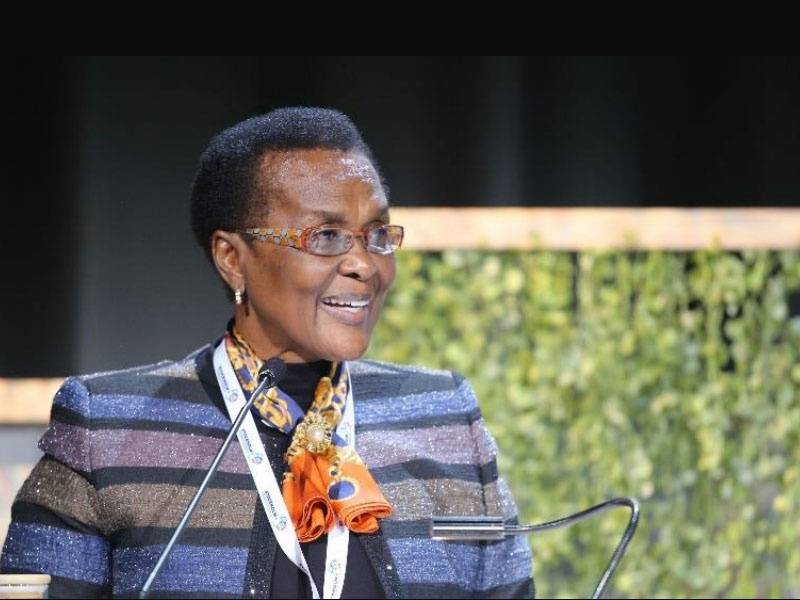
Nancy Karigithu, a globally recognised maritime expert with 38 years of experience, began her journey playing with paper boats on puddles in Mwea, a rice-growing region in Kenya.
“My dad’s teaching fellow, Edna Oxtoby, introduced me to paper boats that I loved floating on the water puddles. Along with the paper boats came the gift of a cowrie shell and a poem about how the shell carried ‘the murmurs of the sea’, as well tales of a sea that ‘goes for lunch’ and comes back in the evening. I now know that this referred to the rise and ebb of the ocean tides.
“These tales created a strong fascination with the sea, making me select a girl’s boarding school in the coast region for my A-Levels. Seeing the ocean for the first time in my life, I fell in love with the endless expanse of water, which set the pace for my life and career,” she said.
Kenyan President William Ruto, together with the African Union, has endorsed her as the only African candidate for the post of secretary general of the International Maritime Organisation (IMO), a specialised UN Agency that regulates shipping.
“In nominating her, we appreciate that no African and no woman has ever held the position of secretary general of IMO in the years of the organisation’s existence. Her election, therefore, will be an affirmative action and will lend credit to the current global momentum of inclusivity and diversity in international decision-making processes,” Ruto said.
Karigithu is running against Moin Uddin Ahmed (Bangladesh), Suat Hayri Aka (Türkiye), Arsenio Antonio Dominguez Velasco (Panama), Cleopatra Doumbia-Henry (Dominica), Minna Kivimäki (Finland) and Zhang Xiaojie (China). The IMO comprises 175 member states and three associate members.
On 19 May, a team of Kenyan government officials and African Union representatives launched Karigithu’s candidature at IMO headquarters in London, England. Forty members of the IMO council will pick the successor to Kitack Lim of South Korea, whose tenure ends in July.
A former principal secretary in the state department for shipping and maritime in the ministry of transport, Karigithu is an advisor on the blue economy in the president’s office and a special envoy for maritime and the blue economy.
She says her family has supported her throughout her career.
“My husband Charles did a most unusual thing for me at a time when it was unheard of — at the time I was offered a scholarship to specialise in international maritime law at the International Maritime Law Institute, based in Malta, we were raising three sons aged between five years and seventeen months. Yet he released me wholeheartedly. He just rolled up his sleeves and became the best single parent he could be,” said Karigithu.
Karigithu worked in various organisations after returning home, and in 2004, she applied for a job at the Kenya Maritime Authority (KMA). Although she was offered the job, she almost didn’t accept it.
“I had enjoyed a varied and exciting career before: attorney general’s office for three years, Kenya Ports Authority for six years — and 11 years as a legal practitioner and as IMO, African Union consultant. So, after applying for and getting the KMA job, I was shocked and discouraged at the salary offered.
I contemplated very seriously saying ‘no’. Here I was with our sons due to join university, and staring at a massive salary cut. But I consulted with my husband, and to my surprise, Charles encouraged me to take the job. ‘There are some things in life that money cannot buy,’ he said.”
She took the job and “it turned out to be the best career advice I ever got”.
However, beginning at KMA was challenging, and her first obstacle was the reception she received from her colleagues.
“Some said that I had no seatime experience, and that I had never served on board ships — someone even told me that I was not qualified to hold a job as a ‘spanner boy’ on board a ship,” she said.
She worked at KMA for nine years, serving as the first director general of the organisation.
In this position, she led the review and enactment of the comprehensive legal frameworks for maritime activities in Kenya. She later set up the first-ever state department for maritime and shipping affairs, serving as the principal secretary and championing the country’s maritime agenda for national social and economic growth.
Within the region, Karigithu has spearheaded Kenya’s contribution to the suppression and prevention of acts of piracy and armed robbery against ships within the western Indian Ocean region. She also played a key role in ensuring that IMO issued a formal notification to member states on the removal of the Indian Ocean from the list of high-risk areas.
She recently championed a global initiative for the protection of wildlife that resulted in adopting guidelines for the prevention and suppression of the smuggling of wildlife on ships engaged in international maritime traffic, which the IMO endorsed in May 2022.
In addition, Karigithu played a pivotal role in forming the Association of Women in the Maritime Sector in Eastern and Southern Africa (Womesa).
“The fact that women still make only about 1.2% compared to their male counterparts clearly highlights the glaring need for diversity, equality and inclusion in the industry. That is why, when the idea of bringing together women in the eastern and southern Africa region came up, I embraced it as it gave a platform for the countries in the [Common Market for Eastern and Southern Africa] region to join together to ensure progress in the maritime sector with a key focus on gender equity,” she said.
The association’s primary objective is to encourage IMO member states to open the doors of their maritime institutes to enable women to train alongside men. This is done through advocating for gender equity, improving women’s access to maritime training and technology and promoting their advancement to crucial decision-making levels in the marine sector in Eastern and Southern Africa.
“For centuries, and even now, women still encounter prejudice in the maritime industry, the most common of which being the idea that shipping is a man’s world — and, thus, it might be tough for a woman to achieve the same level of success as a man,” Karigithu said.
“Women seafarers work mainly in the cruise and ferries sector, which are among the lowest-paid and least protected jobs at sea. Women also tend to be younger, with fewer officers than their male crewmates.
“Their low number means that women can be subject to discrimination and harassment. Equally important is the fact that most women fear to pursue such a career as they believe they might have to deal with sexual harassment or even abuse while at sea, as well as a low level of support from co-workers.”
She says the ship culture reflects masculine norms and values, which manifests in the uniform sizes, space design and the facilities on board, and believes action is needed to improve support for females, which might include re-evaluating living conditions to make them more gender-sensitive.
“Female role models must also rise up so as to help young women develop the right self-perception for different career paths. We must also take important steps to include the integration of women in the maritime sector at the design and planning of national policies, programmes and projects, as well as in the financing, implementation and monitoring and evaluation,” she said.
If elected as the next secretary general of IMO, Karigithu has plans to bring “new thinking” to the organisation.
“Global organisations such as IMO need to think outside the box, with new impetus and thinking that is not ‘polluted’ with the business-as-usual norm, in order to ensure that the organisation remains relevant and effective in the 21st century. A future-ready 75-year-old IMO, therefore, needs a new, firm, unbiased, neutral pair of steady hands to navigate the changing and uncertain global maritime terrain.”
Karigithu is passionate about increasing awareness among African youths about opportunities at sea, particularly on cruise ships, and encourages them to apply for these positions.
“The crew of a cruise ship comprises various skill sets and disciplines ranging from marine engineering and deck crew through to entertainment; onboard security; hotel management; food and beverage services; pool attendants; welders; fitters; plumbers; butchers; lifeguards; culinary; housekeeping; acrobats; childminders; guest activities; guest services; human resources; medical; casino operations; shopkeepers; kitchen utilities; refurbishment and facilities,” she said.
“It also includes hairdressers, nail technicians, masseurs, keep-fit trainees, environmental personnel and garbage collectors. For our hard-working youth in Africa, whatever skill they have can be used to get a well-paying job at sea.” — bird story agency
My Tina Turner is Aunty Entity in ‘Mad Max Beyond the Thunderdome:
Inspirational, powerful and legendary are words associated with describing Tina Turner’s incredible career that spanned six decades, sold more than 200 million albums and received eight grammy awards.
Straight up, I never owned any Tina Turner albums, or have a stash downloaded on my phone’s Deezer account, but I know many of her songs.
I am not a fan but when the news arrived that she had died I had to let my significant other know. I hollered “Tina Turner died!” “Really? Oh no!” returned the voice still in bed.
I knew she had survived an abusive marriage to a man named Ike Turner and that they were a music couple like Sonny and Cher, and they had reasonable success.
She left him and then went on to become a global superstar, selling millions of albums with songs like Private Dancer and Simply the Best. Songs that South Africans adored and could be heard regularly in supermarkets, company braais, corporate team-building events and Christmas parties.
All good and well, but really not “my thing”.
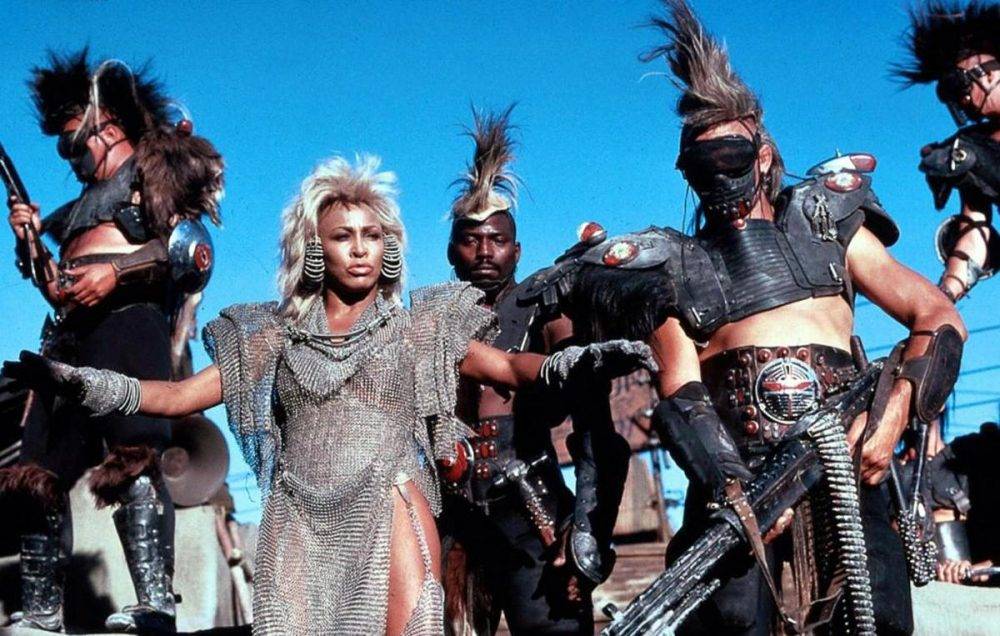
For me, my Tina Turner was Aunt Entity, the savvy, gritty ruler of Bartertown in the 1985 movie, Mad Max Beyond the Thunderdome. That was a Tina I could appreciate. Post-apocalyptic glamour queen.
Mad Max is a dystopian action film series that follows the adventures of Rockatansky, a police officer in a future Australia, which is experiencing societal collapse because of war and critical shortages of essential resources.
“But he is just a raggedy man.” Her first words in the film.
The hero, played by Mel Gibson, has just been escorted by Aunty’s grumbling, crossdressing Sigue Sigue Sputnik inspired henchmen up to her chambers to meet Aunty and audition for a job.
After some chit-chat she asks, “Do you want to hear my life story?”
Before Max can answer she continues, “I was nobody, except on the day after [the apocalypse] I was still alive. This nobody had a chance to be somebody. So much for history.”
She knew what she was talking about, be it in the dystopian world of Mad Max or the real world Deep South where she grew up. She had to fight to get to where she was. She was a survivor.
Tina Turner was born Anna Mae Bullock on 26 November 1939 in Brownsville, Tennessee. She recalled picking cotton at an early age, where her father worked as an overseer of the sharecroppers.
Sharecropping is a legal arrangement in which a landowner allows a tenant to use the land in return for a share of the crops produced on that land. It was a humble start for someone who’s musical legacy is indisputable, with a list of honours and achievements that are truly impressive, easily validating her title as The Queen of Rock n’ Roll. Turner’s net worth at the time of her death was estimated at $ 250 million.
Turner also acted in Tommy (1975) as the Acid Queen, an erratic prostitute who deals in prophetic LSD. The name Tina was inspired by Sheena, Queen of the Jungle, a comic-book character that first appeared in the late 1930s. I think we can see a theme is starting to emerge here.
In Mad Max her name is Aunty Entity, but she was a queen. The queen of Bartertown, a powerful and determined ruler, whose character was inspired by the real world Tina Turner.
Director George Miller said, “We needed someone whose vitality and intelligence would make her control over Bartertown credible. She had to be a positive character rather than a conventional evil ‘bad guy’. We had worked on the script with [Turner] in mind. But we had no idea if she’d be interested.”
Long live Queen Tina. She was a transcender, a survivor and powerful role model, a true legend, rock n’ roll queen and, for me, the amazing Aunty Entity.
Submit and get free exposure here: Showcase Your Business | Advertise Your Special Offers.