Extending coal plants lifespan will not solve anything, says Crispian Olver:
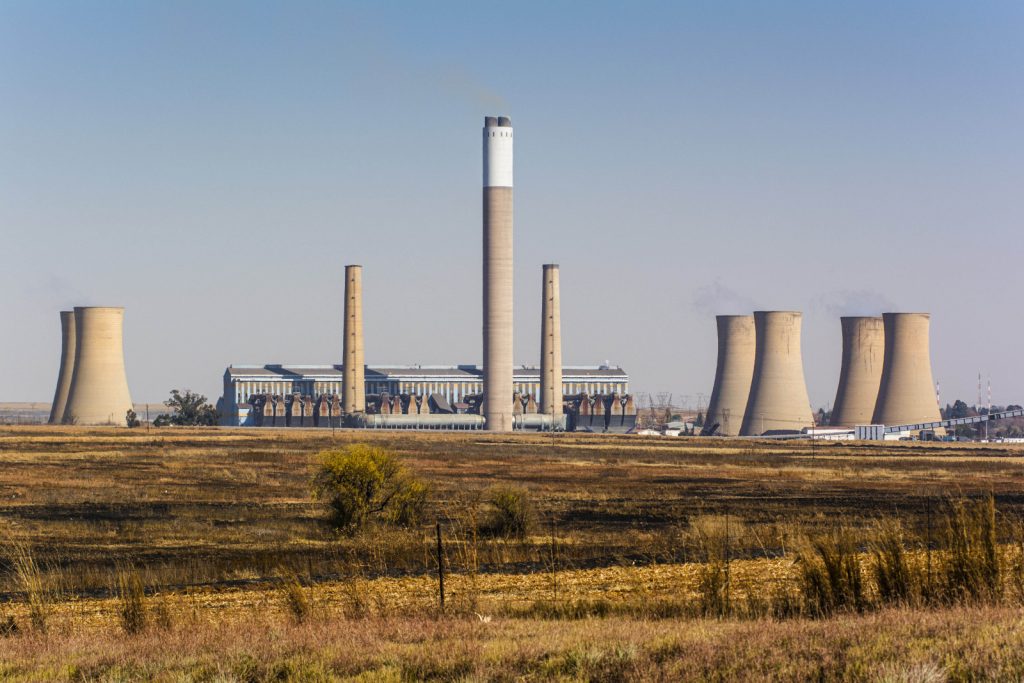
The Presidential Climate Commission (PCC) objects to extending coal-fired power stations beyond their natural lifespan in its latest report on the Just Energy Transition Investment Plan (JET-IP).
Speaking at a media briefing, PCC’s executive director, Crispian Olver presented its critique of the just energy transition investment plan following widespread sectoral consultations.
He urged President Cyril Ramaphosa not to succumb to pressure to extend the power stations “as keeping them would be financially detrimental”.
Olver said the commission presented its recommendations to Ramaphosa last week highlighting that although it sympathised with the energy crunch, it supported decommissioning of plants as soon as the power crunch eases.
Last year, the president requested the PCC to conduct public and sectoral consultations on the transition plan with the intention of making a collective recommendation to the president and government in the first quarter of 2023.
He argued that extending the lifespan of power stations would be more expensive and would not receive enough investment as many countries are moving into cleaner renewable energy.
“The least costly pathway is to pull these power stations off at the end of their economic life. Moving the decommissioning of particular coal plants by a couple of years is neither here nor there,” Olver said.
Olver suggested that the government’s overriding priority right now should be Eskom’s plan to expand the transmission grid by 8 500km by 2031.
“Grid capacity is a major constraint to scaling up the energy transition and that is a view across the board — every stakeholder, government, business, labour, civil society. Grid capacity is a national priority to solve, not only for our transition needs but also for our short-term emergency to solve load-shedding,” he said.
An expanded grid is essential for renewable energy projects to take shape. As it stands, renewable energy can be left stranded because the grid does not have the capacity for them.
Olver added that unlocking the national grid at speed and scale is key to many elements of the transition. He also added that funding in the implementation plan should be aligned with National Treasury’s evolving policy, paying particular attention to the need to simplify public-private partnerships for financing of infrastructure.
Once South Africa added sufficient new renewables, storage and peaking capacity, Olver believed there might be potential to opportunistically close more expensive coal units down ahead of their official decommissioning dates.
This comes after Electricity Minister Kgosientso Ramokgopa received the go-ahead from the ANC and cabinet in delaying the decommissioning of power plants to help stabilise the energy grid.
In its report presented to the president, the PCC recommended that alternative investment models, including public-private partnerships (PPPs), be explored to expand and strengthen South Africa’s electricity grid as an immediate solution.
The report notes that public-private partnerships funding models, with appropriate risk sharing, have been proven effective globally and in Africa and “can be a highly bankable, solid credit investment for the private sector”.
The report said the JET-IP needs to clearly indicate how the grid expansion will be financed, despite the constraints on public sector funding.
“It may be worth exploring alternative models for new investments in the state-owned transmission grid,” Olver said.
The report comes after the PCC conducted intensive public consultation with labour, business and community stakeholders.
It argues that the grid should be the key focus of the JET-IP in the coming five years and that the implementation plan should be fully aligned with Eskom’s Transmission Development Plan.
Olver said when the government drafts its implementation plan for the JET-investment plan presented at COP27, it should consider redrafting the allocation of funds to accommodate skill development, economic diversification, mine rehabilitation and worker support should be substantially reviewed, and investments increased.
The plan was drafted and signed between the South African government and the governments of France, Germany, the UK, the US and the EU at the COP26, which gave rise to the establishment of the transition plan.
He added that the JET-IP implementation plan is being finalised and is expected to be published soon, “drawing on the recommendations arising from the consultation process, during which stakeholders also agreed that the just elements of the plan had been inadequately prioritised”.
Olver added that the PCC recommends that the electric vehicle and green hydrogen components of the plan be located within a national industrial strategy which sets out fiscal incentives and enabling infrastructure to grow the sectors, rather than to use the JET-IP as a replacement for such policy support.
Olver said he was hopeful that the country would be able to meet decarbonisation commitments, despite the likelihood of the coal decommissioning schedule being revised in light of intense load-shedding.
Last week, forestry, fisheries and the environment minister Barbara Creecy released the department’s eighth national greenhouse gas inventory report which found that South Africa’s net carbon emissions decreased by about 0.8% between 2000 and 2020.
According to the report, South Africa’s net emissions in carbon dioxide declined from an equivalent of 446 million tonnes in 2000 to 442 million tonnes in 2020.
“The greenhouse gas inventory is central to tracking the implementation of South Africa’s nationally determined contribution,” it reads.
Mandisa Nyathi is a climate reporting fellow, funded by the Open Society Foundation for South Africa
Zambia’s debt crisis is not easy to solve:

Debt restructuring deals are never easy to negotiate. But in Zambia’s case, the excitement that accompanied President Hakainde Hichilema’s electoral victory in August 2021 came with confidence that the country’s economic woes would soon be behind it.
The kwacha surged to become the best-performing currency in sub-Saharan Africa in 2022, and mining firms tentatively re-engaged, having distanced themselves from the Edgar Lungu administration, from 2015 to 2021.
The International Monetary Fund even disbursed $ 1.3 billion in special drawing rights and opened an office in the capital Lusaka. This is after repeatedly denying support to the previous administration — even during the coronavirus pandemic, when almost all low-income countries received debt relief.
But now it has been more than two years since the Zambian government defaulted on its debt repayments. And only in recent weeks have murmurings that creditors will agree to make a deal carried weight — which, it should be emphasised, is different from an actual deal. That may only materialise in the second half of this year.
In early 2021, Zambia agreed to be a guinea pig for a new approach to tackle sovereign debt — the G20 Common Framework for Debt Treatment, introduced at the end of 2020.
The framework, in coordinating responses to sovereign debt problems, seeks to bring together members of the Paris Club — a group of established donor governments and Brazil, its only emerging-market member — with creditors outside of it.
This includes governments like China, Kuwait, Turkey and Saudi Arabia, which have increased their lending to low-income countries, and private creditors, which often make up a significant portion of loans provided.
The plan is for the framework to be followed by an IMF-supported reform programme.
Countries that have defaulted are at high risk of doing so again, with restructuring deals providing only short-term relief and failing to consider how a country will recover to later service that same debt. IMF programmes help, so the logic goes, because not only do they provide emergency funding, but encourage responsible spending.
It’s a nice idea, but getting private creditors to participate is tricky, because they lack the inclination to negotiate under the same terms as bilateral lenders. Typically, repayment of government loans can be deferred without too much fuss, but private creditors prefer to recoup their loans sooner, even at a loss (known as a haircut).
Unfortunately, the framework lacks a mechanism to force reluctant parties to the table.
And this is the problem Zambia is facing. A chunk of its debt is owed to private creditors, and not all parties will cooperate. Without a deal, it cannot unlock the promised IMF-support reform programme of $ 1.4 billion. It also cannot untangle itself from the framework.
Given that most of Zambia’s private creditors are Chinese, a way out is for China to assume responsibility for their loans and then to negotiate those alongside its own debt with bilateral creditors. This is likely what the IMF is putting pressure on China to do.
It is easy to criticise Hichilema’s handling of the debt crisis. In fairness, he is dealing with a problem he did not create. His pivot towards the US may seem odd at this juncture, but his administration maintains positive relations with China.
It received Chinese telecommunications giant Huawei at State House in March, and a Chinese consortium will spend $ 650 million to upgrade a road.
Meanwhile, participating in the framework was not his doing. And while austerity measures mean less government support for struggling Zambians, it is the quickest way to clinch further IMF support, itself the quickest way to relieve cash flow problems.
This article first appeared in The Continent, the pan-African weekly newspaper produced in partnership with the Mail & Guardian. It’s designed to be read and shared on WhatsApp. Download your free copy here.
Stage six load-shedding brought forward:

As temperatures continue to drop, Eskom looks set to deliver its promise of a dark cold winter ahead.
On Monday, power utility Eskom announced that stage six load-shedding was to be implemented from 3pm, an hour earlier than it had announced on Sunday.
“Please note that this will be implemented until 5am tomorrow.” The utility then said that it would rotate between stage four as previously communicated.
By Monday there had been almost 30 days of stage six load-shedding this year. In total, there have been 134 days of load-shedding this year.
Electricity minister Kgosientso Ramokgopa recently said that the country will have a hard winter as Eskom’s power units continue to crumble.

Can’t cope with the cold
On Monday, the utility blamed the sudden increase to stage six load-shedding on the cold weather, saying that the demand for electricity is higher and therefore it couldn’t manage and had to bring stage six earlier than planned. There were also failures at two generating units.
On Sunday, South Africa’s power utility announced that the country would rotate between stage four and stage six load-shedding for the week. Stage four was meant to be from 5am until 4pm and stage six was to take over the next slot.
The utility attributed this to breakdowns of around 18 000MW and maintenance of close to 4 000MW.
The problems were at Kriel, Matla, Arnot, Camden, Kendal, Hendrina and Tutuka power stations, which all had difficulties either in breakdowns or restoration.
But on Monday the weather turned colder and wetter in parts of the country, which invariably led to stage six being brought forward.

Increasing load-shedding
Last week the utility announced that it had been able to update its national standard document [the NRS048-9] which enables the utility to increase its load-shedding stages beyond stage eight.
Eskom told the Mail & Guardian that the NRS 048-9 revision proposes load-shedding schedules up to “stage 16 to make load-shedding systematic and orderly”.
The utility has also delayed releasing its winter outlook. On Friday, Ramokgopa said the utility board and the ministers had been unable to agree on the winter outlook plan presented and had sent it back for revision.
Despite the sudden increase to stage six, Ramokgopa dismissed fears about the utility having a total blackout.
During the media briefing, Ramokgopa explained that the utility’s power grid has a safety feature that enables it to protect itself in times of immense pressure.
The utility reiterated its call for people to switch off appliances like geysers between 5pm and 9pm to alleviate pressure on the power system.
Mandisa Nyathi is a climate reporting fellow, funded by the Open Society Foundation for South Africa
Submit and get free exposure here: Showcase Your Business | Advertise Your Special Offers.