Fires, sinkholes and toxic water: The legacy of coal-mining in Zimbabwe:
For Amon Chibuswa, the sun setting over Dinde village signifies more than the coming of the Sabbath, a ritual still observed in the small settlement about 40km east of Hwange, Zimbabwe’s “El Dorado” of coal mining and power generation.
Instead, the sunset signifies the end of an era for his people because Dinde is destined to be destroyed to make way for a Chinese-owned coal mine and thermal power station project touted by the Zimbabwean government as a critical boost for its depleted power generation capacity.
In 2020 the government awarded Beifa Investments (Pvt) Limited, a subsidiary of the Jin An Group, licences to set up Beifa Coal Mine and Beifa Power Station in Dinde.
Chibuswa is one of many concerned that the coal mine will kill the village, and that community infrastructure, including church buildings, gardens, schools, clinic, dip-tanks and a hall, will be destroyed.
The coal project entails the eviction of at least 2,000 people, which Chibuswa says is a double slap because in the 1930s the same Nambya and Tonga people in Dinde today were forcibly evicted from Sinamatellata and Bumbusi areas to make way for the Hwange National Park.
“Today, we face the same circumstances that our grandfathers faced 90 years ago. We are being forced to abandon our ancestral lands for a company to make money. We thought the government would protect the poor from the rich. Instead, it uses the police to arrest us for refusing to let Beifa destroy us,” he said.
Chibuswa accused the local traditional leader of turning against the villagers after he was allegedly lavished with gifts that included a vehicle, a mini solar power plant, a borehole and a 2,000 litre-capacity water tank for his homestead. The chief has allegedly threatened to prosecute and banish anyone who resists the project.
“He wants us to accept the Beifa mine because it will bring development and employment opportunities, but we wonder how because we have already seen the pain and poverty caused by coal mines elsewhere in Hwange. We don’t want that here,” Chibuswa told Oxpeckers.
Opaque planning
One major sticking point is that the villagers say they were not consulted about the project. A lack of information about compensation for their land has also undermined confidence between the two parties. The villagers insist they will only leave after receiving the compensation.
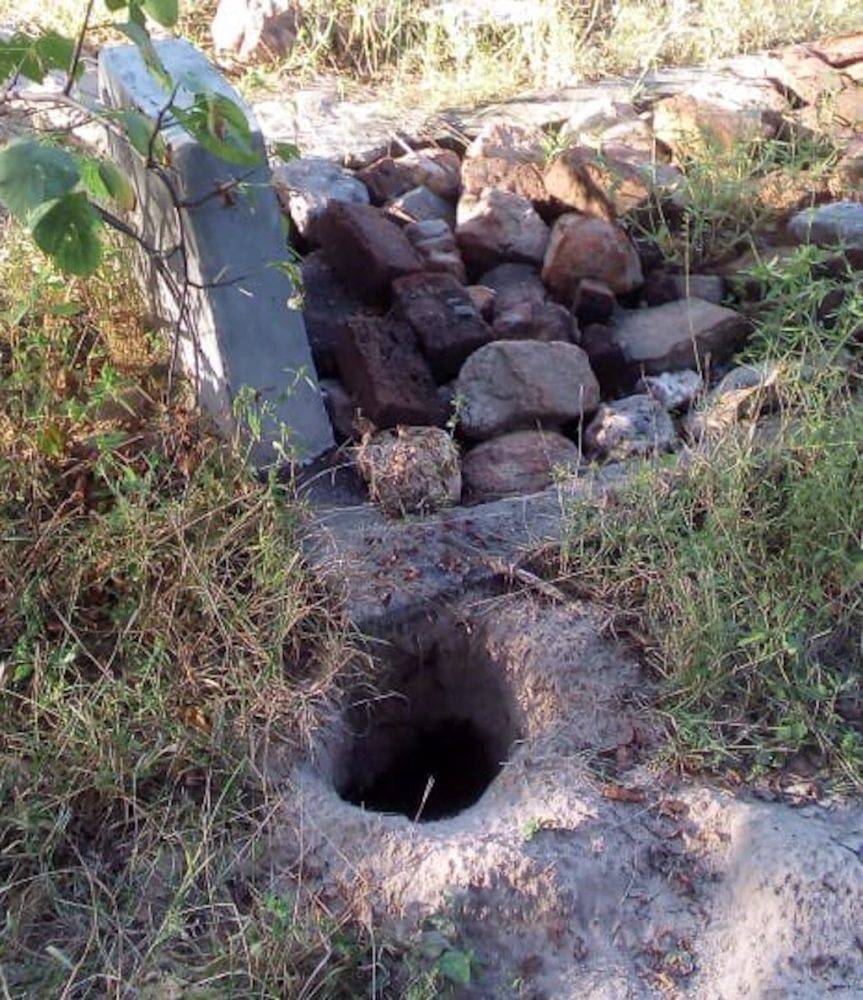
In December 2019 Beifa Investments started a coal exploration programme which allegedly left coal sample holes around the homesteads and violated some gravesites. Stung by global condemnation that followed reports alleging the desecration of graves, Beifa Investments manager Zheng Zhou Qian dismissed the reports as misleading and defamatory.
“Beifa Investments (Pvt) Ltd has not evicted or shown any intention to evict anyone within the Dinde community. Beifa categorically denies ever desecrating any graves in the Dinde community. We note some images posted on the media showing holes drilled near graves (in Dinde). We wish to point out that the company did not sanction the drilling of any holes. As such, if there are any holes on the gravesites, that would be the work of other people unknown to the company,” Qian said.
Underground coal fires
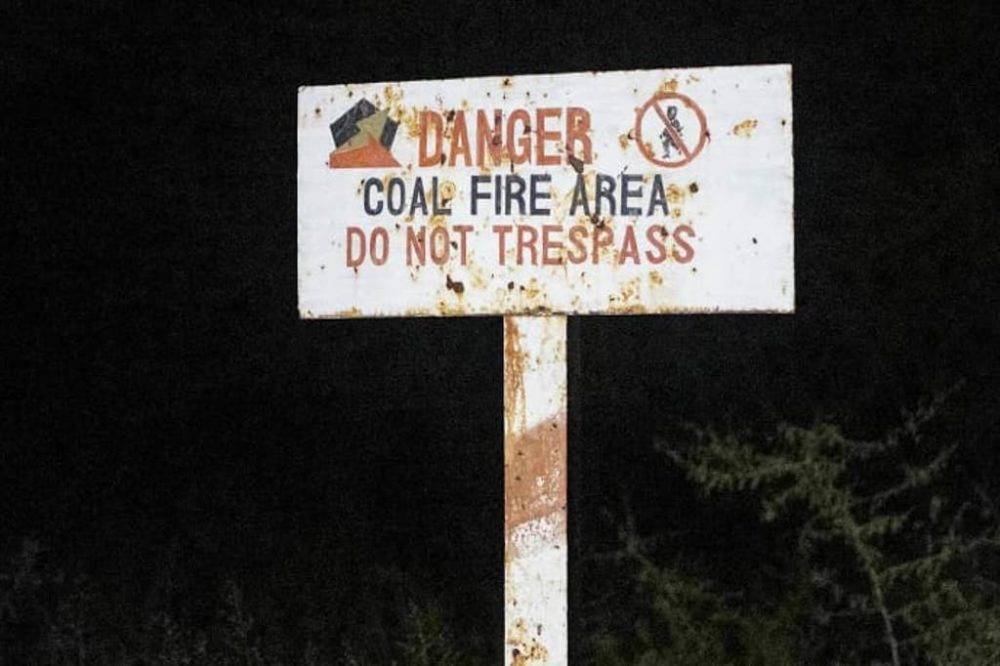
Over a century of coal mining in Hwange has left the town in Matabeleland North sitting atop an intricate network of underground coal mining tunnels and abandoned works which still contain substantial amounts of coal that is not of commercial value. In these tunnels and deep into unexplored areas, underground coal seam fires have been raging unseen for decades.
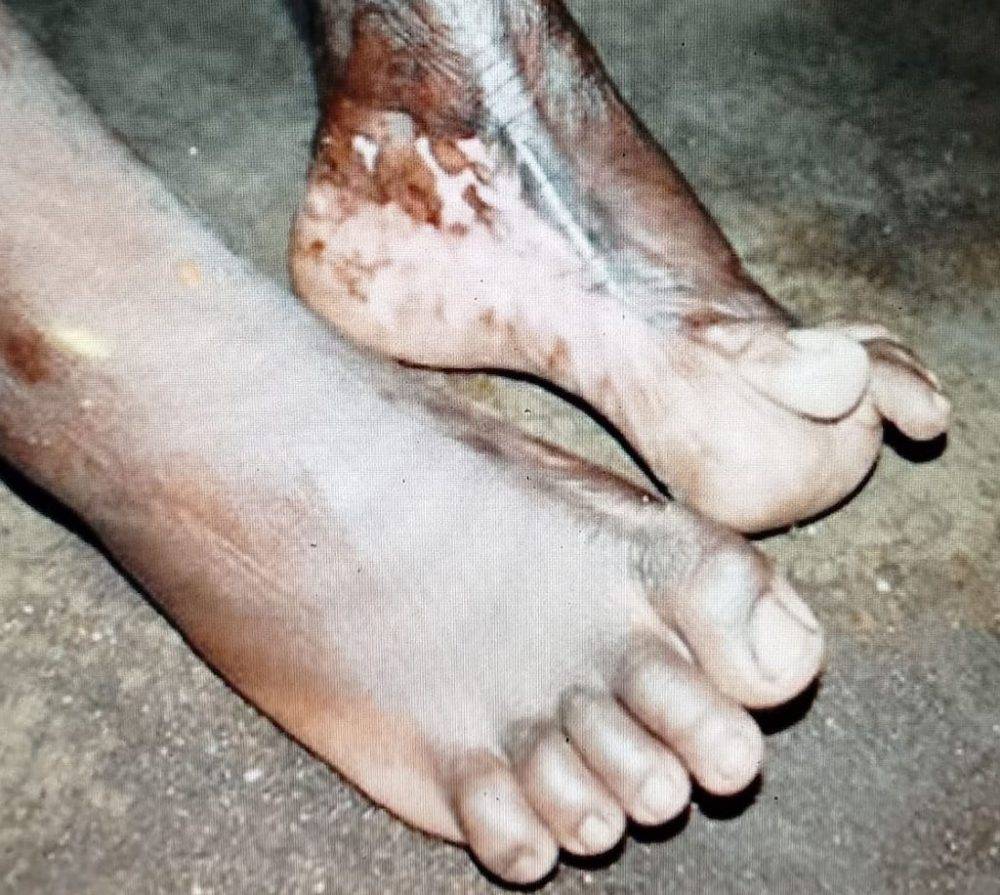
Of late, these fires regularly burst to the surface as flames, or cause ground collapses forming sinkholes of burning coal which have maimed a number of residents and caused infrastructure damage around the town.
A former mine safety officer at the state-owned Hwange Colliery Company Limited (HCCL), who declined to be named for personal safety reasons, told Oxpeckers that most of the fires in Hwange are concentrated in areas previously mined by the company.
Heavy blasting and tunnelling under the town has destabilised the ground and created fissures large enough to allow underground fires or gas explosions to reach the surface as explosions or mini-earthquakes, he said.
“Many suburbs were built on top of burning coal seams. I am afraid there won’t be much of Hwange to save when disaster strikes,” he said.
“You never know you are sitting on one until the ground caves in and drops you into a cauldron of hot ash, hot gases or smouldering coals. The temperature is high enough to reduce bones to ashes in seconds. No one says much about it, but many have lost lives and limbs to coal fires.”
Human settlements
According to a 2021 study commissioned by the Centre for Natural Resources Governance, a research and advocacy civil society organisation, underground coal seam fires are now prevalent in the mining concession owned by HCCL where there are human settlements for mine workers.
“Residents have noted that mine residue dumps found in the Number 2 and 3 areas of the HCCL [concession] are some of the most hazardous sites with raging underground coal seam fires. It was noted that loose dry materials that land on hot coal dumps quickly ignite fires that spread to coal seams. Fires travel underground from one coal seam to another and subsist in the ground for many years. Removal of overburden during mining brings the fires close to the ground,” states the report, titled Effects of coal seam fires and other environmental hazards in Hwange.
It points out that in some cases the overburden gives in to the heat, causing the ground to collapse.
“Studies have shown that the survivors of burn injuries often suffer from chronic pain and serious problems, pruritus and loss of strength,” it states. “Psychosocially, a certain proportion may develop depression and post-traumatic stress disorder after being discharged from hospital and this can go on for several years after the incident.”
In response to the results of independent research showing the effects of its underground coal fires on public health, HCCL managing director Charles Zinyemba issued a statement saying he was “very much alive” to the underground coal seam fires on its concessions.
“As a precautionary measure, public education campaigns [on underground coal seam fires] were, and will continue to be held in the schools and villages [around Hwange],” he said.
“Tribal elders were engaged to disseminate this information to the villagers, and communities living in close proximity to affected areas will continue to be informed of temporary measures to avoid risks, such road diversions and placement of signages in affected areas. In addition, HCCL has invested in a drone that has a camera for security and the identification of underground fires,” Zinyemba said.
A dead river
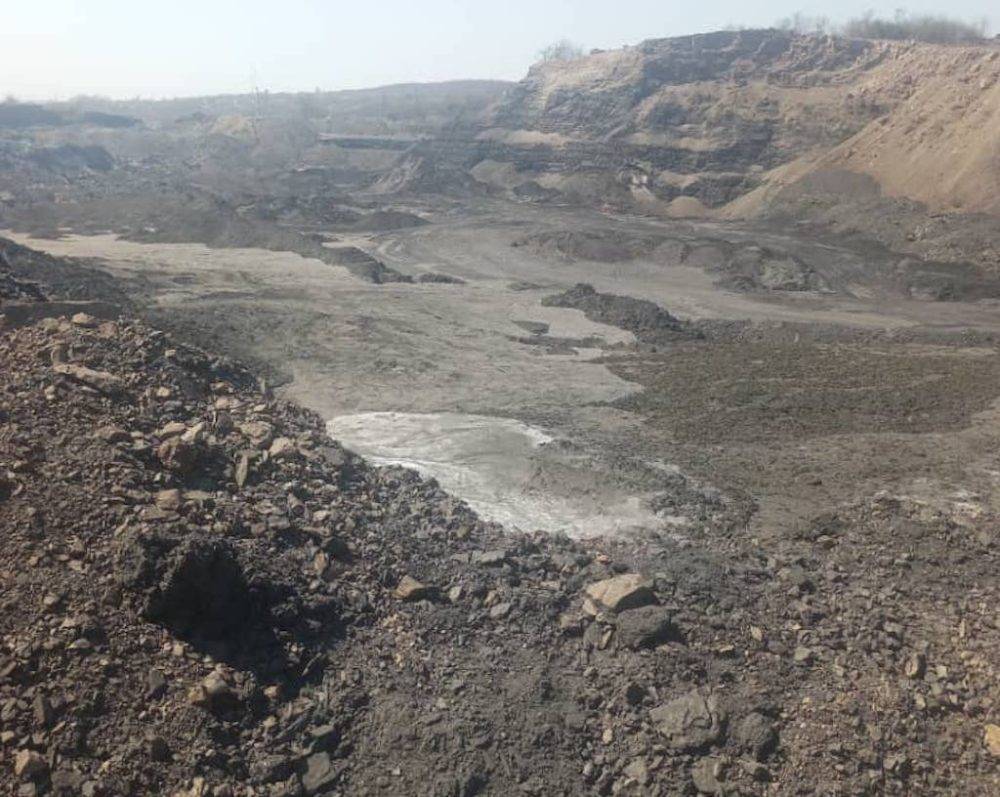
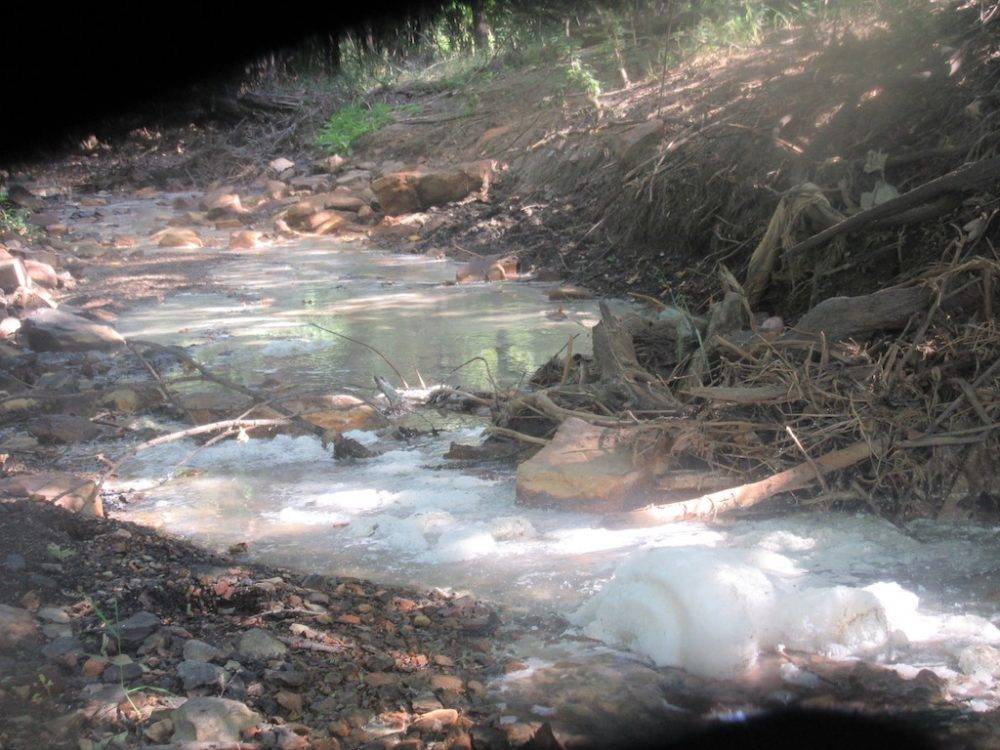
Elsewhere in Hwange, the fears of the Dinde villagers are already being felt by people living along the Deka River, which runs through the mining town. The river transports toxic mineral effluent from at least seven coal miners and thermal power producers.
Villagers who spoke to Oxpeckers said due to fears of poisoning, people do not drink water from the river but are surviving on boreholes drilled by a local NGO.
“The waters of the Deka changed colour to green about 20 years ago, and it has remained like that because of pollution,” said a local headman, Cassius Sinampande.
“We Tongas call ourselves ‘the people of the river’ because fishing is our tradition. But we don’t fish anymore because toxic mine pollutants killed the fish. The water kills people. It kills livestock. Anything watered from the Deka dies.”
In Hwange town, residents are grappling with continuous noise and air pollution, environmental degradation and water contamination by effluents from the coal mines and power stations. The Hwange Local Board also complains of widespread local road network destruction by heavy trucks that deliver coal and supplies to and from the mines. The residents said heavy blasting by coal mines was damaging their houses, with most suffering cracks each time blasting happens.
Acid mine drainage
A study published by Frontiers For Environmental Science in December 2021 found acid mine drainage and other pollutants in the Deka River were causing serious environmental problems and had potentially disastrous public health consequences.
“Based on the data of the community-based monitoring, we showed that coal mining and combustion are degrading the water quality of the Deka River. The main effluent channel Sikabala that joins Deka River carries along a variety of metals that relate to those found in very high concentrations at the point sources of acid mine drainage (AMD),” the report states.
“These AMD sources are mining legacies from former underground mines. Our findings show that AMD formation is mainly responsible for critical loads of Mn2+ [manganese] and other bivalent transition metals in the river downstream of the inlet of the main effluent channel Sikabala.”
The study also recorded cases of illegal pumping of pit water by miners, which violates environmental emission standards. They concluded that the acidic pit lakes in the Hwange area will present high risks for the Deka’s ecosystem as long as mines continue to neglect the environmental impacts of their actions.
“Pollutants are most probably also entering the river system via the atmosphere, as high arsenic concentrations during the rainy season suggest. A potential source of these emissions is the thermal power plants,” it states.
Since the Deka River is a source of drinking water, pollutants such as manganese and to a lesser degree nickel and arsenic are of concern for human health, the researchers concluded. “These elements regularly exceed drinking water standards, with manganese being the most drastic case, surpassing standards around 70 fold.”
The researchers recommended the Zimbabwe government should commission a public health study across the Hwange District to determine potential public health effects of high manganese exposure.
Oscar Nkala is a Zimbabwe-based Oxpeckers Associate who works on transnational investigations across borders in sub-Saharan Africa. This investigation is part of the Oxpeckers investigative series titled ‘The human cost of energy in Africa’.
Governance is not only about clean audits:
Clean audits are a necessary but insufficient condition for achieving governance performance. But there is more to the story than that. It is highly unlikely that audited entities will deliver value for their shareholders in the long run unless their finances are clean and efficient. But those finances also have to be geared towards achieving the entity’s mandate.
Governance can be a rather enigmatic concept. It’s typically defined as the authoritative allocation of resources, but that can sound ethereal. Good governance is about allocating resources in an efficient, productive, transparent and accountable way.
Most of us can grasp that, but where we really feel the effect of good or bad governance is at the local government level. When the potholes get fixed within 24 hours, that’s usually an indication of good governance.
Another dimension of governance, then, is responsiveness — well governed entities respond timeously and proficiently to their shareholders.
In the case of citizens, we are the shareholders of the government and should demand value.
These prefacing remarks should inform our reading of the latest auditor general report on local government audit outcomes for 2022-23, which paints a dismal picture of the state of governance.
Only 34 out of 257 (13%) local municipalities received a clean audit. This is down from 41 in 2020-21.
A clean audit indicates two important things. First, there are no material irregularities (unqualified) contained in the financial statements. Second, these statements are without findings — in other words, they indicate efficiency. Taxpayers’ money has not been spent unnecessarily or on dubious items.
In 2022-23, 110 municipalities received unqualified audits with findings — there was spending on questionable items even if there were no material irregularities per se in the financial statements. This figure is at least up from 100 in 2020-21, although it would be far preferable if these municipalities could have both clean finances and clean procurement, zero over-payments or spending on dubious items.
And 85 municipalities had material irregularities and questionable spending.
The other 28 are essentially in deep distress, with 10 of those not having provided enough information on which to conduct an audit. Only two municipalities were in that situation the previous year.
So, although the number of municipalities receiving disclaimed audits with findings of poor performance has decreased, it looks as if those which received disclaimed audits in the past are now simply not submitting enough information to be audited at all.
At the metro level, the City of Cape Town was the only one to receive a clean audit. Tshwane improved notably; it now has clean (unqualified) finances but with findings pertaining to the performance of those finances.
But the governance picture is clearly worst at the local level (that is, not secondary cities or district level).
Aside from the high-level results, the other key thing to examine in a report of this nature is the extent of fruitless and wasteful expenditure. In the previous year (2021-22) this figure was an eye-watering R4.89??billion. In 2022-23, this rose to a barely conceivable R7.41??billion (out of a total budget of R572.68??billion).
Gauteng is the worst offender by a long way (R2.34??billion), followed by Mpumalanga (R1.64??billion) and the Free State (R1.41??billion).
To make matters worse, the report says: “This amount could be even higher, as 15 municipalities (including 50% of municipalities with disclaimed audit opinions) did not report all the fruitless and wasteful expenditure they should have reported in their financial statements.”
The “good” news in this dark picture is that metros, at R1.62 billion in 2022-23, account for a very small (but rising) proportion of fruitless and wasteful expenditure. And the Western Cape in total accounted for R0.04??billion (less than 1% but still R40??million), suggesting relatively good general governance.
Good Governance Africa (GGA) is interested in how these audit findings map onto its Governance Performance Index (GPI), which is informed by the auditor general’s reports but is less focused on finances and more on the extent to which municipalities are delivering on their core mandate.
The GGA released the latest edition of the index in March this year. On a scale of one to five, with five being best, municipalities in the Western Cape received an average score of 4.13. Perhaps surprisingly, KwaZulu-Natal came in next at 3.5 and Gauteng at 3.42. Gauteng’s poor performance can clearly be explained by the high levels of wasteful and fruitless spending reported by the auditor general.
The index findings mostly cohere with the latest auditor general report, mapped helpfully on its website. But the picture is quite varied.
Take the Western Cape, for instance: the Cape Winelands district, along with the Garden route, incorporating six municipalities each, received clean audits.
But the West Coast district had a hit rate of only four clean audits within the six (although at least the other two were unqualified with findings). The Central Karoo area, to the contrary, with only four municipalities, received no clean audits. Overberg, with five local municipalities, received only three clean audits.
In the index, Drakenstein ranked first among 19 secondary cities and Stellenbosch came second (both in the Cape Winelands district). Interestingly, although George received a clean audit in 2022-23, this secondary city came only fifth in the country in its category. It was beaten by uMhlathuze in KwaZulu-Natal and Steve Tshwete in Mpumalanga (third and fourth, respectively).
uMhlathuze received a clean audit with one material irregularity notification issued.
Steve Tshwete deteriorated in its audit performance, regressing to a qualified audit with findings on compliance with legislation. In all likelihood, then, it will drop out of fourth place in the next iteration of the index in 2026.
In Gauteng, Mogale City came seventh out of the 19 secondary cities countrywide, while Emfuleni came 17th. Mogale received a qualified audit with findings on performance and compliance with legislation. Emfuleni received the same result except that three material irregularity notifications were issued. Again, this largely explains its poor performance in the index.
Now for the good news. The fact that we have a robust auditor general in South Africa is something for which we should be grateful. This is not the same as saying “things are terrible but at least we have X”. The auditor general shines a reliable and credible light on what is going in with our public finances.
Yes, it’s true that the situation is manifestly deteriorating and merely having reports may be cathartic and doesn’t solve the problem. Certainly the transparency in itself is incapable of producing accountability and better performance. But, without this kind of data, it’s hard to know where to start to try to build an ecosystem of accountability.
In this respect, what is clear and correctly identified by the auditor general’s report is this: “At those municipalities that have not managed to move out of the disclaimed space, the lack of transparency, accountability and institutional integrity not only leads to non-delivery of services, but also harms the people these municipalities are intended to serve.”
Overall, the call could not be stronger to build “capable institutions with intergovernmental support” and “a culture of ethics and accountability”.
One important way to do this is to pilot substantive, systematic and sustainable interventions. In many dilapidated municipalities, business organisations and residents are providing their own services and taking government to court for failing to act.
While these efforts are laudable, it is better to empower municipal management teams to build a governance register by which they can ensure basic adherence to the King??IV Code of Good Governance. Like the auditor general, King??IV is committed to moving entities beyond mere compliance, and ensuring that governance mechanisms produce more robust performance.
Building competence takes time, but it will surely stand as an antidote to the current malaise.
Ross Harvey is the director of research and programmes at Good Governance Africa.
Ramaphosa leads tributes for James Matthews:
President Cyril Ramaphosa has paid tribute to Cape Town poet and author James Matthews as an impassioned but elegant chronicler of the struggle against apartheid.
Matthews, regarded as one of the early Black Consciousness poets, died in Cape Town on Saturday. He was 95.
“James Matthews’s voice will ring in our consciousness following his departure and we will remain captivated and inspired by the rage and elegance with which he articulated the stark struggles of the oppressed,” the president said.
“We will be comforted by the many works he has left for us to revisit and by our memories of his appearances at rallies, ghoembas, the frontlines of the street protest and intimate circle of kindred creatives where, beret askew on his head, he would feed the souls and fighting spirit of those around him.”
Matthews was called “a true artist” whose writing gave a voice to those who were silenced by apartheid by the Western Cape government.
“As prolific and talented as James Matthews was, he was so much more than just a writer and poet; he was integral to the anti-apartheid movement, giving a powerful voice through his writing to the oppressed. He was an important part of our province and country’s artistic fabric,” premier Alan Winde said.
Matthews was born in 1929 and grew up in District Six in what he described as a house without bookshelves.
He attended Trafalgar High School where a teacher named Miss Meredith proclaimed that he was a writer after marking one of his compositions.
“She announced to the class that I had written a short story and not a composition. She marked it 21, one mark above the accepted 20 and informed the class that I was a writer,” he recalled in 2016 when he accepted an honorary doctorate from Rhodes University.
After leaving school, Matthews found work as a messenger at the Cape Times. Library access allowed him to explore literature properly for the first time, and he began crafting short stories that were published in the arts pages of both that newspaper and the Cape Argus.
As his teacher predicted, it “spelled out the realisation that I was working towards becoming a writer,” Matthews said.
“It was ironic; except for Jack Cope, who was a sub-editor, none of the reporting staff had short stories published. I was serving them tea on night shift.”
Matthews’s journalism was published in Drum and the Muslim News. His poetry and short stories mapped the scars that poverty and racial oppression left on the psyche of ordinary people grasping for dignity.
His stories were published in Europe in the 1960s. His first anthology of poetry, Cry Rage, appeared in 1972. It was banned by the apartheid government. Black Voices Shout followed in 1974.
Two years later, he was detained for months at Victor Verster prison in Paarl and subsequently repeatedly denied a passport.
He managed to travel to Germany and the United States in the 1980s and was awarded a fellowship by the University of Iowa and given the freedom of the cities of Nuernberg and Lehrte.
Matthews published nine volumes of poetry, a collection of short stories, The Park and Other Stories, and a novel, The Party is Over.
He was a founding member and patron of the Congress of South African Writers and set up two publishing houses, BLAC Publications and Realities.
Matthews lived in Cape Town all his life.
He was awarded the national order of Ikamanga in 2004.
Submit and get free exposure here: Showcase Your Business | Advertise Your Special Offers.