Former health spokesperson Popo Maja in court over alleged Digital Vibes graft:
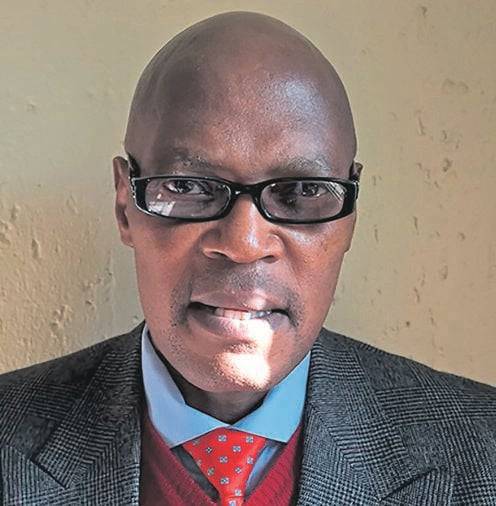
Former head of communications in the department of health Popo Maja was charged with corruption during an appearance at the specialised commercial crimes court on Wednesday, police spokesperson Lieutenant Colonel Brenda Muridili confirmed.
Maja was placed on suspension in September 2021 along with a number of other health department executives over their alleged roles in the dodgy Digital Vibes communication contract.
Health Minister Joe Phaahla placed Maja on suspension a day after President Cyril Ramaphosa made public a report by the Special Investigating Unit (SIU) into the scandal, which had already resulted in the resignation of former health minister Zweli Mkhize.
The report into the department’s awarding of a National Health Insurance media campaign and Covid-19 communications contract to Digital Vibes, found damning evidence of misconduct against government officials including Mkhize.
The investigative body’s report found that Mkhize’s denials that he or his family had benefited from the tender were “untrue”.
According to the report, Mkhize’s conduct in approaching the then director general of the department to appoint Digital Vibes was “at best improper … and at worst … unlawful” because it constituted interference in the affairs of the department’s administrative authority.
The Mail & Guardian previously reported that although the SIU has recommended that criminal charges be pursued against health director general Sandile Buthelezi and former acting director general Anban Pillay over the Digital Vibes tender award, it only recommended executive action by the president against Mkhize.
Mkhize maintains his innocence, claiming the report found him “guilty of and complicit in criminal conduct and has effectively ruined my reputation, dignity and my political and professional career”.
Climate change hits African women:

The African continent is the most affected by the adverse effects of climate change despite contributing the least to global warming.
Climate change is hitting the most vulnerable hardest, and contributing to food insecurity, population displacement and stress on water resources.
Increasing temperatures and sea levels, changing precipitation patterns and increasingly extreme weather patterns are threatening health and safety, food and water security and socio-economic development in Africa.
Climate change amplifies existing gender inequalities and poses unique threats to women and girls’ livelihoods, health and safety. They have lower chances of surviving climate disasters because of the disparities in access to information and safety resources.
Resource competition and depletion exacerbates different forms gender-based violence such as sexual violence, psychological violence and human trafficking. According to the World Bank, times of resource scarcity lead to women being more likely to be coerced into sexual exploitation in exchange for goods or services. For example, food vendors, farmers or landowners in Uganda at times insist on trading sex despite the women negotiating for the provision of labour in exchange for food.
Girls spend more time fetching water, have fewer days in school or may even drop out. They walk increasingly longer distances to find potable water and food, making them vulnerable to sexual assault and human trafficking. Some families resort to marrying off their daughters to better cope with food or resource scarcity.
In families where men leave home to seek a living elsewhere, women and children are left to fend for themselves, making them more vulnerable to violence and sexual exploitation. Although data remains limited, the violence and intimidation experienced by women environmental activists is cause for concern.
Women’s mortality caused by natural disasters has historically been higher than that of men. According to the United Nations Children’s Fund, women and children represented more than three quarters of those displaced in 2007 when rains and flooding in 18 African countries left an estimated 1.5 million people homeless. In most countries, natural disasters and their aftermath narrow the gender gap in life expectancy, which differs inversely to women’s socio-economic status.
Climate change induced displacement is a harsh reality for millions of people today, with increased vulnerabilities experienced by women, especially women with lower levels of economic participation. Because women are the primary caretakers of households and look after children and older people, they are often not able to leave vulnerable areas as easily as men. Today, poor women are 14 times as likely to die from a climate disaster than men, because of displacement risks.
Around the world, women depend more on, yet have less access to, natural resources. In many regions, women bear a disproportionate responsibility for securing and preparing food, water and fuel. Women’s economic labour remains concentrated in the agricultural sector, and during periods of drought and erratic rainfall, women, as agricultural workers and primary procurers, work harder to secure income and resources for their families. This puts added pressure on girls, who often have to leave school to help their mothers manage the increased burden, especially of unpaid care. Consequently, emerging scholarship is supporting the development of climate-smart varieties of staple crops such as rice in Mali, banana and plantain in Cote d’Ivoire and maize in Benin.
The promise of a new climate economy requires tangible actions across key economic systems, some of which include targeted investments into sustainable water infrastructure. Moving away from fossil fuel-based economies to clean, environmentally friendly economies is a complex task that requires changes to many social and economic systems. Therefore, gender-responsive solutions to climate change through the direct involvement of women — not just as beneficiaries but as partners — in the design, implementation and evaluation of all climate action is crucial for sustainable development.
Additionally, supporting the availability of gender statistics and sex-disaggregated data will help ensure that national policies and frameworks are gender-sensitive to aptly respond to the socio-economic problems posed by the climate crisis.
To adapt and build resilience to climate change, sustainably increasing agricultural productivity and reducing greenhouse gas emissions all in the context of climate-smart agriculture.
Karabo Mokgonyana is a legal and development practitioner and programme director for the Sesi Fellowship and Skill Hub. Mahlatse Ramoroka is an international development practitioner in global public service, focusing on development economics and human rights.
The views expressed are those of the author and do not necessarily reflect the official policy or position of the Mail & Guardian.
Four SADC countries scrap cell phone roaming charges:

The Southern African Development Community (SADC) is getting close to realising a One Network Area after four countries — Malawi, Zambia, Zimbabwe and Botswana — agreed to remove cell phone roaming charges from August.
The move raises hope of establishing a single digital market while ensuring increased mobile service affordability, especially for cross-border customers.
Customers in the region will no longer incur extra charges to access mobile phone services even when they cross borders, according to a report by television news channel DW.
“The development is important for the region for many reasons,” said Marks Setshwane, Botswana’s communications regulatory authority’s director of business and development.
“It is a model of regional integration that we have managed to achieve as SADC. We are small economies, but there is always power in numbers,” he said.
The development is critical not only for the region but also for continent-wide efforts to realise the Smart Africa Alliance objectives.
The Smart Africa Alliance is an initiative of 37 heads of state on the continent seeking to establish a digital knowledge economy by removing obstacles to digitalisation such as internet affordability, standard call rates and messaging charges.
In a March 2023 World Bank blog, Baidy Sy, a digital development specialist, wrote that collaborative initiatives promise to lower barriers to trade and communication.
“It will, for instance, make the internet faster and more accessible. Content and services, hosted on local data centres, will be cheaper to download because they won’t go through expensive international connections,” he noted.
Regional economic blocs are leading in establishing a common framework for a unified digital market.
The Common Market for Eastern and Southern Africa (Comesa), through a programme focusing on information and communications technology, is implementing the One Network Area to drive digital trade.
The Comesa bloc plans to merge and align roaming networks in 29 countries with other regional blocs by 2024.
Moreover, other regional blocs, such as West Africa’s Ecowas and the Economic and Monetary Community of Central Africa (Cemac), have already demonstrated a commitment to eliminating roaming charges, while in East Africa, Kenya, Uganda, Rwanda, South Sudan and, more recently, Tanzania, are leading the way with a functional framework that allows for standard roaming charges across their borders.
Reports show plans are afoot to include Burundi and the Democratic Republic of the Congo in the East African Community’s One Network Area, to increase the programme’s scope.
Sy said that beyond communications, a single digital market could open up extensive opportunities in other sectors such as banking and healthcare, because it will enhance connections between businesses and clients.
“Connections to neighbouring countries, to regions, and to the entire continent are key to sparking economic growth, creating jobs, and moving Africa into the digital age,” he says.
The Africa Information & Communication Technologies Alliance, a private sector-led alliance of information and communications technology associations and key players, has seen a surge in its membership, reflecting increased investment in regional and cross-border infrastructure and frameworks.
All of these efforts align with the vision of the Digital Single Market – an African Union-led plan to transform Africa into a digitally empowered continent that can securely access affordable internet, by 2030. — bird story agency
Submit and get free exposure here: Showcase Your Business | Advertise Your Special Offers.