From rhetoric to reality: Turn Africa’s mineral wealth into jobs and industry:
Africa’s mineral endowment is no longer a speculative talking point – it is a strategic asset waiting to be converted into factories, jobs and resilient regional supply chains. The Africa Finance Corporation’s Compendium makes the scale plain: US$ 29.5 trillion in mine site value, with US$ 8.6 trillion still undeveloped. Those figures are not an argument for extraction for extraction’s sake; they are a call to convert latent value into industrial capacity that serves African development.
For most Africans, that figure remains an abstraction-wealth that passes through ports, powers factories elsewhere, and creates jobs on other continents. The question is no longer whether the resources exist. It is why, after decades of talk, the conversion to industrial capacity remains so elusive.
Political signals matter. President Ramaphosa’s recent State of the Nation address – noting South Africa’s “R40 trillion” ore reserves and renewed investment in geological mapping – shows the appetite for action. Industry signals matter too. Senior executives, including Anglo’s CEO, have pointed to corridor investments such as Lobito as the kind of infrastructure that can anchor regional value chains. Those endorsements are useful; what matters now is turning them into disciplined, sequenced interventions that actually build midstream and downstream capacity.
Too often, governments announce beneficiation targets, DFIs promise capital, and lead firms demand traceability and ESG compliance – but the pieces do not line up. Power shortages, fragmented institutions, misaligned finance, and procurement practices that favour compliance ready suppliers combine to block industrialisation. The result is repeated cycles of policy enthusiasm followed by stalled projects and stranded assets.
What has been missing is not another policy statement or feasibility study. It is a disciplined, practical method for answering one question: among all possible mineral-linked investments, which ones can actually succeed, and what sequence of interventions unlocks them?
This is where the Centre for Africa Mineral Value Chains (CAMVaC) has focused.
CAMVaC’s response is deliberately practical. We have developed a policy architecture – the Beneficiation Linkage Matrix (BLM) – with an operational module called the Beneficiation Feasibility Matrix (BFM). The BLM is the strategic lens; the BFM is the decision tool. Together they answer one simple question: where will public and private money actually convert mineral endowments into downstream value?
The BFM ranks projects against three policy facing dimensions: linkage strength, institutional readiness, and systemic risk. The output is not theory – it is a short, ranked list of priorities and a sequenced action plan that ministries, DFIs and investors can implement.
Why sequencing matters. A midstream plant without reliable power, affordable finance or credible offtake is a stranded asset. Conversely, modest, well timed interventions – a concessional tranche to bridge early cashflow, a time bound offtake guarantee, a targeted power allocation – can turn marginal projects into viable industrial platforms. The BFM helps identify those leverage points so scarce public and private resources are spent where they will actually move the needle.
The Lobito Corridor is instructive. When port, rail and power investments are aligned with offtake and finance, corridors can anchor regional clusters and aggregate demand across borders. That is why CAMVaC works with large scale EPCMs and DFIs: to bake linkage building into project delivery from day one. EPCMs do more than build infrastructure; when engaged early they can design logistics, industrial land and power interfaces that make downstream processing feasible. DFIs’ development mandates align with this approach – they can provide blended instruments that reduce conversion risk and attract commercial capital.
Policymakers should act on three immediate priorities.
First, pilot the BFM in two corridors within 12 months. One pilot should target a near term beneficiation project that can be unlocked with targeted interventions (power allocation, concessional finance, offtake guarantees). The second should test a longer term systemic reform package that requires institutional realignment and regional coordination. Pilots create proof points and reduce political risk for scale up.
Second, create a small strategic intermediary to coordinate sequencing. Whether a beneficiation taskforce within an existing agency, or a public private secretariat, this body must align ministries, DFIs, state enterprises and private investors; package blended finance; and hold parties to time bound KPIs tied to beneficiation outcomes.
Third, retool finance to reduce conversion risk. DFIs and commercial banks must move beyond single project lending to instruments that reward local value creation: linkage finance, blended concessional tranches, and performance linked guarantees. These instruments change the calculus for lead firms and make midstream scaling commercially viable.
Industry has a role too. Lead firms and OEMs should recognise that procurement and compliance practices – while legitimate – can exclude nascent local suppliers. Constructive counter signalling matters: phased offtake agreements, supplier development partnerships, and participation in blended finance structures can make local scaling commercially attractive rather than risky.
Regional cooperation is essential. Aggregated demand under AfCFTA and coordinated corridor planning make beneficiation commercially viable in ways that isolated national projects cannot. The AFC Compendium’s mapping of minerals to infrastructure shows where regional clustering can unlock scale; the BLM/BFM helps prioritise which clusters to build first.
Africa’s mineral wealth is a strategic advantage only if it is converted into productive capacity. The headlines and policy statements are welcome; the hard work is operational. At the Centre for Africa Mineral Value Chains (CAMVaC) , we have built the tools to do this work.
CAMVaC’s Beneficiation Feasibility Matrix is already being applied in early-stage engagements with governments and partners like , DFIs, EPCMs and mining sector partners to ensure that investments like Lobito do more than move ore: they build industry, jobs and lasting value for the continent.
Diagnose, prioritise, sequence and finance – that is the pathway from rhetoric to reality. The time to start is now.
Lloyd Nedohe is the founder of the Centre for Africa Mineral Value Chains (CAMVaC), a policy and advisory initiative that develops practical tools and partnerships to convert Africa’s mineral resources into downstream industry, jobs and resilient regional value chains
http://www.camvac.co.za/ info@camvac.co.za
IFC’s new gas projects will destroy Africa:
As Africa faces deepening debt, climate shocks and energy poverty, the World Bank’s private-sector arm is quietly approving new fossil gas projects.
Two investments backed by its International Finance Corporation (IFC) expose a dangerous contradiction at the heart of global climate finance.
Coming at a time when Africa is bearing the brunt of a climate crisis it did not cause, the IFC — the World Bank Group’s private-sector lending arm — is quietly moving to approve two new fossil gas–related projects on the continent.
Framed as pragmatic, transitional and development-friendly, these investments instead reveal a troubling pattern: the continued prioritisation of fossil fuel infrastructure over people, renewables and long-term resilience.
One of the projects in question is the Sahara LPG project, a $ 100 million multi-country investment in new liquefied petroleum gas (LPG) storage terminals across Ghana, Nigeria, Kenya and Tanzania, paired with IFC-backed trade finance for fossil fuel distribution.
The other project is the Cap des Biches (CdB) gas conversion project in Senegal, which aims to convert a thermal power plant from heavy fuel oil to liquefied natural gas (LNG).
Taken together, these projects raise serious questions not only about climate alignment but also about transparency, consultation, debt and whose interests international finance institutions truly serve in Africa.
Gas by another name
The IFC has continued to promote fossil gas as a “transition fuel” for Africa, a framing that is out of step with both climate science and African realities.
LPG and LNG are not benign stopgaps: they require long-term infrastructure, lock countries into volatile import markets and divert scarce public and private capital away from renewable energy systems that are cheaper, faster to deploy and better suited to expanding energy access for 600 million people on the continent living in remote rural communities.
The Sahara LPG project exemplifies this contradiction. The IFC plans to finance four new “greenfield” LPG storage terminals in some of Africa’s most congested and environmentally sensitive port and industrial zones — Tema, Apapa, Mombasa and Dar es Salaam — while simultaneously underwriting trade finance facilities that support the procurement, shipping, storage and distribution of LPG, LNG and other fuels across the continent.
This is not a marginal intervention. It is a regional fossil fuel logistics build-out. Gas by another name is still gas. The expansion of its infrastructure is still fossil fuel expansion.
Consultation as an afterthought
One of the most alarming aspects of these projects is how little information has been made publicly available and how late.
Communities living near ports, pipelines and power plants are once again being asked to accept major energy infrastructure with minimal disclosure, limited opportunity to engage and no meaningful say in decisions that will shape their environment and livelihoods for decades.
In the case of Sahara LPG, there is no evidence that country-specific, early-stage consultations have been conducted across all four host countries.
Disclosure documents are technical, inaccessible and often released in formats and languages that exclude affected communities.
The cumulative impacts of expanding fossil fuel storage in already overburdened industrial zones — air pollution, safety risks, land-use pressures — are barely addressed.
In Senegal, the Cap des Biches gas conversion project is being advanced despite the nearest community being located just 500m from the plant. There is little clarity on whether residents were consulted before key project decisions were made or whether they were meaningfully informed about the safety risks associated with LNG infrastructure and pipeline dependency.
This approach runs counter to the IFC’s own Performance Standards, which require consultation to be timely, inclusive and iterative — not a box-ticking exercise in the eleventh hour.
The quiet power of trade finance
Perhaps the most insidious element of the Sahara LPG project lies in its trade finance component. By “risk participating” in large trade finance facilities arranged by commercial banks, the IFC can enable fossil fuel expansion without the scrutiny typically applied to project finance.
Trade finance obscures end use. It fragments accountability.
It allows international financial institutions to claim alignment with climate goals while continuing to bankroll the fossil fuel supply chain through the back door.
For African countries already struggling with debt distress and balance-of-payments pressures, this model is especially dangerous. Fossil fuel imports — particularly LNG — are exposed to global price volatility, foreign exchange risk and long-term contractual obligations.
Pakistan’s LNG crisis should be a cautionary tale, not a blueprint.
Lock-in at the worst possible time
Proponents of the Senegal gas conversion project argue that switching from heavy fuel oil to LNG will reduce emissions. But this framing ignores the bigger picture. LNG infrastructure is capital-intensive and long-lived. Once built, it creates powerful incentives to keep gas flowing, crowding out investment in renewables and storage solutions that Senegal and other African countries are already well positioned to scale.
Africa does not lack clean energy potential. It lacks political and financial support to deploy it at speed and scale.
Every dollar channelled into new gas infrastructure is a dollar not invested in solar mini-grids, wind, battery storage, grid upgrades or energy efficiency — solutions that can deliver energy access without deepening climate vulnerability or debt.
Who is this development for?
Both IFC projects disproportionately benefit private companies and international financiers. Sahara Energy Resource Limited, Société Générale, ContourGlobal and KKR stand to gain from the IFC’s de-risking and capital mobilisation. African communities, meanwhile, inherit the environmental risks, safety concerns and economic exposure.
This is a familiar pattern. International financial institutions socialise risk and privatise profit, while invoking development rhetoric to justify fossil fuel expansion in the Global South. Similar projects would be politically untenable in the Global North.
Timing is not neutral
The timing of these disclosures matters. Information about both projects was released around the end-of-year holiday period, when many civil society organisations and community representatives are offline. Board approval dates in early February leave little room for scrutiny or challenge.
This is not transparency; it is procedural minimalism designed to move projects forward before opposition can coalesce. Civil society groups such as Don’t Gas Africa and The Big Shift Global have submitted letters outlining concerns from groups in Africa and globally.
Africa deserves better
Africa is not asking for charity. It is asking for coherence, accountability and respect. If the IFC is serious about alignment with the Paris Agreement, just transitions and sustainable development, it cannot continue to approve fossil gas projects under the guise of pragmatism, especially when cheaper, cleaner alternatives exist.
Development finance should be about expanding choices for countries, not locking them into outdated energy systems.
It should prioritise people over pipelines, resilience over returns and the future over fossil fuel nostalgia.
The Sahara LPG and Cap des Biches projects are not isolated decisions.
They are signals. And right now, the signal from the IFC is deeply troubling.
Africa deserves an energy future that is clean, democratic and genuinely developmental — not one quietly mortgaged through gas contracts approved behind closed doors.
Karabo Mokgonyana is the energy co-lead at Power Shift Africa.
Top-performing funds: navigating markets in a changing global landscape:
The global investment environment has become increasingly complex, shaped by geopolitical tensions, technological disruption and shifting economic alliances. In such conditions, identifying fund managers able to navigate volatility while maintaining disciplined investment processes has become more important for long-term investors.
This supplement examines how several leading asset managers are responding to that challenge. The firms featured here illustrate how investment managers are adapting to a rapidly changing market environment. They use different strategies, ranging from global diversification and systematic investing to specialist sector expertise and concentrated global portfolios.
Periods of uncertainty often reveal the true strength of an investment process. While market volatility can unsettle investors, it also highlights the importance of disciplined research, effective risk management and the ability to identify long-term structural opportunities.
A more complex global backdrop
Financial markets are increasingly influenced by forces that extend beyond traditional economic indicators. Geopolitical developments, technological innovation and changing policy priorities are reshaping the global investment landscape.
The inflation shock that followed the Covid-19 pandemic prompted central banks to raise interest rates sharply in many major economies. While inflation has begun to moderate in some regions, the legacy of that tightening cycle continues to influence asset valuations and investor sentiment.
At the same time, geopolitical tensions have introduced a new layer of uncertainty for global markets. Trade disputes, shifting alliances and more assertive economic policies among major powers have contributed to a more fragmented global landscape.
These developments have periodically triggered sharp movements across equity, commodity and currency markets, reinforcing the importance of diversification and disciplined portfolio construction.
For fund managers, navigating this environment requires the ability to balance short-term market volatility with a clear understanding of long-term economic trends.
Technology and structural change
Alongside geopolitical developments, technological transformation is emerging as one of the most powerful forces shaping global investment opportunities.
Artificial intelligence, automation and digital infrastructure are reshaping industries ranging from finance and manufacturing to healthcare and communications. Companies able to harness these technologies effectively often achieve significant competitive advantages, making them attractive prospects for long-term investors.
However, rapid innovation can also create valuation challenges. Elevated expectations and substantial capital investment in emerging technologies mean investors must carefully assess whether share prices accurately reflect long-term earnings potential.
As a result, many fund managers are placing greater emphasis on valuation discipline and fundamental analysis when assessing opportunities in high-growth sectors.
At the same time, the pace of technological change is accelerating competition across industries. Companies that fail to adapt risk losing market share to more innovative rivals, while those that successfully integrate new technologies can unlock entirely new sources of growth. For fund managers, identifying businesses capable of sustaining competitive advantages in such an environment has become a central part of long-term portfolio construction.
This dynamic has also encouraged a greater focus on structural trends rather than short-term market movements. Themes such as digital transformation, artificial intelligence and the electrification of energy systems are expected to influence investment opportunities for many years. Managers therefore increasingly seek companies positioned to benefit from these long-term shifts rather than attempting to predict short-term fluctuations in market sentiment.
Different investment approaches
The firms featured in this supplement illustrate several distinct approaches to managing capital in today’s markets.
Investec Wealth & Investment International emphasises global diversification and valuation discipline in portfolio construction. In an environment where leadership in global equity markets can shift between regions and sectors, maintaining balanced exposure across geographies has become increasingly important.
Prescient Investment Management takes a systematic and evidence-based approach to investing. Its strategies rely on rules-based processes informed by empirical data and long-term research, aiming to remove emotional bias from investment decisions while maintaining consistent portfolio positioning.
Within Denker Capital’s broader product range, the firm has specialist expertise in the global financial sector. The global financials team seeks to identify opportunities that may not be fully reflected in broader market strategies.
Peregrine Capital, one of South Africa’s longest-running hedge fund managers, emphasises disciplined risk management and long-term compounding. The firm recently launched the Vision Fund, a US dollar-denominated strategy designed to provide investors with exposure to a concentrated portfolio of its highest-conviction global investment ideas.
The role of diversification
One of the key themes emerging across global asset management is the importance of diversification. Exposure across multiple asset classes, geographic regions and investment strategies can help reduce portfolio risk while still allowing investors to benefit from long-term growth opportunities.
Periods of market stress often highlight the value of diversified portfolios. When certain sectors or regions experience sharp declines, exposure to other assets can help stabilise returns and protect capital.
This approach also allows fund managers to remain invested in markets while still managing downside risk. This is an important consideration in an environment characterised by frequent volatility.
Long-term thinking in volatile markets
Despite the uncertainty surrounding global markets, one principle remains consistent: long-term investment success is rarely determined by a single market call.
Instead, it is typically the result of disciplined decision-making, careful portfolio construction and the ability to maintain a long-term perspective even during periods of market turbulence.
Many of the world’s most successful investment strategies are built around this principle. By focusing on long-term economic trends rather than short-term market noise, fund managers aim to identify opportunities that can compound value over time.
Looking ahead
Global markets are likely to remain influenced by geopolitical developments, technological transformation and evolving economic policies. Trade relationships between major economies, fiscal policy decisions and shifting capital flows will continue shaping the investment environment in the years ahead.
At the same time, demographic changes, energy transitions and the ongoing digitisation of industries are expected to create new investment opportunities across both developed and emerging markets. For fund managers, the challenge lies in distinguishing between temporary market narratives and structural changes that can drive long-term value creation.
For investors, this environment reinforces the importance of partnering with managers able to combine rigorous research with disciplined portfolio construction. In markets where volatility has become more frequent, strategies grounded in long-term thinking and robust risk management may prove better positioned to capture opportunities while protecting capital.
For investors, the challenge is navigating this uncertainty while maintaining exposure to long-term growth opportunities. The fund managers featured in this supplement illustrate how different investment philosophies can respond to that challenge. Whether through systematic portfolio construction, specialist sector expertise or concentrated global strategies, each approach reflects an attempt to balance risk with the pursuit of sustainable long-term returns.
In an increasingly complex world, disciplined investment processes and a clear long-term perspective may prove more valuable than ever.
Investec Investment Management: patience, valuation and discipline in an uncertain market
Global markets in 2025 were shaped by persistent inflation, uneven economic growth and rising geopolitical uncertainty. Against that backdrop, investment outcomes were increasingly influenced by valuation and regional positioning, with previously lagging markets beginning to outperform.
Shift in global market leadership
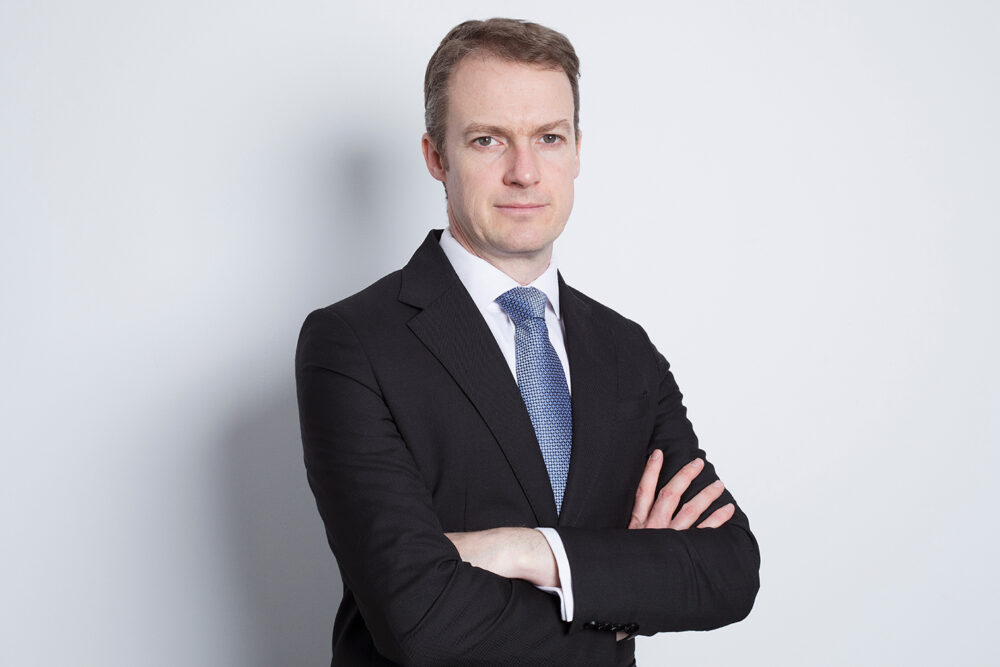
According to Chris Holdsworth, Chief Investment Strategist at Investec Wealth & Investment International, the year marked an important shift in global equity performance dynamics.
“For the first time in a while, countries that were cheaper outperformed and countries that were more expensive underperformed,” he says. “That meant the US underperformed the broader global index for the first time in several years.”
Concerns around the US fiscal outlook and the potential impact of tariffs on growth contributed to a weaker US dollar during the year. Investors also sought safe-haven assets, pushing gold higher amid uncertainty around global economic conditions.
Staying true to mandates
While headline returns often attract the most attention, Investec assesses portfolio performance through a different lens. The key question, Holdsworth explains, is whether portfolios delivered outcomes consistent with their intended mandates.
“The test is whether a portfolio did what it is supposed to do,” he says. “If a high-quality mandate had performed exceptionally well in a year when quality was out of favour globally, that would have suggested a divergence in style.”
Balancing risk and return
Investec’s multi-style mandates performed strongly in 2025, reflecting the broader market environment. Risk management also played an important role in navigating the year’s volatility.
“Risk management is critical and needs to be balanced against the opportunity for generating return,” says Holdsworth. “At the same time, investors need to be able to stomach short-term volatility in order to earn the premium that comes from long-term equity investing.”
Patience and long-term thinking
A defining feature of Investec’s investment philosophy is patience. Investment decisions are based on detailed research and a long-term time horizon, even when markets move against a position in the short- term.
“Often a call will go against us over shorter periods and we will test our thesis,” says Holdsworth. “Most of the time we expect the thesis to remain intact and we ride out the volatility.”
Several of the firm’s long-term expectations began to play out during 2025. They included US dollar weakness, relative underperformance of US equities and stronger performance from Japanese equities. These dynamics contributed to solid returns in Investec’s multi-manager portfolios.
Looking beyond the US
Asset allocation decisions also reflected the view that global leadership was beginning to broaden beyond the US.
“Our key call was to be overweight non-US markets,” Holdsworth says. “Even after recent strong performance, we are not yet willing to close that position.”
Looking ahead, Investec expects global markets to remain characterised by elevated uncertainty. Markets have already become more volatile, and performance differences between regions and sectors are likely to remain wide.
Why valuation still matters
For long-term investors, the central lesson remains clear: valuation still matters.
“It can take time, but ultimately valuation has a strong bearing on market returns,” says Holdsworth. “At the same time, not everything reverts to the mean. Record or near-record valuations should often be treated as warning signs.”
In a more uncertain global environment, disciplined investment processes and a long-term perspective may prove more important than ever.

Inside a standout year in global financials
With a 47.9% return in US dollars in 2025, the Denker Global Financial Fund finished the year well ahead of broader global equity markets. The fund, managed by Denker Capital’s Kokkie Kooyman, focuses on global banks, insurers and other companies in the financial sector.
Although the fund benefited from rising bank share prices, particularly in Europe and the UK, the result reflects more than one strong year. It is the outcome of a repeatable process applied consistently for more than 20 years.
What sits behind the long-term track record?
Experience and learning
Financial companies are complex and closely linked to economic cycles. Having navigated multiple crises, the global financials team at Denker Capital understands the risks these businesses face and sees when markets overreact.
Investing in businesses, not shares
Buying a bank or insurer means backing its management, strategy and ability to grow shareholder value over time, rather than trading short-term price movements.
Not overpaying
A share can look cheap but still disappoint if the underlying business is weak. The focus remains on owning quality businesses at sensible prices.
A clear circle of competence
The strategy is managed by a dedicated global financials team with deep sector expertise.
Emotional discipline
Financial stocks can be volatile. The team avoids chasing momentum and is prepared to invest, or stay invested, when sentiment is negative but fundamentals remain intact.
While 2025 was an outstanding year, it was not an anomaly. It reflects a disciplined, specialist approach that has been applied consistently for more than two decades.
Disclaimer
This is a marketing communication and does not constitute investment advice or an offer or solicitation to buy or sell any securities. The Denker Global Financial Fund is a sub-fund of Sanlam Universal Funds plc, an Irish UCITS authorised by the Central Bank of Ireland. Past performance is not a reliable guide to future performance. The value of investments may go down as well as up and investors may not recover the full amount invested. Source of performance data: Morningstar. The return shown is for the A class, which is the most expensive class (with an annual management fee of 1.25%). The prospectus, supplement, MDD and KIID are available free of charge at www.sanlam.ie

Concentrated global investing in a volatile market
Global financial markets are navigating a period of heightened uncertainty, shaped by geopolitical tensions, shifting economic alliances and rapid technological change. For fund managers, this environment requires a careful balance between protecting capital and identifying opportunities created by market volatility.
For Peregrine Capital, one of South Africa’s longest-running hedge fund managers, volatility is not only a risk but also a source of potential opportunity. The firm has been managing client capital since 1998 and has navigated multiple market cycles over that period, refining strategies designed to balance downside protection with long-term growth.
Managing risk in turbulent markets
Periods of geopolitical and economic uncertainty can trigger sharp market swings, particularly when policy announcements or trade measures alter investor expectations. In such conditions, disciplined risk management becomes central to portfolio strategy.
According to Peregrine Capital, protecting client capital during periods of stress allows portfolios to remain positioned for long-term growth opportunities when markets stabilise.
At the same time, volatile markets can create pricing dislocations that enable investors to increase exposure to high-quality companies at more attractive valuations.
A focused global strategy
Within this context, Peregrine Capital recently introduced the Vision Fund, a US dollar-denominated strategy designed to provide investors with exposure to a concentrated portfolio of the firm’s highest-conviction global investment ideas.
Unlike more diversified portfolios, the strategy accepts higher short-term volatility in pursuit of stronger long-term returns. The fund focuses primarily on global companies positioned to benefit from long-term structural growth trends, including technological innovation and digital transformation.
Artificial intelligence and related technologies remain an important theme for many global investors as industries continue to adapt to rapid advances in computing power, automation and data-driven business models.
Performance and long-term compounding
The Vision Fund delivered a 28.96% net return in 2025, benefiting from exposure to selected global technology and innovation-driven investments.
Peregrine Capital’s flagship strategies also continued to demonstrate the impact of long-term compounding. The High Growth Fund and Pure Hedge Fund delivered net returns of 14.67% and 10.6% respectively during the year.
While market conditions are expected to remain volatile, Peregrine Capital believes that maintaining disciplined investment processes and focusing on high-quality companies positioned for long-term growth can help investors navigate uncertainty while continuing to build capital over time.

Prescient Investment Management: disciplined exposure to South Africa’s largest companies
South African equity investors navigated a complex market environment in 2025, shaped by persistent inflation concerns, shifting expectations for interest rates and uneven global economic growth. Against this backdrop, disciplined investment processes and diversified sources of return played an increasingly important role in navigating volatile markets.
Systematic investment approach
The Prescient Core Top 40 Equity Fund ranked strongly within its ASISA South African High Equity peer group in 2025, while also maintaining competitive rankings over the three- and five-year periods. According to Prescient Portfolio Manager and Investment Analyst Seeiso Matlanyane, this consistency reflects a systematic investment approach rather than a reliance on short-term market calls.
Post-pandemic disruption
“The period following the pandemic has been defined by powerful macro forces,” he explains. “Investors have had to navigate debates around inflation, changing monetary policy expectations, technological disruption and a complex geopolitical backdrop.”
One of the key questions facing investors was whether the post-pandemic inflation surge would prove structural or temporary. Prescient’s analysis suggested that much of the inflation shock would eventually prove transitory, with tighter policy ultimately giving way to a more favourable interest-rate environment.
Evidence-based investing
Rather than attempting to rotate aggressively between sectors or predict short-term market movements, Prescient’s approach focuses on maintaining broad market exposure while systematically incorporating macro information into portfolio construction.
Central to the strategy is what Matlanyane describes as a systematic, evidence-based investment framework. “Our investment philosophy is grounded in what we call ‘gut-free investing’,” he says. “Rather than relying on intuition or discretionary judgement, portfolios are constructed using rules-based processes informed by empirical data and long-term research.”
This structured approach becomes particularly valuable during periods of heightened market volatility. While financial markets frequently react to short-term narratives and investor sentiment, a clearly defined process helps ensure that portfolio decisions remain aligned with long-term evidence.
Embedded risk management
Risk management is also embedded within the portfolio structure. The strategy combines broad equity market exposure with additional sources of return generated through systematic strategies implemented in liquid cash and fixed-income markets.
Within this portable alpha framework, equity exposure provides diversified market beta while additional alpha is generated from other segments of financial markets. These return streams are largely uncorrelated, providing diversification that helps manage overall portfolio risk.
Importantly, this means Prescient does not rely on traditional bottom-up stock selection as the primary driver of performance.
Sources of alpha
“Extensive empirical evidence suggests that consistently outperforming through discretionary stock picking in large, well-researched markets is extremely difficult,” says Matlanyane. “Our edge comes from combining equity exposure with additional alpha generated in other areas of the market.”
For long-term investors, the lesson remains clear: disciplined processes and patience are essential for capturing the benefits of compounding. “Equity markets reward patience over time,” Matlanyane says. “The greatest risk for many investors is not volatility itself, but the temptation to abandon a strategy during short-term periods of market noise.”
Looking ahead, investors are likely to continue navigating an environment shaped by shifting inflation dynamics, evolving monetary policy and geopolitical uncertainty. In such conditions, maintaining diversified market exposure while systematically identifying additional sources of return may remain an effective way to capture long-term equity growth while managing risk.
Submit and get free exposure here: Showcase Your Business | Advertise Your Special Offers.