South Africa’s G20 finance track has reiterated calls for reform of the International Monetary Fund (IMF), with a special focus on revising quotas that determine countries’ contribution, access to finance and voting rights.
During the third meeting of G20 finance ministers and central bank governors last week, the finance track supported the restructuring of the international financial architecture with enhanced country risk evaluation.
“We reaffirm our commitment to a strong, quota-based, and adequately resourced IMF at the centre of the global financial safety net. We have advanced the domestic approvals for our consent to the quota increase under the 16th general review of quotas, and we look forward to finalising this process with no further delay,” a communique at the end of the meeting stated.
“We acknowledge the importance of realignment in quota shares to better reflect members’ relative positions in the world economy while protecting the quota shares of the poorest members. We acknowledge, however, that building consensus among members on quota and governance reforms will require progress in stages.”
Last week’s meeting was part of a series of forums held under South Africa’s year-long G20 presidency and ahead of the main summit of G20 leaders in Johannesburg in November.
The finance track delegates backed a declaration agreed in April, for the development of a set of principles guiding future discussions on IMF quotas and governance, to be concluded by the next IMF spring meeting in 2026.
According to the G20 finance track, IMF reforms are meant to enhance its efficiency and effectiveness — essential for generating “strong economic growth and creating more and better jobs”.
Critics have spoken of “excessive imbalances” in IMF representation, calling for reforms that could lead to country-specific reforms and multilateral coordination “in a way that contributes to an open global economy and without compromising sustainable global growth”.
Think Tank 20, a G20 working group composed of international think tanks, recently made similar recommendations for the overhaul of IMF governance and financing models, ensuring that “no individual country should have veto power” and increased transparency in the methodologies of credit rating agencies.
In June, Youth 20 (Y20) working groups issued their own statement emphasising the importance of multilateral cooperation, national sovereignty and enhancing the participation and inclusion of young people in tackling the problems facing the world.
While acknowledging the importance of the IMF in global financing, the finance track conceded that building consensus among members on quota and governance reforms will take time because Global South countries negotiate their demands against Global North priorities.
The track outlined the factors affecting global economic growth, financial and price stability — heightened uncertainty and “complex challenges” including wars, geopolitical and trade tensions, disruptions to global supply chains, high debt levels and frequent extreme weather events and natural disasters.
“In light of high public debt and fiscal pressures, we recognise the need to raise long-term growth potential by pursuing growth-oriented macroeconomic policies, while building fiscal buffers, ensuring fiscal sustainability, encouraging public and private investments and undertaking productivity-enhancing reforms,” the communique said.
It also recommended central bank independence and revitalising the World Trade Organisation (WTO). The G20 central bank governors committed to ensuring price stability, data-driven policy adjustment and policy consistency with their respective mandates.
“We will continue to pursue efforts that advance prosperity and recognise the importance of the World Trade Organisation to advance trade issues, and acknowledge the agreed-upon rules in the WTO as an integral part of the global trading system,” the communique said.
“We recognise the WTO has challenges and needs meaningful, necessary, and comprehensive reform to improve all its functions, through innovative approaches, to be more relevant and responsive in light of today’s realities.”
The finance ministers and governors urged the international community to support vulnerable countries whose debt is sustainable but which face liquidity problems, and encouraged IMF and the World Bank to work on feasible options to support these nations.
The finance track also underscored the importance of “sustainable finance” by ensuring “robust, resilient and effective coordination” between multilateral development banks, climate funds and others in support of national priorities.
“Scaling up co-financing and mobilising private sector resources by improving efficiency and promoting the use of innovative financial instruments is essential for developing countries’ risk-sharing in country-led climate investments,” said the communique.
The ministers and governors reaffirmed their commitment to addressing vulnerabilities and promoting an open, resilient and stable financial system, which supports economic growth, and is “based on the consistent, full and timely implementation of all agreed upon reforms and international standards, including Basel III”.
Basel III is an internationally agreed set of measures developed by the Basel committee on banking supervision in response to the financial crisis of 2007-09, aimed at strengthening the regulation, supervision and risk management of banks.
The finance track backed the G20 roadmap for enhancing cross-border payments; regional financial action task forces to combat money laundering; and implementation of partnerships on financing micro, small and medium enterprises.
The finance ministers and central bank governors highlighted the importance of pandemic prevention, preparedness and response and called for more support for the pandemic and global health funds to strengthen medical infrastructure.
“We emphasise the importance of effective and efficient health spending and domestic resource mobilisation, given the current reduction in donor assistance, as well as the need for better coordination and alignment of external and domestic funding flows,” the communique stated.
The finance ministers and central bank governors’ will meet in October in Washington DC in preparation for the November summit and handover of the G20 presidency from South Africa to the United States.
Mozambican children die after US funding cuts: Who bears responsibility?:
After the United States Agency for International Development (USAid) abruptly terminated billions of dollars’ worth of overseas aid grants, the health system in central Mozambique was left in tatters. Earlier this year, I travelled to two badly hit provinces of the country to describe the toll.
In one article, I reported how thousands of orphaned and vulnerable children in Sofala province had been abandoned by their USAid-funded case workers. Many of these children are HIV-positive and had relied on case workers to bring them their medicines or accompany them to hospitals. Without them, some children stopped taking their treatment and died.
In a second piece, I reported how USAid had cut funding for contractors transporting medicines and diagnostic tests to health facilities in Manica province. This led to shortages of HIV drugs at hospitals in the area, which also led to the deaths of children.
In the midst of all this chaos, I was often curious to know from people on the ground who they held accountable for this situation and who they believed needed to solve the problem. My assumption was that they would call for the Mozambican government to help them out.
I was surprised to find that in the affected villages I visited, this was far from anyone’s expectation. For most, it was simply unthinkable that their government could do anything to save them.
“You mentioned the government,” one community leader said after I asked whether the state should intervene. “But even these chairs we’re sitting on are stamped with USAid logos. So what help can we expect from the government?”
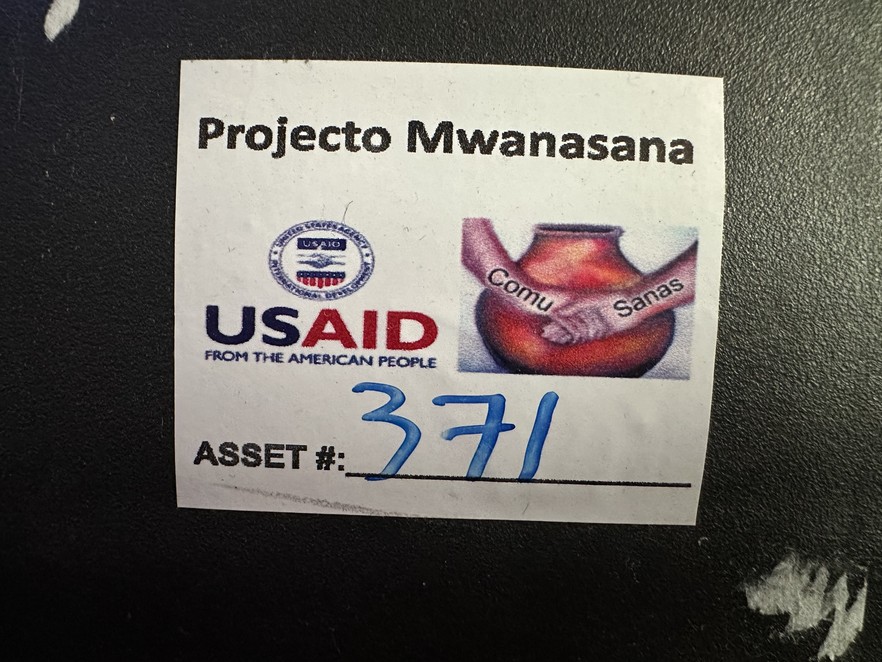
The more I learned about governance in Mozambique, the more understandable this attitude became. Throughout the country, core government functions have been outsourced to a combination of foreign governments, aid agencies, interstate bodies and private companies.
For instance, many of the country’s essential medicines are procured by a large international financing body, the Global Fund to Fight AIDS, Tuberculosis and Malaria. Until January, the transportation of these medicines to hospitals was overwhelmingly financed by US aid agencies, as were the pay cheques of many health workers.
Outside of the healthcare sector, the story is similar.
The main highway I travelled on was built and paid for by Chinese corporations and banks. To keep hydrated I relied on bottled water supplied by private companies because the taps either didn’t run or produced contaminated water.
In many of the impoverished rural settlements, there was virtually no state infrastructure, and people received no financial support from the government. Instead, they primarily depended on aid organisations.
The country’s national budget has historically been heavily supplemented by foreign bodies, including the International Monetary Fund (IMF) and European Union, though much of this support was suspended in 2016-17.
Even national defence has been partially outsourced.
When Islamist militants began rampaging through the northern province of Cabo Delgado, the government struggled to contain it and contracted Russian and South African mercenary groups. When that failed, they authorised a military intervention by the Southern African Development Community and invited a parallel mission by the Rwanda Defence Forces.
It is thus no surprise that Mozambicans have virtually no expectation that their government will come to the rescue when facing an emergency. Instead, they look outward. As one community leader in a rural village told me, “Here, we depend on Trump.”
Cash-strapped and corrupt
Mozambique has 35 million people. About 2.5 million live with HIV, the second highest HIV-positive population in the world after South Africa. Life expectancy is well under 60.
Eight in 10 people live on less than three dollars a day.
The government is deeply cash-strapped. The South African government spends 10 times more per citizen than the Mozambican government does. A large chunk of its spending goes towards paying off debt.
Mozambique simply doesn’t have the money to build an effective health system, though had it spent its limited budget reserves more effectively over the years it could have developed a health system that was at least a bit more independent of donor support.
Instead, the country’s budgetary resources have often been wasted on corruption. Mozambique ranks 146th out of 180 in the world on Transparency International’s Corruption Perceptions Index. This has directly played a role in its public health woes.
One clear example of this is the Tuna Bonds scandal, in which state-owned companies took out $ 2 billion of loans, backed by secret state guarantees. This was supposedly to finance large fishing and maritime security projects. In reality, much of the money was siphoned off to enrich political elites, including the then-finance minister, who is now in prison.
As a result of those decisions, the country was swallowed by debt. And when the extent of the corruption was publicised in 2016, the IMF pulled its financial support for Mozambique.
A detailed 2021 report found this directly led to a fall in economic growth and government spending. It states: “Comparing the three-year average of 2016-18 to the three previous years, spending on health and education fell by $ 1.7 billion — entirely due to the debt.”
The country’s governance crisis is further demonstrated by the political unrest that engulfed the country after the October elections last year, triggered by accusations of election fraud. The accusations were probably overblown, but international observers said the election was not free and fair.
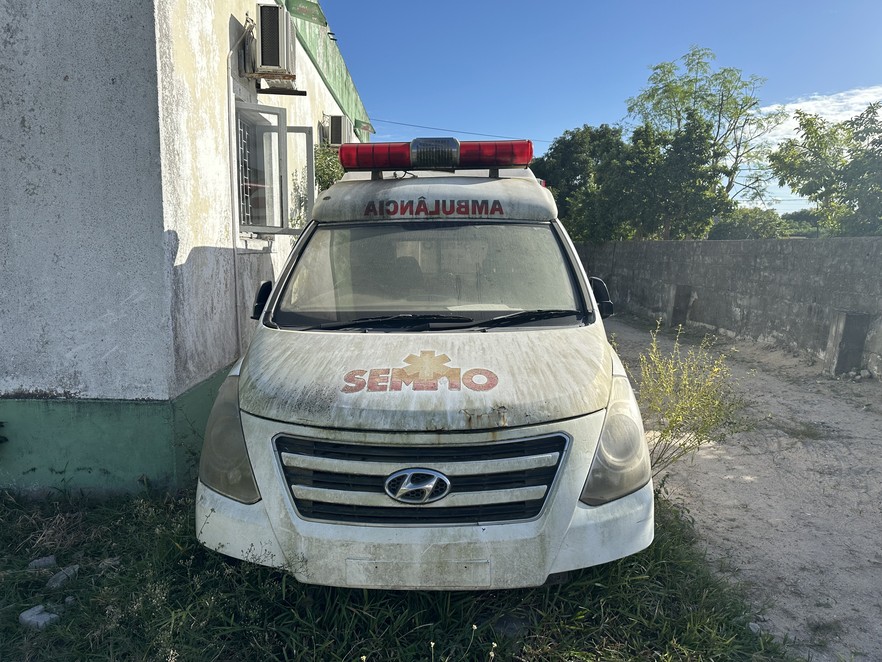
Even during the brief one-week period I spent in central Mozambique, signs of corruption and mismanagement filtered into my interactions with officials.
For instance, before I embarked on a multi-day tour of one province, government officials told me that someone from the provincial health department would need to accompany me on my trip. This was apparently to make formal introductions to district-level officials that I hadn’t asked to meet. For this apparently vital service, the man would need to be paid a per diem of roughly R500 a day for two days, they said.
The civil servant in question was a very senior person in the provincial health department. Despite facing a collapsing health system in the wake of the US cuts, he was apparently ready to drop everything he had going for the rest of that week to follow me around.
When I explained that I wouldn’t pay a government official to stalk me, I was told that saying no wasn’t an option. This is unfortunately the way things are done around these parts, said a local who helped arrange the tour. Neither GroundUp, Spotlight nor I paid the bribe.
US responsibility
Against this backdrop, it is no surprise that defenders of the current US government have often resorted to arguments about moral responsibility when justifying the decision to abruptly slash aid. It is reasonable to ask why the American taxpayer should bear any of the brunt of Mozambique’s public health system when so many of its problems have been caused by the Mozambican government itself.
But it’s not so simple.
The Mozambican civil war from 1977 to 1992 destroyed the country. The anti-communist Renamo insurgency probably received millions of dollars of support from US evangelists, despite committing numerous atrocities. It is strongly suspected that the US government also materially supported Renamo. So the US’s involvement in Mozambique has not been innocent. It could be argued that its aid spending was the least the US could do to make amends for its role in the war.
Moreover, Mozambique didn’t develop its high level of dependency in isolation. For more than two decades, the US actively took responsibility for core functions of the country’s health system. Until January, the US government continued to sign numerous contracts with local organisations, pledging millions of dollars to help run life-saving health programmes for years into the future.
The health system was consequently built around these commitments.
If the US was going to take that much responsibility for the wellbeing of some of the world’s most vulnerable people, then it had a duty to at least provide notice before pulling the plug. Instead, it chose to slash the funds instantly, and in a manner that needlessly maximised damage and confusion.
Stop-work orders were issued overnight, which required that people who were doing life-saving work down their tools immediately. Organisations decided to adhere to these instructions rigidly in the hope that their funding would be reinstated. At that point the Trump administration said it was only pausing aid funding pending a review, and no one wanted to give the reviewers a reason to terminate their programmes.
The consequence was complete chaos.
Orphaned children in extremely rural parts of Mozambique waited for their case workers to bring them their medicines, but often they simply never came. Many of these children had no idea why they had been abandoned.
When certain case workers decided to defy the stop-work order and continue their work voluntarily, they had to do so in secret.
To add fuel to the fire, the Trump administration routinely provided contradictory information to its former recipients and to the public.
The initial executive order signed in January said all foreign development assistance would be suspended for 90 days, pending a review, and might be restored after this time.
Then US Secretary of State Marco Rubio issued a waiver stating that the suspension wouldn’t apply to life-saving humanitarian services. He told the public that organisations providing these life-saving services could instantly resume their work under this order.
Yet the organisations themselves received different instructions from their USAid officers. Rather than immediately continuing their work, they were told to submit revised budgets that only covered life-saving services and to wait for approval.
Organisations rushed to submit these budgets by the deadline. But in the end, the green light never came and their funds remained frozen. This was not only the case in Mozambique; researchers estimated that virtually no funds were released under Rubio’s waiver globally.
In the meantime, Rubio stated that organisations that hadn’t resumed life-saving activities were clearly unable to understand instructions or were simply trying to make a political point.
Later on, the organisations received explicit termination notices, ending their programmes.
Despite this, US embassies and several large media outlets continued to reference Rubio’s order as if it was actually implemented en masse. Even as I write this, the on-again, off-again US aid story is unfinished.
This mixed messaging created an enormous amount of confusion for staff of these organisations and the recipients of their work, ultimately for no clear benefit to the American people.
There was simply never any reason to act this callously toward health organisations to whom USAid had pledged its support. In contrast to the rampant corruption that has plagued the Mozambican government, these organisations were heavily audited to continue receiving funding.
The work they were doing was clearly making a material difference to some of the poorest people on Earth. In the far-flung settlements that I visited, villagers told me about how their lives had been transformed by these organisations. Many were only put on life-saving HIV treatment because of them.
Whatever arguments one may want to advance about the importance of self-sufficiency and national responsibility, none of this justifies the US government administering the aid cuts in such a callous and confusing manner.
This story was originally published by GroundUp
Outgoing Audi Q3 a sensational drive; the new generation will bring better features:
Audi expanded its popular Q3 range in September 2024 to include diesel variants that have two-litre turbocharged diesel engines and some mild upgrades.
The German manufacturer also revealed the new generation Q3 in June, which will go on sale in Europe later this year and in South Africa in 2026.
The Mail & Guardian had the outgoing Audi Q3 35TDI Sportback Black Edition on test for a week and it was the perfect appetiser to get us ready for the new Q3.
The Q3 Black Edition is an attractive car from the outside. We had it in pulse orange, which might not work on other vehicles but really allows the external features of the Q3 to burst into life.
The black exterior mirror housing and blacked out badges also make the vehicle pop a little bit more than the regular TDI and TFSI variants.
The drive
It’s difficult to fight German engineering when it comes to drivetrains.
The Audi Q3 35TDI variants are no different. The two litre turbocharged engine is tied to Audi’s seven-speed S tronic dual-clutch transmission and pushes out 110kW of power and 340Nm of torque.
The Q3 features a MacPherson strut front suspension and a four-link rear axle with separate spring and damper arrangement. Audi drive select also allows the driver to adjust the suspension for different driving modes.
The engine, gearbox and the suspension make the drive capable and comfortable. It also feels extremely smooth and the high torque figure makes overtaking very easy.
Travelling along various highways in Gauteng, and as comfortable as I was driving this vehicle, it was also a lot of fun to drive.
Because of the compact nature of the Q3, the bendy highways were a breeze and allowed me to express myself.
Audi claims a fuel figure of 4.9 litres/100km. I managed 5.5 litres/100km, but also had to endure some terrible traffic on the N1 which didn’t help that figure at all.
I was really impressed.
I was even more impressed when I saw that the new Q3 will feature an improved suspension and a diesel plug-in hybrid that will provide 119km full electric driving range.
The new Q3 will also be available in an all-wheel-drive variant.
Interior and safety
The interior had the sporty feel that you would expect from the Audi Q3 Black Edition, but there were certain aspects that I felt needed work.
For starters, Apple CarPlay and Android Auto were only available on a wired connection, so I had to make sure that I dragged my USB into the vehicle at all times.
The only other complaint I had is the vehicle lacked atmosphere on the inside. For such a sporty and compact looking vehicle, the interior felt plain.
But I will give Audi props for keeping buttons below the infotainment system and making it simple for the driver.
The sport steering wheel and sport seats make the interior extremely comfortable as well.
After seeing the interior of the new Q3 that is coming next year, I have no worries that Audi has intentions to make that interior more exciting and with nicer dash and door materials, even more drivercentric and more technologically advanced.
The old gear shift will also be updated to make the cabin more pleasing to the eye.
In terms of safety, the Audi Q3 has an array of features such as a rear-view camera, parking aid plus and six airbags.
Verdict and looking forward
The outgoing Q3 was really about a seamless driving experience that also included fun dynamics, but I felt the interior of the vehicle did not keep up with the vibrant exterior.
The incoming Q3 looks like it does a much better job at matching the interior and exterior and is likely to be an exciting prospect for South Africans.
The current Audi Q3 is priced from R740 100 and the 35TDI Sportback Black Edition that was tested comes in at R934 050.
Submit and get free exposure here: Showcase Your Business | Advertise Your Special Offers.