
Gordhan, suspended DG, to appear in parliament over SAA deal:
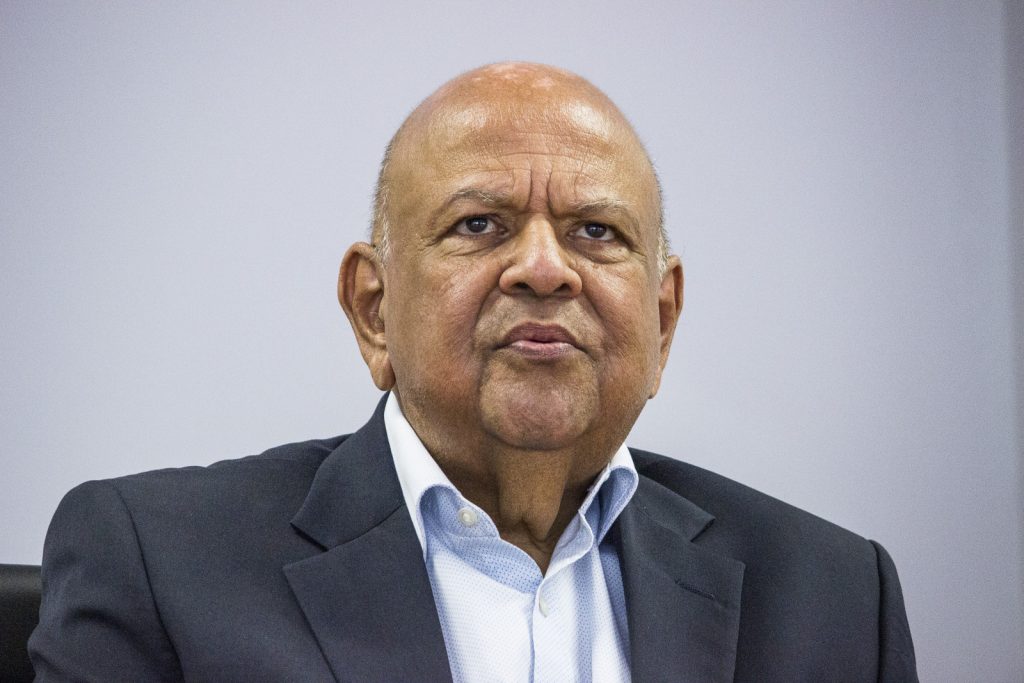
Public Enterprises Minister Pravin Gordhan will be called to appear before parliament to respond to claims by the department’s suspended director general, Kgathatso Tlhakudi, of impropriety in the SAA/Takatso Aviation deal.
Tlhakudi — who was suspended by Gordhan last year — claimed in a protected disclosure and in a letter to parliamentary speaker Nosiviwe Maphisa-Nqakula last week that SAA had been undervalued by R7 billion as part of the takeover of the national carrier by the Takatso consortium.
Tlhakudi also claimed that he was being targeted because of a protected disclosure about the deal and that the new SAA board was being appointed to cover up the undervaluation and to force through the deal.
On Wednesday, parliament’s public enterprises portfolio committee decided to call Gordhan and Tlhakudi to its next meeting to investigate the veracity of the allegations.
Committee chairperson Khaya Magaxa will “fast track” the process to allow both to make representations and be “interrogated” on the matter by MPs on the committee, after which a decision will be taken on the next step.
The meeting is expected to take place by Friday next week.
The SAA deal has been dogged by controversy since the public enterprises department announced two years ago that it had chosen the Takatso consortium as its equity partner to take over 51% of SAA, which had been placed under business rescue.
The opacity of the deal has been criticised by trade unions, opposition parties and now Tlhakudi, who also claimed that the new SAA board appointed this week by Gordhan, with former tourism minister Derek Hanekom as interim chairperson, had been put in place to force the deal through.
The airline relaunched its services in 2021 and is out of business rescue, but a R3 billion cash injection by Takatso had not been made and the deal has not yet been concluded, and is back under scrutiny over Tlhakudi’s allegations.
Tlhakudi, who was the director general during the deal, was suspended for allegedly refusing to appoint a qualified candidate as the department’s director of security, has since been involved in an ongoing court battle with the department and Justice Minister Ronald Lamola, who was appointed by the presidency to deal with the matter.
While some members of the portfolio committee had pushed for the appointment of a parliamentary inquiry on Wednesday, legal opinion it obtained had suggested that they allow Gordhan to respond — which he has done in writing — and Tlhakudi to provide further information before taking any decision.
Legal adviser Andile Tetyana told the committee they had the jurisdiction and authority to investigate the claims by Tlhakudi, which had first been referred to the committee last November.
Tetyana reminded the committee of the Zondo commission’s criticisms of the failure of parliament to play its oversight role during state capture by the Gupta family and others, along with similar criticisms by the courts.
It would “enrich” the process to allow Gordhan to respond to Tlhakudi — and to allow Tlhakudi to make further representations — before the committee took the decision whether to ask parliament to appoint an inquiry or take some form of action
Although ANC MPs were in favour of deferring any decision until Gordhan and Tlhakudi were given a hearing, the Economic Freedom Fighters (EFF) Omphile Maotwe told the committee that a parliamentary inquiry should be appointed immediately.
The committee heard that Gordhan had responded in writing, and while discussions were taking place, an email was received from Tlhakudi in which he said he would not make further written representations, but would prefer to appear before the committee in person.
In the email, Tlhakudi said that the matter should be handled “transparently” and that “an open hearing is the only way forward”.
Tlhakudi said the matter was “not a bilateral discussion between myself and [the] minister and that the committee, which was integral to the process, “should make the ultimate determination based on information they would have gathered”.
Tlhakudi said the committee should invite all affected parties in the SAA transaction to “give their input” and should act “with haste” and could “direct that other parties within the state to take the work forward”, Tlhakudi said.
ANC MP Sibusiso Gumede questioned the veracity of Tlhakudi’s claims and said that although “we need to fast track a decision” it would be premature to talk about appointing an inquiry.
“In fact, any allegations of impropriety concerning SAA, its restructuring and the business rescue process are entirely without merit.”
Public Enterprises Minister Pravin Gordhan
Maotwe said the committee would be “mickey mouse” if it disregarded the allegations.
“We are here to serve the people of South Africa, from different political parties. Let us look at the issue on the table and let the people of South Africa know the truth of what happened,” Maotwe said.
In his response to parliament, Gordhan said the allegations by Tlhakudi were unfounded.
“In fact, any allegations of impropriety concerning SAA, its restructuring and the business rescue process are entirely without merit.”
Gordhan said Tlhakudi’s suspension was “entirely unrelated to the SAA matter” and was over alleged unethical conduct in refusing to appoint the successful candidate for the post of director of security and facilities in the department.
He said the other matters raised by Tlhakudi “appear to be intended to create atmosphere and detract from the real issues”.
It was “abundantly clear that the purported protected disclosure is not only without merit, but lacks the element of good faith”, Gordhan said.
The disclosure was not in fact protected, and had been made after the disciplinary action against Tlhakudi had been initiated, and not before.
Turning to the SAA deal, Gordhan said that Tlhakudi had been central to the business rescue process and had been the project lead of a team that was augmented with “additional resources” and which did not “marginalise his role whatsoever”.
Gordhan questioned why Tlhakudi was “raising it after the fact”.
“Surely as the director general, and having been intricately involved in the process since its inception, if there were something wrong, he would have blown the whistle at that point in time,” Gordhan said.
How the black soldier fly converts organic waste into animal feed:
When one thinks of flies, it’s about how annoying they are and how they spread germs. The black soldier fly, also known as Hermetia illucens, is a little more useful than the regular house fly.
But the black soldier fly can be beneficial both economically and environmentally because they are a good source of oil and protein, according to the University of Florida. The larvae can turn organic waste into a rich fertiliser — which is exactly what a company in Knysna is using them to do.
The Mail & Guardian spoke to Maya Zaken, the head of business developments, marketing and fundraising at Philafeed, which has been “farming” with the black soldier fly since 2022.
M&G: Tell us how Philafeed started.
Zaken: In 2019, I was completing my bachelor degree in economics when I started volunteering with Voice to Echo church in the Kya Sands informal settlement. With my knowledge gained in my development economics course, I turned to agriculture as a means of social and economic development.
After two years doing different courses, gaining different experience, meeting people in the industry, one of my colleagues called me to find out if I knew about black soldier flies. Immediately I fell in love. I called Jason Fine, now the head of business operations at Philafeed, who at the time was leaving his career in IT wanting to find a waste management business to work with. Black soldier flies was his answer.
They ticked all our boxes and would be the vehicle that could allow us to drive all kinds of development and system change.
What are the objectives of Philafeed?
Philafeed’s goal is to contribute to the development of our country and the regeneration of our planet through circular waste management practices, which is the use of products that become waste and sustainably used by people again.
We aim to enhance the effect of the black soldier fly by creating a low carbon, low budget model that can be replicated in numerous areas, closing multiple community food loops.
The way I like to explain what closing multiple community food loops are, is by saying that everything in nature goes back into nature, so like the idea of composting, you use whatever comes out on the other side to put it back into a system. This localised approach can contribute to the development of resilient and sustainable local food systems.
Tell us about the process of converting organic waste to sustainable animal feed using the black soldier fly.
The process begins once we collect organic waste from restaurants, breweries and other waste sources in Knysna. When we speak of organic waste we are referring to food waste. We remove any inorganic material such as cans, glass and metal, reduce the particle size of the food waste so the black soldier fly can eat more efficiently.
We add the waste to a tray, where we then add neonates — 5 day old baby larvae — that we order from established black soldier fly companies. Currently we have a small nursery where we are gaining the technical skills to breed our own larvae.
The black soldier fly immediately starts eating the waste. After about 12 days the tray transforms into a mixture of full grown larvae and frass — insect waste (residue). Fun fact: larvae eat double their body mass on a daily basis. At this point we harvest most of the larvae to sell to farmers, homesteads as well as pet owners, and the other proportiongoes into our small nursery into pupation where it uses up all of the energy it stored during its feeding stage to transform into black soldier fly.
The fly lives for about six days where it drinks a bit, mates and ultimately brings the next generation of natural waste processors into existence. After being incubated and spending five days in the nursery, they will be transferred to a tray where the cycle is continued.
What is frass?
Frass is the excrement or waste material produced by insects, particularly the larvae. Frass is rich in nutrients and can be used as a valuable resource in various applications, including organic fertiliser, vermiculture — which is turning organic waste into your own fertiliser using worms — pest control as it has insecticidal properties that can be used as a natural pesticide or repellent against certain pests in agriculture and gardening. It can be used as a non-toxic and environmentally friendly alternative to chemical pesticides. It has many benefits enhancing soil health, and resilience, improving growth of plants.
Frass from black soldier flies high in carbon improving soils water holding capacity and
contributing to carbon sequestration in soil. This means storing carbon in soil so it does not enter the atmosphere, but also ensuring that the plant uses its resources more efficiently and that it is able to store nutrients for longer. This makes frass a promising resource for sustainable agriculture and environmental management.
How has waste collection and use benefited the environment?
It offers several environmental benefits, including waste reduction, nutrient recycling, greenhouse gas reduction, sustainable protein production, reduced chemical use, and localised food systems, making it an environmentally-friendly and sustainable solution for managing organic waste.
Our business is focused on improving urban waste management systems, which currently rely on outdated landfill practices that release significant amounts of greenhouse gases, including methane, into the environment, posing a major threat to our health and the health of our planet.
By diverting large amounts of waste from landfills, we believe we can have a significant effect on climate change by reducing methane emissions, which are 78% more potent than carbon dioxide.
Black soldier fly technology also provides us with the opportunity to close loop supply chains by minimising the use of virgin materials. Instead of relying on farming livestock for protein, we use existing resources like organic food waste, reducing the demand for alternative resources like soya and fishmeal that rely on extractive processes, which can decrease natural carbon sinks. In this way, we create two sustainable products — insect protein and their byproduct, frass — that allow us to alleviate pressure on land and ocean resources while also increasing biodiversity.
Why the black soldier fly specifically?
The black soldier fly gives us a glimpse of how we view waste and resources in our world. Instead of seeing waste as a problem to be disposed of, the fly steers us in a direction where waste is seen as a valuable resource.
This transformation of waste into a valuable resource not only reduces the burden on landfills and minimises environmental pollution, but also creates a circular economy where waste becomes a valuable input for production.
The larvae are also protein-rich and can be used as a nutrient-dense feed for animals, reducing the dependence on traditional protein sources that may have environmental and social impacts, such as fish meal or soybean meal.
In summary, the black soldier fly represents a vision of a world where waste is seen as a resource, and abundance can be created through sustainable and innovative solutions.
Are they native to South Africa?
The black soldier fly is not native to South Africa. It is believed to have originated in the tropical and subtropical regions of the Americas. But it has been introduced to various parts of the world, including South Africa, probably through human activities such as trade and transportation. The exact timeline of how and when it arrived in South Africa is not clear.
What are you hoping to achieve with this black soldier fly project?
We aim to show that it is possible to achieve both financial sustainability and positive social and environmental impacts through our business model.
We aspire to contribute to the creation of local and sustainable systems that support not only the current generation but also future generations. We believe that local food systems and circular economy approaches, where waste is seen as a resource, can play a critical role in building resilient communities and supporting long-term sustainability.
Our vision is to not only address pressing challenges such as waste management and food security, but also to promote community empowerment, economic development and environmental conservation.
More staff at G4S’ Mangaung prison knew of Bester’s escape – Popcru:
More employees at the Mangaung Correctional Centre appear to have known about Thabo Bester’s planned escape than those already facing criminal or disciplinary charges, the Police and Prisons Civil Rights Union (Popcru) said.
Meanwhile, police arrested a 51-year-old male security guard who is employed by multinational security company G4S. Brigadier Athlenda Mathe said the arrest took place at the Mangaung prison on Tuesday.
The suspect is expected to appear in the Bloemfontein magistrate court on Thursday on charges of assisting an inmate to escape from prison and defeating the ends of justice. He joins another G4S employee and three more suspects accused of aiding Bester’s escape in May 2022.
During a “fact-finding mission” to Mangaung prison, the policing trade union found that many staff members were well aware of Bester’s plan to escape from the maximum security prison “but they were kept in abeyance by majorities”, the union’s president Zizamele Cebekhulu said on Wednesday during a roundtable discussion in Pretoria.
Bester’s escape from the privately run prison, which is managed by G4S, raised concerns about the state of public-private correctional facilities in South Africa.
According to Cebekhulu, labour laws at the Mangaung prison are not maintained and “strict rules of looking after prisoners are not adhered to”.
He said the union had heard accounts of staff being victimised and that “they just kick you outside and dismiss you”.
Cebekhulu did not provide specific examples of victimisation, but referenced a strike by employees outside the prison last year as proof that all was not well at the prison.
Allegations of human rights violations and failure to adhere to labour laws coincide with other international claims against G4S.
In South Africa, wrongdoings at the company were highlighted by investigative journalist, Ruth Hopkins in a series of articles published in Mail & Guardian in 2013. She exposed alleged incidents of inmates being forcibly injected with antipsychotic medication, being electroshocked and tortured — with some allegedly succumbing to their injuries.
The British multinational security company had costs related to lawsuits and fines amounting to more than R3.5 billion in 2018. It has been embroiled in numerous allegations of human rights violations, employee abuse, corruption and tax evasion.
Despite the global controversy, G4S continues to boast about its status as the world’s largest private security service provider, with a global workforce of nearly 800 000 people.
On Wednesday, Popcru argued that G4S “is not interested in rehabilitation, they are interested in making a profit”. Cebekhulu said the union had determined that at Mangaung prison, one guard had to look after 60 inmates.
He also confirmed reports that Bester had had a “lavish” stay at the facility, including one incident where Bester was allowed to wear a suit on his birthday while engaging with people outside the prison.
This particular incident was brought to the public’s attention by non-profit news group GroundUp, which reported on 24 March that Bester, under the pseudonym of “Tom Motsepe”, ran a multi-million rand scam event and a fake production company called 21st Century Media. During a glamorous event at the Hilton Hotel in Sandton on 13 June 2018, Bester virtually appeared before the guests dressed in a suit and claiming to be in New York, while he was in fact in prison.
Popcru placed the blame for the debacle “squarely on the shoulders of the [department of correctional services] who had a responsibility of oversight of private prisons, and looking at how laws of this country are being adhered to because this is a foreign company”, Cebekhulu said.
G4S has been operating in South Africa since 2001 and manages the Mangaung and Kutama-Sinthumule correctional centres.
Last week, the correctional services department told parliament’s portfolio committee on justice that the government had — since its contract commenced with G4S until 2022 — paid the company over R7.7 billion. It cost the state R45 million a month to maintain the contract with G4S. The two private centres have a total of 5 952 inmates, 2 928 of them at Mangaung prison.
Popcru has previously accused management at the prison of trying to cover up the events leading to Bester’s escape. It also slammed correctional services for outsourcing state functions to foreign-owned companies “whose sole preoccupation is profit maximisation as opposed to the core mandate of rehabilitating inmates”.
The trade union, which says the country is “coughing up” a lot of money to maintain public private prisons, called for them to be brought under the control of correctional services.
Cebekhulu confirmed that the trade union planned to address parliament and had also arranged to meet with the department of correctional services.
Submit and get free exposure here: Showcase Your Business | Advertise Your Special Offers.
