Hopes pinned on Dr Naledi Mbude to improve SA’s abysmal reading scores:
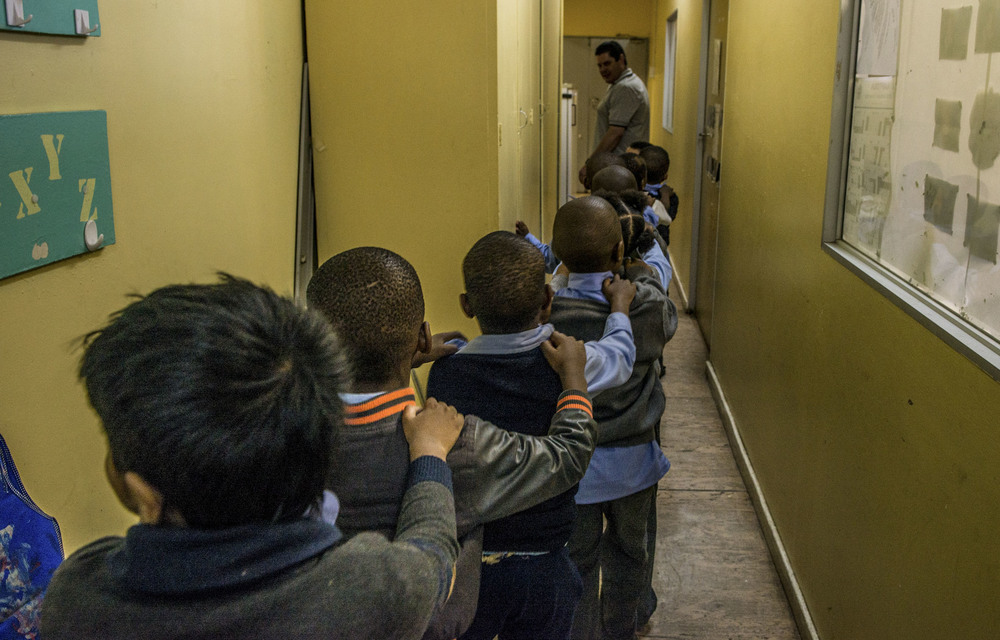
The latest Progress in International Reading Literacy Study (PIRLS) report, released in May, revealed that 81% of grade four learners in South Africa cannot read for meaning in their home language.
Seen as a desperate attempt to address this, the Department of Basic Education (DBE) has now appointed Dr Naledi Mbude as Deputy Director-General for Special Projects, including African language education. Her appointment has been widely welcomed in educational and academic circles.
“Now that all else has failed, the department is at last turning to trying to address the language issue,” says Carole Bloch, Extraordinary Professor in Language Education at the University of the Western Cape (UWC).
Mbude is a champion of mother-tongue instruction. She did pioneering work at Rhodes University. This showed that learners in a pilot project in the Cofimvaba district of the Eastern Cape, who studied maths and science in isiXhosa up to grade six, outperformed their peers from the same district who switched in grade 4 to English medium instruction.
The fate of about 70% of learners in South African state schools is to switch to English-medium instruction after three years of teaching in their home language. Of the remainder, 24% attend English-medium and 6% Afrikaans-medium schools from the outset.
This switch was described as “brutal” at an Academy of Science of SA (ASSAf) roundtable discussion in June by educationist Crain Soudien, former President of the Human Sciences Research Council. The roundtable was convened by ASSAf President Jonathan Jansen in response to the PIRLS report.
“Learners are starting in English before they have mastered comprehension in their own language,” Nangamso Mtsatse, CEO of Funda Wande, Reading for Meaning, an NGO that provides high-quality materials to support teachers in grades 1-3, told the roundtable.
The PIRLS study was conducted across 43 countries, of which South Africa is the only country in sub-Saharan Africa (Egypt and Morocco are the other two on the continent). While South Africa fared worst of all, reading capability at its schools also varied more than in any other participating country as a function of parental income.
Learners worldwide do the PIRLS test in their home language, but at the age when in South Africa most switch to English instruction. There are stark differences among languages in the reading ability of learners, with African languages tailing English and Afrikaans. But socio-economic factors confound the interpretation of these data, as schools that teach grades 1 to 3 in African languages tend to be located in poorer areas.
The fact that schools with Afrikaans and English as the languages of learning and teaching completely outstrip the other schools, suggests that over the past 29 years the government has done little to address historical inequalities in education.
Jansen believes that more parents should be given the option for their children to attend state schools where they can be taught in English for the entire duration of the curriculum.
“Right now our children are failing to read in any and all languages, so why burden them with two or three instructional languages while educational progress and economic opportunity depends solely on fluency in English?” he wrote in the Sunday Times.
But others disagree. Russel Kaschula, Mbude’s former supervisor and now Professor of Forensic Linguistics and Multilingualism at UWC, says that learners should be taught content subjects, such as maths and science, in their mother tongue for at least the first six years, as both Mbude’s and similar research conducted in Nigeria show. This is because mother tongue instruction facilitates conceptual cognition, while English should be taught in tandem as a language subject.
He believes that this model can also allow for translanguaging, where English can be introduced alongside an African language in content subjects, but the emphasis must be on the mother tongue. “The mother tongue must be the point of departure as with most countries in the world,” says Kaschula.
The DBE has been heavily criticised in Parliament for failing to implement the National Reading Plan which was announced by President Ramaphosa in 2019, following a similarly poor performance by South Africa in the previous PIRLS assessment in 2016. So Mbude will have her work cut out for her.
Mbude is no stranger to controversy. After less than a year in the job of provincial superintendent-general of education she was suspended by Eastern Cape Premier Oscar Mabuyane in 2022. This followed her giving incriminating evidence relating to provincial education department practices to a portfolio committee.
The Covid pandemic hit the country’s youth the hardest, with youth unemployment growing by a quarter of a million people over the past three years. In this context the Department of Higher Education and Training has identified a lack of “reading comprehension” as the most important skill deficit in the South African labour market.
Language aside, there are other issues which need to be addressed urgently if this is to be improved. The bua-lit collective of local educationists has outlined five practices which could have an immediate impact on improving literacy among children. The first of these is that every foundation phase classroom should have libraries containing books, both in children’s most familiar language, as well as English, from which children must take at least one book home every day.
This article was first published by GroundUp.
Global study highlights effect of plastic pollution on foraging seabirds:

A new study has found that marine plastic pollution can lead to the starvation of seabirds, affecting their population numbers, and ultimately affect marine ecosystems and wildlife globally.
Seabirds mistake plastic for food and “in some cases, these are then fed to their chicks waiting at breeding sites. This can lead to starvation, as the stomach volume is essentially reduced, or poisoning and injury — including stomach scarring,” Pierre Pistorius, the study’s co-author and head of Nelson Mandela University’s Marine Apex Predator Research Unit, said in a press statement.
The study, The Global Assessment of Marine Plastic Exposure Risk for Oceanic Birds, tracked several locations for 7137 adults of 77 petrel species from 148 populations in 27 countries and Antarctica from 1995 to 2020.
“We’ve tracked various seabird species, included albatrosses, petrels and penguins at South Africa’s Marion Island and some of this data was used in the massive global study of vulnerability of seabirds to plastic pollution,” said Pistorius.
“Although there have been large numbers of studies looking at how plastic pollution influences specific seabird populations, this one provides the most comprehensive assessment of the exposure of foraging seabirds to plastic pollution globally.”
Small tracking devices on seabirds show exactly where they go when away from land.
Seabirds are wide-ranging and the study shows that highest levels of exposure are generally beyond the Exclusive Economic Zones of countries where birds breed, he said.
“This highlights the paramount importance of tackling this problem at a global scale — this is why large, collaborative projects such as ours are of paramount importance,” said Pistorious.
South Africa has a diverse coastline that serves as a crucial habitat for a number of marine species including oceanic birds such as albatrosses, shearwaters, and petrels that play a vital role in the marine ecosystems. But the increasing presence of marine plastic pollution poses a significant threat to these species and the entire ecosystem.
The research also found that because these oceanic birds are integral to the marine food web, their decline can disrupt the balance of the entire ecosystem.
What needs to be done
Peter Ryan, the director of the Percy FitzPatrick Institute of African Ornithology at the University of Cape Town and co-author of the study, said: “The problem is not plastic, the problem is people and how people use things. So it is a people problem and not a plastic problem primarily.”
He also said: “People get overly concerned about plastic in the ocean and, yes, it is definitely a problem but relative to climate change and fishing, it is a very small problem.”
Some of the strategies the study suggests to reduce plastic pollution are improved waste management practices, especially in coastal communities and fishing areas, which can help reduce plastic pollution entering the ocean. Also, raising public awareness about the effect of plastic pollution on oceanic birds and marine ecosystems can encourage responsible behaviour and foster a culture of sustainability.
It also requires collaborative efforts from governments, industries, and individuals to reduce plastic pollution, protect oceanic birds, and safeguard the health of the oceans for future generations.
Ryan said the study serves as a wake-up call for South Africa and the global community to take immediate action to address the plastic pollution crisis.
Lesego Chepape is a climate reporting fellow, funded by the Open Society Foundation for South Africa.

There is an amusing section of Sinead O’Connor’s biography Rememberings where she describes an altercation with her managers at Ensign Records that explains her crew cut. She was having lunch at a place called Khan’s in London with top record company execs, Nigel Grainge and Chris Hill, just before the release of her first album The Lion and the Cobra.
Halfway through the lunch, Nigel announced he’d like her to stop cutting her hair short and start dressing like a girl, she writes. She replied to Hill: “So, lemme get this straight. He wants me to look like your mistress and the bird he left his wife for?” And with that flourish, she picked up her cigarettes and keys and flounced off.
The next day, she decided to cut all her hair off in defiance and in the book she describes going to a Greek barber who wept as he cut off her locks.
And, in that moment, we have Sinead O’Connor — a sharp-tongued, mischievous rebel, confrontational and intoxicating at the same time. But, if you look carefully, in that moment we have the other side of O’Connor too — the person who couldn’t help taking everything too far; the self-destructiveness that always seemed to lie just below the surface.
And there reside contradictions too, because although O’Connor lived during the punk era, and wanted to be a punk, and in some ways was a punk, the crew-cut did something odd — it made her look both vulnerable and beautiful, almost the exact opposite of her intention.
The contradictions of her life just keep coming. In contrast to the deliberate abrasiveness of punk music at the time, O’Connor’s personal style was to sing like a meadowlark. In contrast to the clashing tones and discordant chord structure of punk, O’Connor’s singing was so finely crafted, so perfectly pitched, it seems timeless and angelic.
Yet — more contradictions — often what she sang about was punkish: angry and full of dismissive bile. Even the title of her second, and most enduring, album I Do Not Want What I Haven’t Got is curiously circular and edging toward didactic.
I sometimes think it’s no accident her enormous popularity rests on a song written by someone else — Prince — because her own songs just don’t have the same uncomplicated pop generality as Nothing Compares 2 U. And, yet (another contradiction), she delivers the Prince song with so much poise and skill it never leaves you. The power of the song and its emotional reach are enhanced by that single tear sliding down her face in the video.
There is so much about O’Connor that is overly hard and so much that is unbearably soft. Famously, she was beaten senseless by her clearly deranged mother who, of course, she loved. She spent her youth stealing from shops, encouraged by her mother, and was eventually caught and sent to a reform school run by nuns. Who she loved. And hated.
We don’t know whether O’Connor was so disfigured by her youth that she was emotionally crippled for life or whether her mental issues were inherent or genetic; it honestly doesn’t make much difference. But there is a terrible scene in her biography where she is lying on the floor of her mother’s kitchen trying to arrange her naked body in such a way that the blows mainly hit her bottom. And at that exact moment, she finds Jesus, she writes.
Spirituality, of one sort or another, never left her. But it was a spirituality of a special type. She was always trying to discover some new aspect of some new religion, finally becoming Muslim in later life.
And yet, dare I say it, another contradiction, her relationship with the church was tendentious, as were her relationships with record companies, fame, money and authority generally. Her most public exhibition of this was tearing up a picture of Pope John Paul II’s photo on the popular American TV show Saturday Night Live in 1992.
That event marked a turning point in her career. She never again had a hit in the US, the live shows dried up, and the record sales dwindled. Consequently, she was often asked whether she regretted doing it. In her autobiography she retorts, absolutely not, as she did in interviews down the years.
“Everyone wants a pop star, see? But I am a protest singer. I just had stuff to get off my chest. I had no desire for fame.”
I often wonder about that. Like most people, I’ve had friends and acquaintances who are burdened by their own minds. What stands out is how important blame is in their lives, and how responsibility is often directed outwards, almost to avoid additional mental anguish should it be directed inwards, as often it should. There are lots of ex post facto justifications and confusion over timelines. And for people outside, it’s painful — rendered a useless accessory in the emotional car crash that is happening in front of you. You feel useless and complicit simultaneously.
But, the thing about that tearing-up-picture incident is this — ultimately, she was right. Would the investigation of the Catholic Church by The Boston Globe have happened if a slight, bald singer hadn’t boldly, bravely, unwisely, taken the first step? I don’t think so.
In a sense, it is this which O’Connor leaves us, not just herself, but her music. Music was a balm which held this most tortured soul together until she finally crumbled, understandably, in the face of her son’s suicide. If music could do that for so disfigured a singer and songwriter, it’s a clue about what it does for all of us. Personally, I hope that will be at least part of her gorgeous legacy.
Submit and get free exposure here: Showcase Your Business | Advertise Your Special Offers.