How safe from cholera and harmful bacteria is our water?:

There’s cholera in the Vaal. But even though the risk of these bacteria making it to household taps is very low according to Benoît Le Roy of the South African Water Chamber, failing treatment systems and load-shedding may change this.
The Water Chamber works with government organisations like Rand Water on implementing the national sanitation and water master plan.
The 2022 Blue Drop report, which gives an overview of the state of South Africa’s nearly 1 200 water supply systems, says that only four in 10 of these can provide water that is unlikely to have germs that can make people sick.
In South Africa, water that is destined for household taps is treated to clean and disinfect it so that it’s safe to drink. This requires a system that works around the clock and needs a steady power supply to keep pumps going — which is difficult when load-shedding can interrupt the process more than once a day, often for a total of up to eight hours.
Johannesburg’s water department confirmed that the latest tests done by Rand Water, which supplies 11 million people across Gauteng, the Free State, Mpumalanga and the North West with tap water, show that they have not found cholera in their reservoirs.
Cholera is a bacterial infection that causes runny stools, and in serious cases can lead to life-threatening dehydration. It spreads by drinking water or eating food contaminated with faeces from a person who is sick with cholera.
Rand Water’s announcement comes after lab tests on water downstream from a manhole leaking sewage into the Vaal River came back positive for cholera.
To date, 121 cases of cholera have been found in Gauteng, the Free State, Mpumalanga and Limpopo, with Tshwane in Gauteng being the hotspot at 99 cases.
But while tests show that there’s no cholera in tap water at the moment, for how long will our water be germ-free?
How water is cleaned
In January, the Breede Valley Municipality in the Western Cape asked residents to boil their tap water to make sure it was “absolutely safe” to drink as the systems that clean and disinfect the water run on electricity — and high stages of load-shedding pose a risk of failure.
South Africa’s household water comes from rivers — and the used water from drains and toilets also goes back into rivers.
To make sure that our water is always safe for human use, there are two treatment systems in place.
First, a wastewater treatment plant. This is a town’s sewage works. Here water from municipal sewers flows into a series of open-air ponds where it is filtered, cleaned and disinfected step by step. The treated water — also called effluent — is then released back into a river and the sludge at the sewage works is dried so that it can be discarded. Effluent is tested to check that it does not contain toxic metals and chemicals before it is discharged into a river.
Second, water in rivers, including the treated wastewater, flows into dams, from where it’s drawn into another round of treatment before it can be pumped to a town’s water tanks. These are the water treatment works.
Again the water goes through a series of cleaning steps. Solids — from large objects like branches and leaves to smaller bits like gravel and sand — are first filtered out. The filtered water then goes into a set of ponds, where chemicals are added while the water is swirled around by large mixers. The chemicals make very small pieces of dirt that are still in the water clump together, which can then settle out.
Next carbon dioxide is bubbled through the water to lower the pH from about 10.5 to about 8, which is in line with international guidelines for drinking water.
The pH level is an indication of how alkaline or acidic a solution is. A pH of 7 is neutral. Values lower than 7 means a solution is acid-like, and above 7 the solution becomes alkaline, which means it can have a soapy feel.
After the water has passed through another filter to remove any remaining sand granules, it is pumped into underground pipes that lead to booster stations where it gets disinfected with chlorine. As an extra fail-safe, two more rounds of disinfection follow, to make sure the water in our taps is safe to drink.
Safe water
But the systems for treating water do not work equally well everywhere in South Africa.
According to the 2022 Blue Drop report, only about half of the country’s water treatment works are designed and maintained well enough to supply water that meets the national standards for drinking water.
These rules say what amount of chemicals such as chlorine, fluoride and sulphate is allowed in drinking water, how many and what type of germs there may be in water without people getting sick from using it, and what safe water should taste, smell and look like.
For example, for tap water to be safe it may not contain any germs that come from faeces, such as Escherichia coli, Salmonella or cholera bacteria, as they pose an “immediate unacceptable health risk” to people who drink it because it can cause diarrhoea and vomiting.
The water also shouldn’t have any solid bits in it or be too cloudy — an indication that there are too many salts in it.
Municipalities with substandard waterworks are generally outside of the bigger metros, like in parts of the North West and the Free State.
It is in these places where the risk of disease-causing bacteria, such as cholera, getting into tap water could be higher. In such cases, municipalities should tell residents to take extra precautions, like boiling their water before using it for drinking or cooking.
Ayesha Laher, a water scientist and board member at the Water Institute of South Africa says that if the water quality from a treatment works isn’t up to standard, it means the treatment process isn’t working as it should. And then there could be a risk of disease-causing germs ending up in tap water.
To check if your area has safe water, the department of water and sanitation has put together a dashboard that shows the quality of tap water. If you see a red pin, it means the water quality has not been checked for three months, and it’s probably best to boil your water just to be safe.
As for installing household water filters on taps, Laher says, they won’t protect you against germs “as they have no way to disinfect water” — at most they will remove sand and solid bits.
That we aren’t seeing outbreaks of other water-borne diseases, like hepatitis A and E. coli infections, means that, for now, the water treatment works are still functioning to a “reasonable degree”, says Tom Boyles, an infectious diseases specialist at Right To Care.
If the water quality were compromised, “we would see a large amount of these other diseases in people who drink tap water”, he says. It hasn’t happened yet, warns Boyles, but if it does, outbreaks like the one in Hammanskraal could become more frequent.
“The bottom line is, if it gets into the tap water, it’s a big problem.”
This story was produced by the Bhekisisa Centre for Health Journalism. Sign up for the newsletter.
Unlocking the future: nurturing a literate generation:

The 2030 Reading Panel will address what needs to change to ensure that all children learn to read by 2030
The recent findings of an international study on the reading abilities of 10-year-old children in South Africa have unveiled a disheartening reality. It is not only a matter of deep concern that eight out of 10 do not understand what they read, but also a timely call for serious and intense interventions from both the public and private educational sectors.
The ability to read and comprehend is essential for leading a meaningful life in this technological age, contributing to one’s immediate circle, and increasing the progress of the country as a whole. As Africa positions itself as the future economic powerhouse of the world, the urgency to address these challenges becomes even more paramount.
According to the World Economic Forum (WEF), Africa is projected to witness remarkable population growth, with over a quarter of the world’s under-fives and more than a third of all children being African by 2050.
While population growth in Asia is declining, Africa’s people boom is on the rise. By 2030, one in every five individuals in the world will be African, signifying a demographic shift with profound implications. Consequently, the emphasis on technology, infrastructure, health,and education will be instrumental in propelling this rapidly growing market to the forefront. However, education emerges as a critical factor that demands urgent attention.
Recognising the significance of education, South Africa has set 2030 as a milestone year.
The “2030 Reading Panel,” an annual gathering of esteemed South African leaders convened by former deputy-president Phumzile Mlambo-Ngcuka, seeks to address the question of what needs to change to ensure that all children learn to read by 2030. The panel recommends fundamental reforms in teacher recruitment, training, certification, support and evaluation, as well as educational financing and school resourcing.
While the government must spearhead these reforms, it cannot be expected to shoulder the challenge alone.
READ Educational Trust was established in 1979 precisely because South Africa has long struggled with low literacy rates. It operates on the belief that literacy and access to quality education are fundamental for empowering individuals. The organisation boasts an impressive track record, having positively impacted 7.5 million learners, 250 000 teachers and 40 000 schools across the country. READ has played a pivotal role in influencing and reforming the education system post-apartheid, with its methodologies widely adopted by teachers and literacy NGOs.
While READ has been successful in the past, the rapidly evolving global environment and technological advances necessitate agile adaptation to address present-day literacy needs.
Over the last 18 months READ and its publishing arm, READing Matters, have undergone re-engineering to equip them to respond effectively to current and future challenges. This strategic repositioning centres on a methodology that:
- Incorporates the knowledge, skills, and competencies that children bring to the classroom, regardless of their economic background.
- Uses the child’s home language as a scaffold in the process of learning an additional language.
- Develops learning resources that are culturally appropriate and aligned with the above priorities.
READ is a firm advocate of impact measurement — using credible, scientific tools — that not only reflects the children’s abilities but also informs the design of our literacy interventions.
The recent results of the Progress in International Reading Literacy Study (PIRLS) underscore the seriousness of the situation South Africa faces. The study revealed that a staggering 81% of South African children in grade four struggle to read with comprehension. This marks a significant deterioration from 76% four years prior and it is likely that Covid-19 played a role in eroding the gains made in a decade of slow progress since 2011.
While South Africa ranked last among the 57 assessed countries, it is important to note that very few low- and middle-income countries participated in PIRLS. The survey benchmarked us against the best-resourced education systems in the world and its message — that South Africa must strive for better outcomes — cannot be ignored. This is the generation that must grasp and shape the promising future of the African continent in a competitive world.
The challenges faced by READ, other private literacy organisations, and the government are undeniably daunting. However, they are not insurmountable. The appropriate response should not be one of despair, but rather a resolute call to action for the government and the private sector to improve the life opportunities of South Africa’s children.
Education reform, enhanced teacher training, adequate resources and private sector interventions can collectively pave the way for a brighter future. By prioritising literacy and education, South Africa can unlock the potential of its children, preparing them to thrive in this changing world and contributing to the nation’s overall progress.
— Sizile Mabaso is the CEO of READ
SA star Nandi Madida is the new host of Apple Music 1’s Africa Now Radio:

‘I proudly joined the team because they believe in the continent so much’
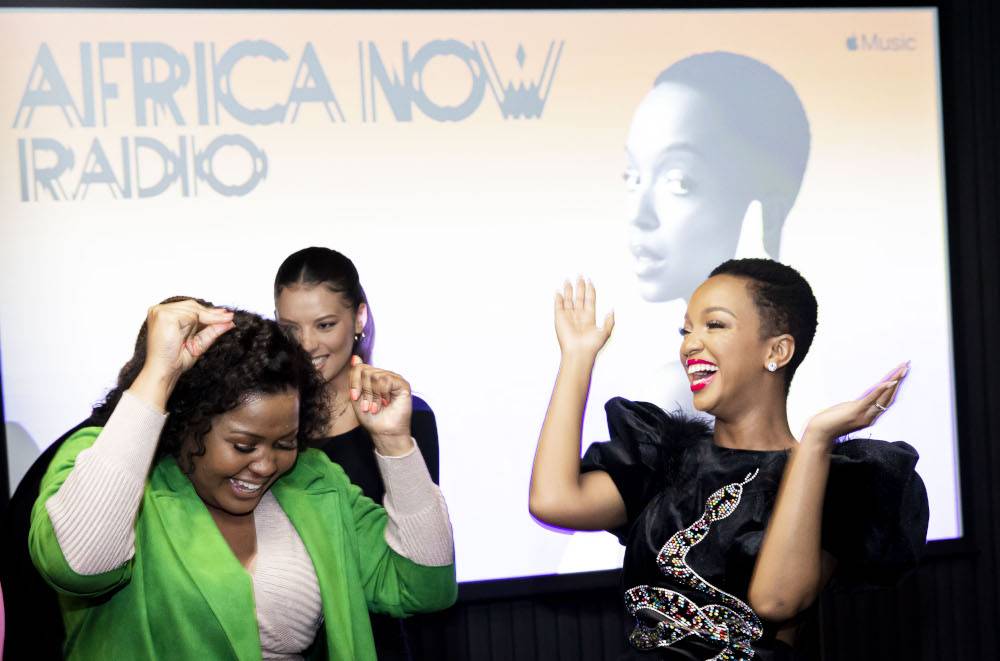
South African actress and singer Nandi Madida has joined Apple Music, taking the reins over as the new host of Africa Now Radio on Apple Music 1. Her debut show was on Friday 2 June. Listeners can tune in to her show on apple.co/_AfricaNow.
Now in its fourth season, Africa Now Radio — Apple Music’s first global African music radio show — has featured exclusive interviews with Africa’s biggest stars, including Davido, Stonebwoy, Diamond Platnumz, Tiwa Savage, Wizkid, Nasty C, Rema, Ayra Starr, Asake, Omah Lay and many more of the boldest and brightest musical and production talent on the continent.
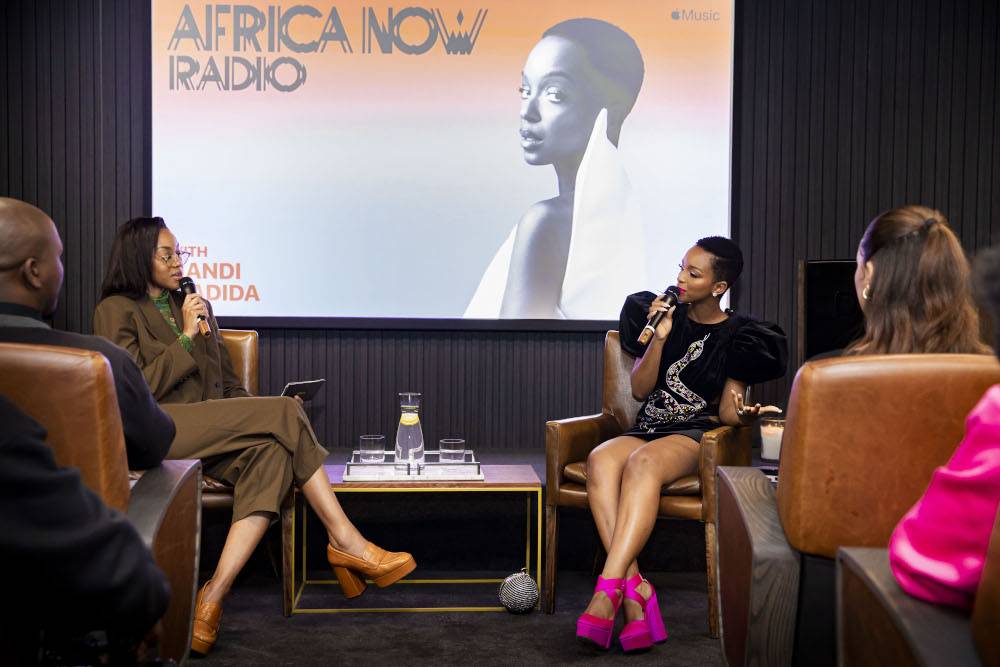
Africa Now Radio has featured over 130 cover stars, debuted over 650 new releases, and introduced Apple Music subscribers worldwide to over 130 of Africa’s hottest new artists, from Gyakie to CKay to Lloyiso to Uncle Waffles and Pabi Cooper. Based on Apple Music’s Africa Now playlist, Africa Now Radio with Madida will continue to showcase the latest African sounds, be it Amapiano, Afrobeats, highlife, Alte, house, hip-hop, bongo flava or kuduro. Its new forms of African popular music fuse traditional and contemporary sensibilities, morphing into hybridised sonic fragments that connect Joburg to Nairobi via Lagos and Accra.
Madida has become an international sensation, known for her infectious and uplifting personality, her steadfast professionalism and her irrefutable beauty. After starring in Black Is King directed by pop icon Beyoncé, Madida was handpicked to play Nala. Her latest single Organic champions self-belief and self-worth under a new deal with Sony Music Africa. Her love for presenting began at the tender age of 15 and from there she progressed to Afropunk’s Main Stage in Brooklyn.
“What a time to be alive on this beautiful continent,” Madida told Apple Music. “I am just, if anything, grateful to witness Africa getting its long overdue credit. We are not only the cradle of humankind but also the cradle of music, and I’m excited to celebrate Pan-Africanism with Apple Music 1’s global audience and see the trajectory of African artists! I am a cheerleader of that movement and will ensure that I support it in any way that I can, and to shine a light on it!”
She added: “Apple Music has always been at the forefront of supporting African emerging artists, so it is not necessarily doing anything different, but it is ensuring that we continue that narrative and continue to give the recognition that these rising African artists deserve. That’s why I proudly joined the Africa Now Radio team, because if anything, they believe in the continent so much and have been doing it before it was popular.”
Apple revolutionised the music experience with iPod and iTunes. Today, the award-winning Apple Music celebrates musicians, songwriters, producers, and fans with a catalogue of over 100 million songs, expertly curated playlists, and the best artist interviews, conversations, and global premieres with Apple Music Radio. With original content from the most respected and beloved people in music, autoplay, time-synced lyrics, lossless audio, and immersive sound powered by Spatial Audio with Dolby Atmos, Apple Music offers the world’s best listening experience, helping listeners discover new music and enjoy their favourites while empowering the global artist community.
Apple Music is available in over 165 countries and regions on iPhone, iPad, iPod touch, Mac, Apple Watch, Apple TV, HomePod mini, CarPlay, and online at music.apple.com, plus popular smart speakers, smart TVs, and Android and Windows devices. Apple Music is ad-free and never shares consumer data with third parties. More information is available at apple.com/apple-music.
Africa Now Radio with Madida airs weekly on Fridays at 3pm in South Africa, at apple.co/_AfricaNow and broadcasts on Cool FM in Nigeria every Sunday at 6pm.
Submit and get free exposure here: Showcase Your Business | Advertise Your Special Offers.