How South Sudan downplays gross human rights’ violations:
Next week the United Nations (UN) Human Rights Council (HRC) will decide whether to renew the mandate of the Commission on Human Rights in South Sudan (CHRSS) – presently the only credible mechanism to collect and preserve evidence of human rights violations and crimes under international law in South Sudan with a view to ensuring accountability.
Next month, the UN Security Council (UNSC) will reconvene to consider the implementation of the arms embargo it imposed on South Sudan’s territory in 2018, which expires on 31 May 2023.
As the HRC and UNSC member states prepare their positions, they need to reflect carefully on the nature of the violent conflicts in South Sudan that continue to have a devastating impact on civilians. Violent conflicts in South Sudan almost always involve human rights violations and abuses and crimes under international law. They are a primary cause of the dire humanitarian situation in the country.
The South Sudanese government claims that the high levels of violence that continue to destroy civilians’ lives is “inter-communal”, or solely between opposition groups, suggesting that it has no connection at all to the armed conflict that broke out in 2013 or the peace deals brokered to end it.
It also suggests that the government plays no role in much of this violence and related violations. This narrative ignores that conflicts in South Sudan are caused by ethno-political wrangling and competition among the elite over access to power and financial resources, and driven by a winner-takes-all mentality that is critical to winning zero-sum politics.
This narrative conveniently overlooks the government’s use of local armed actors as proxies to fight their battles, including weakening the opposition, and pays no heed to the government’s complicity in the entrenched impunity fueling these cycles of violence.
Facts on the ground belie the claim of the South Sudanese government. Looking just at 2022, the renewed violence in Unity, Upper Nile and parts of Jonglei states makes this clear.
The latest cycle of violence that erupted in 2022 in southern Unity State, resulted in yet another round of horrific human rights violations and abuses, and was “driven by the ferocity of national political competition and abetted by impunity for past violations”, according to CHRSS.
One of the politicians alleged to be most responsible for the violations in southern Unity State last year is the same individual implicated in violations, documented by Amnesty International, that were perpetrated in the same areas in 2018.
Clashes in Upper Nile State and parts of Jonglei involving attacks against civilians — documented by CHRSS and presented earlier this month at the ongoing session of the HRC — were triggered by the breakdown of the SPLA-IO breakaway faction. Known as the Kitgwang group, tension was caused by the disagreement between two generals over integrating their forces with the army under Chapter 2 of the peace deal.
Government actors, who had been pitting feuding elites against each other to weaken the opposition, were quick to marginalise one of the generals. Ethnic armed militias and community defense forces aligned to the generals and government clashed and attacked civilians, including shelling people who had gathered in displacement sites, and engaging in sexual violence.
This resulted in yet another round of the conflict-related violence that civilians in Upper Nile have endured for decades, further exacerbating an already dire humanitarian situation. The army gave free passage to the general who sided with them, as his forces moved to attack civilians.
Since the beginning of the conflict in 2013, no one has been held to account for crimes under international law.
Last week, an analyst warned of renewed armed conflict in this area.
Much of the violence plaguing South Sudan is clearly not “inter-communal violence”. The South Sudanese government is further endangering its people by continuing to push this narrative and failing to hold perpetrators to account. By characterising it as “inter-communal” or fighting between opposition groups, the government misleads institutions such as the AU and the UN by continuing to evade the consequences for its actions.
The government opposes the renewal of the CHRSS mandate. It has also repeatedly called on the Security Council to lift the arms embargo, and has actively tried to block and delay the establishment of the Hybrid Court for South Sudan (HCSS), which it committed to in the 2015 and 2018 peace agreements. Clearly, the government does not want any scrutiny into what is happening in the country.
South Sudan plans to hold elections in December 2024 for the first time in the country’s history. The lead-up to this will likely see heightened political disputes, competition and defections – developments that can quickly turn into deadly confrontations in the country. Civilians will continue to be at high risk of attacks as a result of wars instigated by political and security elites and fought through proxy actors.
This is the time for AU and UN member states to increase pressure on South Sudan, and not look away or further relax scrutiny.
It would be a mistake for the UN Security Council to lift the arms embargo, for the Human Rights Council to not renew the mandate of the CHRSS, and for the African Union to not establish the HCSS.
The views expressed are those of the author and do not necessarily reflect the official policy or position of the Mail & Guardian.
How Africa can achieve water security and sustainable sanitation:
Africa’s Rising Investment Tide, a report released in March by the International High-Level Panel on Water Investments for Africa, shows there are pathways by which Africa can close its water and sanitation gaps by 2030.
The panel, consisting of seven African presidents and international leaders, seeks to develop actionable avenues to close in on the continent’s water investment gaps.
In the inaugural report, the panel demonstrates pathways African countries can implement to secure an additional $ 30?billion to drive water security and sustainable sanitation by 2030.
Africa requires $ 50?billion annually — the equivalent of $ 40 per individual African a year — to achieve water security and sustainable sanitation by 2030.
Current water and sanitation investment inflows range between $ 10?billion and $ 19?billion a year, leaving deficits of between $ 11?billion and $ 20?billion annually.
The high-level panel’s report highlights ways to bridge these gaps.
The goal for African countries should include achieving more effective water spending and financial leveraging, mobilising domestic resources, and securing global and continental investment and finance.
Senegal’s President Macky Sall, the panel’s co-chair, said gaps must be closed by “intensifying advocacy and, above all, action”.
“The three proposed pathways outline how to unlock and scale an unprecedented pipeline of investable water projects through greater risk sharing between public and private finance.”
The report highlights the economic value of achieving the 2030 targets, insisting the cost of inaction is taking a toll on individual countries and heightening economic gaps.
For every $ 1 invested in climate-resilient water and sanitation, the report estimates at least $ 7 will be gained by ensuring that $ 1 is used across developments in various sectors.
“African countries lose up to $ 200??billion annually” because of the present sector investment gaps. And sub-Saharan Africa alone loses 5% of its GDP because of a water shortage or contaminated water from poor sanitation.
If this trend continues, African nations could lose $ 50?billion annually as a result of climate effects caused by water-related hazards. A change in paradigm in water investing can remedy that.
The panel proposes a five-point action plan for heads of state and government, businesses and the global community to reinforce the three pathways.
A cross-sectoral political leadership at the highest level of governance should be created with a commitment to increase budgetary allocations to water and sanitation activities.
The authors also propose establishing mechanisms to track progress, with at least 5% of national budgets and 0.5% of GDP a year dedicated to the sector.
New funding sources and innovative finance methods should be explored to support climate resilience, blended public-private finance and gender transformation. These can be met through bringing diverse parties together to collaborate and invest in the sector.
Stronger institutional regulations for water investment will also trigger more incentives besides outlining penalties. This will boost water efficiency across various industries.
Finally, the panel believes using official development assistance models to reduce risk water investments will help. The model will generate larger funding streams.“If we don’t achieve water security and sustainable sanitation on the African continent we will fail at all of the sustainable development goals,” alternate panel co-chair Jakaya Kikwete noted. — bird story agency
‘Wicked’ Kaiser Karl set to have his day at Met Gala:
“If Karl Lagerfeld is the king of fashion, Anna Wintour is the queen, whose collective influence over fashion and media reigns supreme”
With just over a month to go before the 2023 Met Gala, anticipation is building and there’s much speculation about how the celebrity guests will dress according to this year’s theme, “Karl Lagerfeld: A Line of Beauty”.
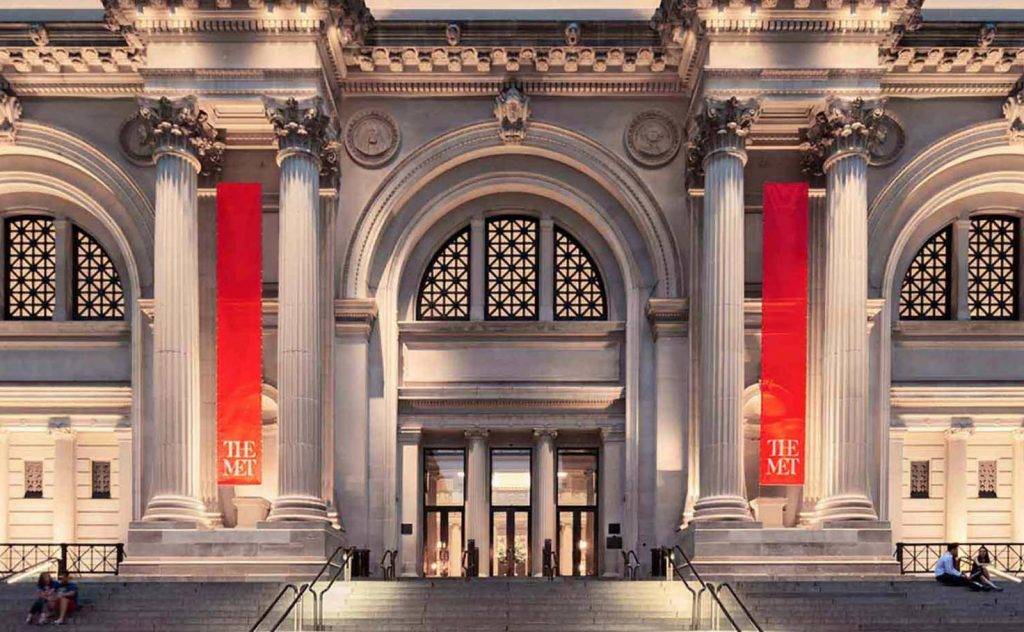
The Met Gala is formally known as the Costume Institute Gala because it is more than a dress-up party for celebrities, it’s a fundraiser for the Metropolitan Museum of Art’s (known as “The Met”) Costume Institute in New York.
“The Costume Institute’s spring 2023 exhibition will examine the work of Karl Lagerfeld (1933 to 2019), focusing on the designer’s stylistic vocabulary as expressed in aesthetic themes that appear time and again in his fashions from the 1950s to his final collection in 2019,” the Met says.
The Lagerfeld theme is extremely broad, due to the late designer’s long résumé of designer roles, which include Chanel, Fendi, Chloé, Balmain, Patou and his eponymous brand, Karl Lagerfeld, which made him king of the elite fashion world.
Guests have the luxury of drawing from these houses’ archives, spanning Lagerfeld’s 60-year career, when they plan their outfits.
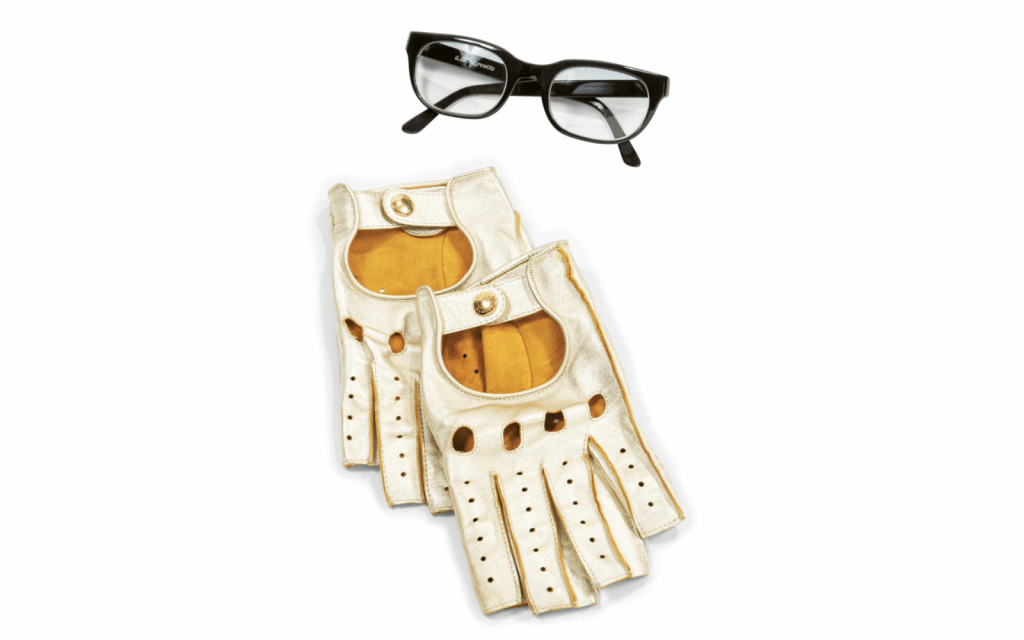
Can we expect Chanel tweed and ostrich-feather gowns paired with big sunglasses and flawless slicked-back ponytails? Or perhaps we will see Fendi coats with Lagerfeld’s signature fingerless gloves.
Hopefully, some of the outfits will include pieces from Lagerfeld’s first Chanel haute couture show, which he presented in January 1983 at the legendary Chanel salon at 31 Rue de Cambon in Paris.
Despite Lagerfeld’s reputation as a fashion genius who dresses the elite, he expressed unapologetically offensive views. The Met is going ahead with the theme, despite this.
Lagerfeld publicly made fat-phobic comments (although he was once overweight) and, in an interview with Número, Lagerfeld said he was fed up with the #MeToo movement.
“I read somewhere that now you must ask a model if she is comfortable with posing. It’s simply too much, from now on, as a designer, you can’t do anything,” Lagerfeld told Número’s Philip Utz.
“If you don’t want your pants pulled about, don’t become a model! Join a nunnery, there’ll always be a place for you in the convent. They’re recruiting even.”
As is traditional, the gala will be chaired by Vogue editor-in-chief Anna Wintour, with actresses Michaela Coel and Penélope Cruz, tennis champion Roger Federer and pop star Dua Lipa.
Wintour’s choice of a Karl Lagerfeld Met Gala theme is not just a nod to the iconic designer, it is a smart fundraising move for the Costume Institute. Lagerfeld was very important to the fashion industry, both editorially and financially. If Lagerfeld is the king of fashion, Wintour is the queen and their collective influence over fashion and media reigns supreme.


The Met Gala is often referred to as the “Super Bowl of fashion”. Since taking the reins of the Costume Institute Gala in 1999, Wintour’s business savvy and tight grip on the fashion world has helped her raise $ 200 million for the exhibit.
In 2014, the Costume Institute was renamed in her honour — the Anna Wintour Costume Centre — since her annual event helps finance the entire department, and she is a board trustee member. But this year’s Met Gala is not Wintour’s first shot at a Lagerfeld exhibit at the Met.
Many shades of Kaiser Karl
In order to sit at the top of fashion’s most desirable maisons, one needs to be more than a trendsetter, one needs to be an artistic genius whose vocabulary — both verbal and visual — is informed by art, photography and literature, with a dash of the unconventional.
Lagerfeld’s nonconformity and perfectly timed romantic nostalgia gave him his legendary flair for presenting curiously innovative clothes and accessories that were praised by both the press and retailers.
“Fashion’s fun and you can’t really take it too seriously. Frivolity must be an integral form,” Lagerfeld once told his close confidant, journalist André Leon Talley, who died last year.
Lagerfeld’s love of books and lust for different forms of luxury is well documented. Things like luxurious linen, fine scents, beautiful bodies and incredible clothes, furniture, cars, as well as classic cinema, serve as pointers to the Met Gala’s guests beyond the low-hanging fruit that is plucking a Chanel gown from the archives.
Lagerfeld’s knack for networking fashion’s media elite and his high-society clientele could mean loyalists will be in attendance, while Wintour has a circle of friends who are at the top of their fields. Perhaps this year’s guest list will be a convergence of highbrow Chanel clientele and contemporary celebrities who keep old brands relevant.
Lagerfeld’s Chanel creations particularly could be playful, such as a wire Chanel shopping basket, a giant pearl, or even a slot machine, which are layered over a luxurious foundation, such as a black wool coat, reminding the fashion world of its exquisite and expensive qualities made to last through generations.
Many from Lagerfeld’s close circle, including Talley, Amanda Harlech and Hervé Léger, have described Lagerfeld’s generosity with material luxuries but also his ability to be ruthless and unpleasant. Wintour once diplomatically referred to him as “wicked”.
But within the context of a Lagerfeld-themed Met Gala, chaired by Wintour, the best way to get into the minds of the emperor and empress of elite fashion is via their shared and highly valued confidant Talley, who was one of Lagerfeld’s closest friends and Wintour’s right hand at Vogue.
Through the lens of Talley in his 2020 memoir The Chif?fon Trenches, one can get a clearer idea of how this year’s theme might have come to be.
Talley’s ability to navigate fashion’s social circles, dominated by Lagerfeld, Wintour, and Lagerfeld’s rival Yves Saint Laurent, shows the deeper relationship between Vogue (under Wintour) and Chanel (under Lagerfeld).
“Karl Lagerfeld did things for Vogue he would not do for anyone else,” wrote Talley. “Four times a year, all of Vogue descended on Paris […], each time, Karl would give a special dinner for the entire staff, at his house, surrounded by his eighteenth-century decor and his porcelains and silverware. If we had visiting writers, they would come as well.”
Talley, whose friendship with Lagerfeld was decades long, recalls his ability for social networking with the fashion’s influential editors, including Wintour.
But, “he did have one spat with Anna Wintour, when she approached him about doing a Chanel retrospective at the Met”, Talley recalled.


“[Lagerfeld] was dismissive of curatorial exhibitions of fashion […], he did not like seeing old, dusty clothes in museums, and he loathed coming to the Met. He came to the Met Gala for many years out of respect for Anna Wintour, but then one year he didn’t come, and he never came back,” wrote Talley.
One of his closest friends, Harlech curated an exhibit of his work in Bonn, Germany, in 2015, but he did not attend.
So, when Wintour proposed the idea of a Chanel retrospective at the Met to Lagerfeld, she was asking a loaded question. The show was on, then it was off, Lagerfeld was against the exhibit.
“In his mind, Karl was still at the height of his career, and a retrospective was for a designer on his way out,” wrote Talley.
Five years after Wintour’s initial pitch to Lagerfeld, she returned to Talley to ask whether Lagerfeld might be interested in a retrospective show. Lagerfeld agreed to it, and a Chanel-themed Met Gala was held in 2005.
“I suffered in exile for a season but learned a valuable lesson: Never trust anyone close to Kaiser Karl. People are always ready and waiting to destroy your place in the line of courtiers, and to decimate your influence with the king,” wrote Talley.
Perhaps this year is a better time for a Lagerfeld-centred themed gala, financially supported by the brands he once helped propel to the top of the fashion world. The Met’s website shows support from Chanel, Fendi, Karl Lagerfeld, as well as Vogue’s parent company, Condé Nast.
Four years after his death, it might be easier for Wintour to get the blessing of Lagerfeld’s business partners than Lagerfeld himself. Regardless of his ego-fuelled disdain for retrospective exhibitions of his work, this year’s exhibit is a special and rare curation of some of fashion’s most beautiful modern pieces.
King of fashion’s kingdom
Lagerfeld was a prolific designer and the rich history of his designs will be on show at the Met from May to July.
The exhibit will show 150 pieces, accompanied by Lagerfeld’s sketches, which informs the “A Line of Beauty” element of the exhibition.
“I saw him as a kind of magician. He would sit down, all you’d see were a couple of lines, and then those lines turned into a complete silhouette, which came to life in the next meeting,” Silvia Fendi recalled in Karl Lagerfeld: A Life in Fashion.
“Almost every day, ideas flew back and forth between Rome and Paris by phone and fax […] The sketches arrived in parcels, and only in recent years by mobile phone,” wrote Kaiser.
When Lagerfeld arrived at Chanel in 1983 after leaving his post at French maison Chloé, (which he helped revive), while keeping his position at Fendi, he was tasked with modernising the tired house of Chanel without losing its long-time clients. Lagerfeld’s ability to refresh the brand without discarding its history is what made his Chanel so spectacular.
In 1985, The New York Times wrote he “succeeded in bringing the Chanel image into the modern age. He has reshaped the suits, recoloured the clothes and introduced knitted styles that are both pertinent and contemporary. Best of all, he has silenced the nay-sayers who perpetually complained that this is not the way Chanel would have done it.”
Under Lagerfeld, Chanel’s shows were highly anticipated spectacles, and remain in the minds of fashion fans today.
In 2014, he would transform Paris’s Palais Galliera into a Chanel supermarket, a very fashionable protest in 2015 and a rocket launchpad in 2017.
Over the decades of his creative career, Lagerfeld styled himself as a living logo and as someone who made beautiful things, despite his sharp tongue and “wicked” ways. His uniform became a pop culture symbol. His stiff-collared white shirts, dark sunglasses and steely ponytail became a self-imposed caricature, instantly recognisable as Karl Lagerfeld.


In 2021, Sotheby’s auctioned more than 1?000 objects including Lagerfeld memorabilia; exquisite works of art and furniture; Goyard trunks; signature garments from his wardrobe and his 2017 Rolls-Royce Phantom. Lagerfeld’s self-portraits sold for over $ 3 000.
“I love to be creative all the time. If not, I would be bored and boredom is a crime,” Lagerfeld famously said.
Despite his beautiful and his ugly sides, the golden thread of the Met Gala is, of course, to honour Lagerfeld’s impact on fashion. With the hierarchical structure of the fashion world, is there any honour higher than being at the centre of Wintour’s Met Gala?
The Met Gala will take place in New York on 1 May.
Submit and get free exposure here: Showcase Your Business | Advertise Your Special Offers.