“I am not Dada’s ball boy” — ANC member defends court bid over Joburg conference:
The ANC member who has filed court papers challenging the legitimacy of the Johannesburg regional conference has denied being instructed by Johannesburg mayor Dada Morero to do so on his behalf, insisting that he was not his “ball boy”.
Stanley Itshegetseng has given the ANC until Wednesday to respond to his concerns about the legitimacy of the regional conference, which took place from 3 to 5 December 2025.
At the conference, Morero lost to the current regional chairperson, Loyiso Masuku.
Since the election outcome, those who lost at the conference have raised allegations of vote-buying and claimed that the election company rigged the conference in favour of the winning slate.
Ballots of additional members, which were meant to be kept safe, were found opened at the house of the presiding officer in January. The ANC has opened a case on the matter.
Some ANC insiders have accused Itshegetseng of being used by Morero to fight the outcomes of the conference. He works as an adviser to the chief of staff in Morero’s office and is known to be a staunch supporter of the mayor.
“People are undermining me. I am a comrade in my own right,” he told the Mail & Guardian on Monday. “I went as a delegate to the conference, not because of Dada’s ticket — I was elected by my branch to go to the conference. The communication that I sent to the ANC was from me and not Dada. Why would people reduce me to a ball boy of Dada and not see me as a comrade?
“By the way, I work for Dada. This year alone, I spoke to Dada twice. The first time it was for less than a minute. The last time, which was last week, I spoke to him for three minutes. When I communicate with Dada, I send him text messages and most of the time he does not respond.”
Itshegetseng said those who had a problem with Morero should not use his name to fight their battle to remove him as mayor.
Over the weekend, a few hours after Itshegetseng filed his court papers, the ANC in Johannesburg held a special regional executive committee (REC) meeting to discuss Itshegetseng’s application.
However, a source close to the matter said the meeting had ended up focusing on the possible removal of Morero as executive mayor. The source said the REC had resolved that he should be recalled as mayor of Johannesburg.
“If people have beef with Dada, they must take the beef to Dada and not reduce me to Dada’s boy. I am older than Dada, by the way. I can’t be his ball boy. People are undermining my political credibility.
“When we went to the regional conference, I was not running Dada’s campaign — I was far from it. Why would people want to reduce me to being Dada’s ball boy? I support him, yes, but you don’t find me around him like I’m his ball boy.
“Do I have beef with him? No. Do I revere and respect him? Yes, I revere and respect him as a leader who I think is capable in Johannesburg currently. But I don’t have orders or instructions from him.”
In his court papers, which the M&G has seen, Itshegetseng wants the court to interdict the REC from making any decisions of binding force, including caucus directions, disciplinary actions, branch and regional administration or public political programming, pending finalisation of the matter.
He also wants the ANC to take all necessary steps to arrange for the reconstitution of the regional conference with the same delegates who attended the December 2025 conference to elect new leadership.
Itshegetseng said that on 17 December 2025 he had raised disputes about the conference and according to party rules, the ANC should have responded within 14 days but that had not happened.
He said he had exhausted every internal recourse on the matter and that the party had failed to act. He added that he was a grounded ANC member and did not want to drag the party to court.
“When I sent the letter to my relevant leadership in the province, I copied my REC and BEC [branch executive committee] on 17 December. There had been no response. I then wrote another letter towards the end of February to give them 24 hours to at least acknowledge receipt,” he said.
There had been no response and a week later, he had advised his lawyer to write a letter demanding that the ANC respond to his letter.
“Again, there was no response. We waited another week before we made the legal submission to the court through the sheriff. The ANC had a window of opportunity to engage us by 17 March. If they fail, on the 18th we are going to court on an urgent application.”
If he won the case and the conference was declared illegitimate, his concern was what would happen to the drastic changes the REC continued to make.
“My position is that there is a complaint about the standing and legitimacy of the conference. There are ballot papers which were found where they were not supposed to be. They were supposed to be in the custody of the ANC but were found lying in a house somewhere. Such things affect the legitimacy of the conference itself.
South Africa reviews ICJ case against Israel as West Bank family killed before Eid:
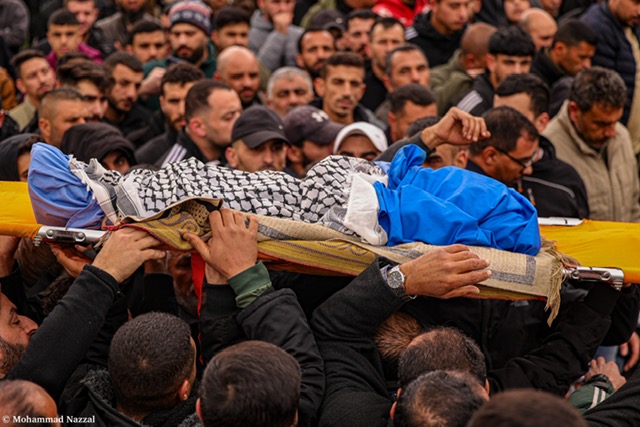
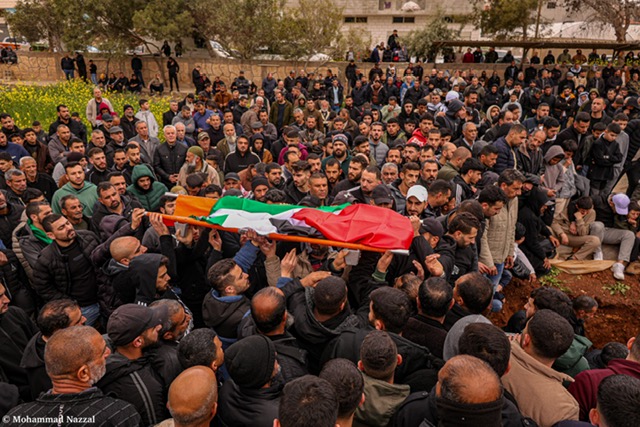
Two boys who survived a shooting that killed four members of their family, including their parents, in the northern West Bank town of Tammoun have described witnessing the attack that left them orphaned and without two of their brothers.
The attack happened on Sunday as the family returned from the nearby city of Nablus, where they had gone to buy clothes and other items for Eid al Fitr, which will be celebrated on Friday in Palestine.
Palestinian health authorities identified the victims as Ali Khaled Sayel Bani Odeh, 37, his wife Widad Osman Aql Bani Odeh, 35, and their two sons Muhammad, 5, and Othman, 7. Two other children travelling in the vehicle survived.
Palestinian officials said Israeli forces opened fire on the family’s car during a military operation near Tammoun, south-east of Tubas in the northern West Bank.

Video released by the Palestine Government Communication Centre shows one of the surviving boys recounting the attack. In the footage, the child said he and his brothers were travelling with their parents back from Nablus after buying clothes for Eid when their car came under fire.
The footage also shows the surviving children saying farewell to their parents and two siblings before the burial.
Palestinian officials said the boys were mistreated by Israeli forces after the shooting. Israeli authorities had not immediately issued a statement on the incident.
Hours later, hundreds of residents gathered on a hillside cemetery in Tammoun where the Bani Odeh family were buried. Children sat quietly near the edge of the burial ground while mourners passed handfuls of soil between them.
The killings unfolded as South Africa confirmed it is reviewing Israel’s latest legal response in the genocide case before the International Court of Justice (ICJ) in The Hague.
In a statement released on Sunday, the Presidency said Israel had submitted its counter-memorial to the court on 12 March, responding to South Africa’s memorial filed in October 2024.
Pretoria said it would analyse the submission before deciding whether to request permission to file further written pleadings or allow the case to proceed to oral hearings.
South Africa instituted the case in December 2023, arguing that Israel’s military campaign in Gaza breaches its obligations under the Convention on the Prevention and Punishment of the Crime of Genocide.
Israel rejects the allegation and maintains that its military operations are directed at Hamas after the attacks of 7 October 2023.
Israel’s counter-memorial marks a key stage in the legal proceedings. During the written phase of ICJ cases, both sides submit detailed legal arguments and evidence setting out their interpretation of international law.
Once the written phase concludes, the case moves to oral hearings before the court’s panel of judges. The court has issued provisional measures ordering Israel to take steps to prevent acts that could fall within the scope of the genocide convention and to allow humanitarian assistance into Gaza.
Yet conditions on the ground continue to deteriorate.
In the southern Gaza city of Khan Younis, video circulating on Sunday showed the wall of Al-Ribat College collapsing onto tents sheltering displaced families along Street 5. A child was killed and several others injured when the structure fell onto the encampment.
The area is one of many makeshift shelter sites for families displaced by months of bombardment that have devastated large parts of the Gaza Strip. Humanitarian organisations warn that restrictions on shelter materials have forced many families to live in tents pitched beside damaged buildings and rubble.
The case before the ICJ is drawing increasing international involvement.
Last week the Netherlands and Iceland filed declarations of intervention under Article 63 of the court’s statute, which allows states that are parties to a treaty under interpretation to present their legal views.
Their filings add to a growing list of countries seeking to participate in the proceedings, among them Spain, Mexico, Colombia, Chile, Libya, Türkiye and Palestine. Brazil and Belgium have also submitted interventions.
The US has separately intervened in the proceedings, disputing South Africa’s interpretation of the genocide convention and warning against lowering the legal threshold required to establish genocidal intent.
The expanding group of intervening states has transformed what began as a bilateral dispute between South Africa and Israel into a broader international legal contest over how the genocide convention should be interpreted in the context of modern warfare.
South Africa must now decide whether to submit a further written reply to Israel’s filing or allow the case to move toward oral hearings before the judges in The Hague.
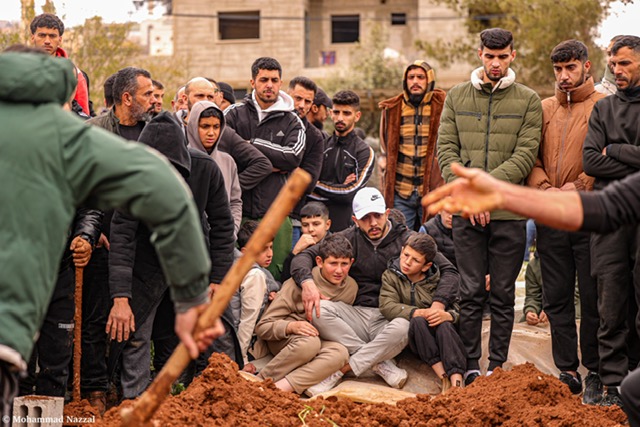
But in Tammoun, where the Bani Odeh family were buried on Sunday after returning from their Eid shopping trip, the legal arguments unfolding thousands of kilometres away offer little immediate relief from the violence shaping daily life on the ground.
SAPS asked Matlala to arrest Musa Khawula:
Police officer Fannie Nkosi, known as Witness F, told the Madlanga commission that suspended deputy national police commissioner for crime detection Shadrack Sibiya had requested Vusimuzi “Cat” Matlala to arrest social media blogger Musa Khawula.
“We received a call from General Sibiya telling me that I must forward this warrant to Mr Matlala because at that time Mr Matlala had a security company,” said Witness F.
He said Sibiya had wanted an immediate arrest as the complainants were the ANC secretary general Fikile Mbalula and businessperson Ze Nxumalo.
Khawula was arrested in February 2025 on allegations of cybercrimes and derogatory posts. The topic of his arrest has since arisen at the Commission of Inquiry into Criminality, Political Interference and Corruption in the Criminal Justice System, known as the Madlanga commission.
At the instruction of Sibiya and with the involvement of Matlala VIP Protection, Nkosi was questioned about his involvement in Khawula’s arrest. He was arrested for posts he made in October 2024.
He said Matlala’s company had known the social spots Khawula frequented.
Businessperson Nxumalo had sent Nkosi Khawula’s contact card profile report, identity details, residence address and warrant of arrest. He told the commission he had subsequently received concert tickets to institute an arrest.
Nksosi said Sibiya had requested the assistance of Matlala’s VIP Protection to arrest Khawula because they frequented the same social hangouts.
Nkosi confirmed that Matlala had visited Sibiya’s farm several times and facilitated meetings between them. He said Sibiya’s testimony that Matlala had never visited his office was false and that Sibiya had never told him he did not want the 20 impalas, as claimed in previous testimony.
He denied Sibiya’s claim that he had not received the 20 impalas Matlala had given him as a gift. Nksoi denied having received further amounts from Matlala besides the R20 000 he had received from a police motorbike escort and R5 000 gift.
At the start of the commission, chairperson Mbuyiseli Madlanga ruled that Witness F could be identified as Sergeant Fannie Nkosi as his name and face had been publicised in the media.
The ruling comes after the police arrested a suspect linked to Witness D, identified as Boksburg police reservist Marius van der Merwe. He testified about the controversial blue lights saga between Matlala and the Ekurhuleni police department.
“While the commission takes the safety of its witnesses seriously and will take all reasonable measures to ensure that its witnesses are not put at risk, it is clear to me that the order that he continue testifying remotely is no longer justified,” Madlanga said.
Nkosi (Witness F) had asked the commission to provide his testimony in camera and offside, citing security concerns. Several high-ranking ANC members, a member of parliament and friends and supporters of the ANC had contacted him to dissuade him from testifying, he said.
Submit and get free exposure here: Showcase Your Business | Advertise Your Special Offers.