
Illovo Sugar won’t buy Tongaat Hullet’s assets:

Sugar producer Illovo Sugar says it is not interested in purchasing Tongaat Hulett’s assets after its troubled competitor released its long awaited business rescue plan indicating that the company will be sold.
There are eight potential bidders for Tongaat, but the business rescue practitioners have kept mum on their identities, although three of the offers are reportedly from large entities seeking full purchase, while the others are interested in constituent parts of the company.
“Currently our business remains focused on its own growth imperatives which do not include purchasing any Tongaat Hulett (SA) assets,” Illovo Sugar South Africa’s managing director, Ricky Govender, told the Mail & Guardian.
“As a responsible and proudly South African company, we are invested in securing the sustainability of our local sugar industry, and especially in how to support emerging and small-scale farmers.”
In a statement, Tongaat’s business rescue practitioners said due diligence processes were well advanced, and they expected to receive final offers by the end of June. Offers include strategic equity partners (SEPs) looking to purchase the company in its entirety, as well as those offering partial investment.
The sugar and property company has been struggling with debt, alleged financial misstatements and historic mismanagement under previous leadership and needs R1.5 billion to service its debt.
It entered into voluntary business rescue in October last year. This has caused much strife in the sugar industry because the company could not pay its lenders and its supplier sugarcane farmers for their produce.
Earlier this year, another sugar mill, Gledhow, also entered into voluntary business rescue. This has left farmers with nowhere to take their sugarcane. Tongaat Hulett and Gledhow Sugar’s mill defaults cost growers R1 billion, dropping revenue by 8%, according to SA Canegrowers.
“While we, like all other affected parties within the sugar industry value chain, await the outcomes of the Tongaat Hulett business rescue process, we continue to proactively engage relevant stakeholders to discuss the current challenges,” Govender said.
“Illovo SA is resolute in its dedication to the continued success and growth of the South African sugar sector, and to working hand in hand with all stakeholders to achieve a sustainable and prosperous future.”
Grower-led consortium NewCo proposed to buy Tongaat’s operations late last year. NewCo announced that it had submitted an expression of interest in acquiring the company’s South African mills, refinery, animal feeds subsidiary and other brands and trademarks.
The M&G asked Tongaat’s business rescue practitioners for comment, but they signalled they were not in a position to speak about whether they had been approached by NewCo.
Tongaat also has industrial, commercial, retail and residential properties. The company’s property arm has also been under distress and is also in business rescue.
The majority of Tongaat’s creditors voted in favour of the business rescue plan for the property concern, which entails a structured winding down of the company, its operations and the sale of its property assets. With 92% of creditors voting, 99.8% voted in favour, the business rescue practitioners said.
Tongaat’s lenders had claims totalling R7.7 billion against Tongaat Hulett Developments (THD), which managed and developed Tongaat’s property interests.
The business rescue practitioners explained that Tongaat Hulett Developments was historically dependent on holding company Tongaat Hulett Limited for access to working capital facilities. The financial stability of Tongaat Hulett Developments was therefore linked to the financial stability of Tongaat Hulett Limited.
“The reality is that THD’s liabilities significantly exceed the value of its assets, which will only satisfy around 7% of creditor claims,” the business rescue practitioners said.
“In line with the Companies Act, secured creditors (in whose favour all THD’s assets are secured) rank highest in a business rescue. Due to secured creditors’ claims of around R7.2 billion and the limited funds available to THD, the payment of a dividend to unsecured creditors is unfortunately not possible.”
The axing of Ace is the start of what the ANC needs:
There are a few images that stand out for me in the decline of the ANC over the past two decades. The first being the celebrations of people such as Fikile Mbalula when Jacob Zuma had finally managed to topple Thabo Mbeki in Polokwane as we — the lowly journalists — sat on the floor of that 2007 conference.
It was quite a show, and sadly many of those men and women in that building remain today as stewards of our political discourse. The whisky and high-end champagne flowed that entire weekend as the guillotines were sharpened.
I was working for an international news agency at the time and was stationed at the small Holiday Inn in the middle of the Limpopo town during the rain-soaked weekend in December. In the bar at the end of that evening when the impossible had happened — the ousting of Mbeki and his inner sanctum — whisky also flowed as some of his key lieutenants drowned their sorrows. It marked the end of something, we all knew that, even though it also showed that democracy, no matter how uncomfortable, was working in the old liberation movement.
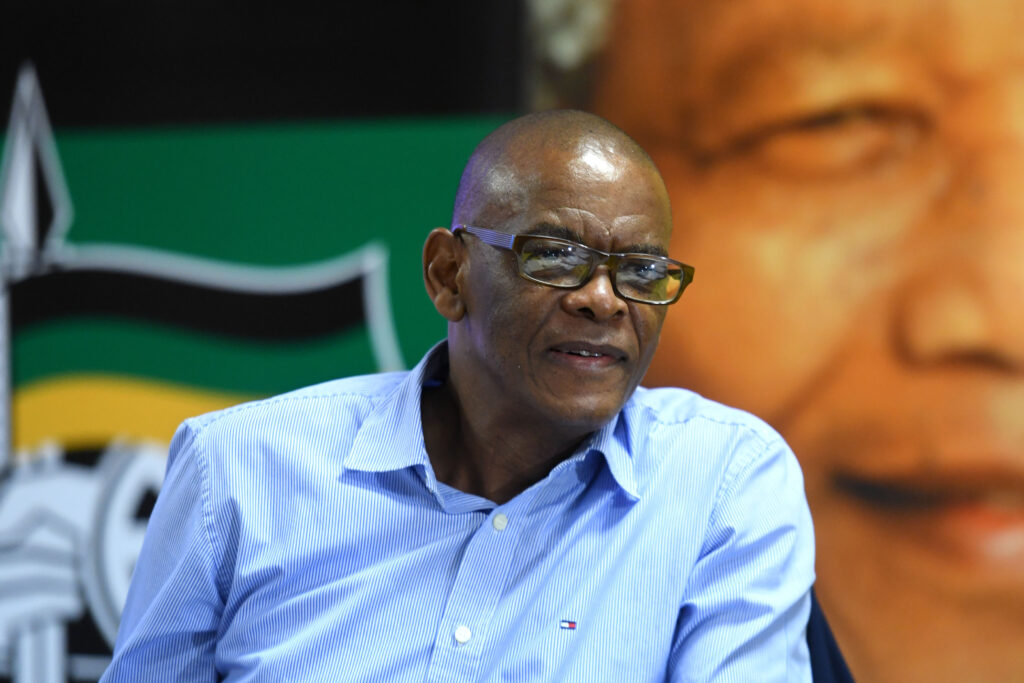
The other image of this transitory stage that comes to the ANC every five years was that of the victors in December 2017 at Nasrec. After the voting results were announced and after a sullen face of Zuma broadcast to all, there was the image of incoming president, Cyril Ramaphosa, next to a bewildered looking face of Ace Magashule — the new secretary general of the ANC. It was so abundantly clear from that image alone that the ANC stood no chance of renewal or that it would see a “New Dawn”. The party was broken, right?
This week, Ace, who represented the “Premier League” — remember that term — was finally kicked out of the party. Having long been suspended as secretary general and de facto chief-executive of the party, he has long been a non entity. But as long as he remained an aggrieved member and a high profile one at that, his presence in whatever form would continue to drag the party lower.
He is out today, but we know that there are many more Ace-like figures in the party that need to leave if it’s ever, ever to renew itself. It’s a long and an impossible list to consider — think of the 80 members in the ANC’s national executive council.
Reading Paul Holden’s latest book, Zondo at your fingertips, over the past week, my memory was refreshed of all the key political players in the Gupta-inspired state capture project. I was reminded of names such as Malusi Gigaba, Tina Joemat-Pettersson, David Masondo and Faith Muthambi. They sadly are still players, joined by the likes of Zweli Mkhize — who has his own scandal over PPE. Remember that.
Then there’s the ever changing coalition of the wounded that stay in the party’s decision making ranks, seething at the state of the party and its unfairness of leadership which is their birthright, like Lindiwe Sisulu.
Ace’s departure is just a drop in the ocean of what’s needed for the party to renew itself and be relevant to a country that is drifting away.
Grootvlei residents demand jobs, threaten to stop transition:

Community members living around Eskom’s Grootvlei power plant are threatening protest action against the utility for excluding them from job opportunities at the plant.
Residents have accused the utility of hiring external service providers and neglecting equally qualified companies in the community.
Threats to protest follow a meeting with Eskom management in Grootvlei last week where residents and job seekers complained about being excluded from contracts and job opportunities at the power station.
In their meeting, residents proposed that the utility include them in choosing projects for contracting and that big companies contracted by the utility should be available to mentor and help small companies to grow, thereby addressing unemployment in the community.
“We requested that a list of companies in the area must be created for tender allocation,” read the documents presented at the meeting. Community members are arguing that they should be involved in any big projects and jobs that come to the power station.
“We raised that each company that is chosen must be groomed by the big companies inside the power station. Failure to do this will result in a strike action and the transition will not happen without us,” they said.
In response, Eskom Grootvlei management said it will review the information presented and provide feedback on 18 June.
Grootvlei, near the town of Balfour, was constructed in the 1960s and mothballed in 1990 because of excess power at the time. In 2013, former president Jacob Zuma reopened it after a R7.2?billion upgrade. Grootvlei is set to reach the end of its operational life in 2027. It is also earmarked for transition to renewable energy after being identified as a potential training facility on energy. Discussions on this proposition are underway.
People in the area also told the Mail & Guardian that they are concerned and have a sense of unease about whether the power station would close or not.
In March, electricity minister Kgosientsho Ramokgopa called for a life extension of Eskom coal plants. While approved by the government, the Presidential Climate Commission, which is tasked with overseeing the transition, has argued against it.
In its report in May, the climate commission said the use of coal would be expensive to maintain in the future as they would lose investment opportunities.
Getting rid of coal and the use of fossil fuels is in line with the world climate goals towards a cleaner future. But people in Grootvlei are unsure of what this means for them.
Another Komati
Speaking to the Mail & Guardian, residents argued that if they kept quiet, they feared that Grootvlei would end up like Komati power station where people and contractors have not been absorbed into the transition and were left behind without work and a future.
“We have decided that it is better to fight now, to force the utility to see us now, and recognise that we need the work, and that our children deserve work. They cannot outsource companies from outside and leave us idle here to suffer.”
The community cannot die because Eskom is changing. If it is changing they must take us along with them,” said one of the participants at the meeting.
The country’s energy planning is within the mandate of the department of mineral resources and energy and its integrated resource plan 2019, which sets out the electricity plan until 2030, including the closure of existing power stations, Eskom said.
Anxiety
Members of Power, a town situated next to the Grootvlei power station, are anxious about what the future holds for them after hearing rumours regarding the future of the plant.
Sitting outside the station, a group of men seeking jobs say that the only thing they know about the transition is based on what they hear on the news as there has been no official consultations on the matter.
“We just hear rumours of the station closing down but then suddenly we are told that there is no such plan but that the power station is operating at 80%. So you can imagine the position we are in of not knowing where we stand. Are there jobs or are there no jobs?”
They said until there is official communication regarding the future of the station and their jobs, they will continue to sit outside the station with the hope that one day someone will call them in when there is a job opportunity.
One of the job seekers said that the town does not benefit from the power station as most people who work there are either from neighbouring towns or another province.
“We do not know any of the people who work at that power station, but by engaging with them we learnt that they are from places like Witbank and Secunda. Some come from as far as North West and Johannesburg. This tells you that there is something wrong with the system — it is against people from Grootvlei who are supposed to be getting first preference,” he said.
Without consultation from Eskom or the PCC, they are all in the dark, he said.
Knock-on effect
Lebohang Khumalo, a teacher at a local pre-school said that the majority of the children at the school’s parents work at the power station. She fears that should the power station shut down and the parents lose their jobs, it meant that she would also lose hers.
“We rely on them to keep the school afloat. Without their support we will have to shut down and I will have to uproot and move elsewhere which is not what I want because I love these children and I love my town,” said Khumalo.
Khumalo added that things will be very difficult for her and her family should things pan out that way.
Joe Vincent, who owns a lodge called Olive Grove which is eight minutes away from the power station, said that he is worried about his staff and the establishment.
He added that he saw the cracks quite early but still keeps the establishment running as he too has not been informed as to what will happen to the station.
“We used to be very busy. There would be contractors setting camp at the lodge for long periods at a time and that stopped. Every now and then we will have people come but that rarely happens” he said.
He said that he will do all he can to help his employees, adding that he has established a few businesses in the area.
“I will not abandon the area. It will always be a place for my children and colleagues or families to come for a holiday. I can’t just leave as this is the result of years of hard work. But if I am not able to make a living from it, at least my family will enjoy it” Vincent said.
Speaking during the Presidential Climate Commission‘s quarterly meeting on Friday, Mantashe said “just” wasn’t being applied at Komati.
“In terms of the number of jobs destroyed and the number of jobs created, the megawatts destroyed and those created. In all aspects, it is not a just energy transition. It is an energy transition,” he said.
At Grootvlei, the reskilling and retraining of workers on renewable energy has not started. Eskom has secured a R180?million grant from German development bank KfW to establish a renewable energy training facility at Grootvlei and “discussions are underway”.
Mandisa Nyathi and Lesego Chepape are climate reporting fellows, funded by the Open Society Foundation for South Africa.
Submit and get free exposure here: Showcase Your Business | Advertise Your Special Offers.
