Inflation heats up as food prices hit 14-year high:
Inflation accelerated to 7.1% year-on-year, bucking expectations that prices would have eased slightly in March.
According to data from Statistics South Africa, released on Wednesday, the monthly change in the consumer price index was 1% in March, the most significant monthly rise since July 2022, when inflation was expected to have peaked.
The rise in inflation was again driven by elevated food price inflation, which recorded another increase, rising to 14% year-on-year in March — the highest reading in 14 years. Food prices were also the biggest driver of inflation in February, when they rose by 13.6% year-on-year.
In March, food price inflation contributed 2.4 percentage points to the annual rate of 7.1%. The Thomson Reuters consensus had inflation easing slightly to about 6.9% year-on-year, down from 7% in February.
Despite pencilling in a slight cooling, economists were expecting inflation to remain elevated in March after two consecutive months of upside surprises and amid still sticky food prices.
Last month, the South African Reserve Bank’s monetary policy committee (MPC) revised the country’s 2023 headline inflation forecast significantly higher to 6% from 5.4%.
The MPC’s new forecast took into account higher local food price inflation, which the committee revised up again, in part because of the lagged effect of the rand’s weaker exchange rate. The MPC now expects food price inflation to be 9.9% in 2023, up from the previous forecast of 7.3%.
The committee surprised analysts by hiking the repo rate, which affects the cost of borrowing, by a more-aggressive-than-expected 50 basis points. This was despite deteriorating economic conditions, which prompted the Reserve Bank to lower its 2023 growth forecast from 0.3% to 0.2%.
The MPC flagged the rand’s generally weaker position compared to a year ago, a factor that will keep inflation elevated. According to the MPC’s forecast, the implied starting point for the rand forecast is now R18.06 to the US dollar, compared with R17.32 at the time
of the committee’s January meeting.
The rand was buoyed last week as expectations of sharp interest rate hikes in the US continued to fade in the wake of turmoil in the banking sector. The rand is vulnerable to the Fed’s whims, which determine the dollar’s value. A weak rand signals higher inflation.
On Monday, the Bureau for Economic Research (BER) noted that recent speeches from several senior US Federal Reserve officials suggest that the time is approaching for a pause in the hiking cycle stateside. “Notwithstanding another robust US employment print in March, some of the recent US data releases have also been on the soft side. Combined with the tone from the latest Fed speeches, in response to this, some forecasters have reduced their US interest rate hike expectations.”
Last month the Fed hiked interest rates 25 basis points, with Fed chair Jerome Powell indicating that the fight to rein in inflation is far from over. Borrowing costs in the US are now higher than they have been since 2007.
The BER expects another 25 basis point Fed hike in May, followed by a lengthy pause.
Investec chief economist Annabel Bishop notes that the direction of the rand going forward will depend heavily on the movement of the US dollar. A more definitive end to the US rate hike cycle would spur the rand to strengthen against the dollar, although a May Fed hike is still a possibility, she said.
De Lille axes ‘dysfunctional’ SA Tourism board:
Tourism minister Patricia de Lille has axed the board of South African Tourism over the R1 billion Tottenham Hotspur sponsorship debacle and allegations of sexual harassment and poor corporate governance at the entity.
The minister had given the board’s members until Tuesday to give reasons she should not dissolve it over “serious allegations” against its members, but they failed to do so.
On Wednesday, De Lille said that not only had board members failed to respond to her letter placing them on terms, but eight of the 11, including chairperson Thozamile Botha, had resigned since 7 April.
De Lille said her letter “outlined a number of serious concerns”, including the Tottenham deal; the composition of the board and the skills, competence and qualifications of its members and “certain serious allegations” raised by acting chairperson, Themba Khumalo.
De Lille said the remaining three members could not form a quorum and that the board was no longer functional.
“In all the circumstances, I believe that good cause exists to dissolve the board and I shall do so officially through the government gazette on Friday 21 April 2023,” De Lille said.
De Lille said that she would also gazette a three person team to act while a new board was appointed.
The Mail & Guardian can reveal that De Lille decided to move on the board, which falls under her ministry and is responsible for marketing the country abroad, after Khumalo submitted a memorandum asking her to “terminate” it to avoid further damage to its image over a sexual harassment scandal.
The contents of the memorandum — which was also sent to De Lille’s predecessor, Lindiwe Sisulu, on her last day in office — and the furore over the Tottenham deal are understood to have convinced De Lille to dissolve the board and appoint a new one.
The sleeve sponsorship deal with Tottenham came to light in February and sparked the resignation of three board members, Enver Duminy, Ravi Nadasen and Rosemary Anderson, in opposition to attempts to force it through.
Despite statements by Khumalo that no agencies were involved in the deal, it was later revealed that an agency linked to acting chief financial officer Johan van der Walt stood to profit from the Tottenham sponsorship.
Van der Walt subsequently resigned and the deal was shelved after opposition in parliament and from the presidency. Khumalo remains the acting chief executive and is among those who applied for the full-time post last month.
After Sisulu was axed from the cabinet last month, De Lille took over the tourism portfolio.
On 16 March, Khumalo sent the new minister a memorandum outlining allegations of sexual harassment and board dysfunction and asked her to dissolve the board immediately to avoid further scandal.
On 6 April, De Lille wrote to the board and asked them to provide her with reasons she should not dissolve the board on 18 April.
Several sources at SA Tourism said on Tuesday that they were expecting the minister to act in the course of the next day or so.
Last week, Botha, board member Mduduzi Zakhe and two other members resigned.
In the memorandum to De Lille, which the M&G has seen, Khumalo said a “deeply disturbing” pattern of sexual harassment by two board members — who he did not name — had developed at SA Tourism and needed to be brought to De Lille’s concern.
Khumalo said he had sent the same memorandum to Sisulu and was duty bound to do the same with De Lille.
“As a country, as an entity within the public sector representing the nation’s endeavours and goals, as an individual charged with leading this organisation in my professional and personal capacity, with exceptionally clear organisational, professional, and personal values, we cannot ever accept a situation where sexual harassment is the norm,” Khumalo said.
Two male board members had been accused of sexual harassment — one of them mulitiple times — by staff members at SA Tourism, he said.
“These allegations have been brought to my attention and I must report this to the minister of tourism as our shareholder,” Khumalo said. “I can no longer allow any female employee of the organisation to be alone with any of the male board members both at our offices, nor during periods of travel involving these board members.”
He said SA Tourism had a duty to protect its female employees now and in the future. Two of the employees who had made allegations against them were young women who had “direct and frequent interaction with the board given that it forms part of their core daily responsibilities”.
“The trauma of these experiences are therefore constant and repeated lived experiences as they need to engage with these board members continuously. Yet, they are expected to behave as normal during these interactions and remain professional,” Khumalo said.
He warned that interventions needed to be made urgently to protect the tourism body from further damage.
“If ever these sexual harassment allegations were to be made public, before the appropriate interventions are made, there would be no recovering from it for the organisation,” he said. “We would face total collapse and our corporate reputation would be irrefutably and irreparably damaged.”
Khumalo said he would “humbly recommend” that the entire board be terminated to allow the minister to reconfigure it, rather than just the two members accused of sexual harassment, because this “could result in exposure due to the reasons for their termination”.
He also expressed “grave concern” about the high number of board meetings and the associated cost.
The board, which was legally compelled to hold four meetings a year, had met 37 times from 1 April 2022 to 2 March 2023 at a cost of R2.7 million, Khumalo said. A total of 11 board meetings were held from 1 September 2022 to 27 October 2022, while another 10 were held during January and February this year.
“In the current fiscal, the number of board meetings exceeds the annual requirement by more than 500%. In the current fiscal, the allocated budget for board costs is R2 850 000, which has been depleted as at 2 March 2023,” Khumalo said.
A lack of continuity in the board, which has had four chairpersons since last September, had worsened the situation, as had the failure of the board to “assume accountability for and take full ownership of prior board decisions”.
Khumalo told De Lille that in the Tottenham deal the board had left management to take the rap when it had backed the deal, albeit on the recommendation of management.
“There is no accountability assumed by the board as the entity’s oversight body for any of the decisions it takes. This has been evident in a number of public platforms. The management of SA Tourism is therefore left to defend board decisions entirely on its own, without the support of the board on matters it has taken decisions on,” he said in the memorandum
“Overall, the relationship between the board and management is exceptionally strained. There is undue pressure on the organisation to meet the relentless demands of the board on short notice.”
Several sources at SA Tourism, who asked not to be named for fear of retaliation, said Khumalo’s attack on the board came as a result of members raising questions about his qualifications as acting chief executive and his consolidation of power in the CEO’s office.
“Khumalo has used the chaos in the board to consolidate budgets under his office. Marketing is under Khumalo as he is still chief marketing officer at SAT, all of the overseas hub heads [who market South Africa from embassies abroad] now report to him and he now controls the budget for the hubs, and the tourism discretionary fund,” one source said.
“He is knifing them [the board] in the back and trying to get close to De Lille and survive but Khumalo was the architect of the entire Tottenham deal.”
A second source said they were concerned about the lack of screening in the appointment of executive staff and board members and that current leaders of SA Tourism had not undergone the requisite vetting procedures.
“There is a lot that has gone wrong here in terms of appointments, with the board and with the executive,” the source said.”This institution has a very important role in marketing the country, but there is chaos here.”
De Lille’s spokesperson, Zara Nicholson, said that concerns around Khumalo “were under the ambit of the board to deal with.”
Celebrating Africa’s art and soul:
Around the globe, World Art Day is celebrated on 15 April with the theme “art is good for the health”. But, while World Art Day celebrates the development, diffusion and enjoyment of art, the African art world celebrates the nuance, joy and unique narratives of the continent’s diverse artforms.
Those in Africa might ask, “What does it mean to be African in an art world which for decades pillaged, colonised and dismissed Africa’s great works?”
“This World Art Day is a timely reminder that art can unite and connect us even in the most difficult of circumstances. Indeed, the power of art to bring people together, to inspire, heal and share, has become increasingly clear during recent conflicts and crises, including Covid-19,” says Unesco’s website.
Last month, South African master Irma Stern’s 1939 work Children Reading the Koran sold for R22 million at auction, making the painting the most expensive artwork sold on the African continent. The competitive bid-offs that took place at the Strauss & Co sale reveal a growing interest and investment in art produced on the continent.
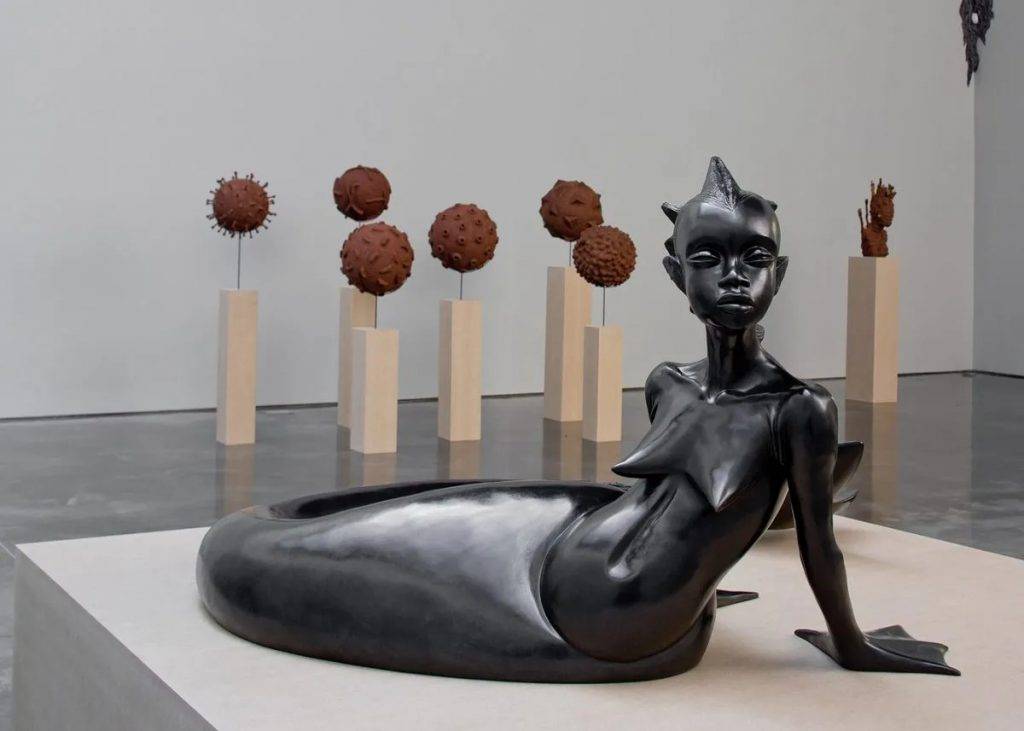
Popular art forms throughout Africa, such as beadwork, sculpture, bronzes, paintings, basketry and textiles, transcend Africa’s reputation as a homogeneous place and mark it as a continent with a more nuanced artistic universe. Different nations lean more towards different artforms based on traditions, natural resources, as well as resources left in colonialism’s shadow.
Ghana’s popular art form is wood carving, while Nigeria’s Benin bronzes tell stories of a kingdom’s political and social life. In contrast, South Africans opt for sculptural and ceremonial beadwork and contemporary painting transcends borders as a chosen medium across many nations in Africa.
It is hard to put the art produced in Africa or by Africans under a single umbrella of “African art” because it is diasporic, spans disciplines, and transcends the Western hemisphere’s movements, such as Bauhaus, art deco or Dadaism, even though African artworks exhibit qualities of these movements.
If Unesco says art “nurtures creativity, innovation and cultural diversity for all peoples across the globe” and “plays an important role in sharing knowledge and encouraging curiosity and dialogue”, then why does African art often exist separately from Asian, American and European art?
Return to sender
Museums across the world have rooms dedicated to African art, for example, the British Museum in London, which houses a large collection of art looted during colonial times. South African museums such as Cape Town’s Zeitz Museum of Contemporary Art Africa promote African and black joy through exhibition’s like When We See Us.
While the debate about returning art looted by colonists to the African countries they originated from still rages, artists on the continent and in the diaspora continue to produce world-renowned works. Perhaps the context of time is the differentiator between African art living in international institutions.
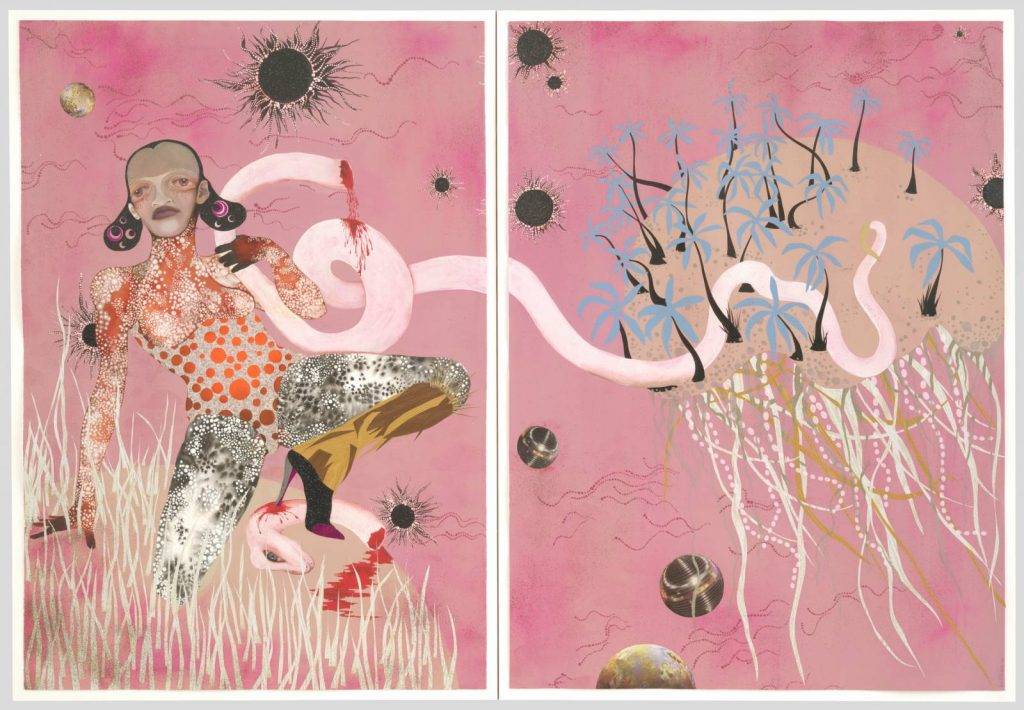
Take South Africa’s William Kentridge, whose work has been on display at the Tate Modern, in the UK, or Kenyan artist Wangechi Muchu, who is exhibiting in the New Museum in New York. This work is consensually exhibited as an ambassador of art from the African continent. On the other hand, over 100?000 pieces of Congolese art from the 1800s are housed in Belgium’s Royal Museum for Central Africa, due to King Leopold II’s control.
While some of this looted art is gradually being returned to Africa, one wonders whether it would have been returned if not for the previously colonised world demanding it back.
Celebrating World Art Day in Africa can also be a celebration of those works by masters that revel in international praise, lest we forget smaller artists whose works are promoted on local platforms, such as the Investec Art Fair, FNB Art Joburg and the Latitude Art Fair.
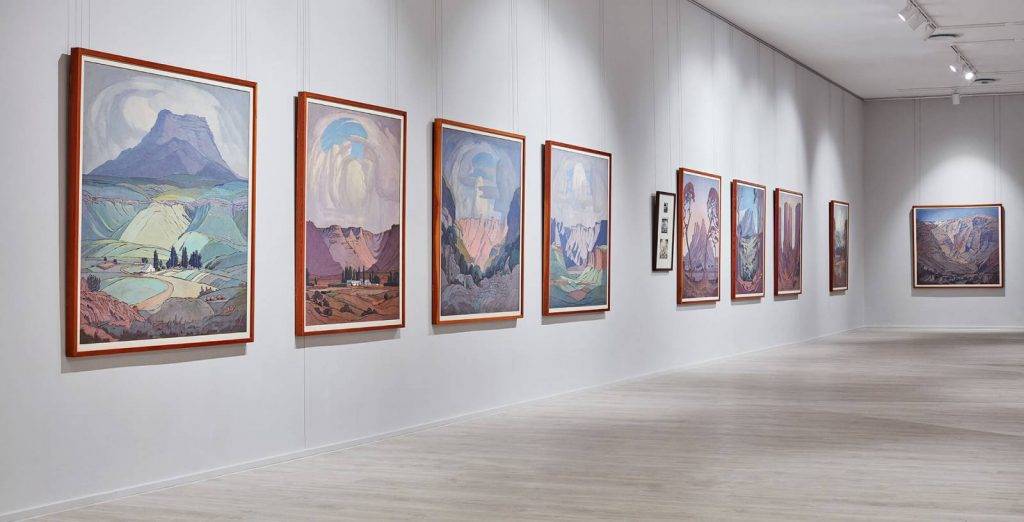
Older African masters, such as Vladimir Tretchikoff or JF Pierneef, immortalise tradition, while contemporary artists, like Athi Patra Ruga, embrace today’s widely celebrated African vibrance.
Surely celebrating World Art Day in Africa is a celebration of Africa’s understanding of nuance and duality.
Submit and get free exposure here: Showcase Your Business | Advertise Your Special Offers.